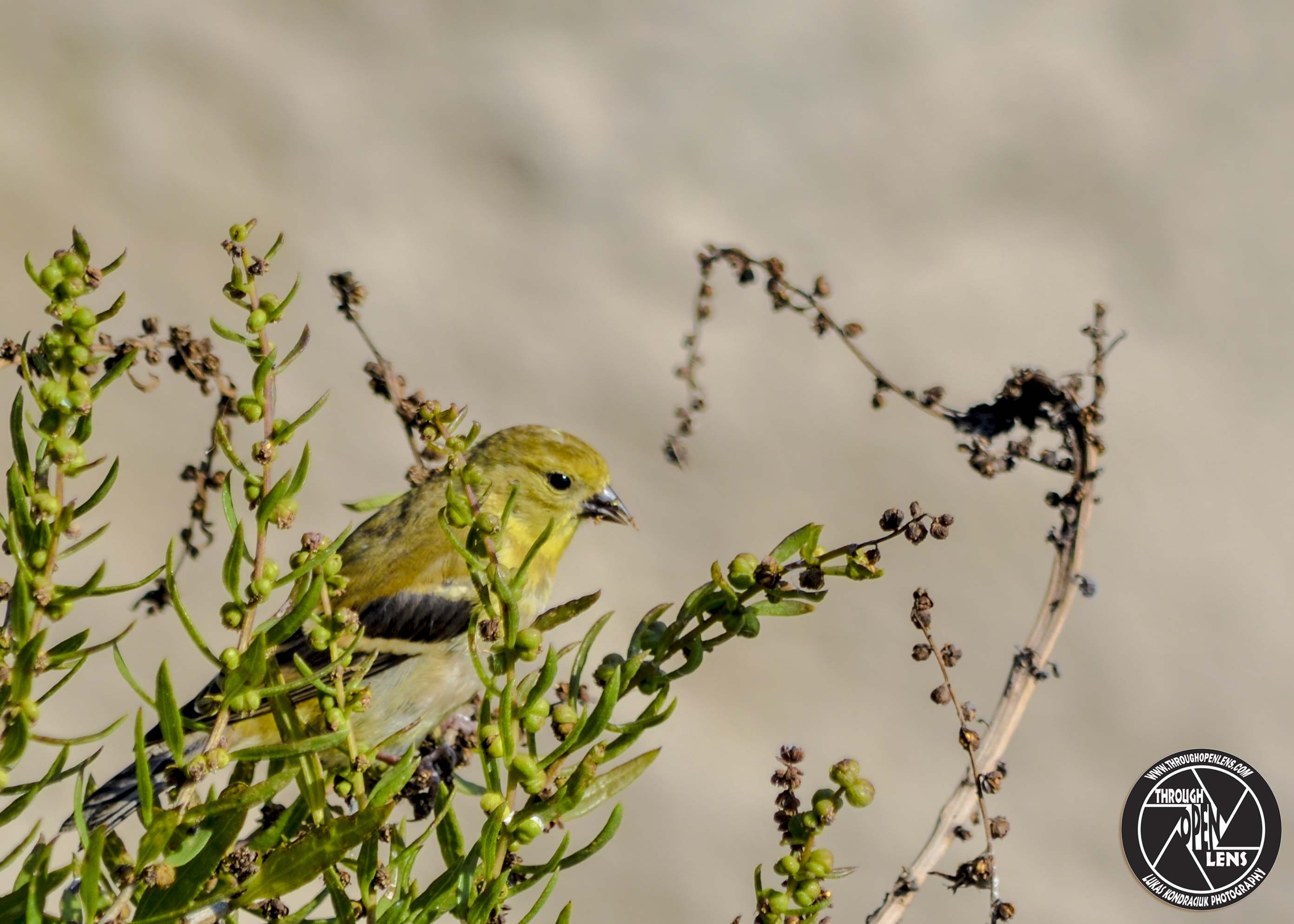
Peek A Boo I Can Still See You!

F/7.1, 1/800, ISO 200.

American Goldfinch

What do computers snack on when they’re hungry?

Chips!

Interesting Fact: Male and female move around together to choose a suitable nest site. The female builds the nest, usually in a shrub or sapling in a fairly open setting rather than in forest interior. The nest is often built high in a shrub, where two or three vertical branches join; usually shaded by clusters of leaves or needles from above, but often open and visible from below. ( https://www.allaboutbirds.org/guide/American_Goldfinch/lifehistory )




I always have been so busy drinking the nectar, that I’ve never taken the time to smell the flowers.

F/5.6, 1/125, ISO 800.

Butterfly

Why don’t skeletons fight each other?

They don’t have the guts.

Interesting Fact: Butterflies can taste with their feet. They have six lets and they each have sensors on them that can tell just by landing on a flower what it taste like. ( http://www.whatdobutterflieseat.info )

In Memory Of 9/11

F/16.0, 30.0, ISO 160.

We Will Never Forget 9/11.

Interesting Fact: On clear nights, the lights can be seen from over 60 miles (97 km) away, visible in all of New York City and most of suburban Northern New Jersey and Long Island. The lights can also be seen in Fairfield County, Connecticut, as well as Westchester, Orange, and Rockland counties in New York. The beams have been clearly visible as far north as the terrace at Century Country Club in Purchase, New York, from at least as far west as western Morris County, in Flanders, New Jersey, at least as far east as the barrier beach of Fire Island in Suffolk County, New York on Long Island, and as far south near Trenton, New Jersey in nearby Hamilton. ( https://en.m.wikipedia.org/wiki/Tribute_in_Light )

By Invitation Only!

F/5.6, 1/500, ISO 200.

Mallard Female

Why do barbers make good drivers?

They know all the shortcuts.

Interesting Fact: During egg-laying phase, she lines the nest with grasses, leaves, and twigs from nearby. She also pulls tall vegetation over to conceal herself and her nest. After incubation begins, she plucks down feathers from her breast to line the nest and cover her eggs. The finished nest is about a foot across, with a bowl for the eggs that is 1–6 inches deep and 6–9 inches across. ( https://www.allaboutbirds.org/guide/Mallard/lifehistory )

Let’s Get Soaking Wet!

F/5.6, 1/500, ISO320.

American Robin

What did the bartender say after a book walked into the bar?

“Please, no stories!”

Interesting Fact: Robins eat a lot of fruit in fall and winter. When they eat honeysuckle berries exclusively, they sometimes become intoxicated. ( https://www.allaboutbirds.org/guide/American_Robin )

Everyone Tells Me To Keep My Head Up But Food Is Down Here

F/6.3, 1/640, ISO 200.

Willet

Did your hear about the man with a broken left arm and broken left leg?

Don’t worry he’s “ALRIGHT” now!

Interesting Fact: Willets breeding in the interior of the West differ from the Atlantic Coastal form in ecology, shape, and subtly in calls. Western Willets breed in freshwater habitats, and are slightly larger and paler gray. Eastern Willets have stouter bills and more barring on their chest and back. The difference in pitch between the calls of the two subspecies is very difficult for a person to detect, but the birds can hear the difference and respond more strongly to recorded calls of their own type.  ( https://www.allaboutbirds.org/guide/Willet/lifehistory )

Shhhh… I’m Hiding From Stupid People!

F/5.6, 1/500, ISO 200.

Great Egret 

Why did the boy take a ladder to school?

It was a high school.

Interesting Fact: The male builds a nest platform from long sticks and twigs before pairing up with a female, and then both members of the pair may collaborate to complete the nest, though the male sometimes finishes it himself. The nest is up to 3 feet across and 1 foot deep. It is lined with pliable plant material that dries to form a cup structure. They don’t typically reuse nests from year to year. ( https://www.allaboutbirds.org/guide/Great_Egret/lifehistory )

Listen To Me Meow!

Gray Catbird

F/5.6, 1/125, ISO1400.

Son: Dad I am cold!

Dad: Go stand in the corner it’s 90 degrees.

Interesting Fact:  The male Gray Catbird uses his loud song to proclaim his territory. He uses a softer version of the song when near the nest or when a bird intrudes on his territory. The female may sing the quiet song back to the male. ( https://www.allaboutbirds.org/guide/Gray_Catbird )

Sunshine Is My Favorite Accessory!

F/8.0, 1/250, ISO 100.

California Sea Lion 

What did E.T.’s mother say to him when he got home?

Where on Earth have you been?

Interesting Fact: The sea lion’s ancient ancestors, like those of whales and dolphins, lived on land. The modern animal is well adapted to an aquatic environment, with its streamlined body and powerful flippers. (The rear flippers rotate forward to allow a California sea lion to move surprisingly well on land.) California sea lions also boast thick layers of blubber to insulate their bodies from the chill of marine waters. ( https://www.nationalgeographic.com/animals/mammals/c/california-sea-lion/ )


Hey Go Nuts Today!

F/6.3, 1/640, ISO 200.

Eastern Gray Squirrel

Why do squirrels swim on their backs?

To keep their nuts dry.


Interesting Fact: Squirrels are extremely intelligent creatures. They are known to put on elaborate bogus food burying displays to deceive onlookers. The fake burials are to trick potential thieves, such as other squirrels or birds, into thinking that they have stored their food stock there. Any observers planning on taking the stash will then focus on the bogus burial site, allowing the squirrel to bury the real stash elsewhere safely ( http://www.onekind.org/be_inspired/animals_a_z/squirrel/ )