Gone Crazy! Be Back Soon!

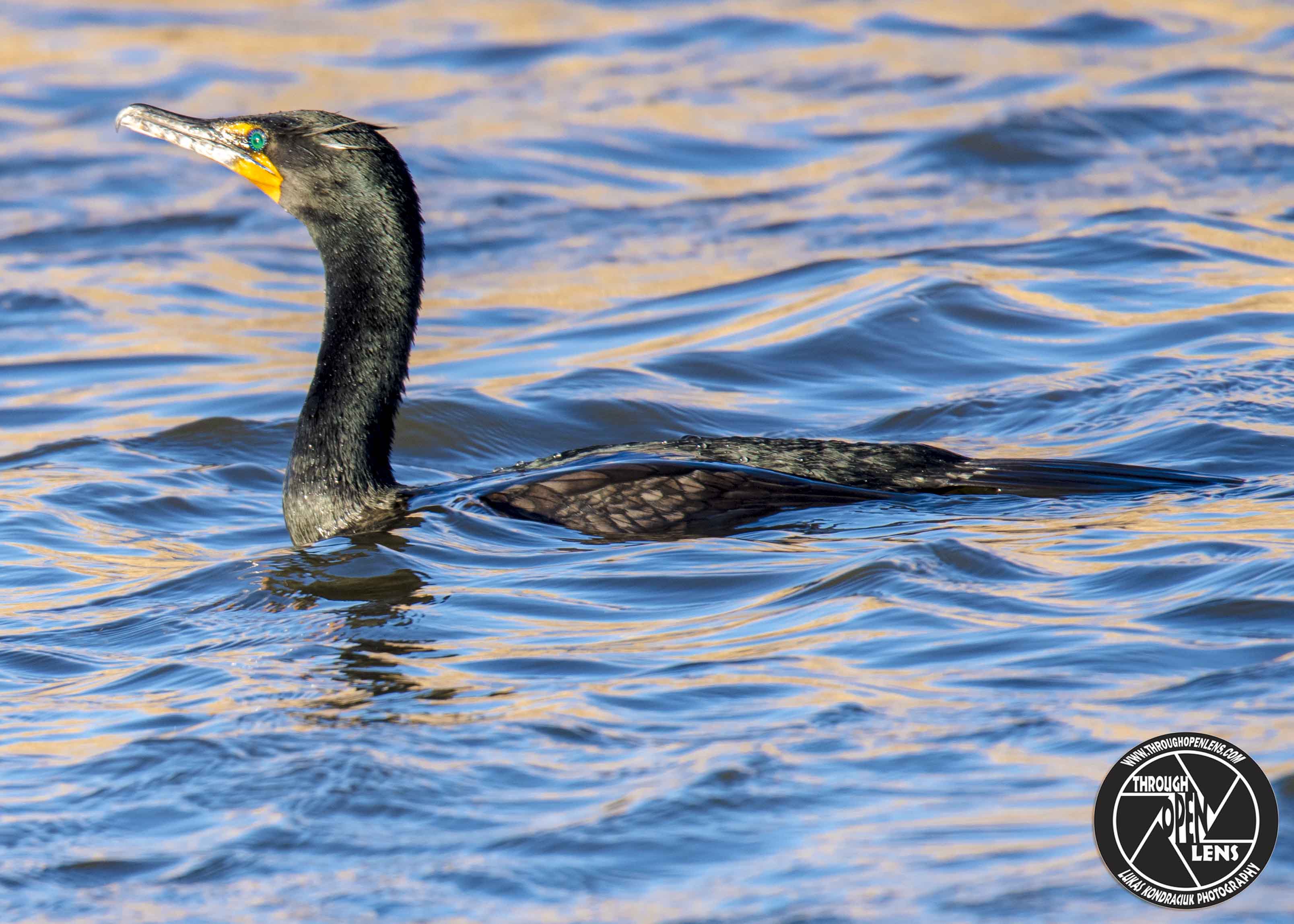
F/9.0, 1/320, ISO 320.

Double-crested Cormorant 

What did one toilet say to the other toilet?

You look a bit flushed.

Interesting Fact: Double-crested Cormorant nests often are exposed to direct sun. Adults shade the chicks and also bring them water, pouring it from their mouths into those of the chicks. ( https://www.allaboutbirds.org/guide/Double-crested_Cormorant )

Don’t Look Back You’re Not Going That Way

F/5.6, 1/500, ISO 220.

Least Sandpiper

Browsing in a pet shop, a man sees a beautiful parrot with a red
string tied to its left leg and a green string tied to its right
leg, and asks the store owner about the different colored strings.
“This is a highly-trained parrot,” the owner explains. “If you
pull the red string, he’ll speak French.  If you pull the green
string, he’ll speak Spanish.”
The customer asks, “What happens if I pull both strings?”
“I’ll fall off my perch, dummy!” screeches the parrot.

Interesting Fact: Eastern populations probably fly nonstop over the ocean from the Gulf of St. Lawrence and New England to wintering grounds in northeastern South America, a distance of about 1,800 to 2,500 miles. ( https://www.allaboutbirds.org/guide/Least_Sandpiper/lifehistory )


Sleeping Beauty.

F/6.3, 1/160, ISO 200.

Common Snapping Turtle

What do you get when you mix an elephant with a rhino?

Elephino!!!

Joke complementary of: robinwrites

F/5.6, 1/125, ISO 200.

F/5.6, 1/500, ISO 400.

Interesting Fact: Snapping turtles ambush their prey from the bottom of the water. Fish mistake their tongue for warms and viola dinner is served. yum

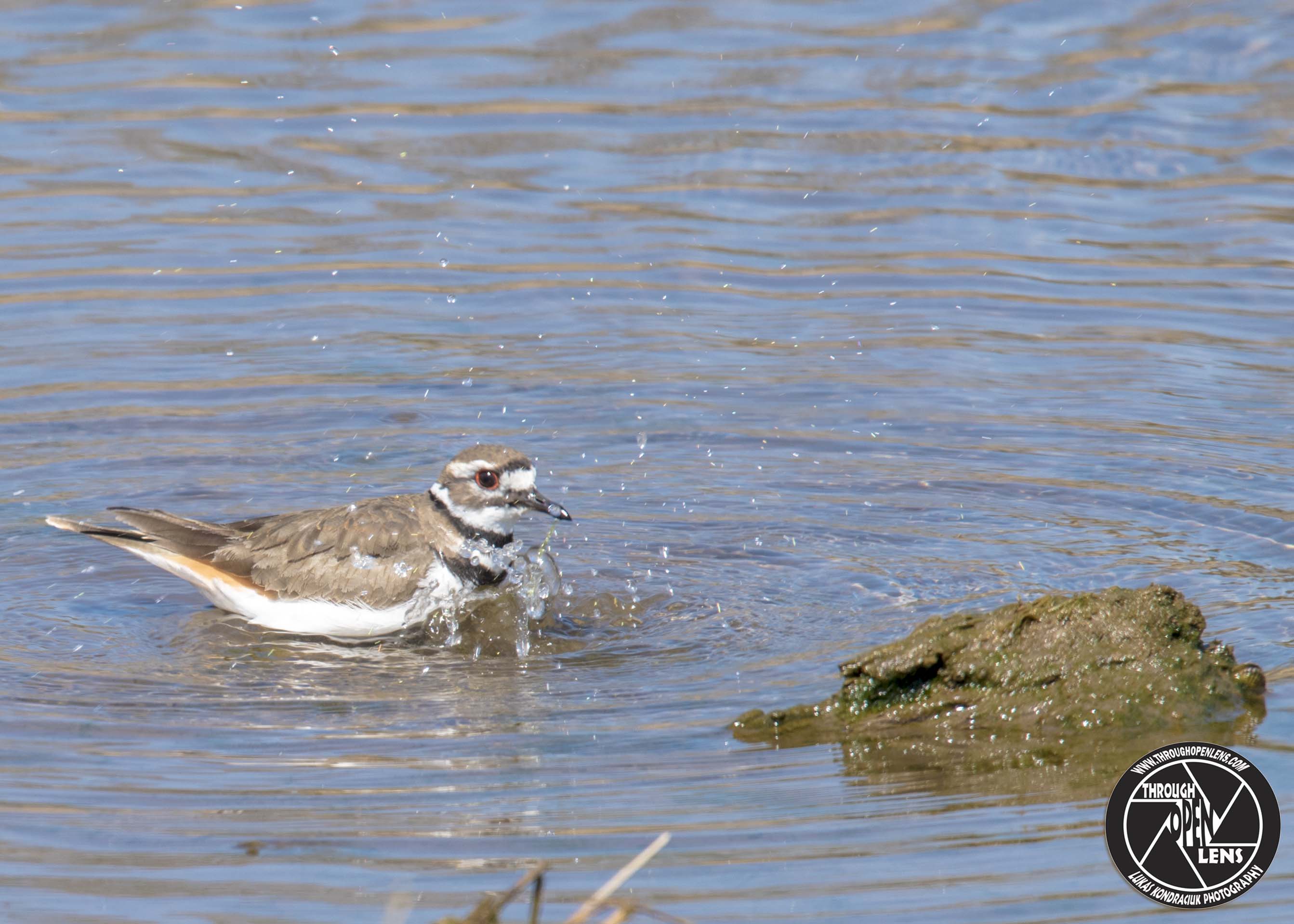
Make A Splash!

F/9.0, 1/320, ISO 200.

Killdeer

How does a man take a bubble bath?

He eats beans for dinner.

Interesting Fact: Often seen in dry, flat landscapes, running and halting on the ground in search of insects and earthworms. Although the Killdeer is common around human habitation it is often shy, at first running away rather than flying. ( https://www.allaboutbirds.org/guide/Killdeer/lifehistory )

Hey, these are my nuts!

F/5.6, 1/160, ISO 800.

Eastern Chipmunk

Why did the skeleton burp?

Because it didn’t have the guts to fart.

Interesting Fact: A chipmunk’s cheeks can expand to three times the size of its head and they have pouches in their cheeks where they hold their food until they get back to store it in their burrows ( http://www.pets4homes.co.uk/pet-advice/fun-interesting-facts-about-chipmunks.html )


DON’T PANIC!

F/5.6, 1/500, ISO 360.

Canada Goose 

A man goes to his doctor because he’s been feeling very ill for days. The doctor gives him several sets of pills.

The doctor instructs; “Take the green pill with two big glasses of water when you get up. An hour later, take the white pill with another glass of water. Take the blue pill with a big glass of water after lunch. Mid afternoon, take the orange pill with plenty of water, and repeat that at dinner. Then, just before going to bed, take the red pill with several big glasses of water.”

The man is alarmed at huge volume of medicine he has been given to take, and nervously asks, “What’s the diagnosis? What’s wrong with me?”

The doctor says, “You’re dehydrated.”

Interesting Fact: The “giant” Canada Goose, Branta canadensis maxima, bred from central Manitoba to Kentucky but was nearly driven extinct in the early 1900s. Programs to reestablish the subspecies to its original range were in many places so successful that the geese have become a nuisance in many urban and suburban areas.  ( https://www.allaboutbirds.org/guide/Canada_Goose/lifehistory )

Peck Me If You Can!

F/9.0, 1/1250, ISO 800.

Red-Bellied Woodpecker

Why did the owl, owl?

Because the woodpecker would peck ‘er!

Interesting Fact: A Red-bellied Woodpecker can stick out its tongue nearly 2 inches past the end of its beak. The tip is barbed and the bird’s spit is sticky, making it easier to snatch prey from deep crevices. Males have longer, wider-tipped tongues than females, possibly allowing a breeding pair to forage in slightly different places on their territory and maximize their use of available food. ( https://www.allaboutbirds.org/guide/Red-bellied_Woodpecker/lifehistory )


Double Check!

F/5.6, 1/1600, ISO 400.

Mute Swan

What did the digital clock say to his mother?

Look ma, no hands!

Interesting Fact: All of the Mute Swans in North America descended from swans imported from Europe from the mid 1800s through early 1900s to adorn large estates, city parks, and zoos. Escapees established breeding populations and are now established in the Northeast, Midatlantic, Great Lakes, and Pacific Northwest of the U.S. ( https://www.allaboutbirds.org/guide/Mute_Swan )

Be Your Self Everyone Else Is Already Taken!

F/6.3, 1/400, ISO 1600.

Hooded Merganser ( Male )

Did you hear that all the toilets at the police station were stolen?

Yeah… the cops got nothing to go on.

Interesting Fact: Hooded Merganser ducklings leave their nest cavity within 24 hours of hatching. First, their mother checks the area around the nest and calls to the nestlings from ground level. From inside the nest, the little fluffballs scramble up to the entrance hole and then flutter to the ground, which may be 50 feet or more below them. In some cases they have to walk half a mile or more with their mother to the nearest body of water. ( https://www.allaboutbirds.org/guide/Hooded_Merganser )

I Am Coming For You!

F/11.0, 1/500, ISO 400.

Ruddy Duck ( Juvenile ) 

Why are elephants such poor dancers?

Because they have two left feet.

Interesting Fact: Ruddy Ducks get harassed by Horned Grebes, Pied-billed Grebes, and American Coots during the breeding season. The grebes sometimes attack Ruddy Ducks from below the water, a behavior known as “submarining.” ( https://www.allaboutbirds.org/guide/Ruddy_Duck )