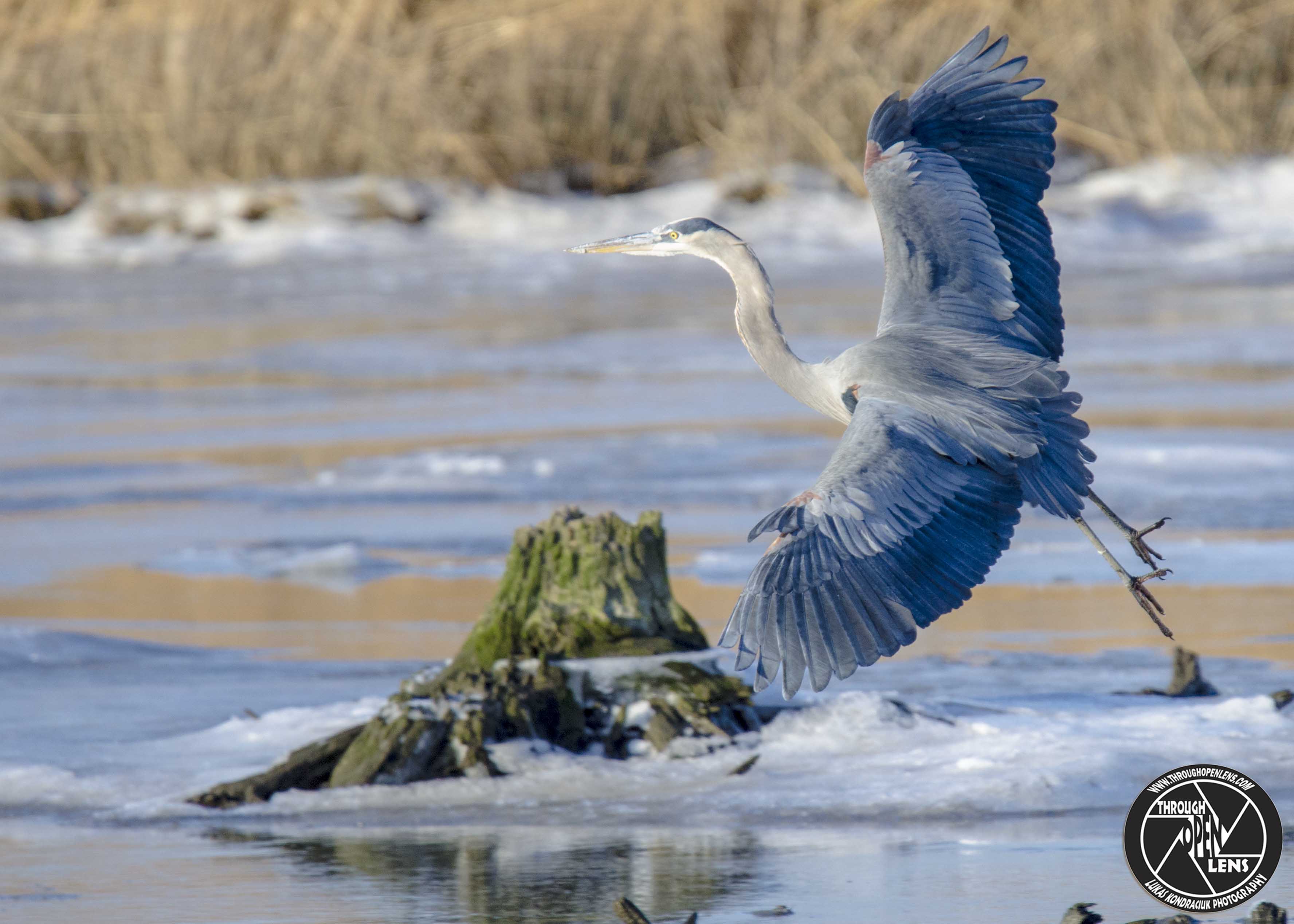
I Spread My Wings And I Fly!

F/6.3, 1/1000, ISO 640.

Great Blue Heron 

Why did the student wear eye-glasses in math class?

It improved DiVision !

Interesting Fact:  In flight the Great Blue Heron folds it neck into an “S” shape and trails its long legs behind, dangling them as it prepares to land or when courting. ( https://www.allaboutbirds.org/guide/Great_Blue_Heron/lifehistory )

Nooo, Go Away You Are Bothering Me!

Tree Swallow

F/5,6, 1/400, ISO 125.

Tree Swallow

How do you make a water bed more bouncy?

Use spring water.

Interesting Fact: The Tree Swallow—which is most often seen in open, treeless areas—gets its name from its habit of nesting in tree cavities. They also take readily to nest boxes.  ( http://www.allaboutbirds.org/guide/tree_swallow/lifehistory )

Into The Woods We Go!

F/6.3, 1/13, ISO 1600.

Groundhog (Woodchuck )

What’s the Great White Sharks favorite candy?

The Jaw-Breaker!

Interesting Fact: Groundhogs prepare for hibernation by putting on weight.  Then they live off the stored fat until they come out of hibernation. ( https://www.kidsplayandcreate.com/fun-groundhog-facts-and-groundhog-day-facts-for-kids/ ) 

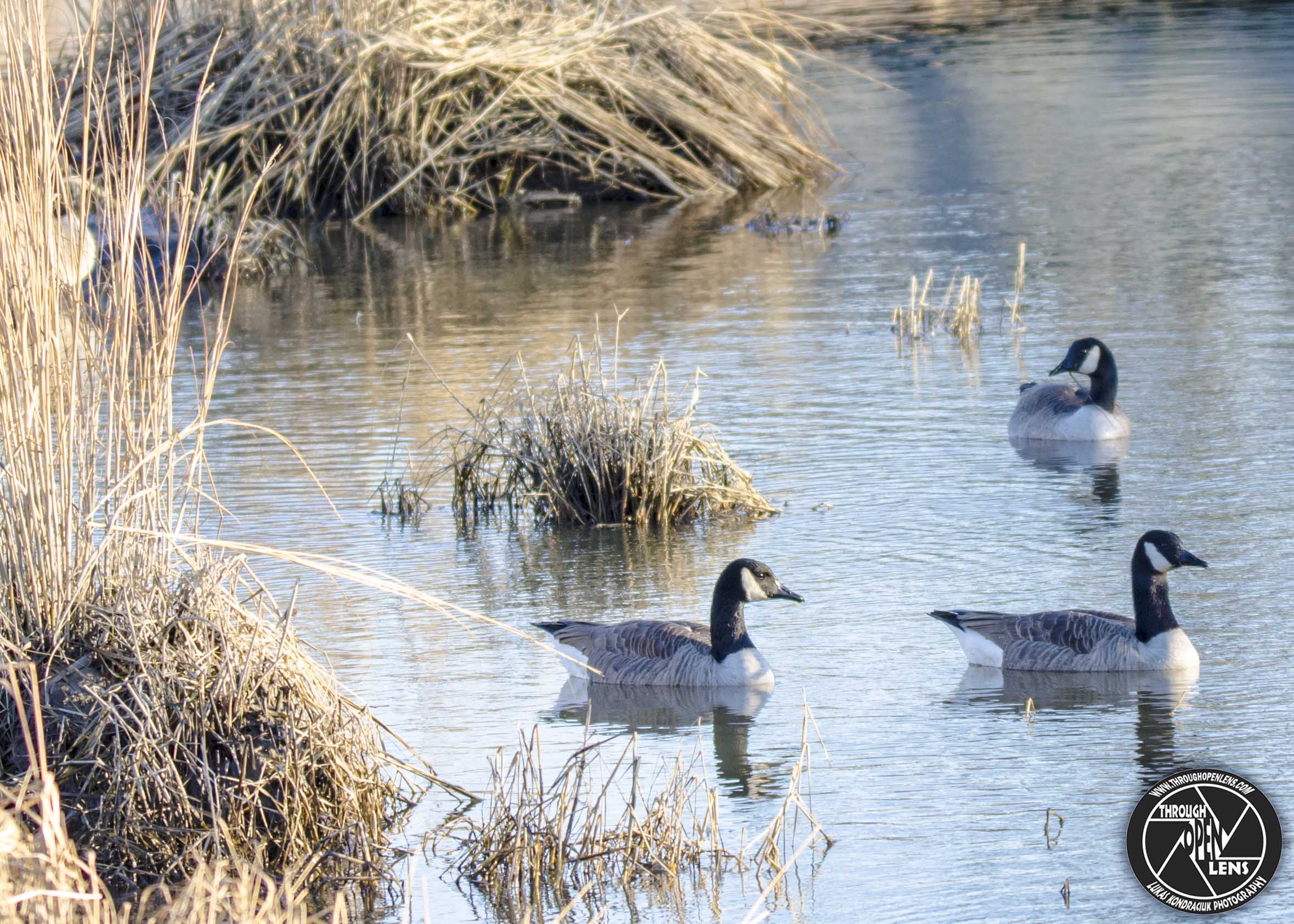
I Trying To Get My Duck In The Row But I Got Geese Instead!

F/7.1, 1/200, ISO 250.

Canada Goose and Goslings

What did the triangle say to the circle?

Your pointless!

Interesting Fact:  In spring and summer, geese concentrate their feeding on grasses and sedges, including skunk cabbage leaves and eelgrass. During fall and winter, they rely more on berries and seeds, including agricultural grains, and seem especially fond of blueberries. They’re very efficient at removing kernels from dry corn cobs. Two subspecies have adapted to urban environments and graze on domesticated grasses year round. ( https://www.allaboutbirds.org/guide/Canada_Goose/lifehistory )

Don’t Just Stand There, Summer Is Here!

F/5.6, 1/500, ISO 200.

Greater Yellowlegs

What did the pig say on a hot summer day?

I’m bacon!

Interesting Fact:  Greater Yellowlegs eats small aquatic and terrestrial invertebrates, small fish, frogs, and occasionally seeds and berries. ( https://www.allaboutbirds.org/guide/Greater_Yellowlegs/lifehistory )


Laugh And The World Laughs With You, Cackle Maniacally And People Back Away From You Slowly

cackling-goose

F/5.0, 1/400, ISO 400.

Cackling Goose

What did the 30 degree angle say to the 90 degree angle?

“You think you’re always right!”

Interesting Fact: The Cackling Goose was long considered just a small race of the Canada Goose. The smallest four of the eleven recognized races were recently determined to be distinct enough to be their own species. Cackling Goose includes the races known as Taverner’s, Richardson’s, Aleutian, and Cackling geese. Confusingly, the “Lesser Canada Goose” is still a race of the Canada Goose. ( https://www.allaboutbirds.org/guide/Cackling_Goose/lifehistory )

When You Are With The Right Person, Every Day Is Valentine’s Day!

Happy Valentine’s Day!

mallard-love

F/9.0, 1/320, ISO 100.

Mallard

Girl: “I can’t be your valentine for medical reasons.”

Boy: “Really?”

Girl: “Yeah, you make me sick!”

Interesting Fact: Numerous early Christian martyrs were named Valentine.[11] The Valentines honored on February 14 are Valentine of Rome (Valentinus presb. m. Romae) and Valentine of Terni (Valentinus ep. Interamnensis m. Romae).[12] Valentine of Rome was a priest in Rome who was martyred in 269 and was added to the calendar of saints by Pope Galesius in 496 and was buried on the Via Flaminia. The relics of Saint Valentine were kept in the Church and Catacombs of San Valentino in Rome, which “remained an important pilgrim site throughout the Middle Ages until the relics of St. Valentine were transferred to the church of Santa Prassede during the pontificate of Nicholas IV“.[13][14] The flower-crowned skull of Saint Valentine is exhibited in the Basilica of Santa Maria in Cosmedin, Rome. Other relics are found at Whitefriar Street Carmelite Church in Dublin, Ireland. ( https://en.wikipedia.org/wiki/Valentine%27s_Day#History )

I Get Knocked Down But I Get Up Again You Are Never Gonna Keep Me Down

mallard-duck

F/7.1, 1/200, ISO 250.

Mallard Duck

What did the duck say when he bought lipstick?

“Put it on my bill.”

Interesting Fact: Ducks are strong fliers; migrating flocks of Mallards have been estimated traveling at 55 miles per hour. ( https://www.allaboutbirds.org/guide/Mallard/lifehistory )

Never Hide Your Wings!

Butterfly 1

F/ 5.6, 1/320, ISO 400.

Butterfly

My friend thinks he is smart.

He told me an onion is the only food that makes you cry, so I threw a coconut at his face.

Interesting Fact: Butterflies can eat anything that can dissolve in water. They mostly feed on nectar from flowers but also eat tree sap, dung, pollen, or rotting fruit. They are attracted to sodium found in salt and sweat. This is why they sometimes even land on people in Butterfly Parks. Sodium as well as many other minerals is vital for the butterflies reproduction. ( http://www.whatdobutterflieseat.info/ )


Reflection On This

Great Blue Heron 4

F/6.3, 1/100, ISO 320.

Great Blue Heron

How do you prevent a Summer cold?

Catch it in the Winter!

Interesting Fact: The white form of the Great Blue Heron, known as the “great white heron,” is found nearly exclusively in shallow marine waters along the coast of very southern Florida, the Yucatan Peninsula, and in the Caribbean. Where the dark and white forms overlap in Florida, intermediate birds known as “Wurdemann’s herons” can be found. They have the body of a Great Blue Heron, but the white head and neck of the great white heron. (  https://www.allaboutbirds.org/guide/Great_Blue_Heron/lifehistory )