Keep Calm And Hop On!

F/8.0, 1/250, ISO 250.

Desert Cottontail Rabbit

What do rabbits say before they eat?

Lettuce pray.

Interesting Fact: Due to the variable temperature of living conditions, desert cottontails must be adequate thermoregulators to minimize water loss during the hotter seasons and require shaded areas of their environment to conduct evaporative water loss through thermal heat transfer. In open-desert areas, they can withstand for a short period with extremely high temperatures of around 45 °C and have a large evaporative water loss capacity of around 1.5% body mass/hour, though cottontails can withstand longer in an ideal environment with shaded areas. To cope with evaporative heat loss, they do panting and undergo changes in production of their basal metabolic rate in relation to the ambient temperature of the environment. Ears of desert cottontails make up 14% of their body size and may help with thermoregulation. ( https://en.wikipedia.org/wiki/Desert_cottontail )

Sing… The World Needs More Music!

F/8.0, 1/250, ISO 320.

Yellow Warbler Immature (Northern)

How do you make an egg laugh?

Tell it a yolk.

Interesting Fact: In addition to the migratory form of the Yellow Warbler that breeds in North America, several other resident forms can be found in Mexico, Central America, and the Caribbean. Males in these populations can have chestnut caps or even chestnut covering the entire head. ( https://www.allaboutbirds.org/guide/Yellow_Warbler/overview )

Headbanger!

F/6.3, 1/100, ISO 320.

Pileated Woodpecker

Two men visit a prostitute.

The first man goes into the bedroom. He comes out ten minutes later and says, “Heck. My wife is better than that.”

The second man goes in. He comes out ten minutes later and says, “You know? Your wife IS better.”

Interesting Fact: The Pileated Woodpecker prefers large trees for nesting. In young forests, it will use any large trees remaining from before the forest was cut. Because these trees are larger than the rest of the forest, they present a lightning hazard to the nesting birds. ( https://www.allaboutbirds.org/guide/Pileated_Woodpecker  )

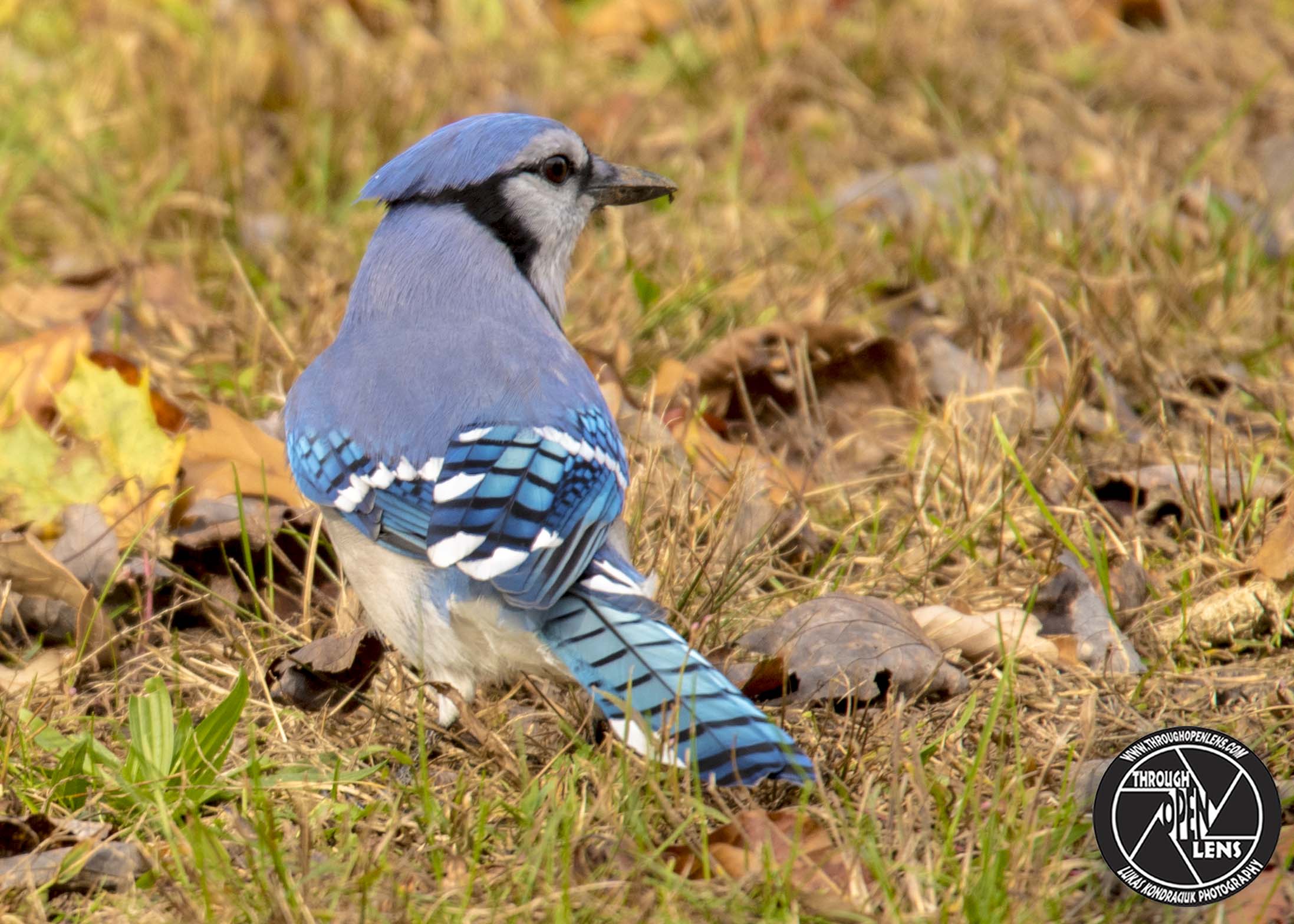
Bluetiful!

F/8.0, 1/250, ISO 400.

Blue Jay

Where do cows go for entertainment?

The mooooo-vies!

Interesting Fact:  The Blue Jay frequently mimics the calls of hawks, especially the Red-shouldered Hawk. These calls may provide information to other jays that a hawk is around, or may be used to deceive other species into believing a hawk is present. (  https://www.allaboutbirds.org/guide/Blue_Jay/lifehistory )

Do You Think I Give A Quack!

F/10.0, 1/400, ISO 160.

Wood Duck

Why couldn’t the leopard play hide and seek?

Because he was always spotted.

Interesting Fact: Natural cavities for nesting are scarce, and the Wood Duck readily uses nest boxes provided for it. If nest boxes are placed too close together, many females lay eggs in the nests of other females. ( https://www.allaboutbirds.org/guide/Wood_Duck )

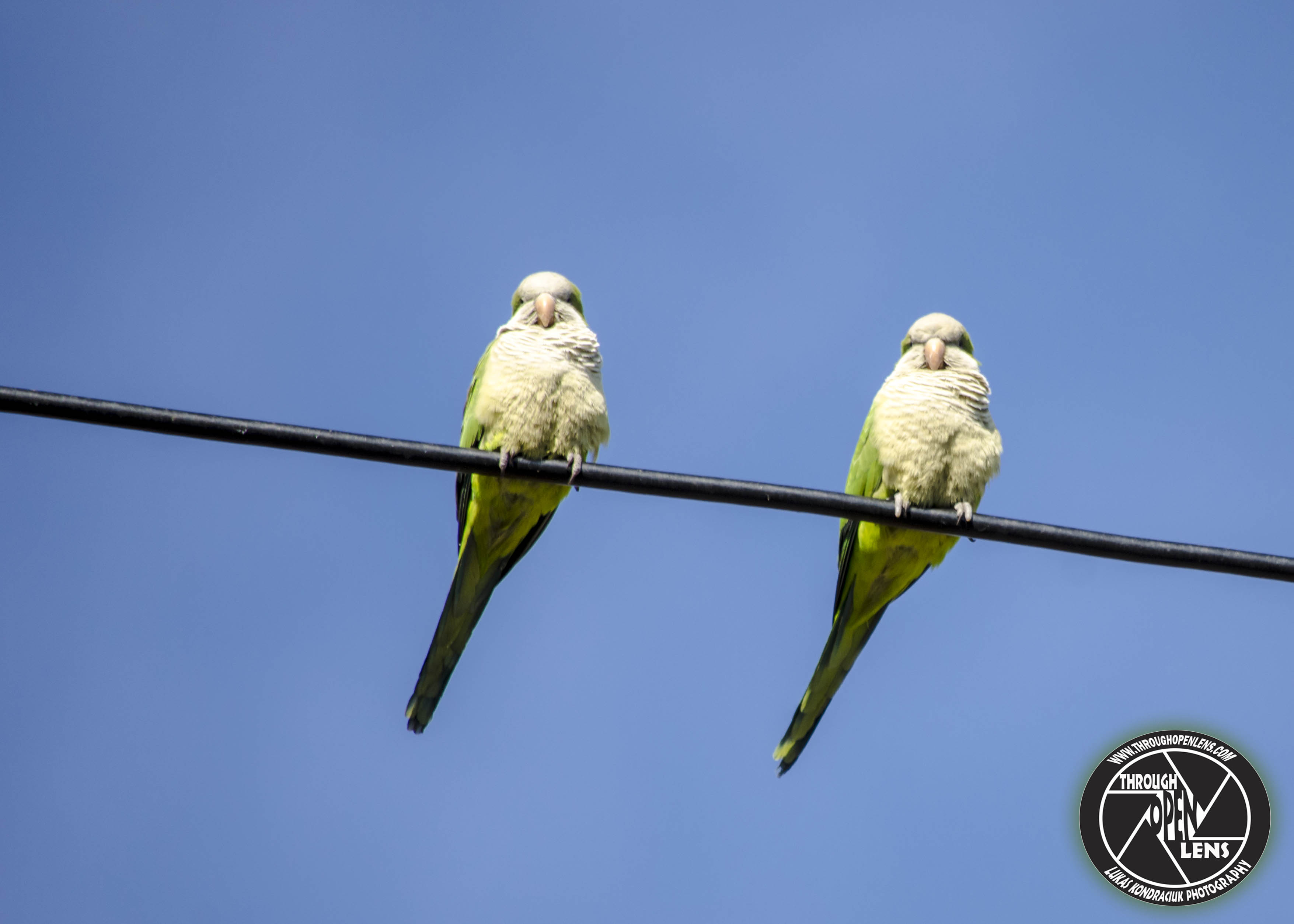
“So What’s So Great About Being OnLine?! “

monk-parakeets-online

F/6.3, 1/640, ISO 200.

Monk Parakeets

What is a parrot’s favorite game?

Hide and Speak!

Interesting Fact: In their native Argentina, Monk Parakeets sometimes adopt old nests of other species. Some ornithologists have suggested that this behavior may have been the first step, evolutionarily speaking, to transitioning from nesting in tree cavities to constructing stick nests. ( https://www.allaboutbirds.org/guide/Monk_Parakeet/lifehistory )

The Hardest Thing In Life Is To Know Whitch Bridge To Cross And Which To Burn.

F/13.0, 1/640, ISO 320.

Golden Gate Bridge

Just watched a documentary about beavers… It was the best damn program I’ve ever seen.

Interesting Fact:Many wanted to build a bridge to connect San Francisco to Marin County. San Francisco was the largest American city still served primarily by ferry boats. Because it did not have a permanent link with communities around the bay, the city’s growth rate was below the national average.[14] Many experts said that a bridge could not be built across the 6,700 ft (2,042 m) strait, which had strong, swirling tides and currents, with water 372 ft (113 m) deep[15] at the center of the channel, and frequent strong winds. Experts said that ferocious winds and blinding fogs would prevent construction and operation. ( https://en.wikipedia.org/wiki/Golden_Gate_Bridge#Ferry_service )

Swim Your Worries Away!

F/10.0, 1/400, ISO 400.

Northern Shoveler 

A jumper cable walks into a bar.

The bartender says, “I’ll serve you, but don’t start anything.”

Interesting Fact: Northern Shovelers don’t just occur in the Americas, they also breed across Europe and spend the winter throughout Europe, Africa, and India. ( https://www.allaboutbirds.org/guide/Northern_Shoveler )

Build A Bridge And Get Over It!

F/25.0, 73.0, ISO 250.

Golden Gate Bridge

Why did a boy build a bridge across the river?

So he could have shade when he swam across.

Interesting Fact: The Golden Gate Bridge is a suspension bridge spanning the Golden Gate, the one-mile-wide (1.6 km) strait connecting San Francisco Bay and the Pacific Ocean. The structure links the American city of San Francisco, California – the northern tip of the San Francisco Peninsula – to Marin County, carrying both U.S. Route 101 and California State Route 1 across the strait. The bridge is one of the most internationally recognized symbols of San Francisco, California, and the United States. It has been declared one of the Wonders of the Modern World by the American Society of Civil Engineers. ( https://en.wikipedia.org/wiki/Golden_Gate_Bridge

Just Give Me The Lights!

F/22.0, 66.0, ISO200.

East River, Manhattan, Brooklyn Bridge.

What did daddy spider say to baby spider?

You spend too much time on the web.

Interesting Fact:  The area that is now Manhattan was long inhabited by the LenapeNative Americans. In 1524, Florentine explorer Giovanni da Verrazzano – sailing in service of King Francis I of France – became the first documented European to visit the area that would become New York City. He entered the tidal strait now known as The Narrows and named the land around Upper New York HarborNew Angoulême, in reference to the family name of King Francis I that was derived from Angoulême in France; he sailed far enough into the harbor to sight the Hudson River, which he referred to in his report to the French king as a “very big river”; and he named the Bay of Santa Margarita – what is now Upper New York Bay – after Marguerite de Navarre, the elder sister of the king. ( https://en.wikipedia.org/wiki/Manhattan )