Dont Be Afraid to Stick Your Neck Out!

F/9.0, 1/320, ISO 320.

Ring-necked Duck

Why is it hard for a ghost to tell a lie?

Because you can see right through him.

Interesting Fact:  Ring-necked Ducks feed by diving underwater, rather than by tipping up as “dabbling” ducks do. When diving, they leap forward in an arc to plunge underwater, and they swim using only their feet for propulsion. ( https://www.allaboutbirds.org/guide/Ring-necked_Duck/lifehistory )

Kinda Classy Kinda Hood

F/6.3, 1/500, ISO 220.

Hooded Merganser ( Female )

When is a door sweet and tasty?

When it’s jammed!

Interesting Fact: Unlike dabbling ducks, Hooded Mergansers swim low in the water. Their legs are far back on their bodies, which helps in diving but makes them awkward on land. They take flight by running across the water, flying with fast wingbeats and never gliding until they are about to land (by skidding to a stop on the water). ( https://www.allaboutbirds.org/guide/Hooded_Merganser/lifehistory )


I Give High A New Meaning!

F/13.0, 1/640, ISO 320.

Northern Harrier

What did the eggs say when the cops showed up?

Everybody scramble!

Interesting Fact: Northern Harriers hunt mostly small mammals and small birds, but they are capable of taking bigger prey like rabbits and ducks. They sometimes subdue larger animals by drowning them. ( https://www.allaboutbirds.org/guide/Northern_Harrier )

And Since I Have No Place To Go Let It Snow, Let It Snow, Let It Snow.

F/7.1, 1/200, ISO 320.

Northern Cardinal Female

Why did the baseball coach throw Cinderella off the team?

Because she ran away from the ball.

Interesting Fact: A week or two before the female starts building, she starts to visit possible nest sites with the male following along. The pair call back and forth and hold nesting material in their bills as they assess each site. Nests tend to be wedged into a fork of small branches in a sapling, shrub, or vine tangle, 1-15 feet high and hidden in dense foliage. ( https://www.allaboutbirds.org/guide/Northern_Cardinal/lifehistory )


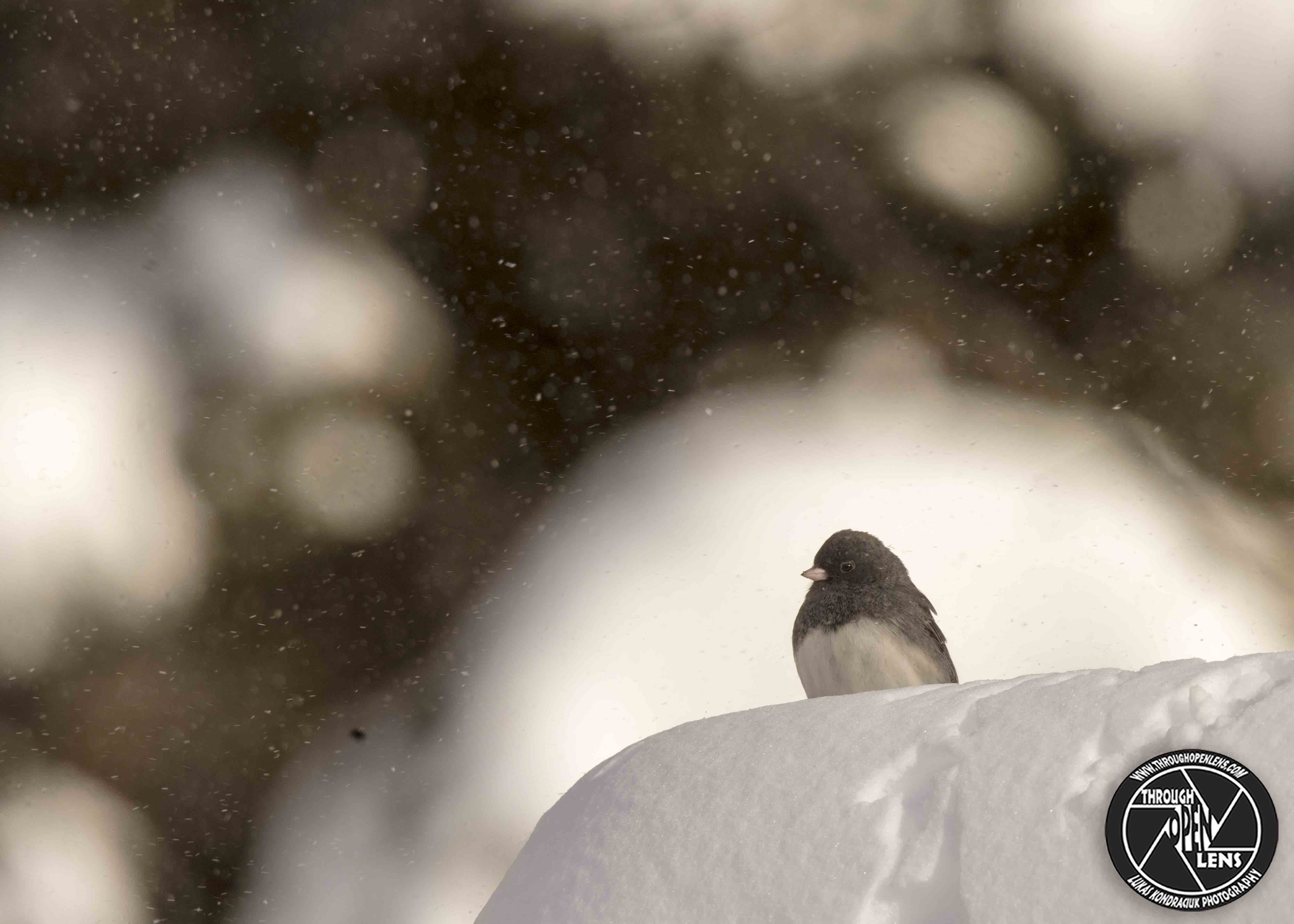
Let It Snow!

F/10.0, 1/800, ISO 250.

Dark-eyed Junco

What do you call an old snowman?

Water!

Interesting Fact: The oldest recorded Dark-eyed Junco was at least 11 years, 4 months old when it was recaptured and rereleased during banding operations in West Virginia in 2001. It had been banded in the same state in 1991. ( https://www.allaboutbirds.org/guide/Dark-eyed_Junco/lifehistory )

A Bird Does Not Sing Becauces It Has An Answer. It Sings Because It Has A Song.

F/6.3, 1/100, ISO 320.

Tufted Titmouse

What is the snowman’s breakfast?…

Frosted flakes!

Interesting Fact: The Black-crested Titmouse of Texas and Mexico has at times been considered just a form of the Tufted Titmouse. The two species hybridize where they meet, but the hybrid zone is narrow and stable over time. They differ slightly in the quality of their calls, and show genetic differences as well. ( https://www.allaboutbirds.org/guide/Tufted_Titmouse/lifehistory )

Is Your Tail Up For A Reason Or You Just Happy To See Me?!

F/9.0, 1/320, ISO 250.

Ruddy Duck

Why are Christmas trees so bad at sewing?

They always drop their needles!

Interesting Fact:  Unlike most ducks, they form pairs only after arriving on the breeding grounds each year. Males perform unusual courtship displays in which they stick their tails straight up while striking their bills against their inflated necks, creating bubbles in the water as air is forced from their feathers. They punctuate the end of the display with a belch-like call. Courting males also lower their tails and run across the water, making popping sounds with their feet. ( https://www.allaboutbirds.org/guide/Ruddy_Duck/lifehistory )

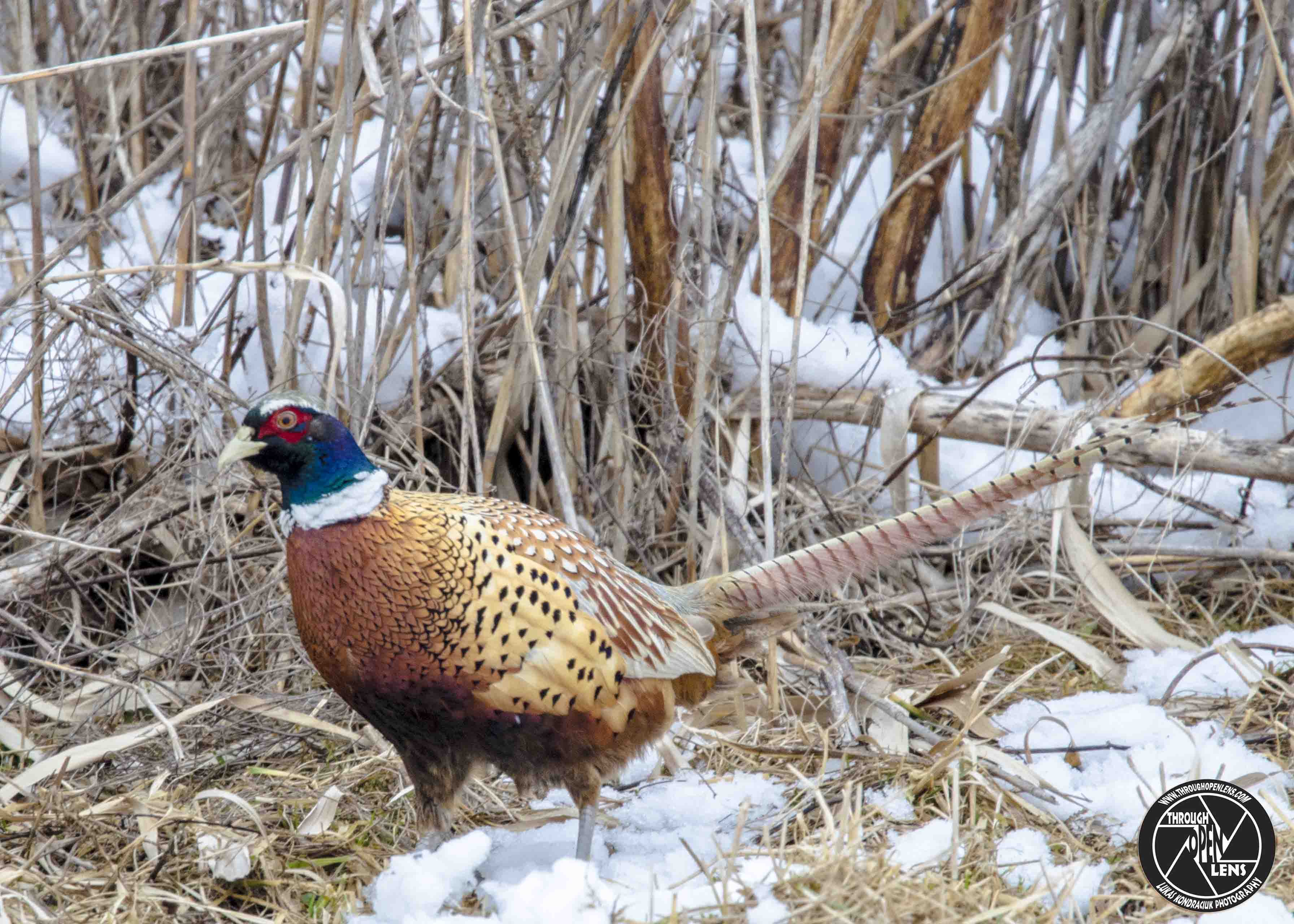
You Are Full Of It!

F/6.3, 1/250, ISO 1600.

Ring-Necked Pheasant

How do snowmen get around?

They ride an icicle!

Interesting Fact: Male Ring-necked Pheasants may harass other ground-nesting birds, such as the Gray Partridge and the Greater Prairie-Chicken. Female pheasants sometimes lay their own eggs in these birds’ nests. This may explain why some male pheasants have been seen chasing away male prairie-chickens and courting females—the pheasants may have been raised in prairie-chicken nests and imprinted on the wrong species. ( https://www.allaboutbirds.org/guide/Ring-necked_Pheasant# )

May All Your Troubles Soon Be Gone. Oh, Christmas Lights Keep Shining On.

F/22.0, 87.0, ISO 125.

Jersey City Downtown

What did the stamp say to the Christmas card?

Stick with me and we’ll go places!

Interesting Fact: The first known electrically illuminated Christmas tree was the creation of Edward H. Johnson, an associate of inventor Thomas Edison. While he was vice president of the Edison Electric Light Company, a predecessor of today’s Con Edison electric utility, he had Christmas tree light bulbs especially made for him. He proudly displayed his Christmas tree, which was hand-wired with 80 red, white and blue electric incandescent light bulbs the size of walnuts, on December 22, 1882 at his home on Fifth Avenue in New York City. Local newspapers ignored the story, seeing it as a publicity stunt. However, it was published by a Detroit newspaper reporter, and Johnson has become widely regarded as the Father of Electric Christmas Tree Lights. By 1900, businesses started stringing up Christmas lights behind their windows.[14] Christmas lights were too expensive for the average person; as such, electric Christmas lights did not become the majority replacement for candles until 1930. ( https://en.wikipedia.org/wiki/Christmas_lights#History )


Why The Long Face?

F/6.3, 1/160, ISO 200.

Common Eider 

What did one toilet say to the other toilet?

You look a bit flushed.

Interesting Facts: This species dives for crustaceans and molluscs, with mussels being a favoured food. The eider will eat mussels by swallowing them whole; the shells are then crushed in their gizzard and excreted. When eating a crab, the eider will remove all of its claws and legs, and then eat the body in a similar fashion. ( https://en.wikipedia.org/wiki/Common_eider )