That Moment That You Realize It Wasn’t A Fart!

F/6.3, 1/125, ISO 400.

White-cheeked pintail

When is a door sweet and tasty?

When its jammed!

Interesting Fact: The white-cheeked pintail feeds on aquatic plants and small creatures obtained by dabbling. The nest is on the ground under vegetation and near water. ( https://en.wikipedia.org/wiki/White-cheeked_pintail )

Everything In Your Life Is Reflection Of A Choice You Have Made, If You Want A Difrent Result, Make A Different Choice.

F/10.0, 1/400, ISO 320, Photoshop CS6.

Mute Swan

A pirate was on his ship and his watchman comes to him and says, “1 enemy ship on the horizont.”

The captain says, “Bring me my red shirt, no men get injured or die.”

So the watchman comes to him and asks, “Why did you want your red shirt?”

The captain says, “Because if i get injured they won’t see and keep on fighting.”

So the watchman comes to him again and says, “20 enemy ships on the horizont.”

The captain says, “Bring me my brown pants.”

Interesting Fact:  Mute Swans can adapt to degraded habitat and actually benefit from the spread of the invasive common reed Phragmites australis, which flourishes in disturbed sites. As the reeds spread into lakes and ponds, the swans can build nests farther offshore in the reed beds, where they’re safer from egg predators. ( https://www.allaboutbirds.org/guide/Mute_Swan/lifehistory )

Keep Calm And Quack On!

F/9.0, 1/320, ISO 200.

Red-breasted Merganser  

A motorist in a B.M.W. was driving through the countryside on a beautiful Saturday afternoon, having a lovely time, when he came to an area of the road that was covered with a rather large puddle of water from a previous rain storm. Worried that he was going to damage the car and its engine in the deep water, he spotted a nearby farmer and asked how deep the water was. “Arr”, said the local farmer “That water only be a few inches deep!” Relieved, the motorist edged his car into the water, expecting to come out the other side in no time. Instead, as he drove in, the water came right up the side of the car, and the engine sputtered to a halt. Sitting there in his soaking wet luxury car, the motorist yelled at the local angrily: “I thought you said this water was only a few inches deep!!!” “Well,” replied the local farmer “It only come up to the waist of them there ducks!”

Interesting Fact: It prefers salt water more than the other two species of merganser. ( http://identify.whatbird.com/obj/115/overview/Red-breasted_Merganser.aspx )

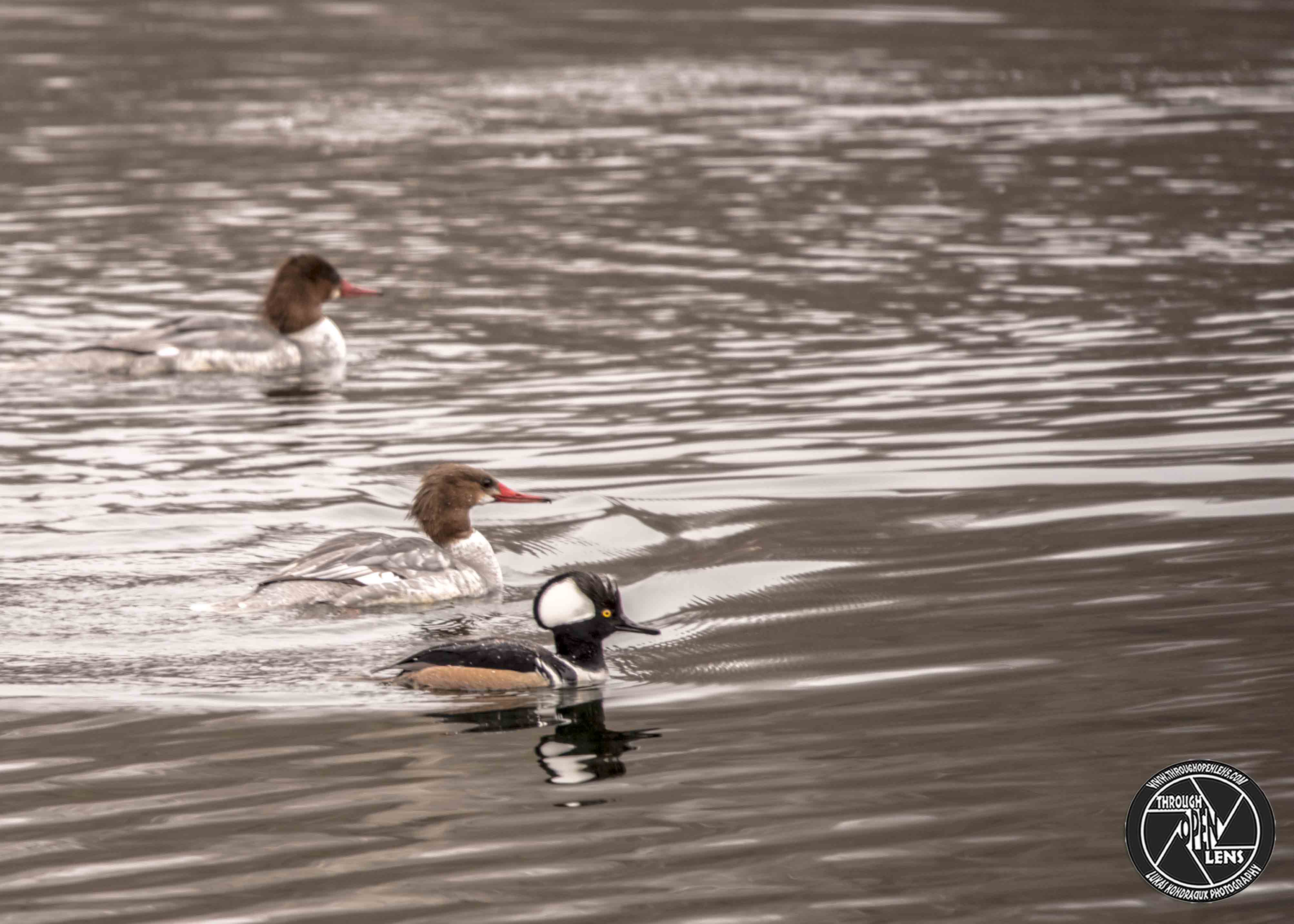
And The Race Is On!

F/6.3, 1/100 ISO 400.

Hooded Merganser

Common Merganser ( Females )

What is the color of the wind?

Blew.

Interesting Fact: The female chooses the nest site, and may start scouting for next year’s tree cavity at the end of each breeding season. Nest cavities can be in live or dead trees and are usually close to water. Cavities are typically 10–50 feet off the ground, up to about 90 feet. Hooded Mergansers nest readily in boxes, preferring those with wood shavings or nest material from previous uses. They prefer cavities with 3–5 inch openings. ( https://www.allaboutbirds.org/guide/Hooded_Merganser/lifehistory )

Where Does The Itch Goes After You Scratch It?

canada-goose-itch

F/6.3, 1/640, ISO 200.

Canada Goose

What do you call a pig that does karate?

A pork chop.

Interesting Fact: Some migratory populations of the Canada Goose are not going as far south in the winter as they used to. This northward range shift has been attributed to changes in farm practices that makes waste grain more available in fall and winter, as well as changes in hunting pressure and changes in weather. ( https://www.allaboutbirds.org/guide/Canada_Goose/lifehistory )

My Spirit Animals Is Grey Goose!

F/5.6, 1/800, ISO 160.

Greylag goose

How do you make an egg-roll?

You push it!!!

Interesting Fact: Young greylags stay with their parents as a family group, migrating with them in a larger flock, and only dispersing when the adults drive them away from their newly established breeding territory the following year.[18] At least in Europe, patterns of migration are well understood and follow traditional routes with known staging sites and wintering sites. The young learn these locations from their parents which normally stay together for life. ( https://en.wikipedia.org/wiki/Greylag_goose#Behaviour )

You Give Me Goosebumps!

F/6.3, 1/640, ISO 160.

Greylag goose

What concert costs 45 cents?

50 Cent featuring Nickleback.

Interesting Fact: Greylag geese are gregarious birds and form flocks. This has the advantage for the birds that the vigilance of some individuals in the group allows the rest to feed without having to constantly be alert to the approach of predators. After the eggs hatch, some grouping of families occur, enabling the geese to defend their young by their joint actions, such as mobbing or attacking predators.[17] After driving off a predator, a gander will return to its mate and give a “triumph call”, a resonant honk followed by a low-pitched cackle, uttered with neck extended forward parallel with the ground. The mate and even unfledged young reciprocate in kind. ( https://en.wikipedia.org/wiki/Greylag_goose#Behaviour   )

When you are with the right person, every day is Valentine’s Day!

Happy Valentines Day

F/5.6, 1/1600, ISO 400.

Mute Swan

What’s the best part about Valentines Day?

The day after when all the chocolate goes on sale.

Interesting Fact:  The Mute Swan is reported to mate for life. However, changing of mates does occur infrequently, and swans will remate if their partner dies. If a male loses his mate and pairs with a young female, she joins him on his territory. If he mates with an older female, they go to hers. If a female loses her mate, she remates quickly and usually chooses a younger male.  ( https://www.allaboutbirds.org/guide/Mute_Swan/lifehistory )

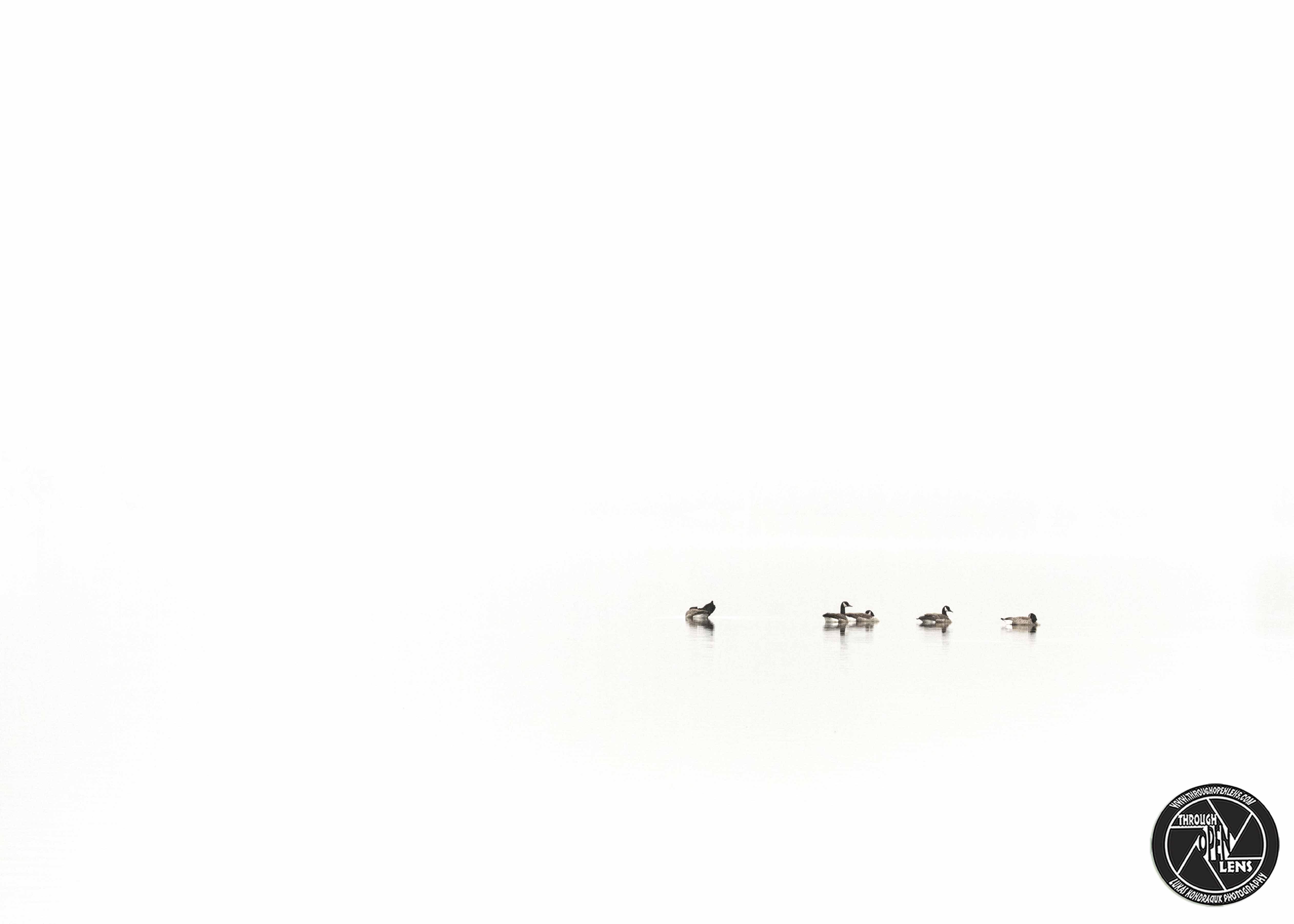
The Fog Always Lifts.

F/9.0, 1/320, ISO 800.

Canada Goose

What do clouds do when they become rich?

A. They make it rain!

Interesting Fact: Nest Placement on the ground, usually on a muskrat mound or other slightly elevated site, near water. They prefer a spot from which they can have a fairly unobstructed view in many directions. Female selects the site and does much of nest construction. She adds down feathers and some body feathers beginning after the second egg is laid. She does all the incubation while her mate guards her and the nest.  ( https://www.allaboutbirds.org/guide/Canada_Goose/lifehistory )

Ehh, What’s Up Duck?

F/5.6, 1/500, ISO 200.

Mallard 

Why did the duck cross the road?

Because there was a quack in the sidewalk. 

Interesting Fact:  Ducks have webbed feet, which they use for paddling beneath the water. Their feet have no nerves or blood vessels, which mean that they won’t feel chill from swimming in icy water. ( https://americanexpedition.us/mallard-duck-information-facts-photos-and-artwork )