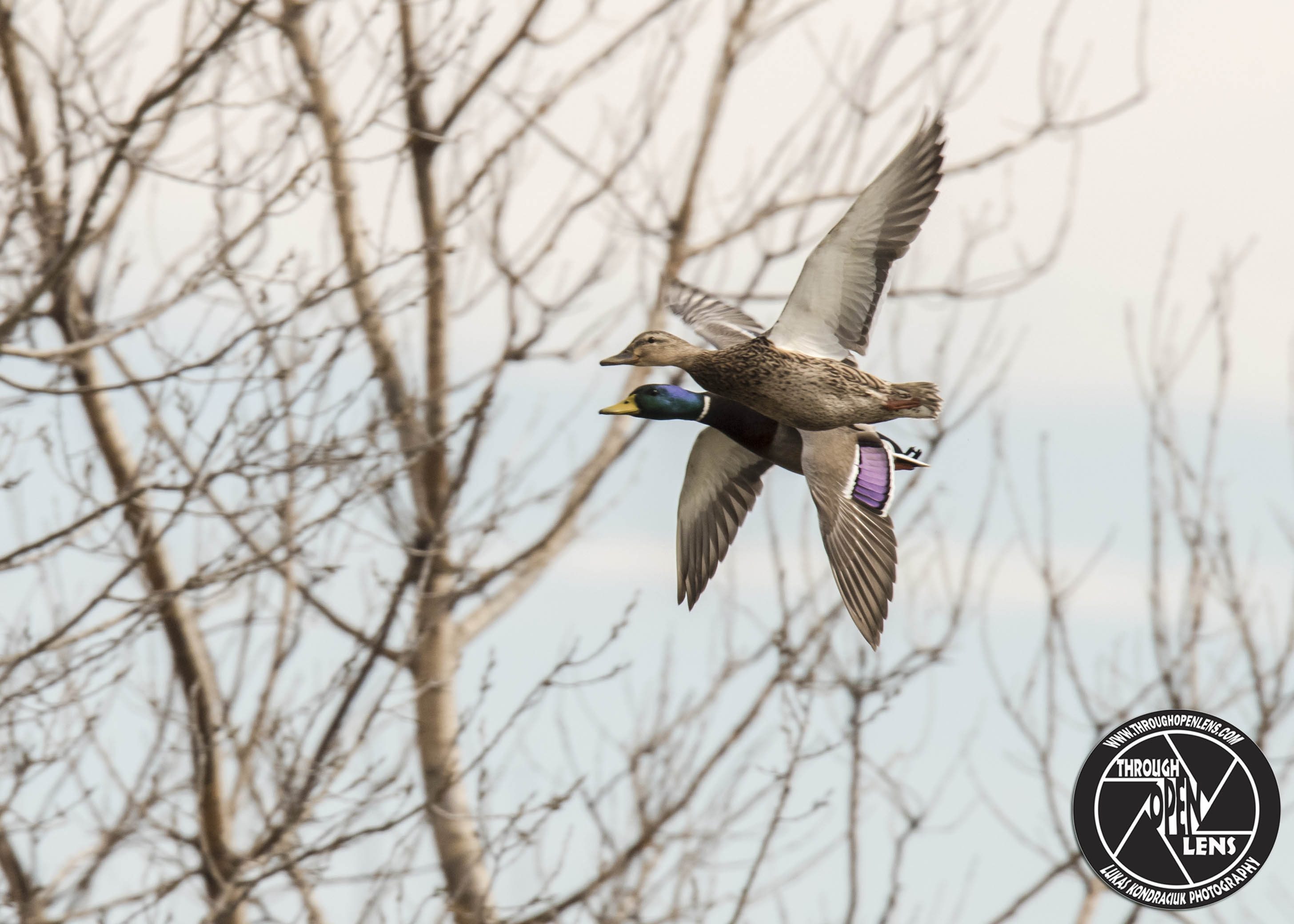
Together We Fly!

F/13.0, 1/640, ISO 400.

Mallard

As a scarecrow, people say I’m outstanding in my field.

But hay, it’s in my jeans.

Interesting Fact: Mallards, like other ducks, shed all their flight feathers at the end of the breeding season and are flightless for 3–4 weeks. They are secretive during this vulnerable time, and their body feathers molt into a concealing “eclipse” plumage that can make them hard to identify. ( https://www.allaboutbirds.org/guide/Mallard )

How low can you go?

northern-shoveler-2

F/9.0, 1/320, ISO 250.

Northern Shoveler 

How do you know if there’s a snowman in your bed?

You wake up wet!

Interesting Fact: The bill of the Northern Shoveler is about 6.5 cm (2.5 inches) long. The bill has has about 110 fine projections (called lamellae) along the edges, for straining food from water. ( https://www.allaboutbirds.org/guide/Northern_Shoveler/lifehistory )

I Dont Give A DUCK!

F/5.6, 1/1600, ISO 400.

Common Merganser ( Female )

Tom and Bob are talking:

Tom: “I managed to lose my rifle when I was in the army.”

Bob: “And…”

Tom: “I had to pay $1000 to cover the loss. I’m starting to understand why a Navy captain always goes down with his ship. ”

Interesting Fact: Often when one bird dives in a large group, the others follow the leader and disappear. They can stay under for up to 2 minutes, but they normally dive for less than 30 seconds. ( https://www.allaboutbirds.org/guide/Common_Merganser/lifehistory )

I Heard Of Skipping Rocks But I Never Seen A Skipping Ducks

F/10.0, 1/400, ISO 250.

Common Merganser

Did you hear the watermelon joke?

It’s pitful.

Interesting Fact: Common Mergansers spend much of their time afloat, loafing, fishing, and often sleeping on open water. They may form flocks of up to 75 individuals. They often swim in small groups along the shoreline, dipping their heads underwater to search for prey and then diving with a slight leap. ( https://www.allaboutbirds.org/guide/Common_Merganser/lifehistory )

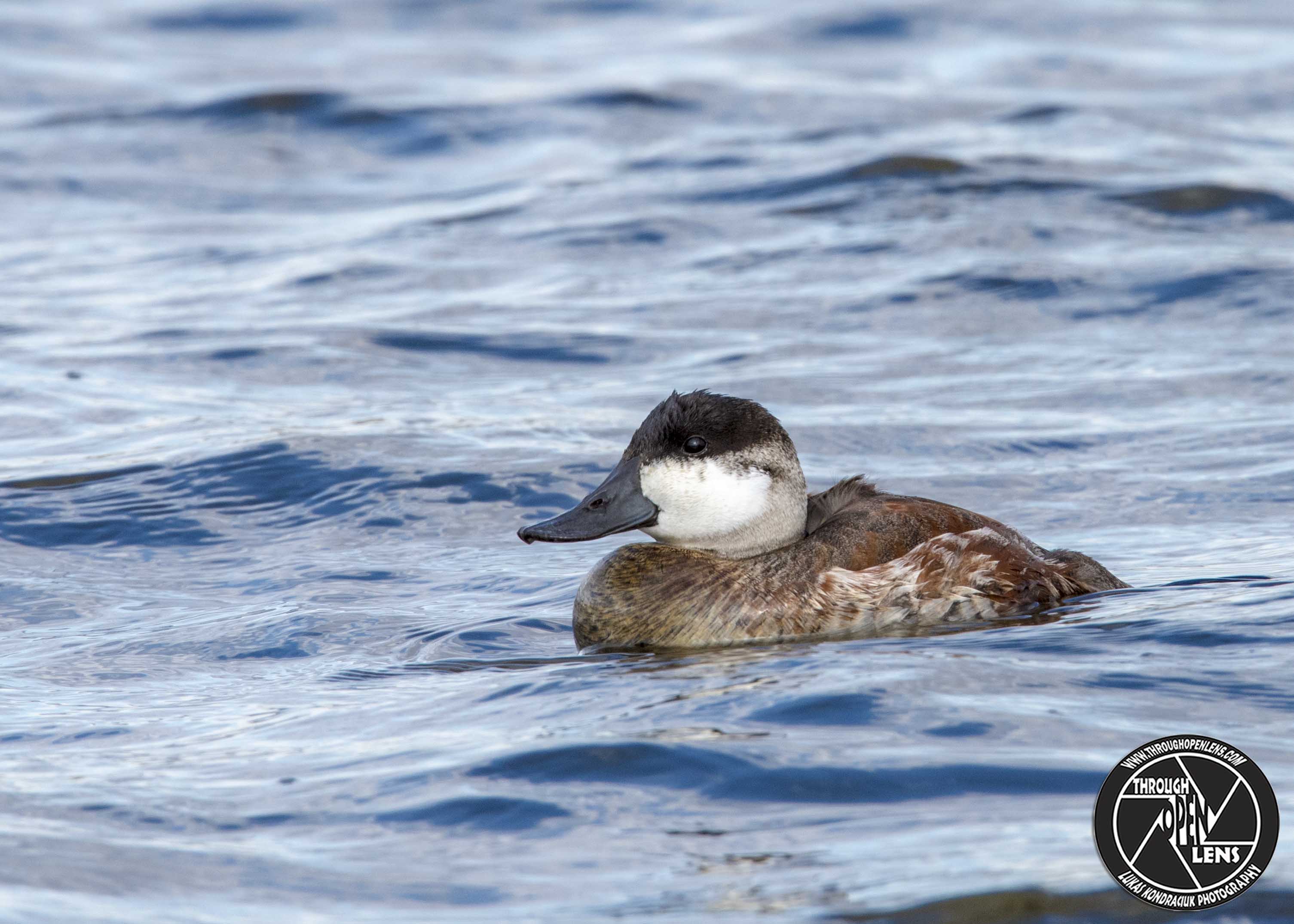
Sometimes Life Isn’t All It’s Quacked Up To Be!

F/11.0, 1/500, ISO 500.

Ruddy Duck

Why are trees so care free and easy going?

Because every fall, they let loose.

Interesting Fact: Ruddy Ducks breed in wetlands and reservoirs from southwestern Canada through the western United States and Mexico, as well as in scattered sites in the eastern United States and on the Caribbean islands. About 86 percent of the breeding population is concentrated in the prairie pothole region of south-central Canada and north-central United States. Their breeding habitat includes large marshes, stock ponds, reservoirs, and deep natural basins. ( https://www.allaboutbirds.org/guide/Ruddy_Duck/lifehistory )

Don’t Forget To Duck!

F/6.3, 1/400, ISO 400.

Hooded Merganser

What did the calculator say to the math student?

You can count on me.

Interesting Fact: On the bird family tree, Hooded Mergansers (genus Lophodytes) lie between goldeneyes (Bucephala) and the other North American mergansers (Mergus). They share many courtship behaviors and calls with both of those groups. ( https://www.allaboutbirds.org/guide/Hooded_Merganser/lifehistory )

Chill The Duck Out!

F/10.0, 1/400, ISO 250.

Ring-necked Duck

Why did the duck go to jail?

Because he got caught selling quack.

Interesting Fact: Ring-necked Ducks on their breeding grounds occasionally get attacked by the much larger Common Loon, the Red-necked Grebe, and even the much smaller Pied-billed Grebe. ( https://www.allaboutbirds.org/guide/Ring-necked_Duck/lifehistory )

Do You Think I Give A Quack!

F/10.0, 1/400, ISO 160.

Wood Duck

Why couldn’t the leopard play hide and seek?

Because he was always spotted.

Interesting Fact: Natural cavities for nesting are scarce, and the Wood Duck readily uses nest boxes provided for it. If nest boxes are placed too close together, many females lay eggs in the nests of other females. ( https://www.allaboutbirds.org/guide/Wood_Duck )

Swim Your Worries Away!

F/10.0, 1/400, ISO 400.

Northern Shoveler 

A jumper cable walks into a bar.

The bartender says, “I’ll serve you, but don’t start anything.”

Interesting Fact: Northern Shovelers don’t just occur in the Americas, they also breed across Europe and spend the winter throughout Europe, Africa, and India. ( https://www.allaboutbirds.org/guide/Northern_Shoveler )

PhotoBomb!

F/13.0, 1/400, ISO 500.

Black Scoter 

Why did the belt go to jail?

Because it held up a pair of pants!

Interesting Fact:  The Black Scoter is among the most vocal of waterfowl. Groups of Black Scoters often can be located by the constant mellow, plaintive whistling sound of the males.  ( https://www.allaboutbirds.org/guide/Black_Scoter )