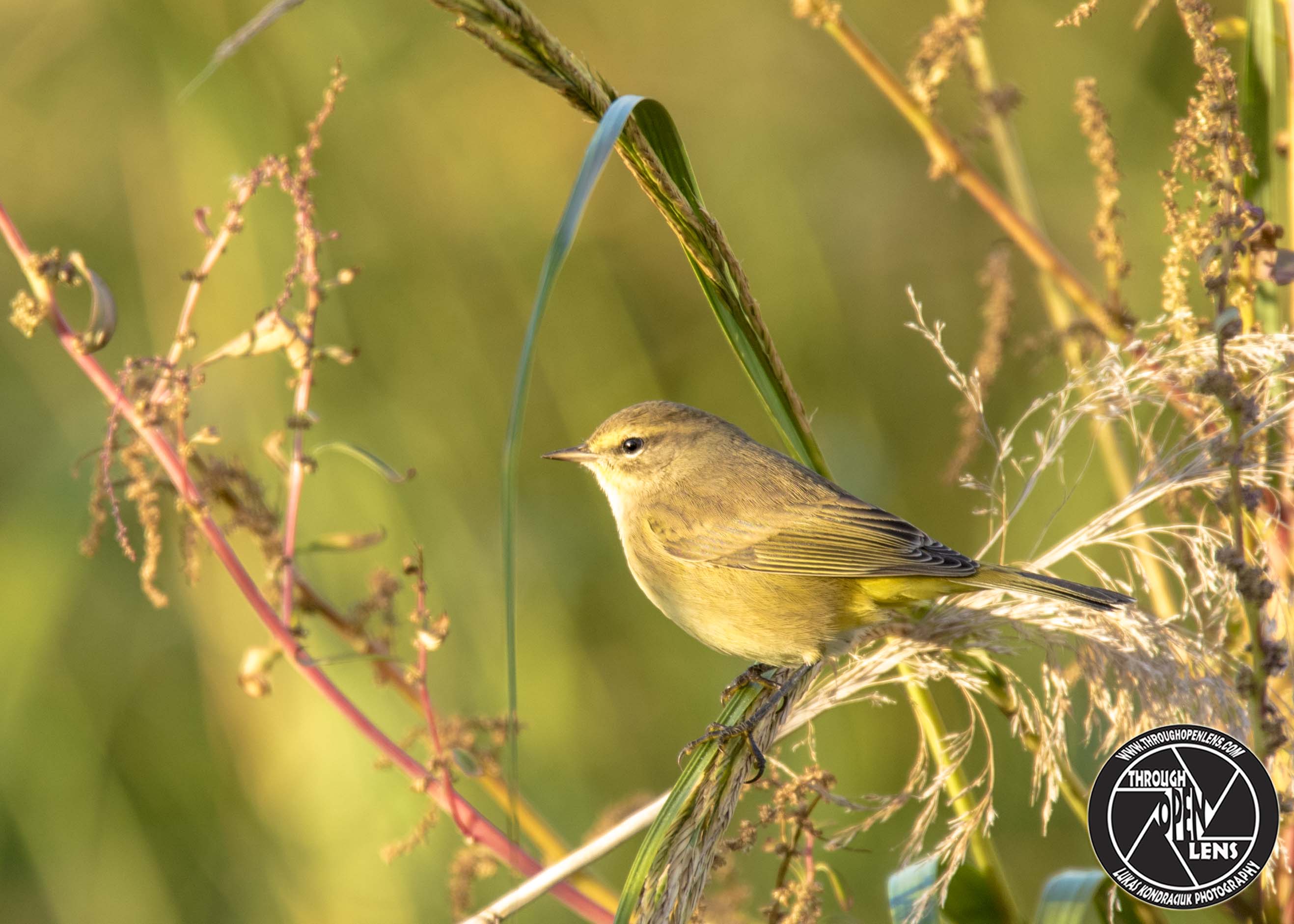
When You’re Thinking That I’m Thinking Of You, I’m Thinking You’re Thinking Of Me.

F/7.1, 1/200, ISO 320.

Yellow-Rumped Warbler

An invisible man marries an invisible woman.

The kids were nothing to look at either.

Interesting Fact: Females build the nest, sometimes using material the male carries to her. The nest is a cup of twigs, pine needles, grasses, and rootlets. She may also use moose, horse, and deer hair, moss, and lichens. She lines this cup with fine hair and feathers, sometimes woven into the nest in such a way that they curl up and over the eggs. The nest takes about 10 days to build. It’s 3-4 inches across and about 2 inches tall when finished. ( https://www.allaboutbirds.org/guide/Yellow-rumped_Warbler/lifehistory )

Ain’t No Thang Like A Duck Wing!

F/8.0, 1/250, ISO 200.

American Black Duck

Why did the Skeleton go to the movies by himself?

He had no body to go with him.

Interesting Fact:  Pleistocene fossils of American Black Ducks, at least 11,000 years old, have been unearthed in Florida and Georgia. ( https://www.allaboutbirds.org/guide/American_Black_Duck/lifehistory  )

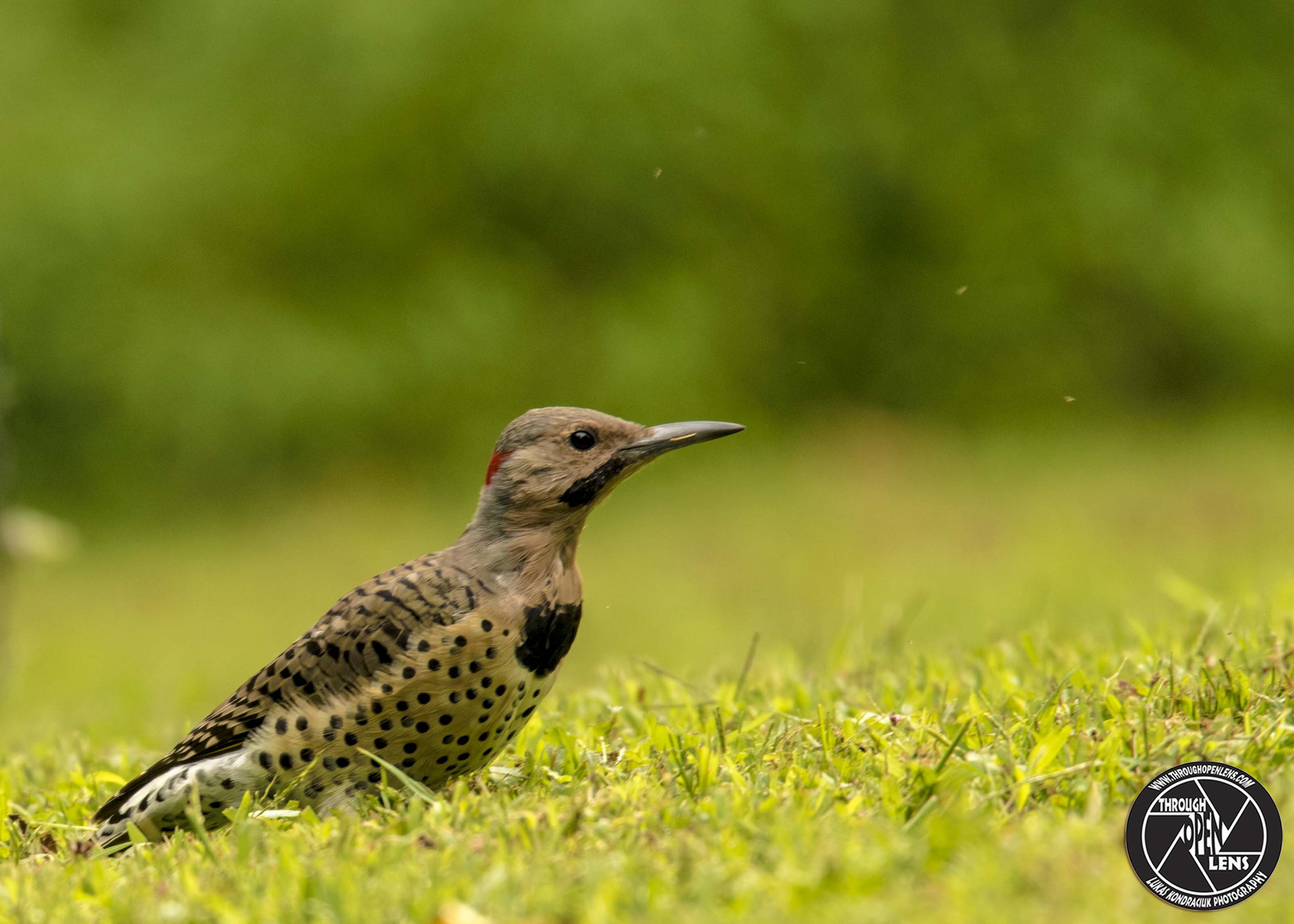
PLEASE KEEP ON THE GRASS! LIE DOWN! ROLL AROUND IN IT! FORGET ALL YOUR RESPONSIBILITES!

F/7.1, 1/200, ISO 400.

Northern Flicker

What do you call a Happy Cowboy?

A Jolly Rancher

Interesting Fact: Northern Flickers don’t act like typical woodpeckers. They mainly forage on the ground, sometimes among sparrows and blackbirds. When flushed, flickers often perch erect on thin horizontal branches rather than hitching up or around a tree trunk. Flickers do fly Iike most woodpeckers do, rising and falling smoothly as they intersperse periods of flapping with gliding. ( https://www.allaboutbirds.org/guide/Northern_Flicker/lifehistory )

Listen To Me Meow!

Gray Catbird

F/5.6, 1/125, ISO1400.

Son: Dad I am cold!

Dad: Go stand in the corner it’s 90 degrees.

Interesting Fact:  The male Gray Catbird uses his loud song to proclaim his territory. He uses a softer version of the song when near the nest or when a bird intrudes on his territory. The female may sing the quiet song back to the male. ( https://www.allaboutbirds.org/guide/Gray_Catbird )

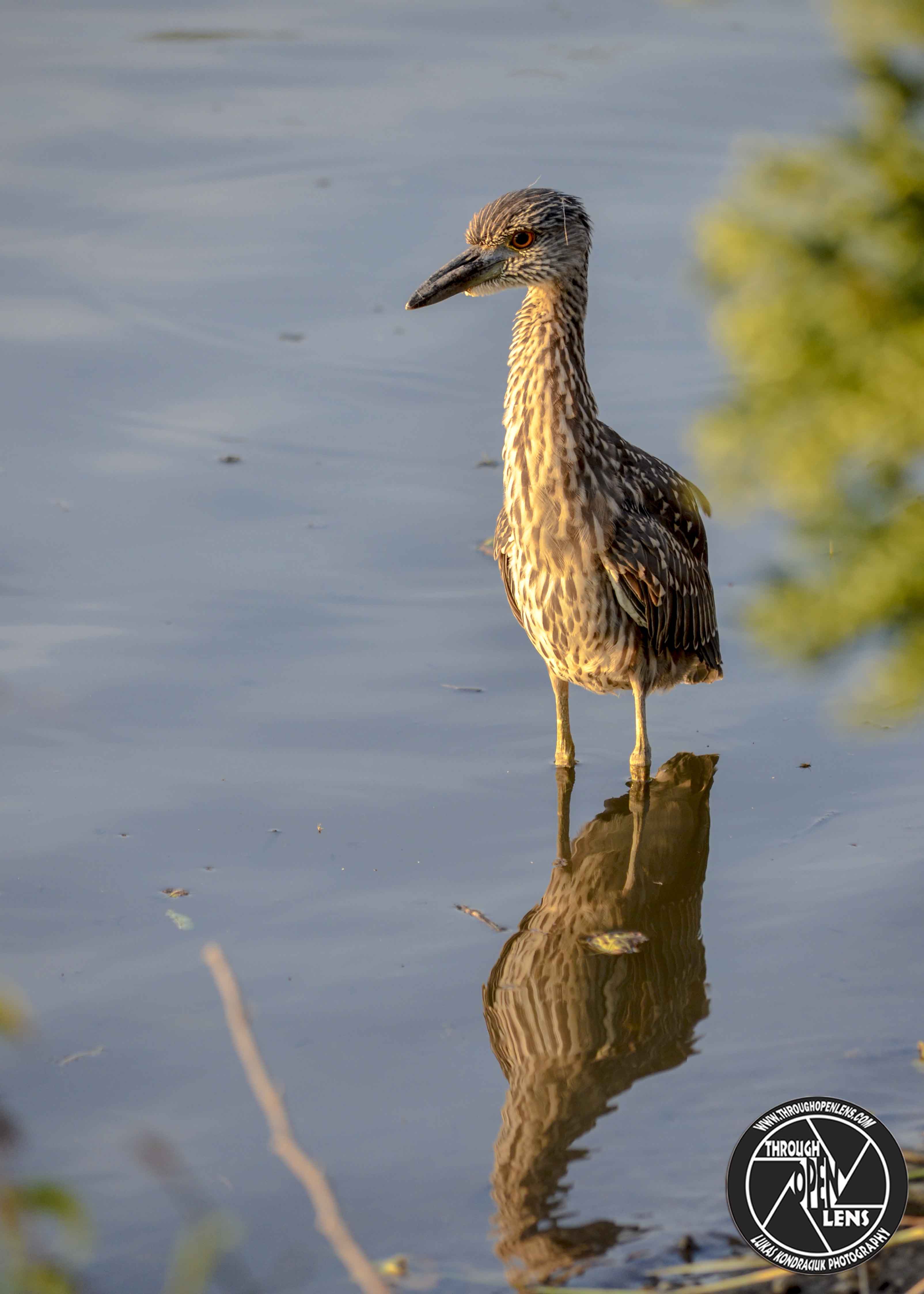
You Are Young. So Shut Up, And Enjoy Life.

F/5.6, 1/500, ISO 400.

Yellow-crowned Night-Heron ( Juvenile ) 

Why was the baby strawberry crying?

Because her mom and dad were in a jam

Interesting Fact: Foraging birds stand still or slowly stalk crabs and other prey along shorelines, marshes, and fields. Once in striking range they lunge at their prey and seize it in their bill. They swallow small prey whole, but often shake apart, crush, or spear larger prey. They forage on their own, typically keeping other individuals at a distance of 15 feet or more. Courting Yellow-crowned Night-Herons make display flights around their colonies, sometimes with the neck conspicuously extended. Courting pairs make a neck-stretching display, slowly raising and then quickly pushing the head back between its shoulders, while fanning the long shoulder plumes. Males do this first and females sometimes follow. ( https://www.allaboutbirds.org/guide/Yellow-crowned_Night-Heron )

Hey Go Nuts Today!

F/6.3, 1/640, ISO 200.

Eastern Gray Squirrel

Why do squirrels swim on their backs?

To keep their nuts dry.


Interesting Fact: Squirrels are extremely intelligent creatures. They are known to put on elaborate bogus food burying displays to deceive onlookers. The fake burials are to trick potential thieves, such as other squirrels or birds, into thinking that they have stored their food stock there. Any observers planning on taking the stash will then focus on the bogus burial site, allowing the squirrel to bury the real stash elsewhere safely ( http://www.onekind.org/be_inspired/animals_a_z/squirrel/ )


It’s Not Easy Being Green

F/6.3, 1/60, ISO 640.

Northern Green Frog

What’s the difference between a cat and a frog?

A Cat has nine lives but a Frog croaks every night!

Interesting Fact:  The northern green frog (Lithobates clamitans melanota[2]) is a subspecies of the green frog, Lithobates clamitans. It is native to the northeastern North America and has been introduced to British Columbia.[3] Its mating call sounds like the single note of a plucked banjo. It is also quite common in the pet trade. ( https://en.wikipedia.org/wiki/Northern_green_frog )

Up In The Air

F/13.0, 1/640, ISO 320.

Blue-gray Gnatcatcher

Why is the barn so noisy?

Because the cows have horns.

Interesting Fact: Occasionally, significant numbers of Blue-gray Gnatcatchers “overshoot” on their spring migrations and end up much further north than usual. They may be carried past their target by strong southwest winds in warm regions, and by strong northerly winds on the west side of high pressure systems. Most probably make their way back south before nesting.  ( https://www.allaboutbirds.org/guide/Blue-gray_Gnatcatcher/lifehistory )

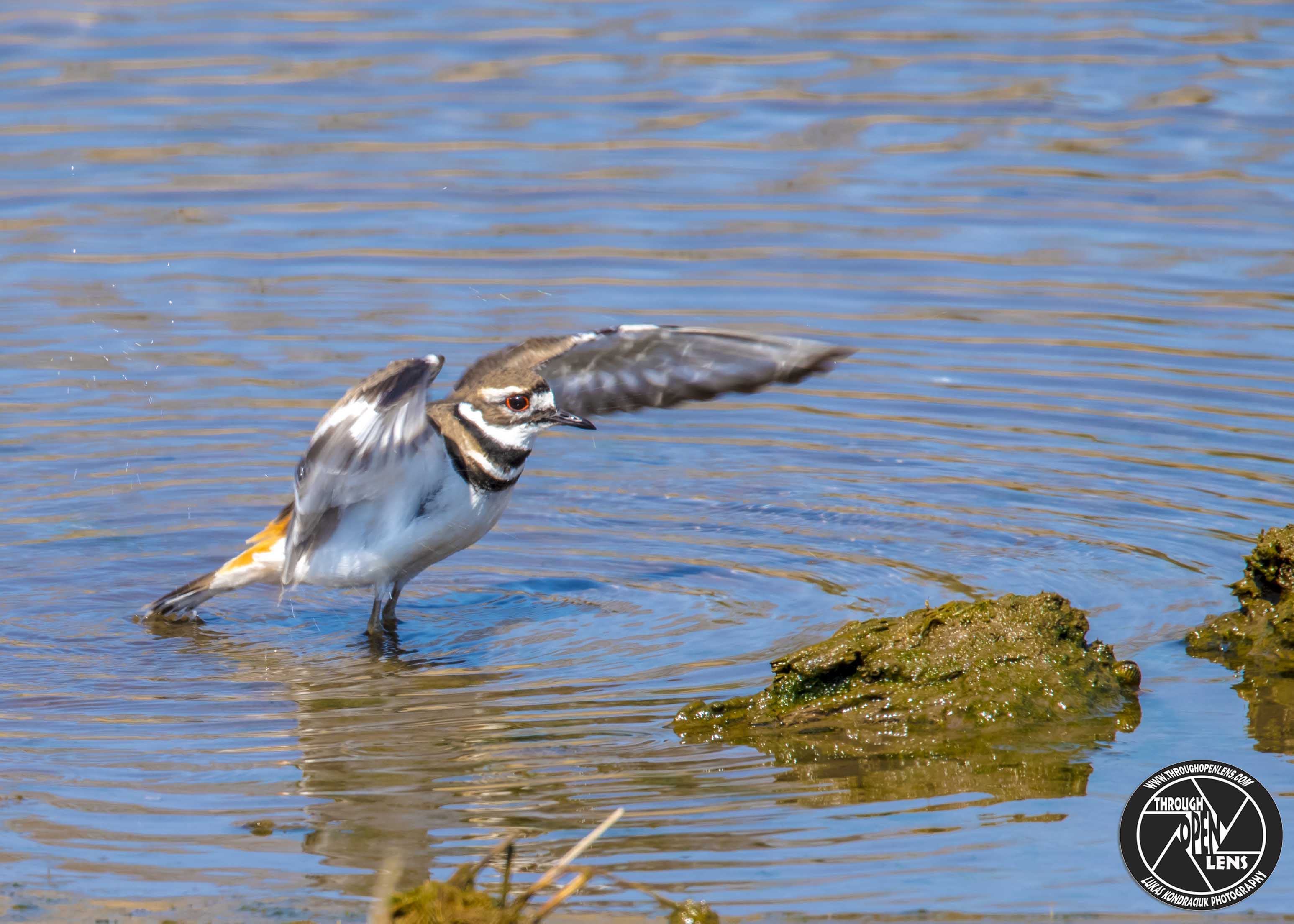
Do We Have A Problem, Come At Me Rock!

F/9.0, 1/320, ISO 200.

Killdeer

What kind of rock can fly?

A rock-et!

Interesting Fact: Killdeer get their name from the shrill, wailing kill-deer call they give so often. Eighteenth-century naturalists also noticed how noisy Killdeer are, giving them names such as the Chattering Plover and the Noisy Plover. ( https://www.allaboutbirds.org/guide/Killdeer/lifehistory )


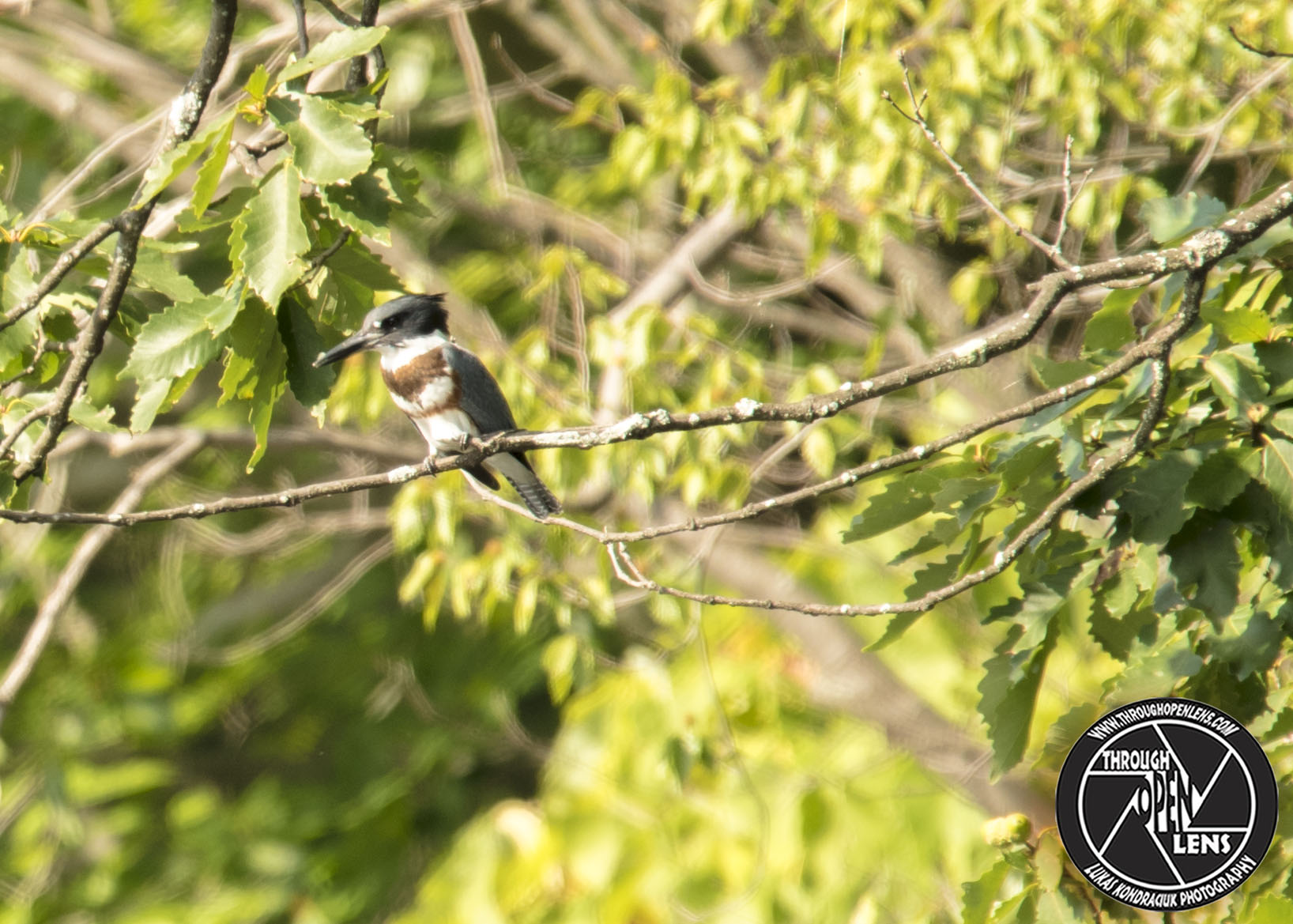
They Don’t Call Me King For Nothing

F/7.1, 1/200, ISO 200.

Belted Kingfisher

What is a baby’s motto?

If at first you don’t succeed cry cry again!

Interesting Fact: The breeding distribution of the Belted Kingfisher is limited in some areas by the availability of suitable nesting sites. Human activity, such as road building and digging gravel pits, has created banks where kingfishers can nest and allowed the expansion of the breeding range. ( https://www.allaboutbirds.org/guide/Belted_Kingfisher/lifehistory )