I Don’t Give A Duck!

F/10.0, 1/400, ISO 250.

Bufflehead Duck male

Why was the snowman looking through the carrots?

He was picking his nose!

Interesting Fact: During the winter, look for these tiny, black-and-white ducks in sheltered coves along the Atlantic or Pacific coast, or on inland ponds in southern North America. While foraging they spend half their time underwater, so scan carefully and patiently. ( https://www.allaboutbirds.org/guide/Bufflehead/ )


Don’t Be Jealous Of My Beak.

F/9.0, 1/320, ISO 640.

Common Loon 

Why is sex like math?

You add a bed, subtract the clothes, divide the legs, and pray there’s no multiplying!

Interesting Fact: A hungry loon family can put away a lot of fish. Biologists estimate that loon parents and their 2 chicks can eat about a half-ton of fish over a 15-week period.  ( https://www.allaboutbirds.org/guide/Common_Loon )

Why The Long Face?

F/6.3, 1/160, ISO 200.

Common Eider 

What did one toilet say to the other toilet?

You look a bit flushed.

Interesting Facts: This species dives for crustaceans and molluscs, with mussels being a favoured food. The eider will eat mussels by swallowing them whole; the shells are then crushed in their gizzard and excreted. When eating a crab, the eider will remove all of its claws and legs, and then eat the body in a similar fashion. ( https://en.wikipedia.org/wiki/Common_eider )

Stay With Me, Sway With Me!

F/6.3, 1/60, ISO 640.

American Black Bear

What do you call a knight who lets people borrow his stuff?

Sir lends a lot

Interesting Facts: When winter arrives, black bears spend the season dormant in their dens, feeding on body fat they have built up by eating ravenously all summer and fall. They make their dens in caves, burrows, brush piles, or other sheltered spots—sometimes even in tree holes high above the ground. Black bears den for various lengths of time governed by the diverse climates in which they live, from Canada to northern Mexico. ( https://www.nationalgeographic.com/animals/mammals/a/american-black-bear/ )


Why Fit In When You Were Born To Stand Out.

F/4.5, 1/30, ISO 640.

PDN PhotoPlus International Conference + Expo (“PhotoPlus“)

What do you call a bee trying to make up its mind?

A maybe

Interesting Fact: PDN PhotoPlus International Conference + Expo (“PhotoPlus”) is an annual event held at the Jacob K. Javits Convention Center in New York. Designed for professional and advanced amateur photographers, Photoplus displays recent advances in photography through a variety of exhibitions as well as photography and digital design seminars. ( https://en.wikipedia.org/wiki/Photoplus )

Nooo, Go Away You Are Bothering Me!

Tree Swallow

F/5,6, 1/400, ISO 125.

Tree Swallow

How do you make a water bed more bouncy?

Use spring water.

Interesting Fact: The Tree Swallow—which is most often seen in open, treeless areas—gets its name from its habit of nesting in tree cavities. They also take readily to nest boxes.  ( http://www.allaboutbirds.org/guide/tree_swallow/lifehistory )

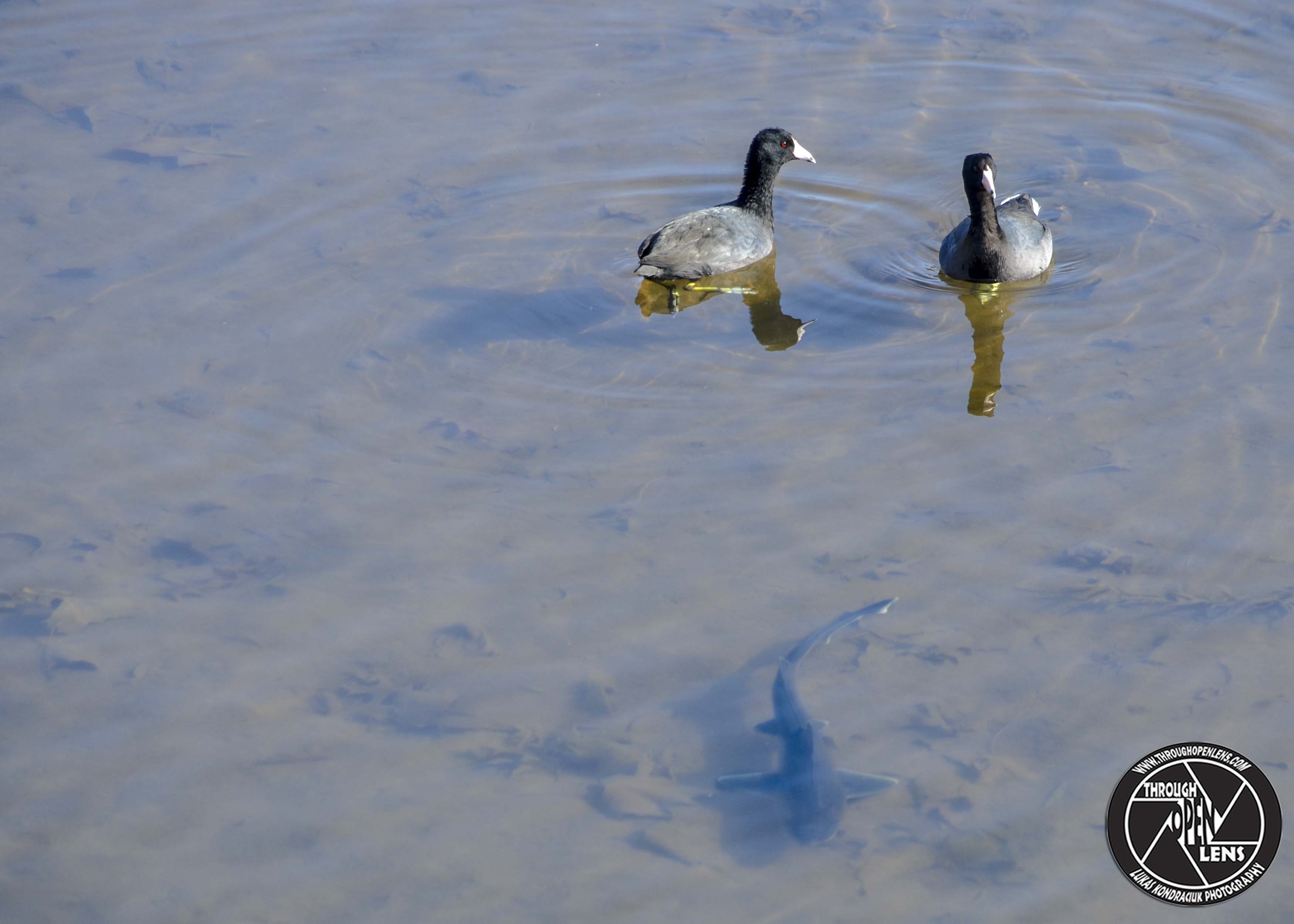
Duuun-Dunn-Dunn-Duh-Duh-Duh-Nuh-Nuh-Nuh-Nuuh!!!

F/5.6, 1/500, ISO 250.

Shark Week 

American Coot

Spiny Dogfish Shark

Why do sharks make terrible lawyers?

They’re too nice!

Interesting Fact: Although it swims like a duck, the American Coot does not have webbed feet like a duck. Instead, each one of the coot’s long toes has broad lobes of skin that help it kick through the water. The broad lobes fold back each time the bird lifts its foot, so it doesn’t impede walking on dry land, though it supports the bird’s weight on mucky ground. ( https://www.allaboutbirds.org/guide/American_Coot )

Into The Woods We Go!

F/6.3, 1/13, ISO 1600.

Groundhog (Woodchuck )

What’s the Great White Sharks favorite candy?

The Jaw-Breaker!

Interesting Fact: Groundhogs prepare for hibernation by putting on weight.  Then they live off the stored fat until they come out of hibernation. ( https://www.kidsplayandcreate.com/fun-groundhog-facts-and-groundhog-day-facts-for-kids/ ) 

I Fear Sharks So Much That I Just Sharted!

F/6.3, 1/640, ISO 7200.

Pied-Billed Grebe

Why do sharks make terrible lawyers?

They’re too nice!

Interesting Fact: Pied-billed Grebe chicks typically leave the nest the first day after hatching and spend much of their first week riding around on a parent’s back. They usually spend most of their first 3 weeks on or near the nest platform. ( https://www.allaboutbirds.org/guide/Pied-Billed_Grebe )

In A World Full Of Fish Be A Shark

Shark Week 

F/5.6, 1/500, ISO 360.

Spiny Dogfish Shark

What did the seal with the broken arm say to the shark?

Do not consume if seal is broken.

Interesting Fact: This shark is known to hunt in packs that can range up into the thousands. They are aggressive hunters and have a sizable diet that can range from squid, fish, crab, jellyfish, sea cucumber, shrimp and other invertebrates. ( https://en.m.wikipedia.org/wiki/Spiny_dogfish )