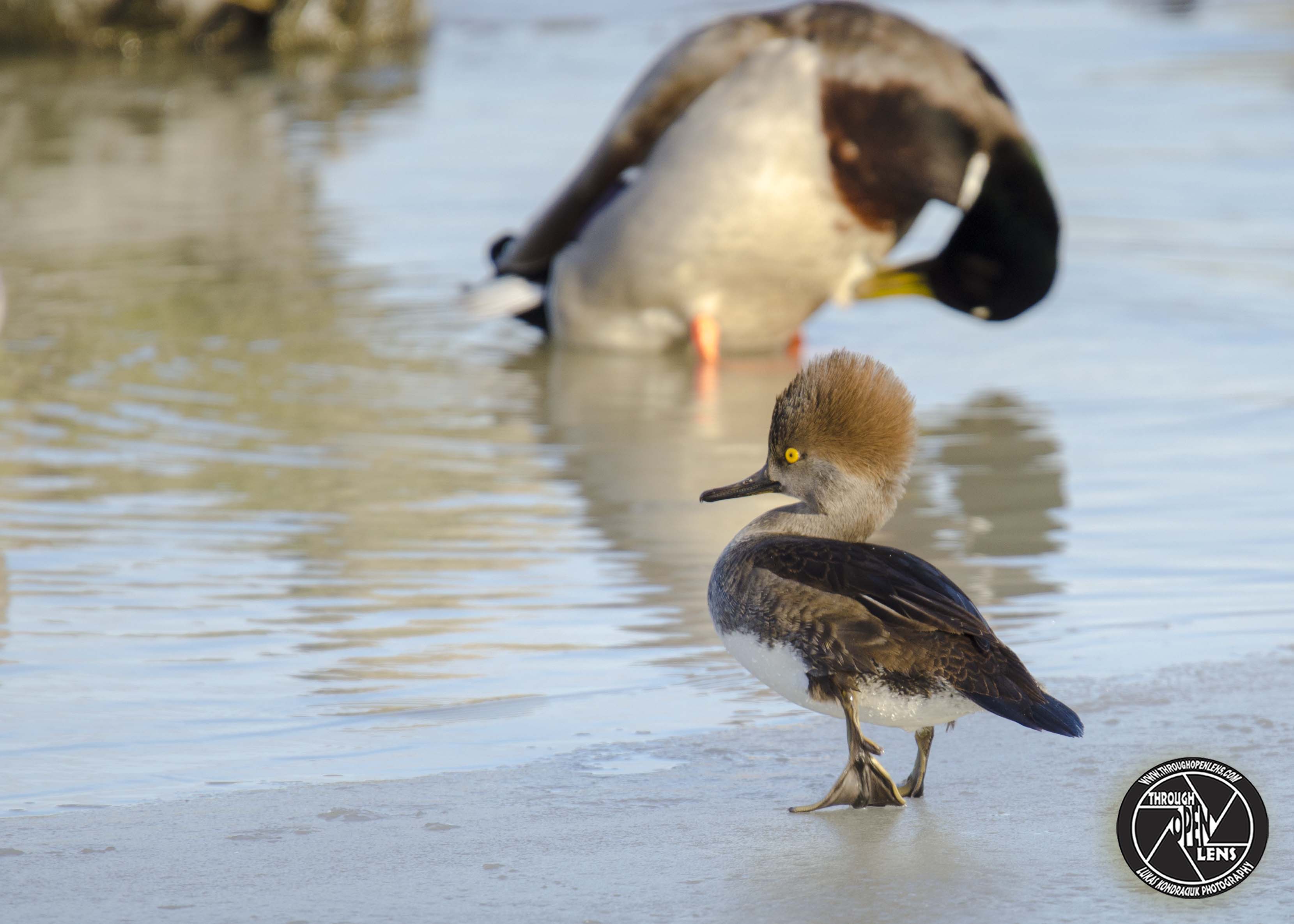
I’m A Duck That Does Not Give A Quack!

F/6.3, 1/500, ISO 250.

Hooded Merganser ( Female )

2 Guys walking down the street.

One walks into a bar, the other ducks.

Interesting Fact:  The female chooses the nest site, and may start scouting for next year’s tree cavity at the end of each breeding season. Nest cavities can be in live or dead trees and are usually close to water. Cavities are typically 10–50 feet off the ground, up to about 90 feet. Hooded Mergansers nest readily in boxes, preferring those with wood shavings or nest material from previous uses. They prefer cavities with 3–5 inch openings. ( https://www.allaboutbirds.org/guide/Hooded_Merganser/overview )

Flying Quack!

F/6.3, 1/500, ISO 280.

Hooded Merganser ( Male ) 

A police officer stops a Bob’s car.

Police Officer: “Your driver’s license please.”

Bob: “I’m really sorry, I forgot.”

Officer: “At home?”

Bob: “No, to do it.”

Interesting Fact:They take flight by running across the water, flying with fast wingbeats and never gliding until they are about to land (by skidding to a stop on the water). ( https://www.allaboutbirds.org/guide/Hooded_Merganser/lifehistory )  

I Got Blue More Than You!

F/7.1, 1/200, ISO 320.

Eastern Bluebird

In Court:

Judge: “Why did you steal the car?”

Defendant: “Your Honour I had to get to work.”

Judge: “Why didn’t you take the bus?”

Defendant: I don’t have a driver’s license for the bus.

Interesting Fact: Eastern Bluebirds occur across eastern North America and south as far as Nicaragua. Birds that live farther north and in the west of the range tend to lay more eggs than eastern and southern birds.  ( https://www.allaboutbirds.org/guide/Eastern_Bluebird )

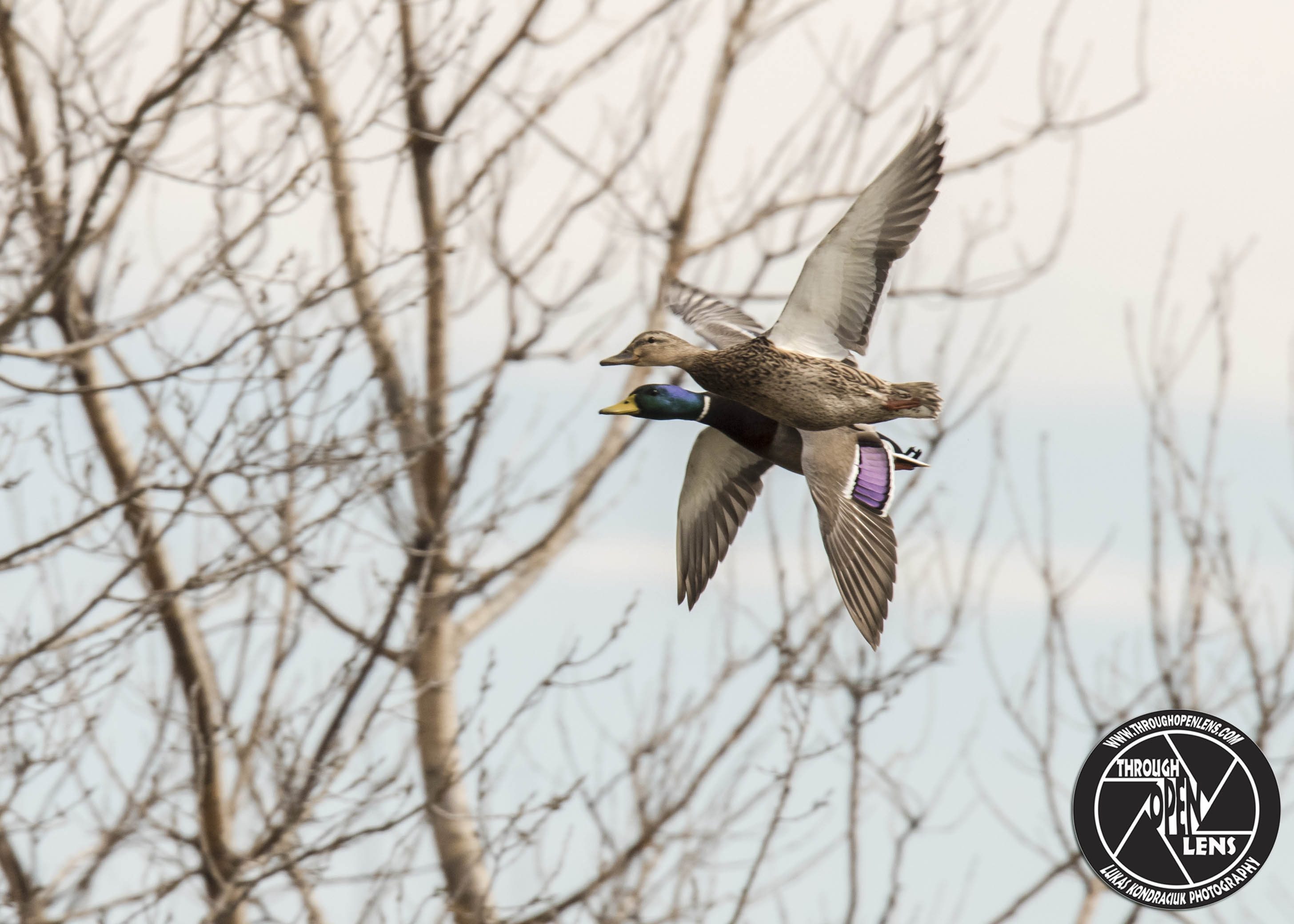
Together We Fly!

F/13.0, 1/640, ISO 400.

Mallard

As a scarecrow, people say I’m outstanding in my field.

But hay, it’s in my jeans.

Interesting Fact: Mallards, like other ducks, shed all their flight feathers at the end of the breeding season and are flightless for 3–4 weeks. They are secretive during this vulnerable time, and their body feathers molt into a concealing “eclipse” plumage that can make them hard to identify. ( https://www.allaboutbirds.org/guide/Mallard )

Don’t Forget To Duck!

F/6.3, 1/400, ISO 400.

Hooded Merganser

What did the calculator say to the math student?

You can count on me.

Interesting Fact: On the bird family tree, Hooded Mergansers (genus Lophodytes) lie between goldeneyes (Bucephala) and the other North American mergansers (Mergus). They share many courtship behaviors and calls with both of those groups. ( https://www.allaboutbirds.org/guide/Hooded_Merganser/lifehistory )

Don’t Give Me That Look!

F/9.0, 1/320, ISO 320.

Double-crested Cormorant

What did the sick chicken say?

Oh no! I have the people-pox!

Interesting Fact: From a distance, Double-crested Cormorants are dark birds with snaky necks, but up-close they’re quite colorful—with orange-yellow skin on their face and throat, striking aquamarine eyes that sparkle like jewels, and a mouth that is bright blue on the inside. ( https://www.allaboutbirds.org/guide/Double-crested_Cormorant/lifehistory )

Blue Me!

F/6.3, 1/160, ISO 400.

Eastern Bluebird

Doctor is talking to a patient.

Doctor:  “Do you do sports?”

Patient:  “Does sex count?”

Doctor:  “Yes.”

Patient:  “Then no.”

Interesting Fact: Eastern Bluebirds typically have more than one successful brood per year. Young produced in early nests usually leave their parents in summer, but young from later nests frequently stay with their parents over the winter.  ( https://www.allaboutbirds.org/guide/Eastern_Bluebird/lifehistory )

You See Me Rollin!

F/7.1, 1/200. ISO 125.

Great Egret

What did the Buffalo say to his little boy when he dropped him off at school?

Bison.

Interesting Fact: The Great Egret walks with its neck extended and its wings held close to its body. In flight, it is graceful and buoyant, with its neck tucked back against its shoulders and its legs trailing behind. ( https://www.allaboutbirds.org/guide/Great_Egret/lifehistory )

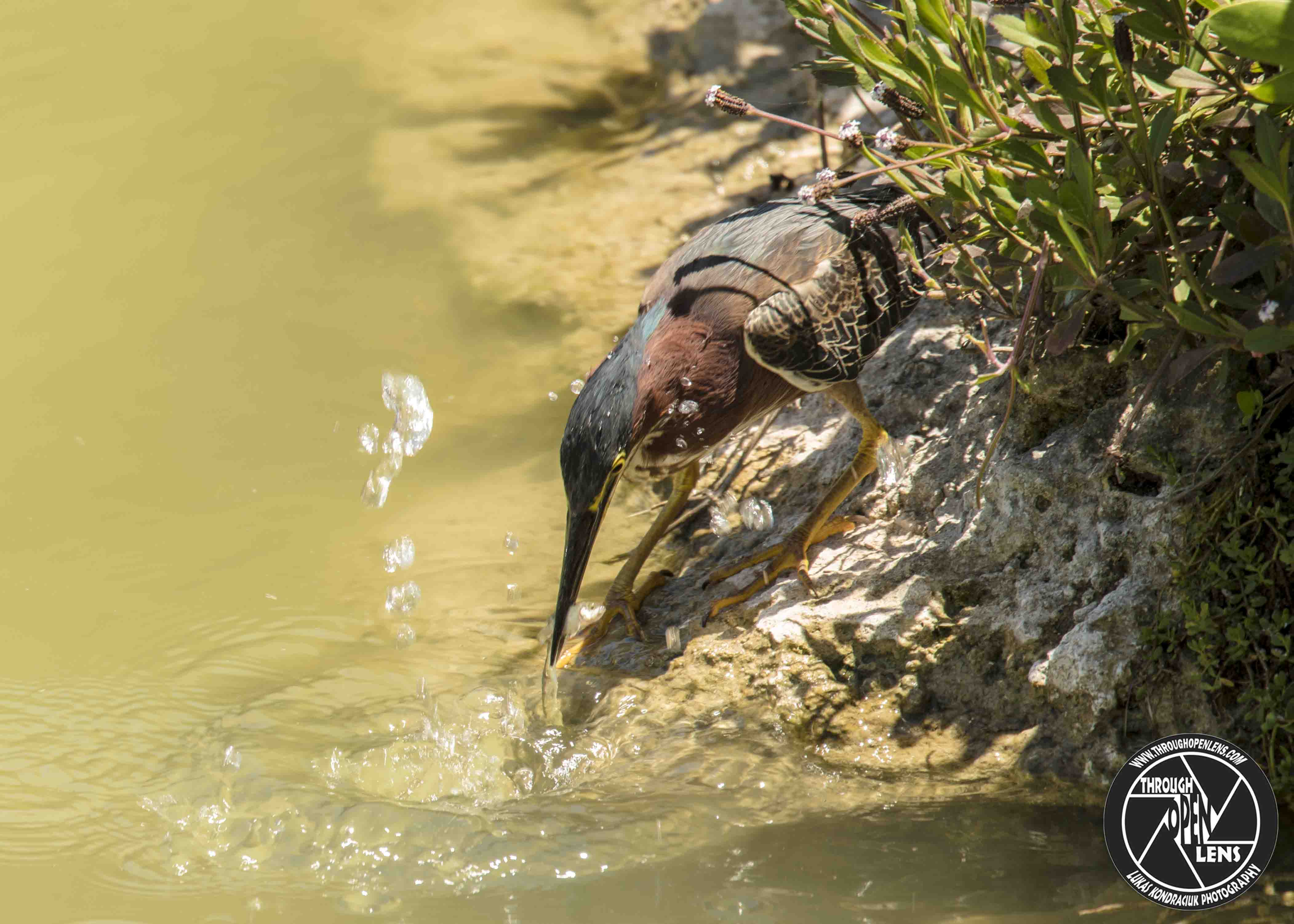
Fish Tremble When They Hear My Name!

F/8.0, 1/200, ISO 160.

Green Heron

When do zombies go to sleep?

When they are dead tired.

Interesting Fact:  Green Herons eat mainly small fish such as minnows, sunfish, catfish, pickerel, carp, perch, gobies, shad, silverside, eels, and goldfish. They also feeds on insects, spiders, crustaceans, snails, amphibians, reptiles, and rodents. They hunt by standing still at the water’s edge, in vegetation, or by walking slowly in shallow water. When a fish approaches, the heron lunges and darts its head, grasping (or sometimes spearing) the fish with its heavy bill. ( https://www.allaboutbirds.org/guide/Green_Heron/lifehistory )

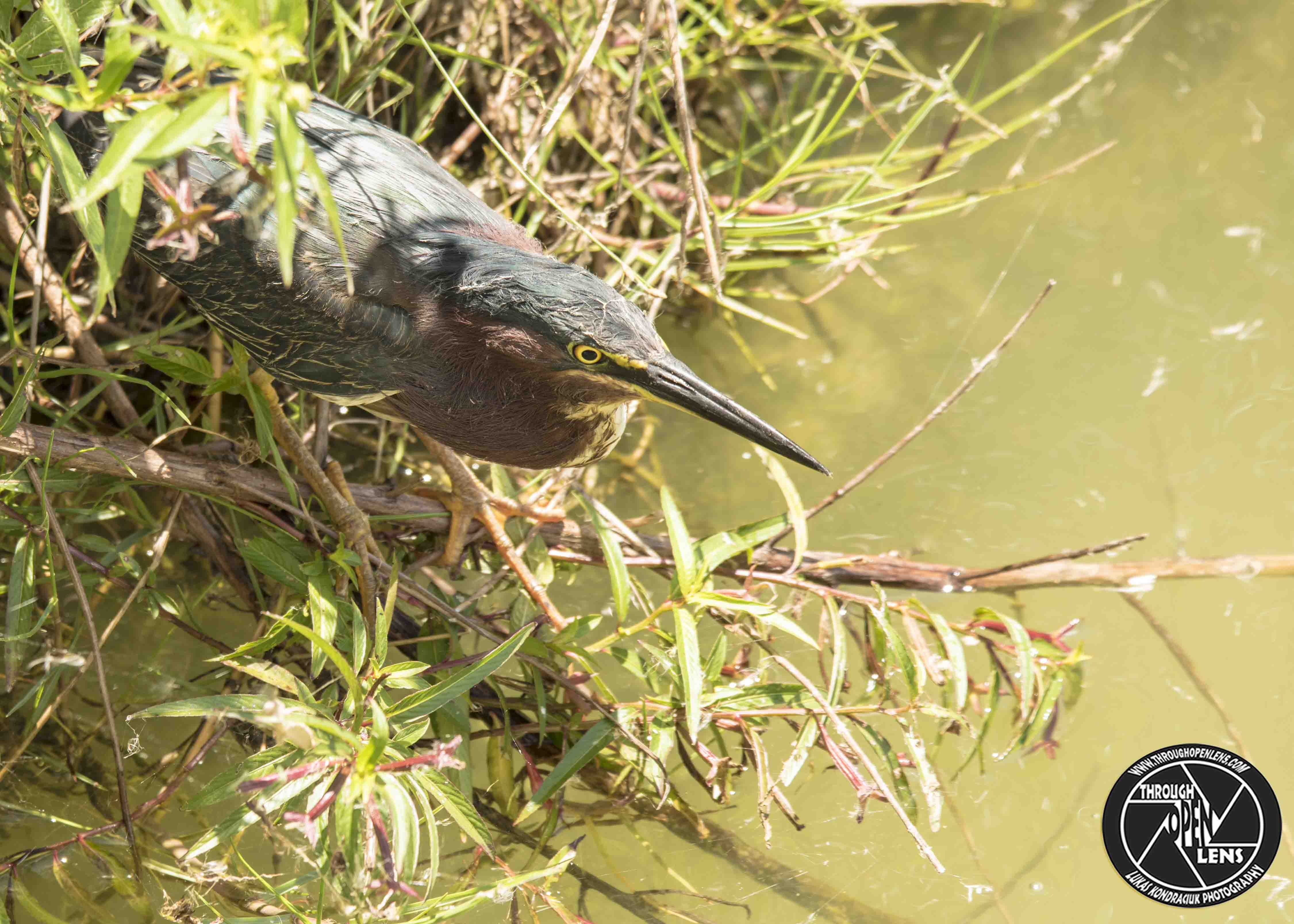
Shh… I’m Hiding From Negative People.

F/6.3, 1/160, ISO 160.

Green Heron

Why won’t sharks attack lawyers?

Professional courtesy!

Interesting Fact: Occasionally Green Herons hunt in deeper water by plunging on prey from above. They hunt at all times of the day and night in the shallows of swamps, creeks, marshes, ditches, ponds, and mangroves. They usually forage among thick vegetation in water that is less than 4 inches deep, avoiding the deeper and more open areas frequented by longer-legged herons. ( https://www.allaboutbirds.org/guide/Green_Heron/lifehistory )