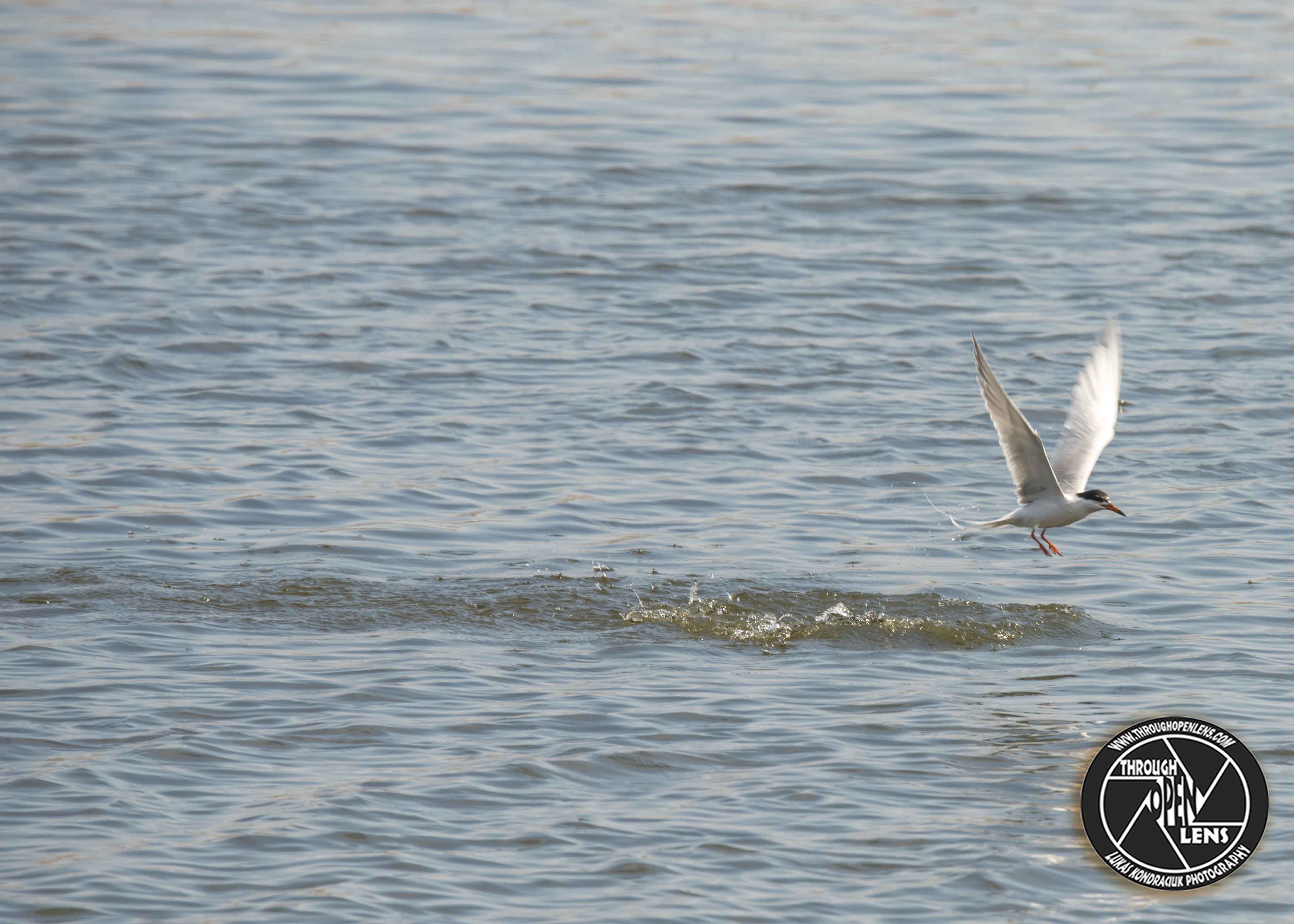
F/10.0, 1/400, ISO 160.
Common Tern
What do you call cheese that is not yours?
Nacho Cheese
Interesting Fact: Plunges into water from flight; may hover briefly before plunging. ( https://www.allaboutbirds.org/guide/Common_Tern/lifehistory )

F/10.0, 1/400, ISO 160.
Common Tern
What do you call cheese that is not yours?
Nacho Cheese
Interesting Fact: Plunges into water from flight; may hover briefly before plunging. ( https://www.allaboutbirds.org/guide/Common_Tern/lifehistory )

F/9.0, 1/320, ISO 320.
Red breasted Merganser
What did E.T.’s mother say to him when he got home?
Where on Earth have you been?
Interesting Fact: The female creates a depression on the ground that she covers with dead grasses, forming a shallow bowl. She plucks down feathers from her breast to help insulate the nest. ( https://www.allaboutbirds.org/guide/Red-breasted_Merganser/lifehistory )

F/7.1, 1/800, ISO 200.
Common Tern
What did the stamp say to the envelope?
Stick with me and we will go places!
Interesting Fact: The incubating adult Common Tern flies off its nest to defecate 5-50 m (16-160 ft) away. It deposits its feces indiscriminately in nearby water or on the territories of other terns. ( https://www.allaboutbirds.org/guide/Common_Tern/lifehistory )

F/8.0, 1/250, ISO 200.
Red-breasted Merganser
Two men meet on opposite sides of a river.
One shouts to the other, “I need you to help me get to the other side!”
The other guy replies, “You’re on the other side!”
Interesting Fact: Red-breasted Mergansers are among the fastest flying ducks, clocking speeds of up to 81 miles per hour. ( https://www.allaboutbirds.org/guide/Red-breasted_Merganser/lifehistory )

F/9.0, 1/320, ISO 200.
Red-breasted Mergansers
Can February March?
No, but April May.
Interesting Fact:Red-breasted Mergansers nest along forested riverbanks, marsh edges, lakeshores, coastal islands, and sandy shores with vegetation. They are never far from water. Female Red-breasted Mergansers select a spot on the ground under dense cover from low tree branches, fallen logs, or boulders. They nest alone or in colonies often with gulls and terns. ( https://www.allaboutbirds.org/guide/Red-breasted_Merganser/lifehistory )

F/5.6, 1/500, ISO 220.
Least Sandpiper
Browsing in a pet shop, a man sees a beautiful parrot with a red
string tied to its left leg and a green string tied to its right
leg, and asks the store owner about the different colored strings.
“This is a highly-trained parrot,” the owner explains. “If you
pull the red string, he’ll speak French. If you pull the green
string, he’ll speak Spanish.”
The customer asks, “What happens if I pull both strings?”
“I’ll fall off my perch, dummy!” screeches the parrot.
Interesting Fact: Eastern populations probably fly nonstop over the ocean from the Gulf of St. Lawrence and New England to wintering grounds in northeastern South America, a distance of about 1,800 to 2,500 miles. ( https://www.allaboutbirds.org/guide/Least_Sandpiper/lifehistory )

F/5.6, 1/500, ISO200.
Osprey
What does the man in the moon do when his hair gets too long?
Eclipse it!
Interesting Fact: Ospreys hunt by diving to the water’s surface from some 30 to 100 feet (9 to 30 meters) up. They have gripping pads on their feet to help them pluck fish from the water with their curved claws and carry them for great distances. In flight, ospreys will orient the fish headfirst to ease wind resistance. ( https://www.nationalgeographic.com/animals/birds/o/osprey/ )

F/6.3, 1/640, ISO 200.
Semipalmated Plover
Why do birds in a nest always agree?
Because they don’t want to fall out.
Interesting Fact: The Semipalmated Plover has been seen to swim short distances across small water channels during foraging while on migration. Chicks also swim short distances to follow parents to small islets on shallow lakes. ( https://www.allaboutbirds.org/guide/Semipalmated_Plover/lifehistory )
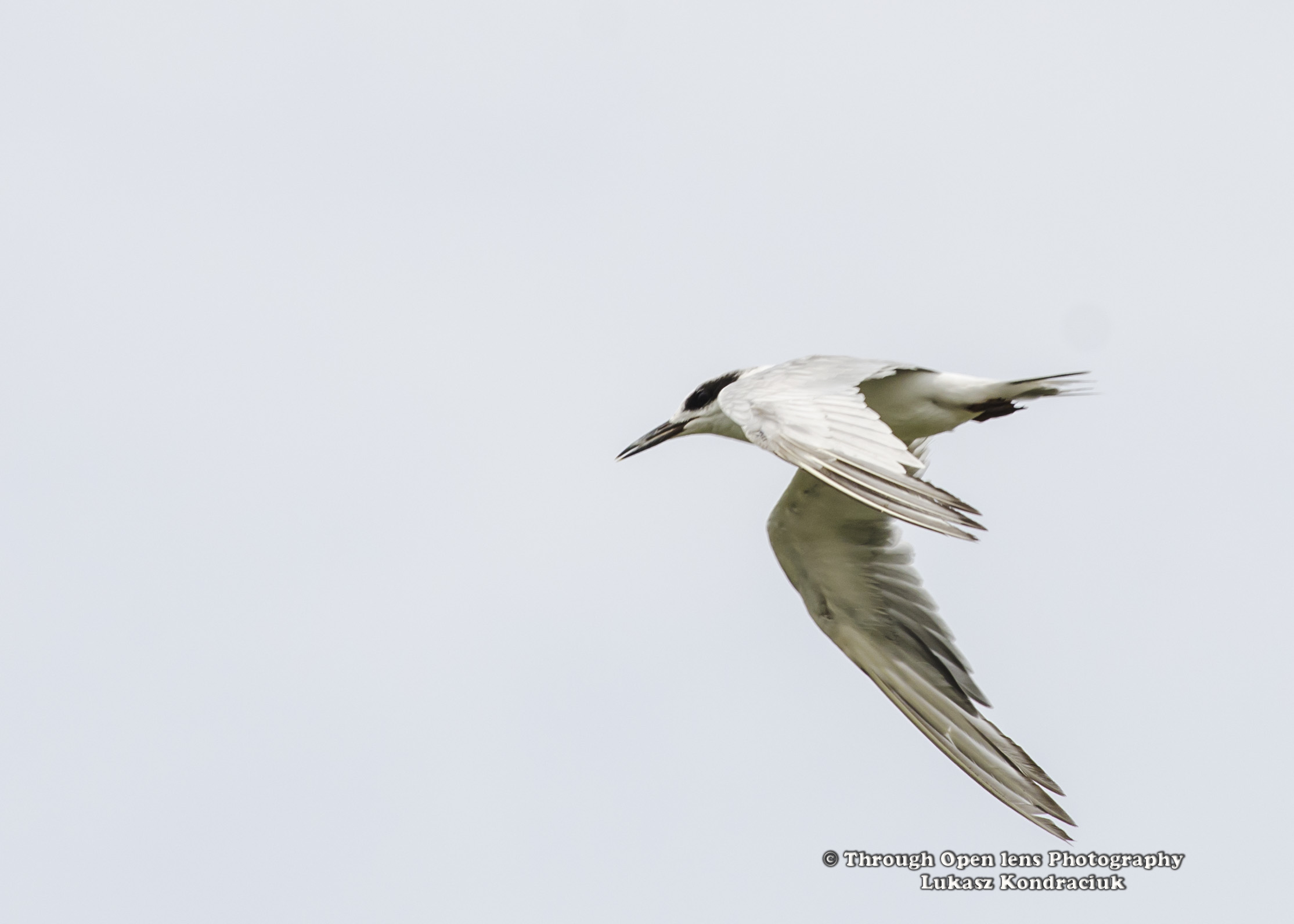
F/8.0, 1/1000, ISO 200.
Forster’s Tern
What did the bird say when her boyfriend bought her the wrong perfume?
Cheep cheep!
Interesting Fact: Forster’s Tern is the only tern restricted almost entirely to North America throughout the year. ( https://www.allaboutbirds.org/guide/Forsters_Tern/lifehistory )

F/7.1, 1/800, ISO 200.
Heermann’s Gull
If someone ever says, “What are you staring at?”
Say “I don’t know, give me a minute.”
Interesting Fact: The Heermann’s Gull, like many other gulls, frequently steals food from other birds. The Brown Pelican is a frequent victim. An adult Heermann’s Gull is most likely to try to steal food from an adult pelican, and an immature gull is more likely to steal from an immature pelican. ( https://www.allaboutbirds.org/guide/Heermanns_Gull/lifehistory )
 Through Open Lens