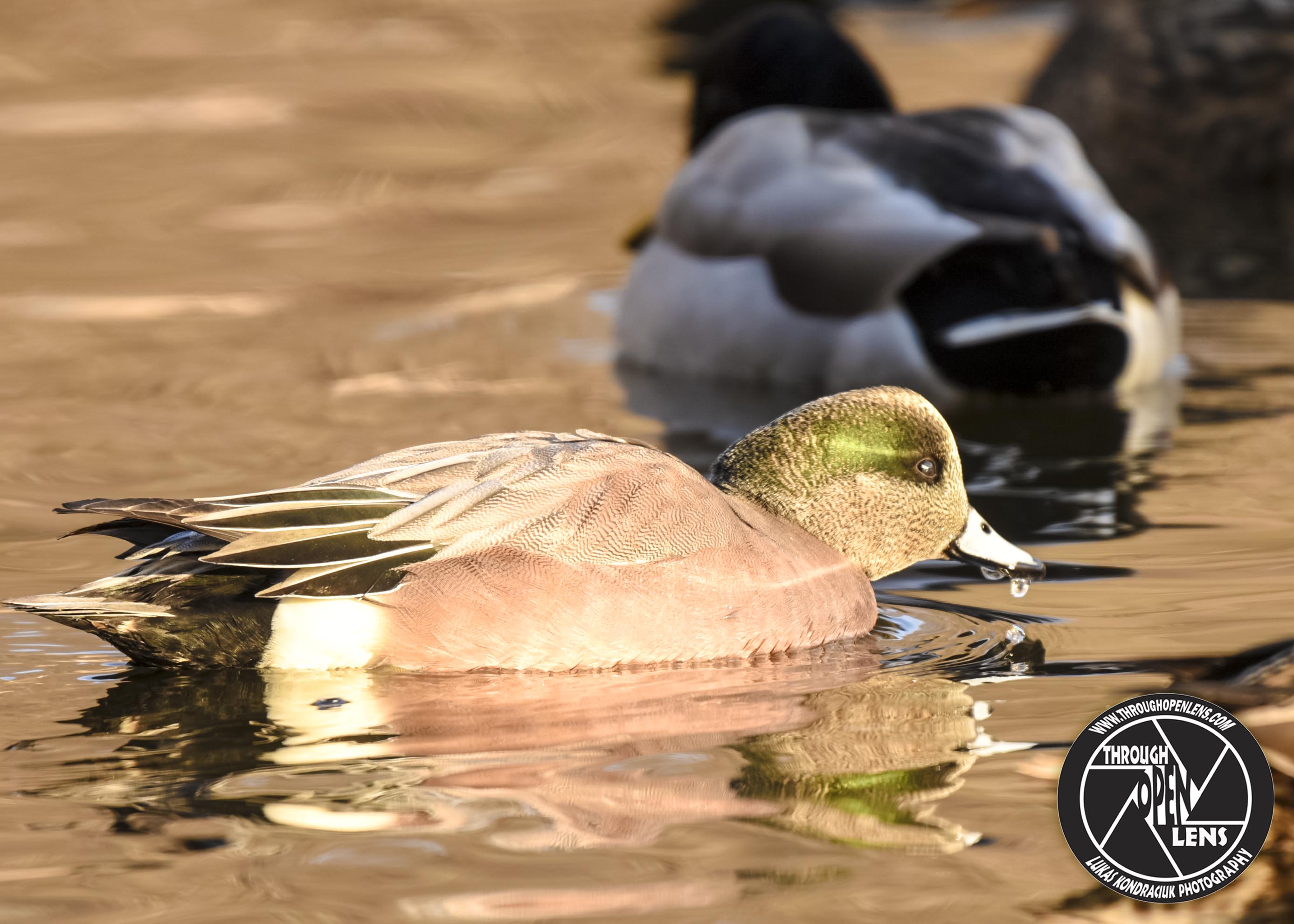
My Nose Has Done More Running This Winter Than I Have.

american-wigeon

F/7.1, 1/200, ISO 320.

American Wigeon

I went to a really emotional wedding over the weekend.

Even the cake was in tiers.

Interesting Fact: The American Wigeon’s short bill enables it to exert more force at the bill tip than other dabbling ducks, thus permitting efficient dislodging and plucking of vegetation.  ( https://www.allaboutbirds.org/guide/American_Wigeon/lifehistory )

CANNONBALL!!!!!!

F/8.0, 1/2000, ISO 800.

Common Merganser

What did the pencil say to the other pencil?

your looking sharp.

Interesting Fact: Common Mergansers spend the breeding season in northern forested habitats near large lakes and rivers. Since they nest in cavities of large trees, breeding Common Mergansers are usually found in mature forests. They spend winters on large lakes, rivers, and reservoirs in the southern and coastal regions of their breeding range, and in additional wintering grounds across the northern and western United States. They tend to prefer freshwater wintering habitat over saltwater, but they may winter in coastal bays, estuaries, and harbors. ( https://www.allaboutbirds.org/guide/Common_Merganser/lifehistory )

I’m Not Trying To Impress You Or Anything, But I Can Swim Without Floaties.

western-grebe-1

F/7.1, 1/800, ISO 200.

Western Grebe

A man was stranded on a desert island for 10 years.
One day a beautiful girl swims to shore in a wet suit.
Man: “Hi! Am I ever happy to see you.”!
Girl: “Hi! It seems like you’ve been here along time. How long has it been since you’ve had a cigarette?”
Man: “It’s been ten years!”
With this information the girl unzips a slot on the arm of her wet suit and gives the man cigarette.
Man: “Oh thank you so much!”
Girl: “So tell me how long its been since you had a drink?”
Man: “It’s been ten years” The girl unzips a little longer zipper on her wet suit and comes out with a flask of whiskey and gives the man a drink.
Man: “Oh. Thank you so much. You are like a miracle”!
Finally the girl starts to unzip the front of her wet suit and asks the man leadingly, “So tell me then, have you been bored?”
The man looked at her and said excitedly: “Oh, my God, don’t tell me you’ve got a surfboard in there too?”


Interesting Fact: Western Grebes breed on freshwater lakes and marshes with extensive open water bordered by emergent vegetation. During winter they move to saltwater or brackish bays, estuaries, or sheltered sea coasts and are less frequently found on freshwater lakes or rivers. ( https://www.allaboutbirds.org/guide/Western_Grebe/lifehistory )

He Is On My Tail!

F/6.3, 1/160, ISO 160.

Wood Duck

What do you call an old snowman?

Water!

Interesting Fact: Breeding pairs search for nest cavities during early morning. The male stands outside as the female enters and examines the site. They typically choose a tree more than 1 foot and often 2 feet in diameter, with a cavity anywhere from 2–60 feet high (higher sites seem to be preferred). ( https://www.allaboutbirds.org/guide/Wood_Duck/lifehistory


You Quack Me Up!

F/9.0, 1/320, ISO 250.

Northern Shoveler

At what time does a duck wake up?

At the quack of dawn.

Interesting Fact: When flushed off the nest, a female Northern Shoveler often defecates on its eggs, apparently to deter predators. ( https://www.allaboutbirds.org/guide/Northern_Shoveler/overview )

I Would Cry But Mascara Is Designer

green-winged-teal

F/6.3, 1/500, ISO 360.

Green-Winged Teal

Men are like mascara, any sign of emotion and they’re running.

Interesting Fact: Green-winged Teals have closely spaced, comblike projections called lamellae around the inner edge of the bill. They use them to filter tiny invertebrates from the water, allowing the birds to capture smaller food items than other dabbling ducks. ( https://www.allaboutbirds.org/guide/Green-winged_Teal/lifehistory )

I Am Very Saucy, You Can Call Me Duck Sauce.

ruddy-duck-2

F/10.0, 1/320, ISO 400.

Ruddy Duck

Why did the scarecrow get promoted?

Because he was outstanding in his field.

Interesting Fact: Pleistocene fossils of Ruddy Ducks, at least 11,000 years old, have been unearthed in Oregon, California, Virginia, Florida, and Illinois. ( https://www.allaboutbirds.org/guide/Ruddy_Duck/lifehistory )


I Am Going To Wing It!

double-crested-cormorant

F/ 5.6, 1/500, ISO 220.

Double-crested Cormorant

What do you call a fly without wings?

A walk

Interesting Fact: Accumulated fecal matter below nests can kill the nest trees. When this happens, the cormorants may move to a new area or they may simply shift to nesting on the ground. ( https://www.allaboutbirds.org/guide/Double-crested_Cormorant/lifehistory )

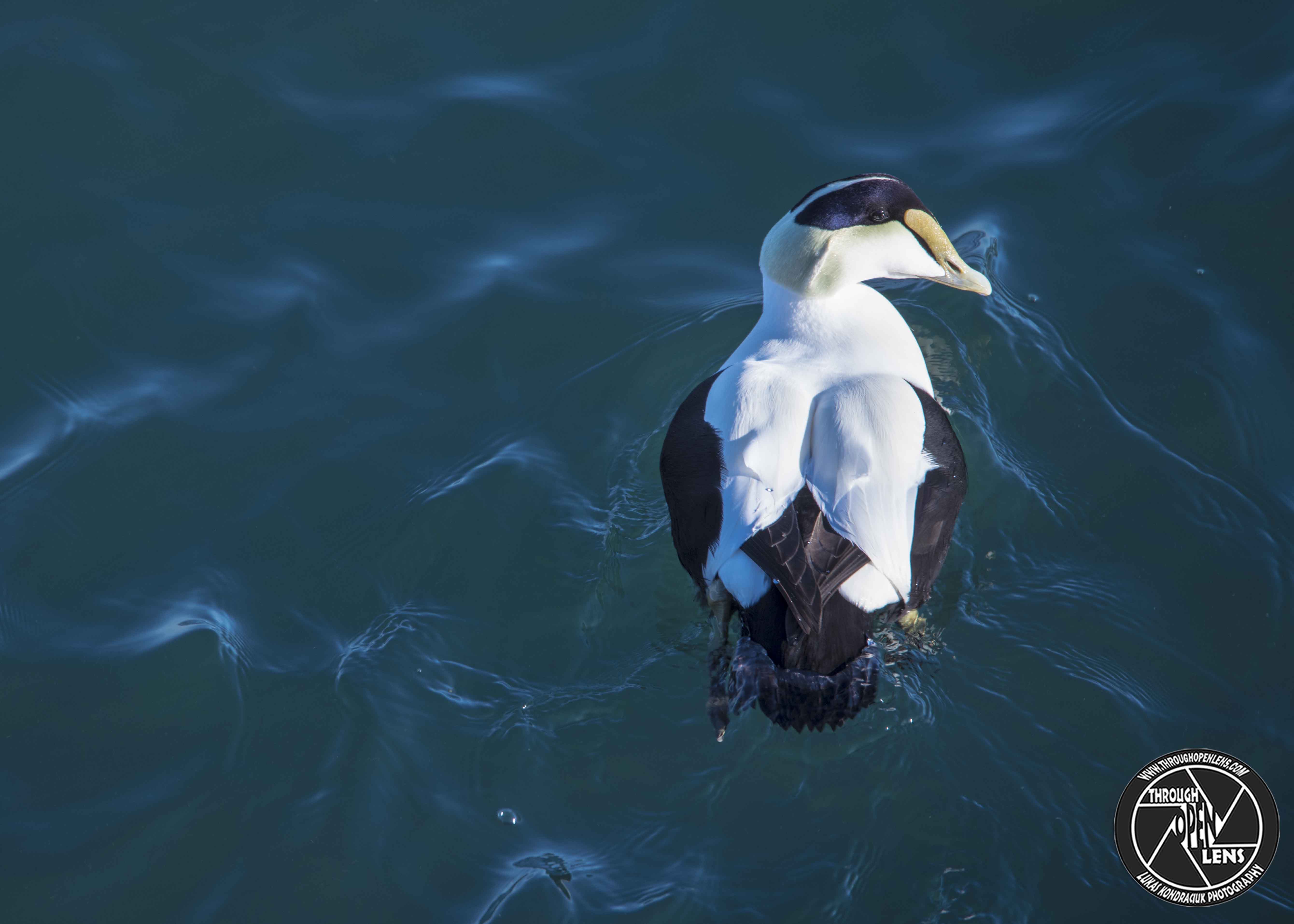
Of Course I Talk To Myself, Somtimes I Need Expert Advice.

F/8.0, 1/250, ISO200.

Common Eider

What did one elevator say to the other elevator?

I think I’m coming down with something!

Interesting Fact: The Pacific form of the Common Eider is distinct genetically and morphologically from the other forms, and may be a different species. The male has a thin black V on its chin and a bright yellow or orange bill. ( https://www.allaboutbirds.org/guide/Common_Eider/ )

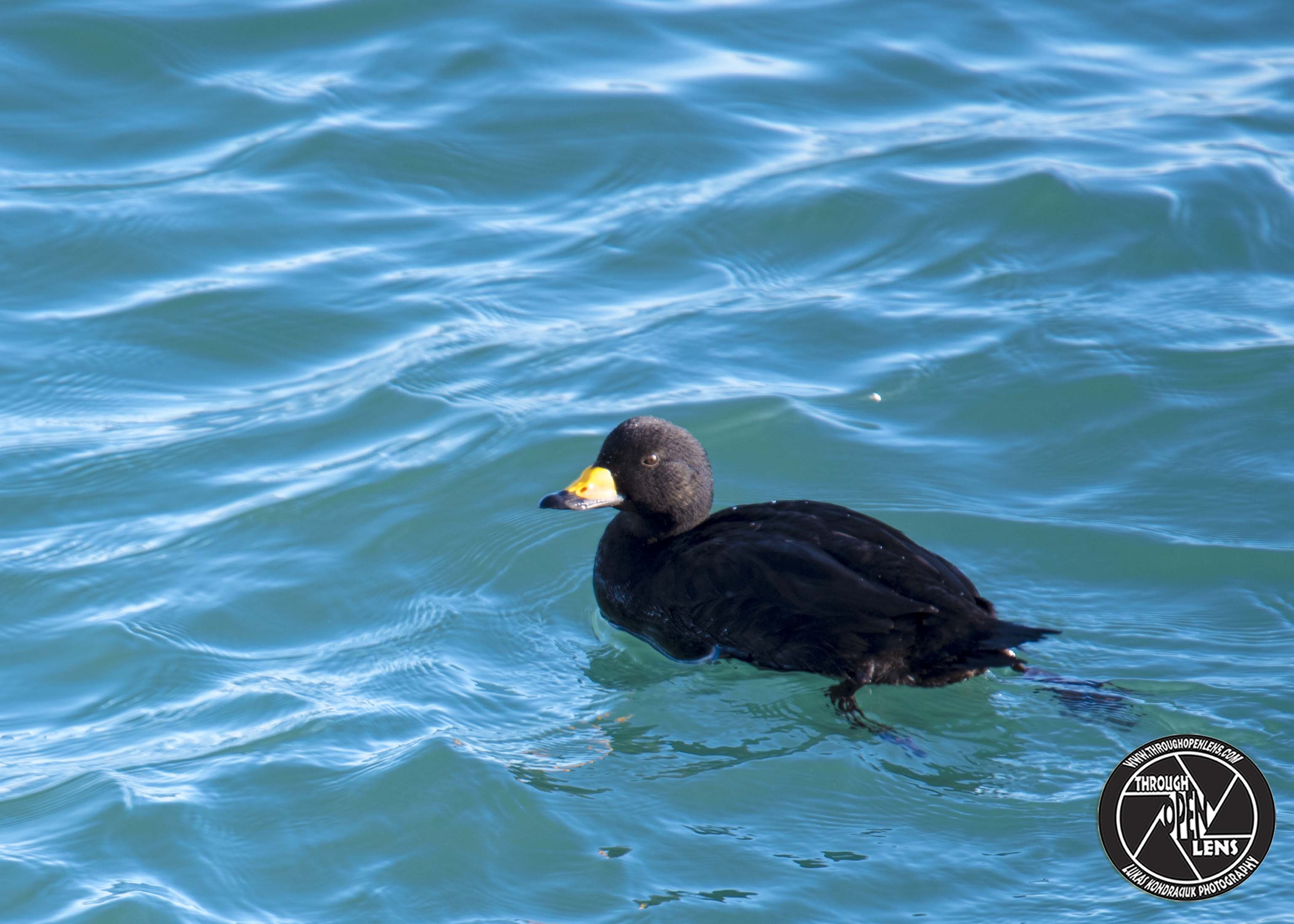
Watch It! I Am Swimming HERE!

F/ 6.3, 1/160, ISO 200.

Black Scoter 

What did the nose say to the finger?

Stop picking on me.

Interesting Fact:  Birds occasionally do a “wing-flap” display while swimming, flapping their wings with the body held up and punctuating this with a downward thrust of head, as if its neck were momentarily broken. ( https://identify.whatbird.com/obj/298/overview/Black_Scoter.aspx )