Swan Lake Ballet ( On Ice )

mute-swan-on-ice

F/8.0, 1/1000, ISO 640.

Mute Swan

A good looking woman walks into a bar wearing a tube top. She raises her hand to signal the bartender for a beer, revealing that she does not shave her

armpits.

Meanwhile, a sloppy drunk on the other side of the bar signals the bartender, “Buy that ballerina over there a drink on me.”

The bartender replies, “What makes you think she’s a ballerina?”

“Because,” answers the drunken man, “any chick that can lift her leg that high has GOT to be a ballerina.”

Interesting Fact: All of the Mute Swans in North America descended from swans imported from Europe from the mid 1800s through early 1900s to adorn large estates, city parks, and zoos. Escapees established breeding populations and are now established in the Northeast, Midatlantic, Great Lakes, and Pacific Northwest of the U.S. ( https://www.allaboutbirds.org/guide/Mute_Swan/lifehistory )

I Love Escorting People… I Put An Ad Out For An Escort Service And Got A LOT Of Responses. Mostly Creeps. Made A Few Friends.

common-merganser-1

F/10.0, 1/1600, ISO 800.

Common Merganser

A police officer was escorting a prisoner to jail when his hat blew off.

“Shall I run and get it for you?” asked the prisoner obligingly.

“Do you think I am a fool” said the officer.

“You stand here and I’ll get it.”

Interesting Fact: The oldest Common Merganser on record was a female, and at least 13 years, 5 months old. She was banded in Oklahoma in 1938 and found in Wisconsin in 1950. ( https://www.allaboutbirds.org/guide/Common_Merganser/lifehistory )

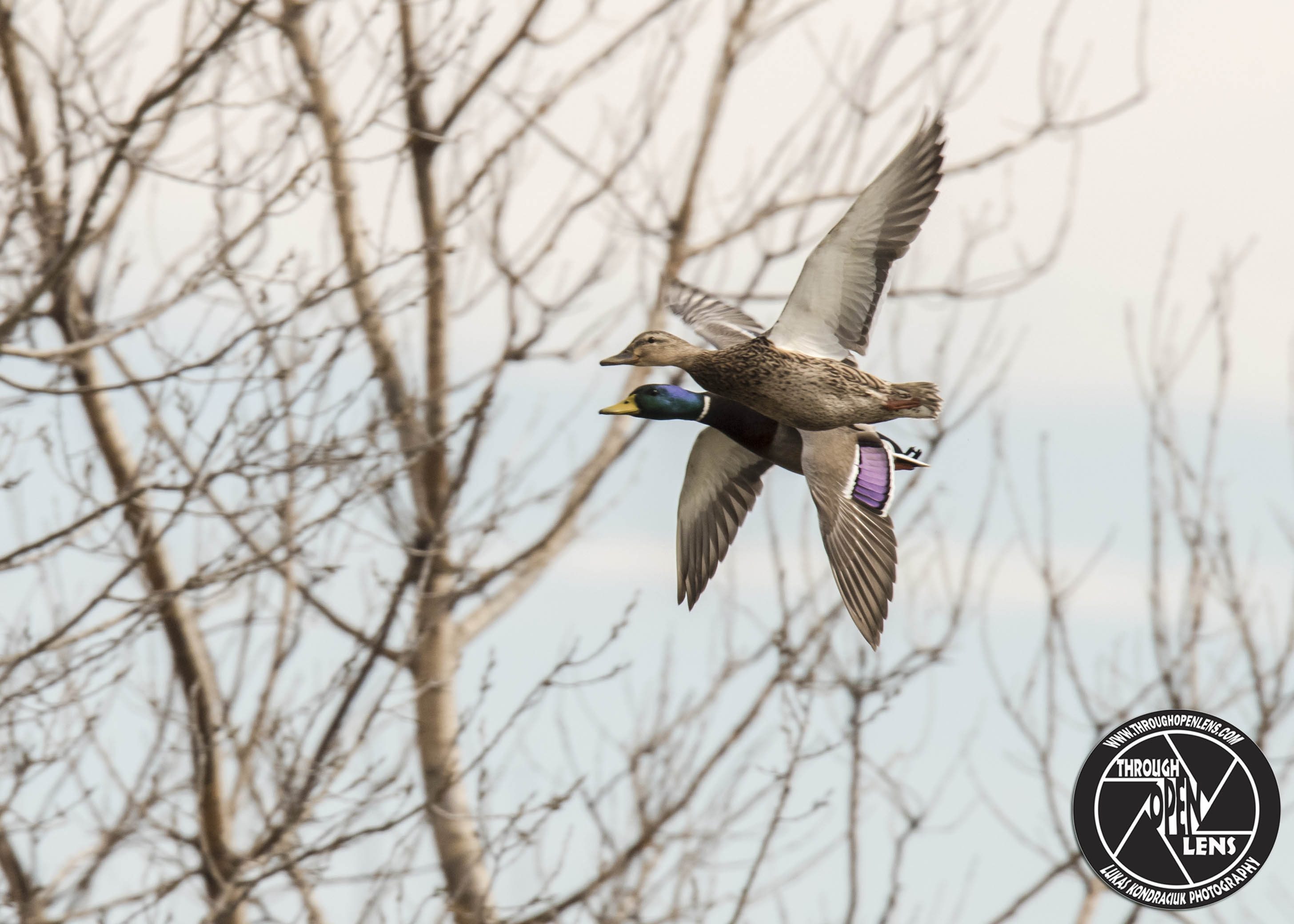
Together We Fly!

F/13.0, 1/640, ISO 400.

Mallard

As a scarecrow, people say I’m outstanding in my field.

But hay, it’s in my jeans.

Interesting Fact: Mallards, like other ducks, shed all their flight feathers at the end of the breeding season and are flightless for 3–4 weeks. They are secretive during this vulnerable time, and their body feathers molt into a concealing “eclipse” plumage that can make them hard to identify. ( https://www.allaboutbirds.org/guide/Mallard )

How low can you go?

northern-shoveler-2

F/9.0, 1/320, ISO 250.

Northern Shoveler 

How do you know if there’s a snowman in your bed?

You wake up wet!

Interesting Fact: The bill of the Northern Shoveler is about 6.5 cm (2.5 inches) long. The bill has has about 110 fine projections (called lamellae) along the edges, for straining food from water. ( https://www.allaboutbirds.org/guide/Northern_Shoveler/lifehistory )

I Dont Give A DUCK!

F/5.6, 1/1600, ISO 400.

Common Merganser ( Female )

Tom and Bob are talking:

Tom: “I managed to lose my rifle when I was in the army.”

Bob: “And…”

Tom: “I had to pay $1000 to cover the loss. I’m starting to understand why a Navy captain always goes down with his ship. ”

Interesting Fact: Often when one bird dives in a large group, the others follow the leader and disappear. They can stay under for up to 2 minutes, but they normally dive for less than 30 seconds. ( https://www.allaboutbirds.org/guide/Common_Merganser/lifehistory )

I Heard Of Skipping Rocks But I Never Seen A Skipping Ducks

F/10.0, 1/400, ISO 250.

Common Merganser

Did you hear the watermelon joke?

It’s pitful.

Interesting Fact: Common Mergansers spend much of their time afloat, loafing, fishing, and often sleeping on open water. They may form flocks of up to 75 individuals. They often swim in small groups along the shoreline, dipping their heads underwater to search for prey and then diving with a slight leap. ( https://www.allaboutbirds.org/guide/Common_Merganser/lifehistory )

Don’t Forget To Duck!

F/6.3, 1/400, ISO 400.

Hooded Merganser

What did the calculator say to the math student?

You can count on me.

Interesting Fact: On the bird family tree, Hooded Mergansers (genus Lophodytes) lie between goldeneyes (Bucephala) and the other North American mergansers (Mergus). They share many courtship behaviors and calls with both of those groups. ( https://www.allaboutbirds.org/guide/Hooded_Merganser/lifehistory )

Don’t Give Me That Look!

F/9.0, 1/320, ISO 320.

Double-crested Cormorant

What did the sick chicken say?

Oh no! I have the people-pox!

Interesting Fact: From a distance, Double-crested Cormorants are dark birds with snaky necks, but up-close they’re quite colorful—with orange-yellow skin on their face and throat, striking aquamarine eyes that sparkle like jewels, and a mouth that is bright blue on the inside. ( https://www.allaboutbirds.org/guide/Double-crested_Cormorant/lifehistory )

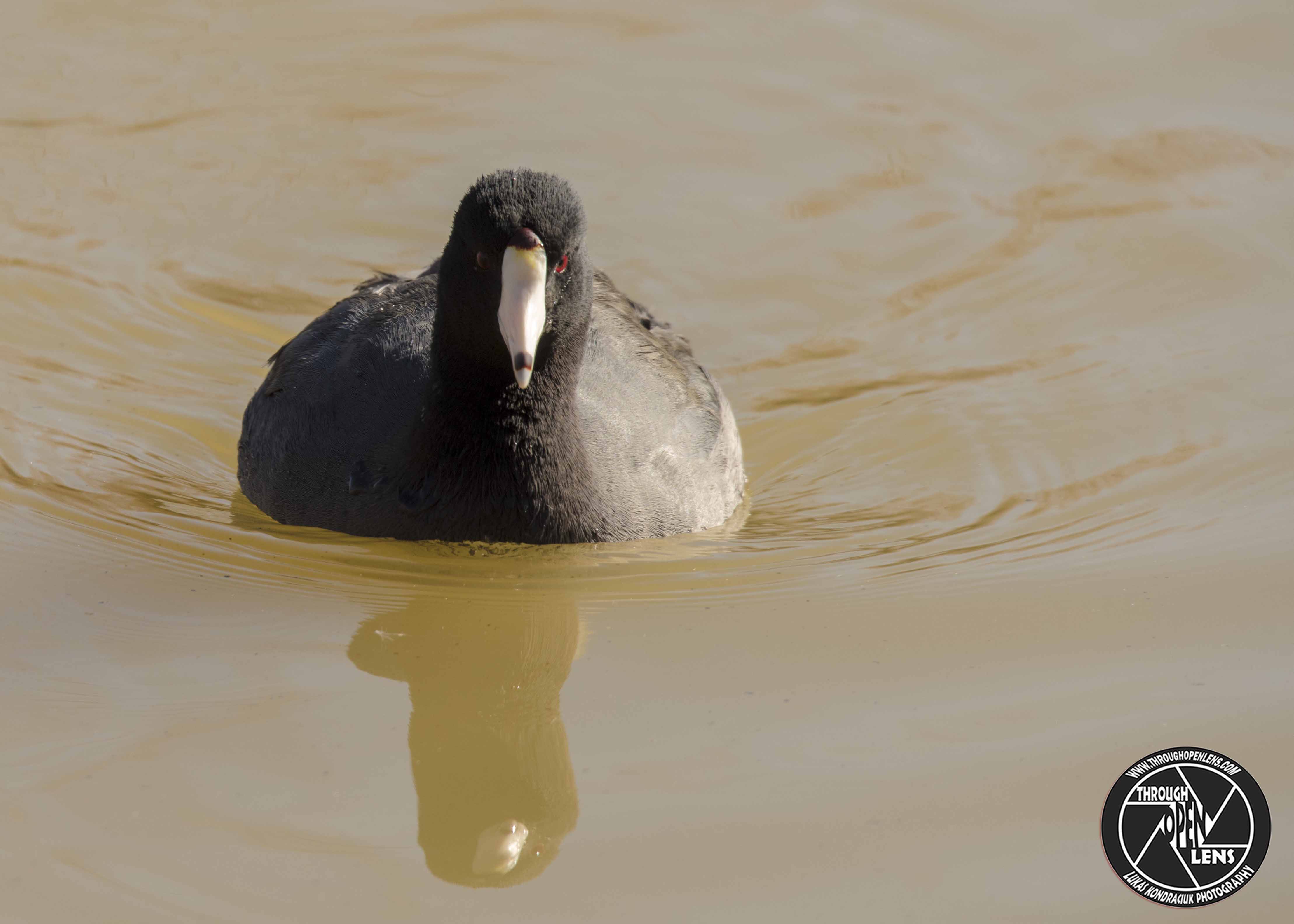
Work Is Just A Daily Detour On My Way To Happy Hour!

F/10.0, 1/400, ISO 320.

American Coot

What did the rug say to the floor?

Don’t move, I’ve got you covered.

Interesting Fact: Although it swims like a duck, the American Coot does not have webbed feet like a duck. Instead, each one of the coot’s long toes has broad lobes of skin that help it kick through the water. The broad lobes fold back each time the bird lifts its foot, so it doesn’t impede walking on dry land, though it supports the bird’s weight on mucky ground. ( https://www.allaboutbirds.org/guide/american_coot )

Do You Think I Give A Quack!

F/10.0, 1/400, ISO 160.

Wood Duck

Why couldn’t the leopard play hide and seek?

Because he was always spotted.

Interesting Fact: Natural cavities for nesting are scarce, and the Wood Duck readily uses nest boxes provided for it. If nest boxes are placed too close together, many females lay eggs in the nests of other females. ( https://www.allaboutbirds.org/guide/Wood_Duck )