People That Take Advice From Duck Are Downright Loony

F/10.0, 1/400, ISO 800.

Common Loon ( Nonbreeding adult )

What computer sings the best?

A Dell.

Interesting Fact: Loons are agile swimmers, but they move pretty fast in the air, too. Migrating loons have been clocked flying at speeds more than 70 mph. ( https://www.allaboutbirds.org/guide/Common_Loon/lifehistory )

Snow Way You’ve Got To Be Flaking Me!

F/5.6, 1/1600, ISO 400.

Mute Swan

Why was the snowman sad?

Cause he had a meltdown.

Interesting Fact: Male Mute Swans select the nest site and may start several nests before the female accepts the location. Nest sites are safe from flooding yet offer easy access to water, with ample nesting materials and food nearby–often on a small peninsula, along a heavily vegetated shoreline, or on a small to medium-sized island.  ( https://www.allaboutbirds.org/guide/Mute_Swan/lifehistory )


I Love Escorting People… I Put An Ad Out For An Escort Service And Got A LOT Of Responses. Mostly Creeps. Made A Few Friends.

common-merganser-1

F/10.0, 1/1600, ISO 800.

Common Merganser

A police officer was escorting a prisoner to jail when his hat blew off.

“Shall I run and get it for you?” asked the prisoner obligingly.

“Do you think I am a fool” said the officer.

“You stand here and I’ll get it.”

Interesting Fact: The oldest Common Merganser on record was a female, and at least 13 years, 5 months old. She was banded in Oklahoma in 1938 and found in Wisconsin in 1950. ( https://www.allaboutbirds.org/guide/Common_Merganser/lifehistory )

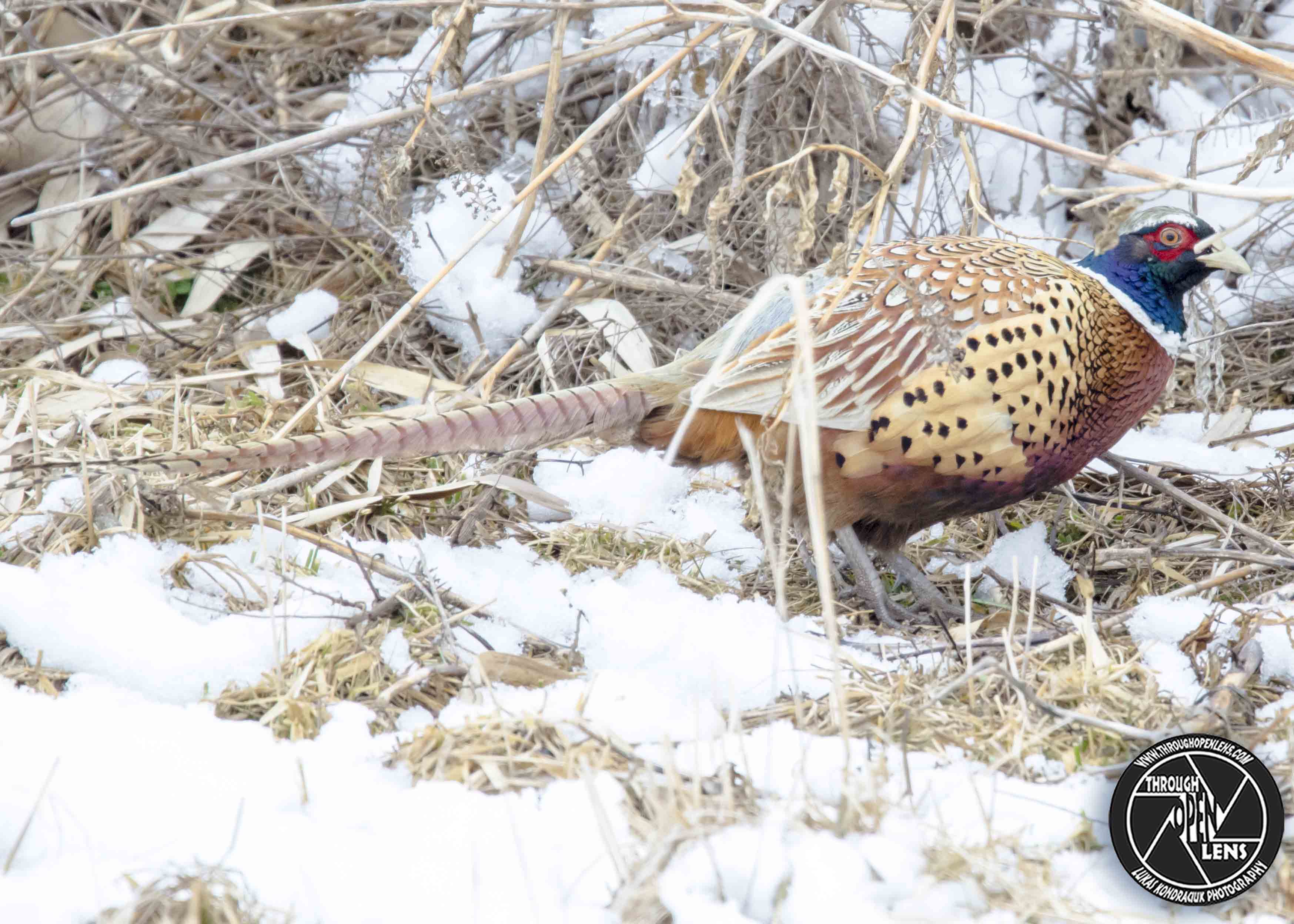
Mother Pheasant Plucker!

F/6.3, 1/250, ISO 1600.

Ring-Necked Pheasant

What is dangerous?

Sneezing while having diarrhea!

Interesting Fact:  Pheasants, along with most members of the grouse family, have specialized, powerful breast muscles—the “white meat” that you find on a chicken. These muscles deliver bursts of power that allow the birds to escape trouble in a hurry, flushing nearly vertically into the air and reaching speeds of nearly 40 miles per hour.  ( https://www.allaboutbirds.org/guide/Ring-necked_Pheasant/lifehistory )

Eat My Bubbles!

F/9.0, 1/320, ISO 200.

Red-breasted Merganser  

Tom and Bobby are talking:

Bobby: “Holy crap, I just fell off a 50 ft ladder.”

Tom: “Oh my God, are you okay?”

Bobby: “Yeah it’s a good thing I fell off the first step.”

Interesting Fact: Its breedinghabitat is freshwater lakes and rivers across northern North America, Greenland, Europe, and Asia. It nests in sheltered locations on the ground near water. It is migratory and many northern breeders winter in coastalwaters further south. ( https://en.wikipedia.org/wiki/Red-breasted_merganser#Behaviour )

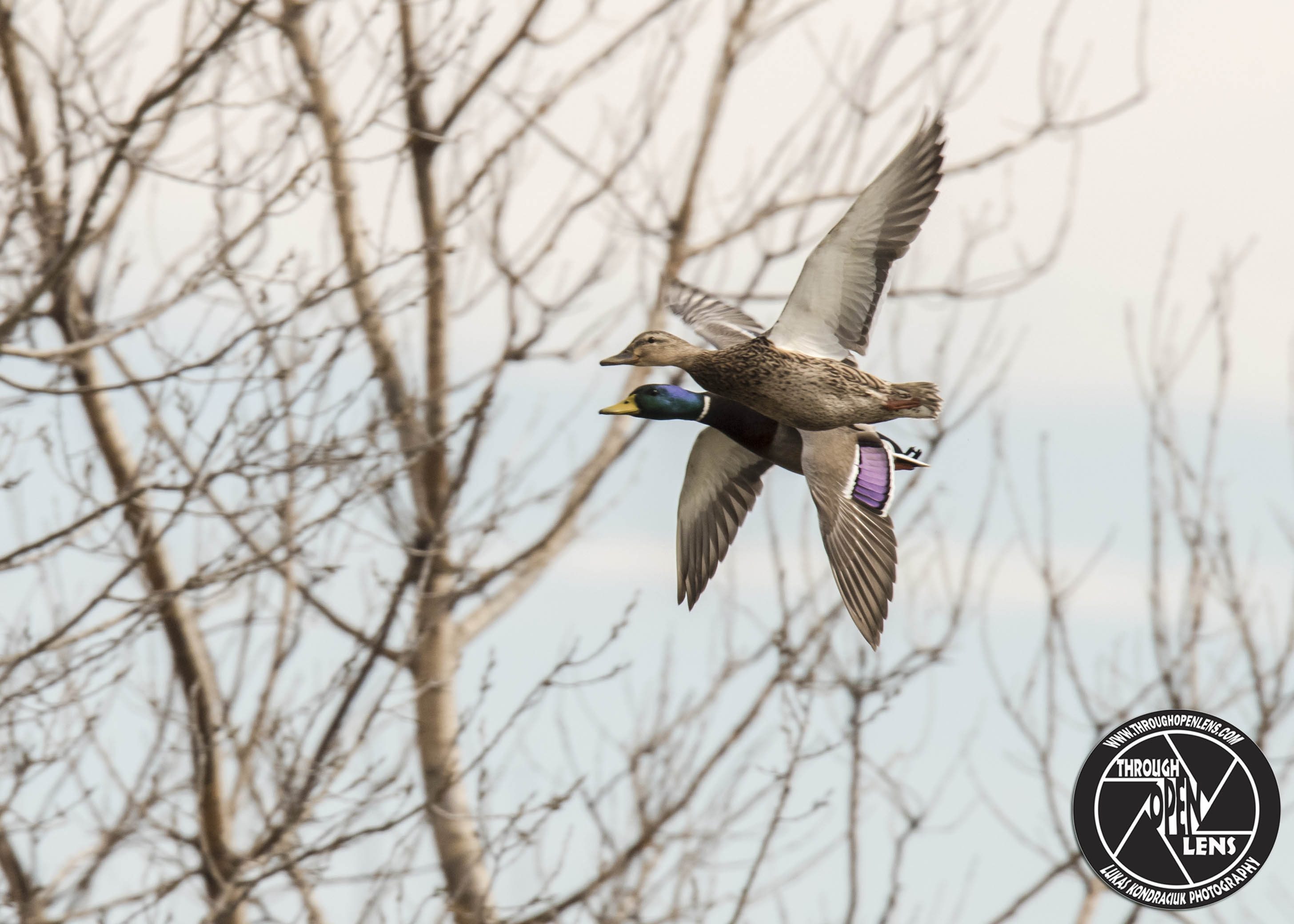
Together We Fly!

F/13.0, 1/640, ISO 400.

Mallard

As a scarecrow, people say I’m outstanding in my field.

But hay, it’s in my jeans.

Interesting Fact: Mallards, like other ducks, shed all their flight feathers at the end of the breeding season and are flightless for 3–4 weeks. They are secretive during this vulnerable time, and their body feathers molt into a concealing “eclipse” plumage that can make them hard to identify. ( https://www.allaboutbirds.org/guide/Mallard )

How low can you go?

northern-shoveler-2

F/9.0, 1/320, ISO 250.

Northern Shoveler 

How do you know if there’s a snowman in your bed?

You wake up wet!

Interesting Fact: The bill of the Northern Shoveler is about 6.5 cm (2.5 inches) long. The bill has has about 110 fine projections (called lamellae) along the edges, for straining food from water. ( https://www.allaboutbirds.org/guide/Northern_Shoveler/lifehistory )

I Dont Give A DUCK!

F/5.6, 1/1600, ISO 400.

Common Merganser ( Female )

Tom and Bob are talking:

Tom: “I managed to lose my rifle when I was in the army.”

Bob: “And…”

Tom: “I had to pay $1000 to cover the loss. I’m starting to understand why a Navy captain always goes down with his ship. ”

Interesting Fact: Often when one bird dives in a large group, the others follow the leader and disappear. They can stay under for up to 2 minutes, but they normally dive for less than 30 seconds. ( https://www.allaboutbirds.org/guide/Common_Merganser/lifehistory )

I Heard Of Skipping Rocks But I Never Seen A Skipping Ducks

F/10.0, 1/400, ISO 250.

Common Merganser

Did you hear the watermelon joke?

It’s pitful.

Interesting Fact: Common Mergansers spend much of their time afloat, loafing, fishing, and often sleeping on open water. They may form flocks of up to 75 individuals. They often swim in small groups along the shoreline, dipping their heads underwater to search for prey and then diving with a slight leap. ( https://www.allaboutbirds.org/guide/Common_Merganser/lifehistory )

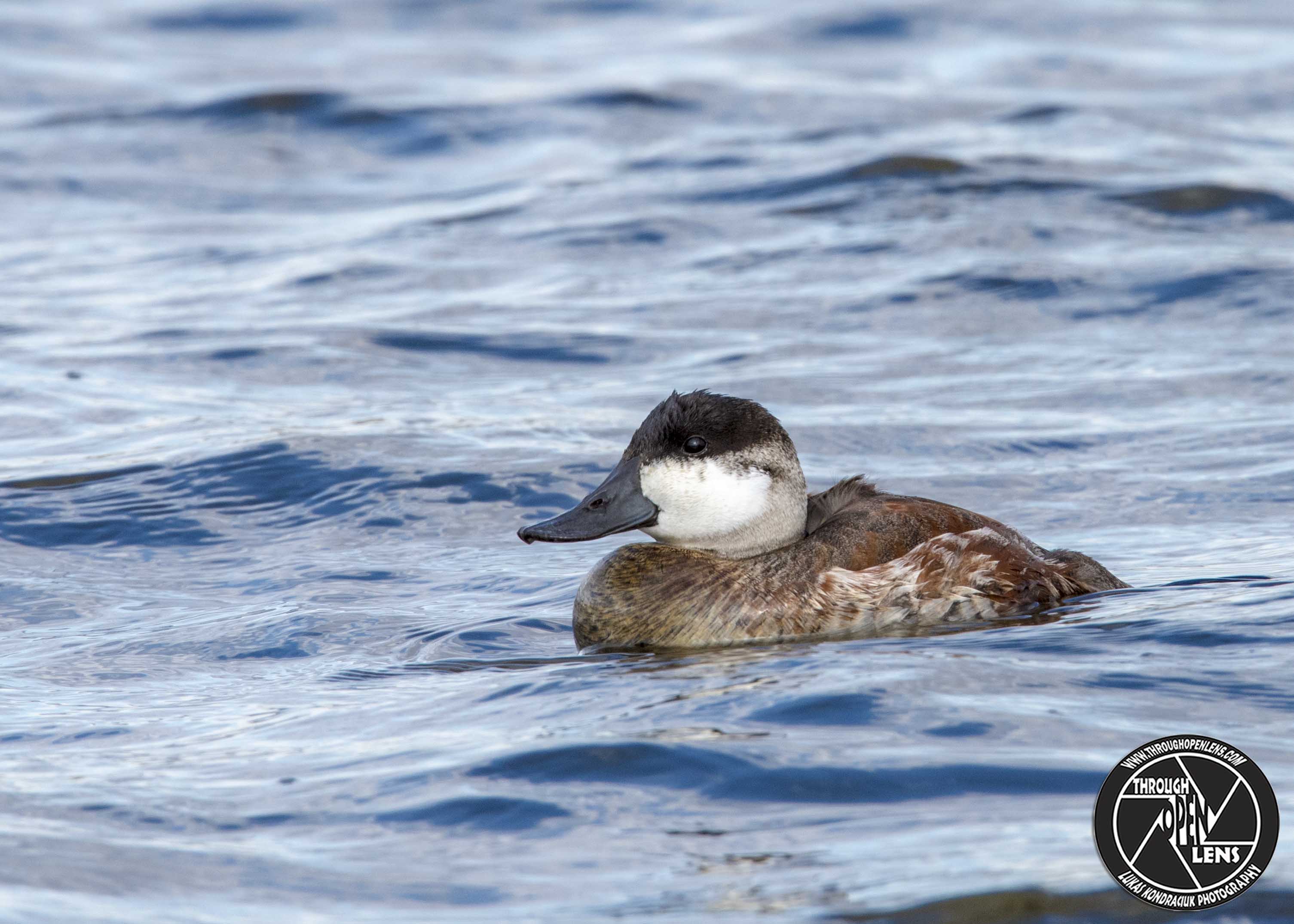
Sometimes Life Isn’t All It’s Quacked Up To Be!

F/11.0, 1/500, ISO 500.

Ruddy Duck

Why are trees so care free and easy going?

Because every fall, they let loose.

Interesting Fact: Ruddy Ducks breed in wetlands and reservoirs from southwestern Canada through the western United States and Mexico, as well as in scattered sites in the eastern United States and on the Caribbean islands. About 86 percent of the breeding population is concentrated in the prairie pothole region of south-central Canada and north-central United States. Their breeding habitat includes large marshes, stock ponds, reservoirs, and deep natural basins. ( https://www.allaboutbirds.org/guide/Ruddy_Duck/lifehistory )