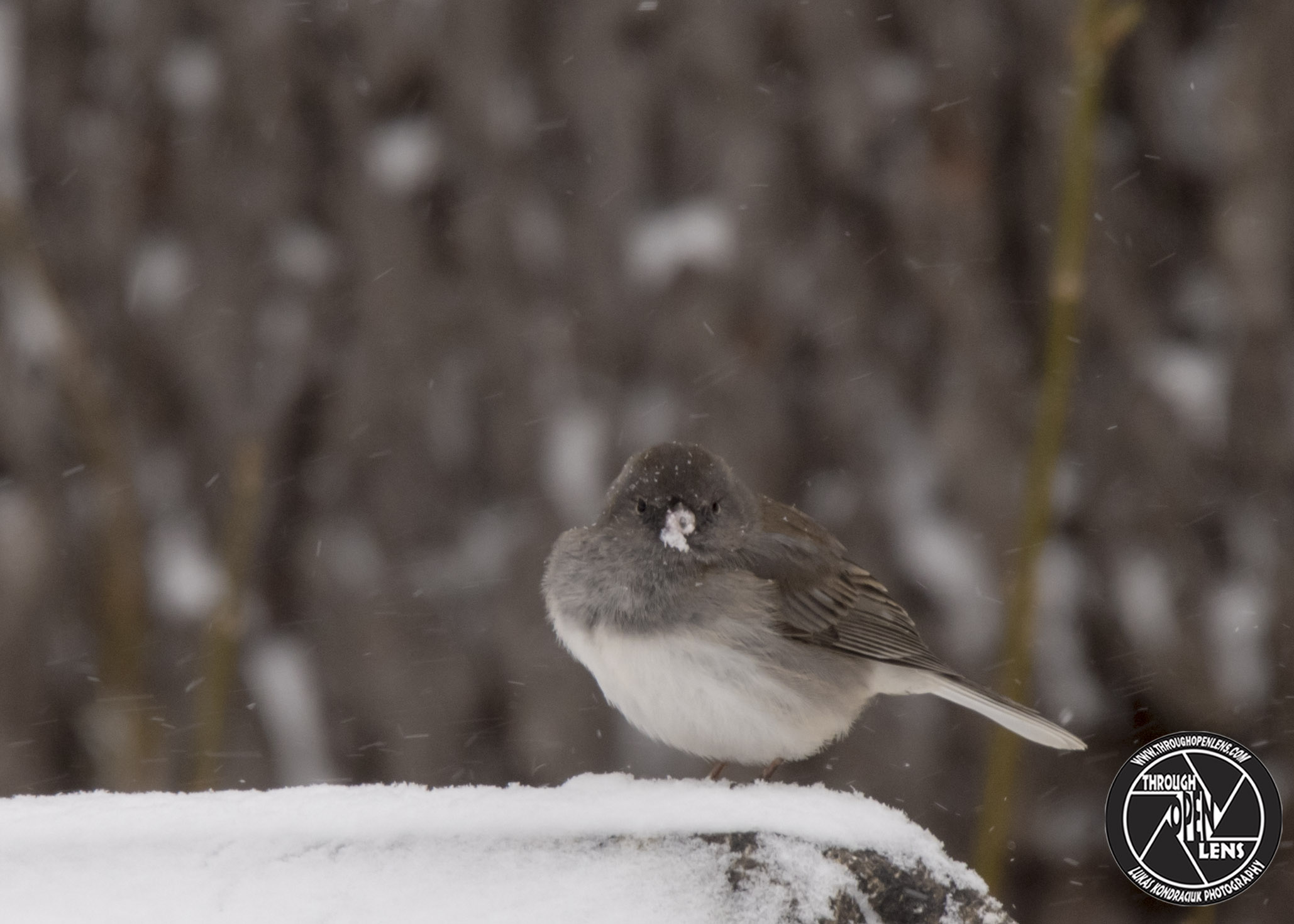
I Am Addicted To Snow!

F/7.1, 1/200, ISO 320.

Dark-eyed Junco

How does a Snowman get to work?

By icicle.

Interesting Fact: Dark-eyed Juncos breed in forests across much of North America and at elevations ranging from sea level to more than 11,000 feet. They are often found in coniferous forests incuding pine, Douglas-fir, spruce, and fir, but also in deciduous forests such as aspen, cottonwood, oak, maple, and hickory. During winter and on migration they use a wider variety of habitats including open woodlands, fields, roadsides, parks, and gardens. ( https://www.allaboutbirds.org/guide/Dark-eyed_Junco/lifehistory )

WHAT DO YOU WANT?!

american-kestrel-1

F/6.3, 1/640, ISO 200.

American Kestrel

Bacon and eggs walk into a bar and order a beer, the bartender says sorry, we don’t serve breakfast.

Interesting Fact:

Sports fans in some cities get an extra show during night games: kestrels perching on light standards or foul poles, tracking moths and other insects in the powerful stadium light beams and catching these snacks on the wing. Some of their hunting flights have even made it onto TV sports coverage.  ( https://www.allaboutbirds.org/guide/American_Kestrel/lifehistory )


Quack Addict

hooded-mergansers-female

F/6.3, 1/500, ISO 220.

Hooded Merganser ( Female )

What did the duck carry his schoolbooks in?

His Quackpack

Interesting Fact: The Hooded Merganser is the second-smallest of the six living species of mergansers (only the Smew of Eurasia is smaller) and is the only one restricted to North America. ( https://www.allaboutbirds.org/guide/Hooded_Merganser/lifehistory )


Quack You, You Quacker!

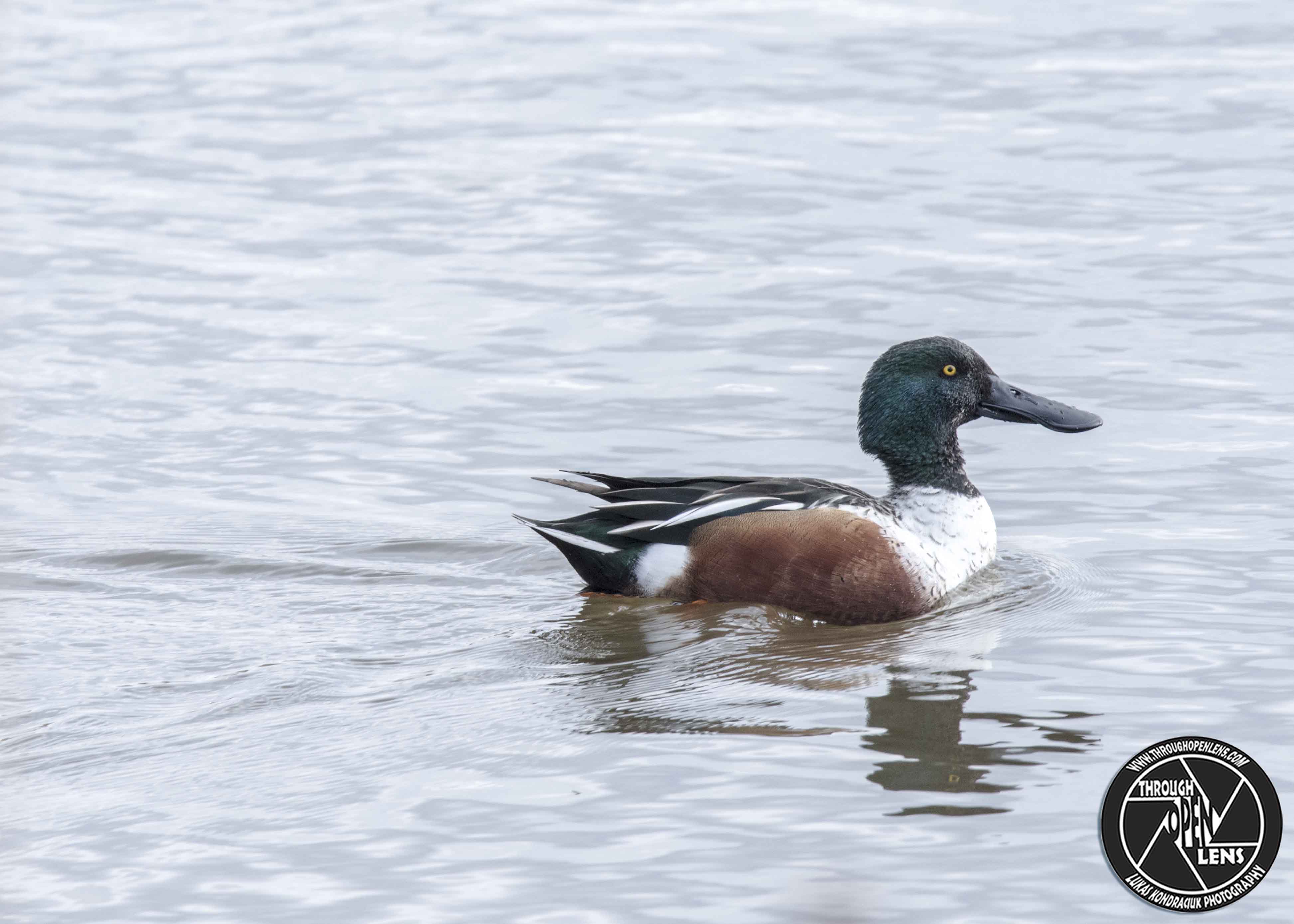
F/ 10.0, 1/320, ISO 320.

Northern Shoveler 

What do you call a kid who doesn’t believe in Santa?

A rebel without a Claus.

Interesting Fact: They are often referred to as the “Spoonbill” or “Spoony” because of their unique spatulate shaped bill, which has about 110 fine projections (called lamellae) along the edges, for straining food from water.  ( http://identify.whatbird.com/obj/97/overview/Northern_Shoveler.aspx )

Stop Waiting For Prince Charming. Get Up And Find Him. The Poor Idiot May Be Stuck In A Tree Or Something.

black-crowned-night-heron-tree

F/10.0, 1/1600, ISO 800.

Black-crowned Night-Heron

Did you know that before you became my best friend, I used to hang out with another girl every single day in her super awesome tree house?

It’s true, but unfortunately we had a falling-out.

Interesting Fact: Scientists find it easy, if a bit smelly and messy, to study the diet of young Black-crowned Night-Herons—the nestlings often disgorge their stomach contents when approached. ( https://www.allaboutbirds.org/guide/Black-crowned_Night-Heron/lifehistory )


Point Of View

white-breasted-nuthatch

F/8.0, 1/250, ISO 320.

White-breasted Nuthatch

How do you keep from getting cold feet?

Don’t go around BRRfooted!

Interesting Fact:  If you see a White-breasted Nuthatch making lots of quick trips to and from your feeder – too many for it to be eating them all – it may be storing the seeds for later in the winter, by wedging them into furrows in the bark of nearby trees. ( https://www.allaboutbirds.org/guide/White-breasted_Nuthatch/lifehistory )

Away With You…. PHEASANT.

ring-necked-pheasant

F/6.3, 1/500, ISO 1100.

Ring-Necked Pheasant

A pheasant says to a bull, “I would love to get on top of that tree, but I haven’t the energy.”

“Well,” says the bull, “why don’t you eat some of my dung? It’s packed with nutrients.”

So the pheasant eats some dung and finds that it gives him enough energy to get to the first branch. The next day, he eats some more and gets to the next branch. This cycle continues for a week. Finally, the pheasant is at the top of the tree, where he is spotted by the farmer, who shoots him with a shotgun.

Moral of the Story: bullsh*t might take you to the top, but it won’t keep you there.

Interesting Fact: While the birds normally don’t cover more than about 600 feet at a time, strong winds can extend their flights considerably. Observers in 1941 reported seeing a pheasant fly a record four miles while crossing a body of water. ( https://www.allaboutbirds.org/guide/Ring-necked_Pheasant/lifehistory )

What The Duck?

bufflehead

F/10.0, 1/400, ISO 250.
Bufflehead Duck

Two ducks are in a pond.

One went “Quack quack!”

And the other duck said “That’s funny I was just about to say that!”

Interesting Fact: The Bufflehead nests almost exclusively in holes excavated by Northern Flickers and, on occasion, by Pileated Woodpeckers. ( https://www.allaboutbirds.org/guide/Bufflehead/lifehistory )

Swim Your Heart Out!

F/10.0, 1/400, ISO 250.

Bufflehead Duck 

What do you call two ducks and a cow?

Quackers and Milk.

Interesting Fact: Bufflehead fossils from the late Pleistocene (about 500,000 years ago) have been found in Alaska, California, Florida, Illinois, Kansas, Texas, and Washington. One California fossil that resembles a modern Bufflehead dates to the late Pliocene, two million years ago.  ( https://www.allaboutbirds.org/guide/Bufflehead/lifehistory )

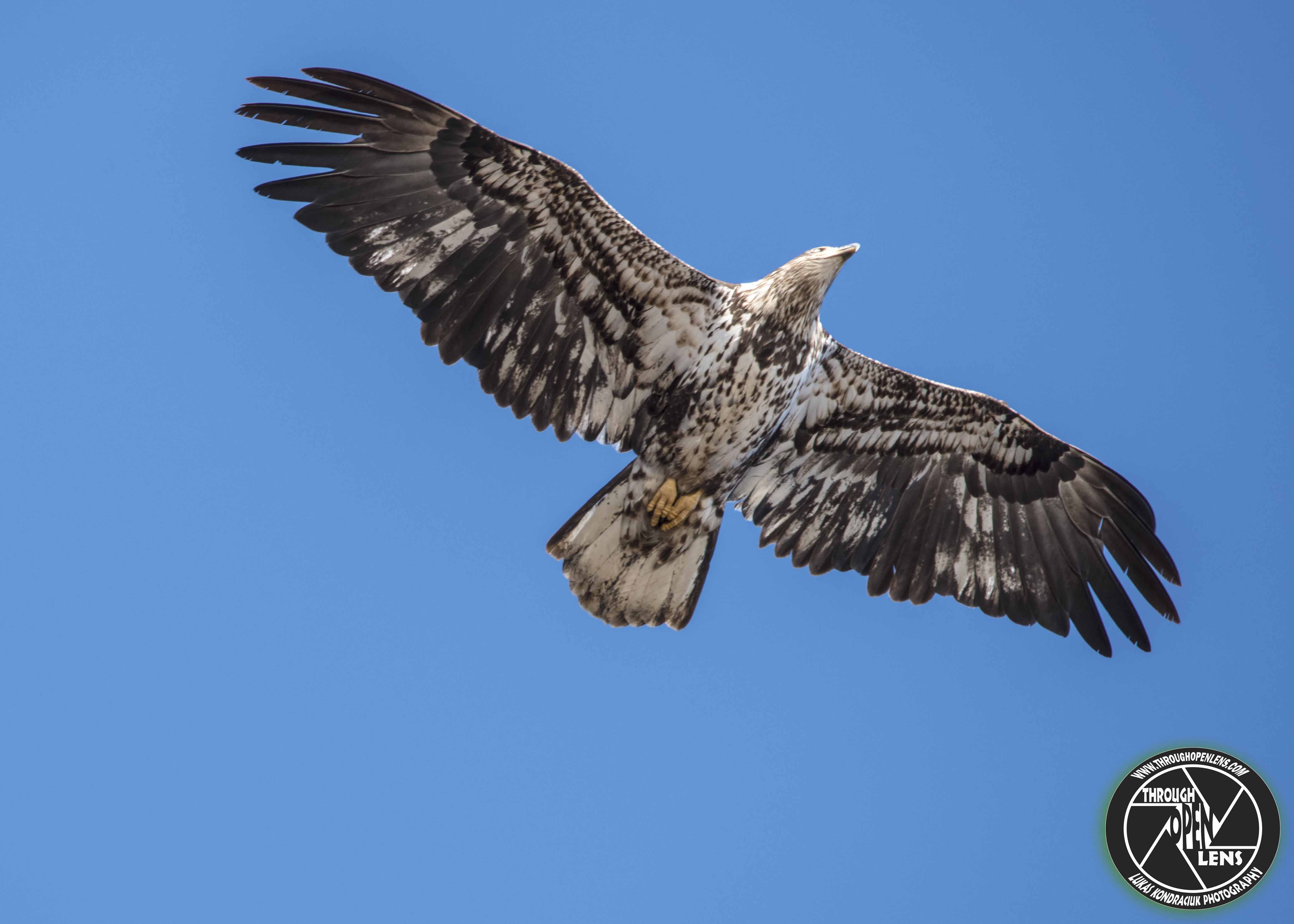
Now That’s What I Call Spread Eagle!

bald-eagle-juvenile

F/9.0, 1/320, ISO 320.

Bald Eagle ( Juvenile )

What does the eagle say to his friends before they go out hunting for food ?

“Let us prey.”

Interesting Fact: The largest Bald Eagle nest on record, in St. Petersburg, Florida, was 2.9 meters in diameter and 6.1 meters tall. Another famous nest—in Vermilion, Ohio—was shaped like a wine glass and weighed almost two metric tons. It was used for 34 years until the tree blew down. ( https://www.allaboutbirds.org/guide/Bald_Eagle/lifehistory )