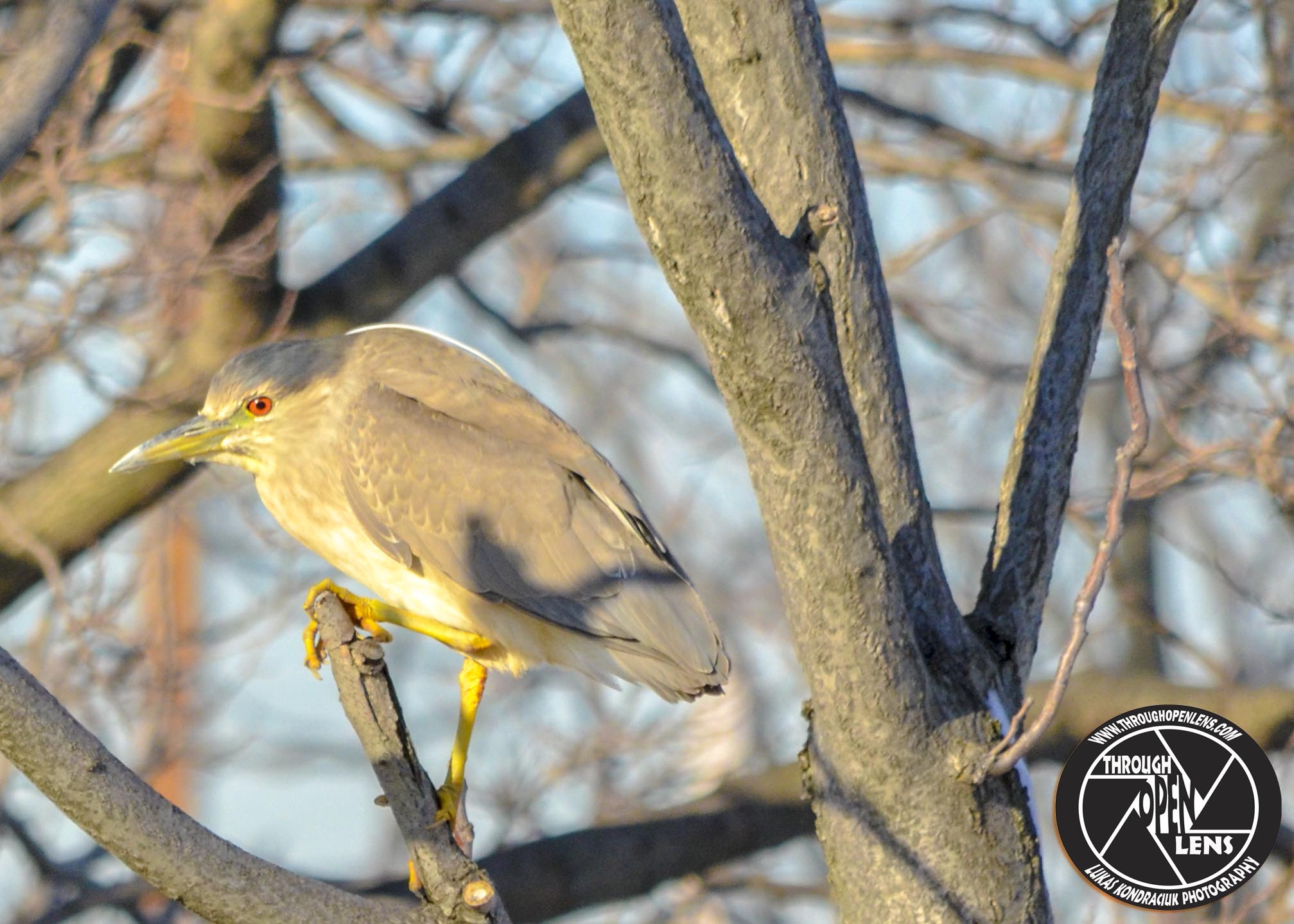
I Solemnly Swear I Am Up To No Good!

F/9.0, 1/125, ISO 320.

Black-crowned Night-Heron

Guest at a restaurant: “I refuse to eat this roast beef. Please call the manager! “

Waiter: “That’s no use. He won’t eat it either.”

Interesting Fact: Black-crowned Night Heron nest in groups that often include other species, including herons, egrets, and ibises. ( https://www.allaboutbirds.org/guide/Black-crowned_Night-Heron )

Go Green Or I’ll Scream!

F/6.3, 1/160, ISO 320.

American Wigeon

Why is it hard to play cards in the jungle?

There are too many cheetahs!

Interesting Fact: The American Wigeon was formerly known as “Baldpate” because the white stripe resembled a bald man’s head.  ( https://www.allaboutbirds.org/guide/American_Wigeon/lifehistory )

He Went Thataway!

F/8.0, 1/250, ISO 320.

White-breasted Nuthatch

A wife complains to her husband: “Just look at that couple down the road, how lovely they are. He keeps holding her hand, kissing her, holding the door for her, why can’t you do the same?”

The husband: “Are you mad? I barely know the woman!”

Interesting Fact: White-breasted Nuthatches live in pairs year round and chase other nuthatches from their territory. Agitated birds fan their tails, flick their wings, or raise the feathers of the back. A bird backing down from a confrontation typically raises its bill and tail, and droops its wings. In winter White-breasted Nuthatches join groups of chickadees, titmice, and woodpeckers to forage.  ( https://www.allaboutbirds.org/guide/White-breasted_Nuthatch/lifehistory#behavior

Don’t Confuse Me With Twitter!

F/9.0, 1/320, ISO 400.

Blue Jay

What do you get when you cross and smurf and a cow?

Blue cheese!

Interesting Fact: The black bridle across the face, nape, and throat varies extensively and may help Blue Jays recognize one another. ( https://www.allaboutbirds.org/guide/Blue_Jay/lifehistory

Better Days Are Coming. They Are Called: Saturday And Sunday!

F/9.0, 1/250, ISO 200.

Common Eider ( Male ) 

How are hockey players like goldfish?

You tap on the glass to get their attention.

Interesting Facts: Common Eiders appear to be monogamous, though males will display to females other than their primary partner. Pairs sometimes reunite in consecutive seasons. During periods of calm weather in autumn, males begin to display, both singly and in groups, tossing their heads, stretching their necks, and flapping their wings while keeping up a soft cooing. Pairs often copulate during fall and winter, well outside of the nesting season. ( Common Eider Life History, All About Birds, Cornell Lab of Ornithology )

Monday Blues

F/7.1, 1/200, ISO 400.

Eastern Bluebird 

Where does Capitan Hook go shopping?

Second hand stores.

Interesting Fact: Eastern Bluebirds eat mostly insects, wild fruit and berries. Occasionally, Eastern Bluebirds have also been observed capturing and eating larger prey items such as shrews, salamanders, snakes, lizards and tree frogs. ( Eastern Bluebird Overview, All About Birds, Cornell Lab of Ornithology )


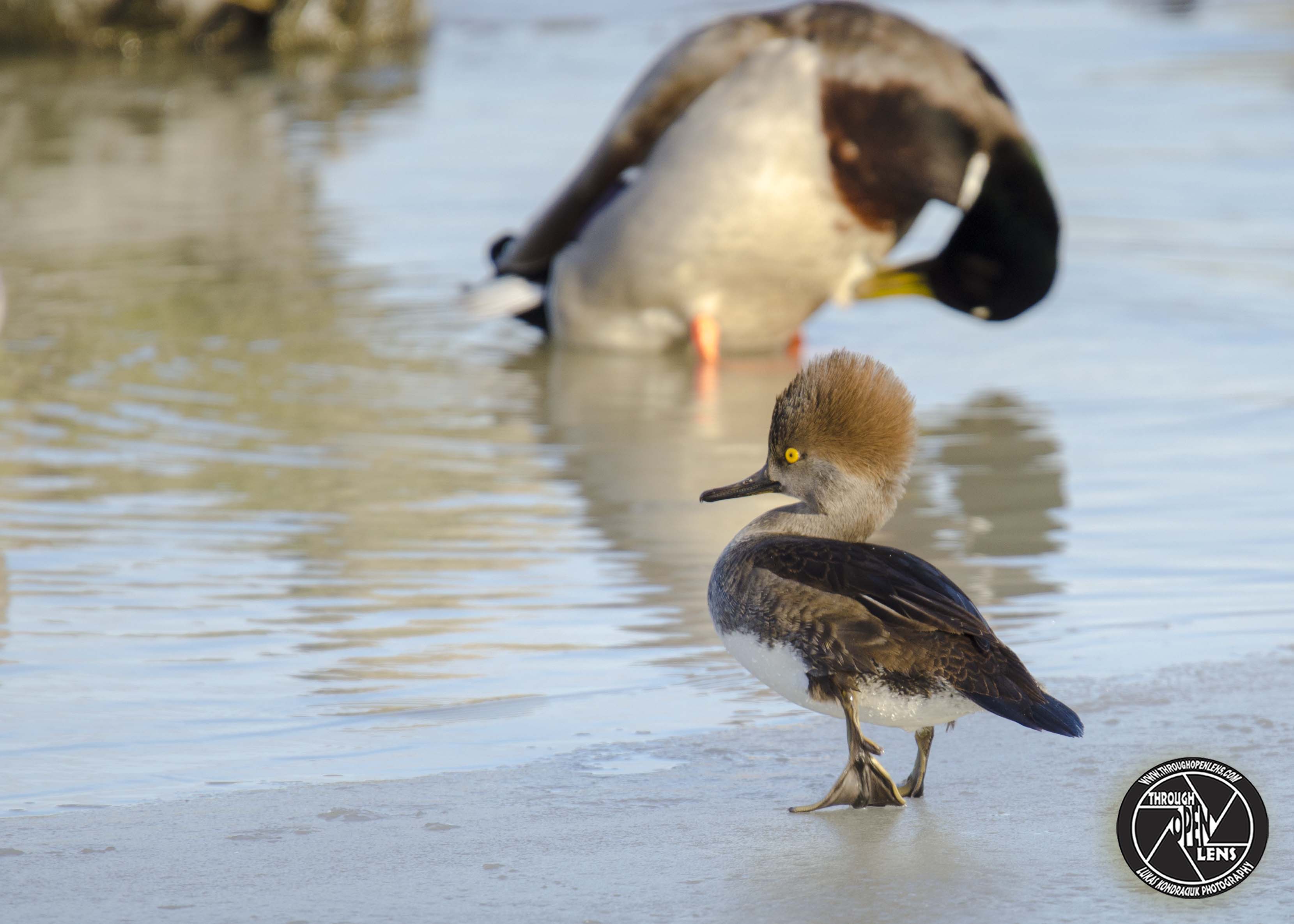
I’m A Duck That Does Not Give A Quack!

F/6.3, 1/500, ISO 250.

Hooded Merganser ( Female )

2 Guys walking down the street.

One walks into a bar, the other ducks.

Interesting Fact:  The female chooses the nest site, and may start scouting for next year’s tree cavity at the end of each breeding season. Nest cavities can be in live or dead trees and are usually close to water. Cavities are typically 10–50 feet off the ground, up to about 90 feet. Hooded Mergansers nest readily in boxes, preferring those with wood shavings or nest material from previous uses. They prefer cavities with 3–5 inch openings. ( https://www.allaboutbirds.org/guide/Hooded_Merganser/overview )

When Nothing Goes Right… Go Left!

F/10.0, 1/400, ISO 250.

Sandhill Cranes

How do you make fruit punch?

Give them boxing gloves.

Interesting Fact: Sandhill Cranes are known for their dancing skills. Courting cranes stretch their wings, pump their heads, bow, and leap into the air in a graceful and energetic dance. ( Sandhill Crane Overview, All About Birds, Cornell Lab of Ornithology )


Like I Give A Duck!

F/11.0, 1/500, ISO 320.

Ruddy Duck 

Why do bees have sticky hair?

They use honey-combs.

Interesting Fact: Though Ruddy Ducks are native to the Americas, one population became established in England after captive ducks escaped in 1952. This population grew to about 3,500 individuals by 1992, and now appears to be expanding into the Netherlands, France, Belgium, and Spain. ( Ruddy Duck Overview, All About Birds, Cornell Lab of Ornithology )

A Good Joke Always Quacks Me Up!

F/10.0, 1/400, ISO 320.

Bufflehead Duck ( Female )

Why couldn’t the bicycle stand up by itself?

It was two tired.

Interesting Fact: They hold their wings tightly against their bodies underwater and use only their feet to propel themselves. At the end of a dive, they may bob to the surface like a cork. Throughout the day they alternate between bouts of feeding, swimming alertly, preening, and sleeping. ( Bufflehead Life History, All About Birds, Cornell Lab of Ornithology )