I Used My Last “Chill-Pill” Yesturday. This Is Your ONLY Warning!

F/10.0, 1/400, ISO 160.

Palmchat

What happened when you go inside with a snowsuit on?

It melts

Interesting Fact: The breeding season is mainly from March to June. The birds build large, messy, communal nests of twigs in the crowns of palms (mainly royal palms Roystonea sp.). Occasionally, in the absence of palms, other trees or even telephone poles, may be used. The whole nesting structure may be up to 2 m across, containing up to 30 adjoining nests with their own separate chambers and entrances. The females lay clutches of 2-4 thickly spotted, grey-purple eggs.  ( https://en.wikipedia.org/wiki/Palmchat )

My Life Is So Much More Interesting Inside My Head

F/10.0, 1/400, ISO 400.

Ruby-crowned Kinglet

Four high school boys afflicted with spring fever skipped morning classes. After lunch they reported to the teacher that they had a flat tire.

Much to their relief she smiled and said, “Well, you missed a test today so take seats apart from one another and take out a piece of paper.”

Still smiling, she waited for them to sit down. Then she said: “First Question: Which tire was flat?”

Interesting Fact: Ruby-crowned Kinglets breed across far northern North America as well as the western mountains. Most migrate to the southern and southwestern United States and Mexico for the winter—but some mountain populations in the West simply move to lower elevations during the cold months. ( https://www.allaboutbirds.org/guide/Ruby-crowned_Kinglet/maps-range )

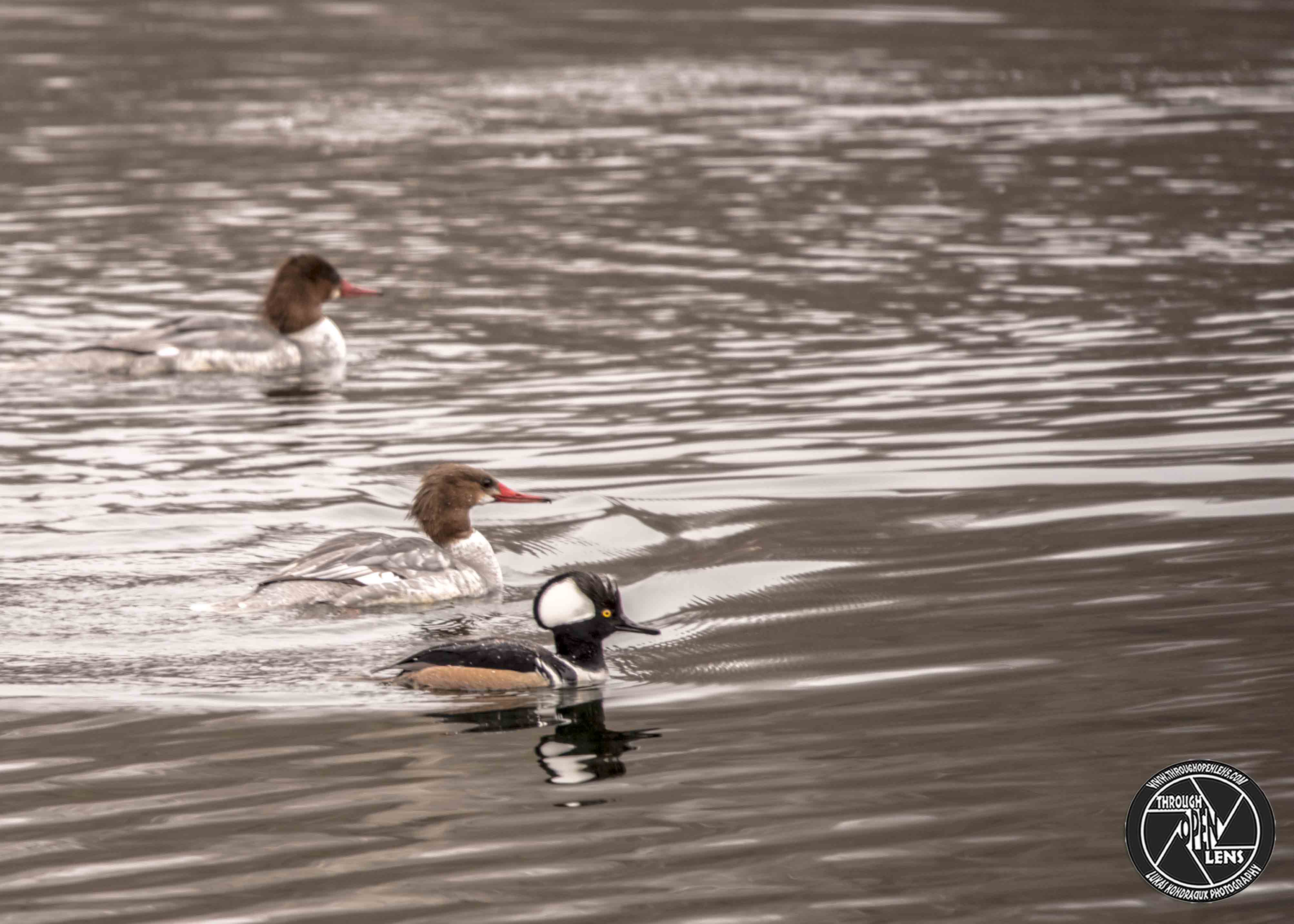
And The Race Is On!

F/6.3, 1/100 ISO 400.

Hooded Merganser

Common Merganser ( Females )

What is the color of the wind?

Blew.

Interesting Fact: The female chooses the nest site, and may start scouting for next year’s tree cavity at the end of each breeding season. Nest cavities can be in live or dead trees and are usually close to water. Cavities are typically 10–50 feet off the ground, up to about 90 feet. Hooded Mergansers nest readily in boxes, preferring those with wood shavings or nest material from previous uses. They prefer cavities with 3–5 inch openings. ( https://www.allaboutbirds.org/guide/Hooded_Merganser/lifehistory )

Chillin’ Like A Villain!

F/8.0, 1/250. ISO 1000.

Bold Eagle

Why is Peter Pan always flying?

Because he neverlands.

Interesting Fact: Bald Eagles nest in trees except in regions where only cliff faces or ground sites are available. They tend to use tall, sturdy conifers that protrude above the forest canopy, providing easy flight access and good visibility. In southern parts of their range, Bald Eagles may nest in deciduous trees, mangroves, and cactus. It’s unknown whether the male or the female takes the lead in selecting a nest site. Nests are typically built near the trunk, high up in the tree but below the crown (unlike Osprey nests). ( https://www.allaboutbirds.org/guide/Bald_Eagle/lifehistory )

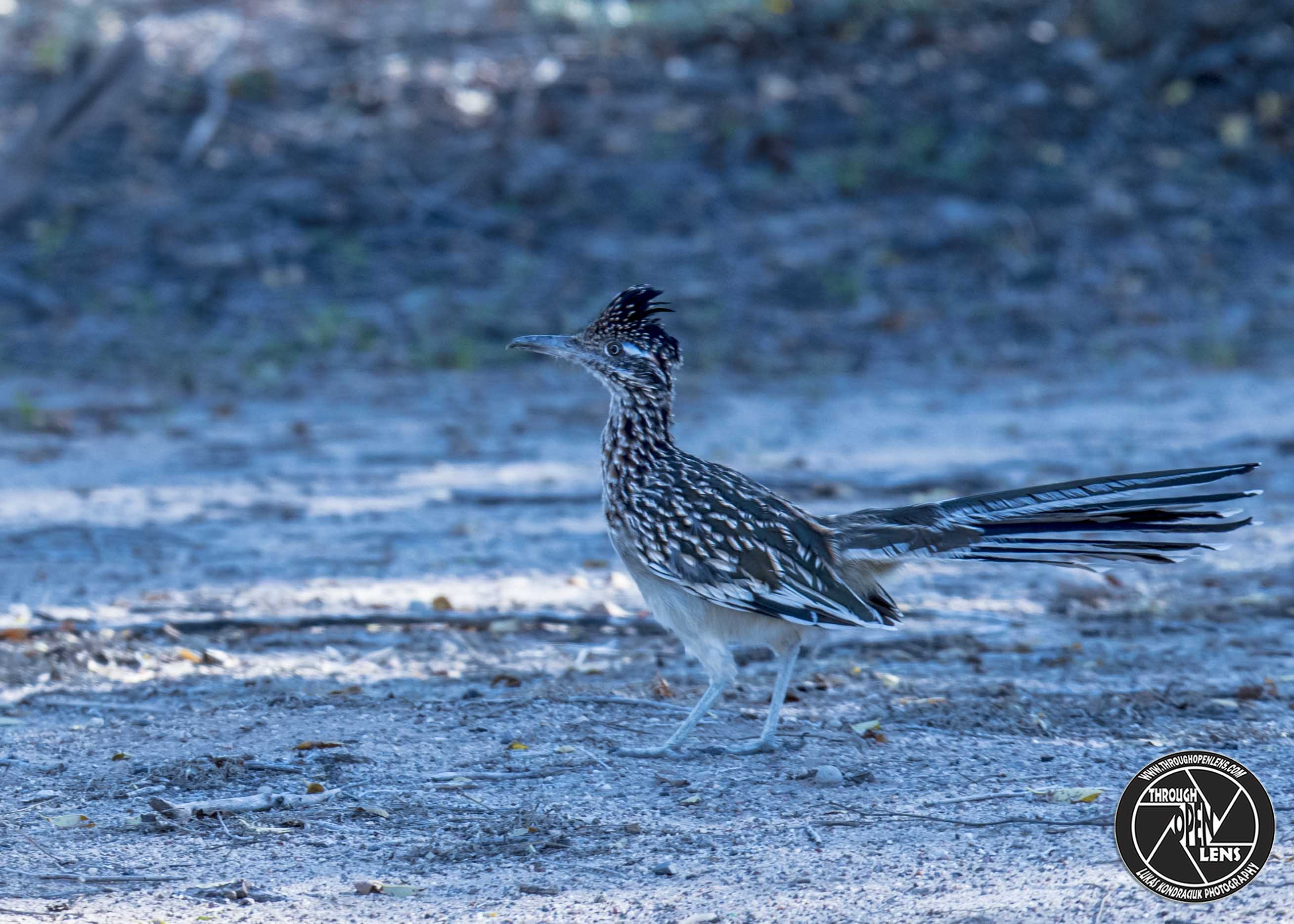
Beep, Beep!

F/7.1, 1/200, ISO 250.

Greater Roadrunner

Why can you never trust atoms?

They make up everything!

Interesting Fact: Roadrunners have evolved a range of adaptations to deal with the extremes of desert living. Like seabirds, they secrete a solution of highly concentrated salt through a gland just in front of each eye, which uses less water than excreting it via their kidneys and urinary tract. Moisture-rich prey including mammals and reptiles supply them otherwise-scarce water in their diet. Both chicks and adults flutter the unfeathered area beneath the chin (gular fluttering) to dissipate heat. ( https://www.allaboutbirds.org/guide/Greater_Roadrunner/overview

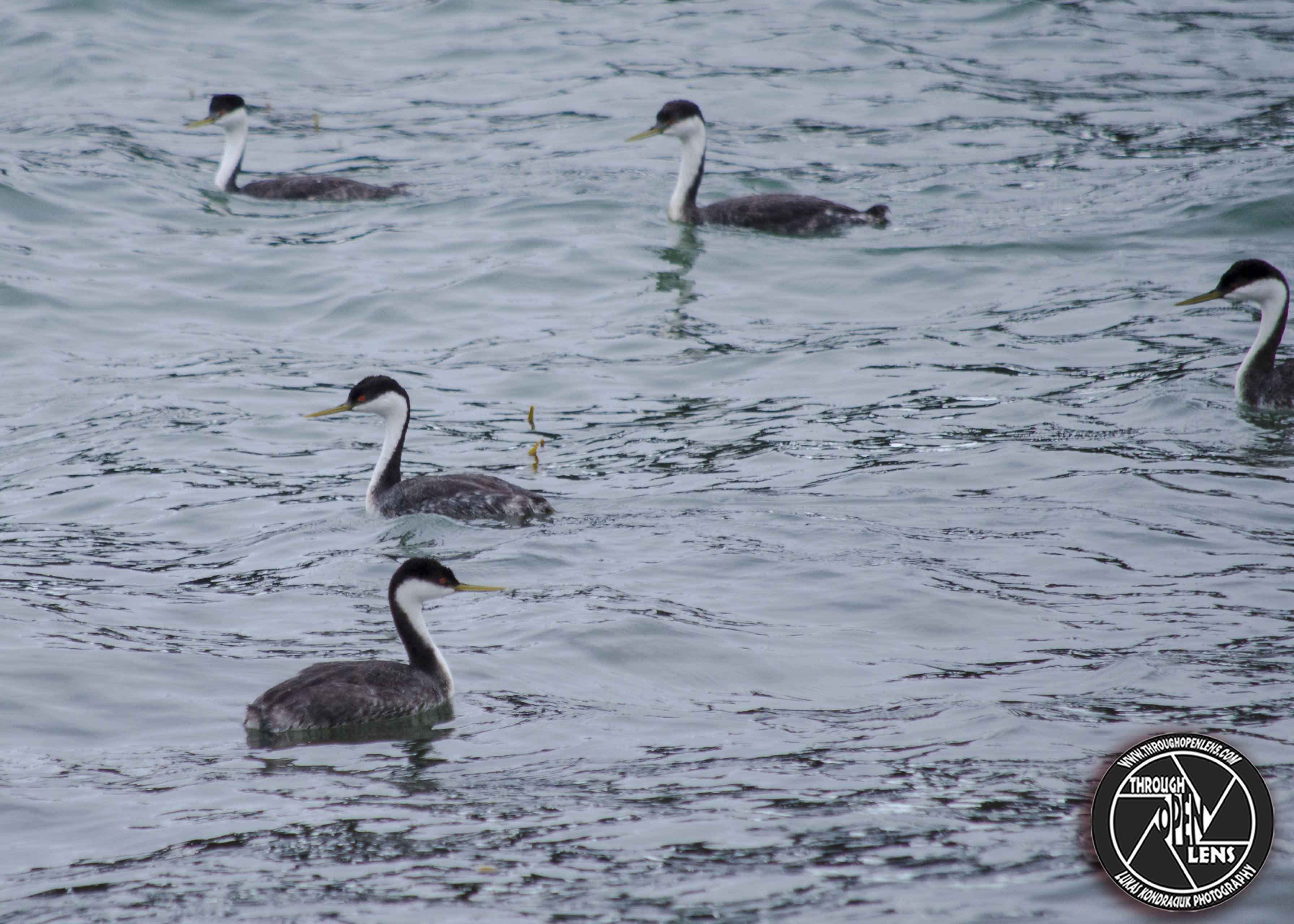
Be Different!

F/5.6, 1/500, ISO 360.

Western-Grebe

Why did the traffic light turn red?

You would too if you had to change in the middle of the street!

Interesting Fact:  The Western Grebe, like other grebes, spends almost all its time in water and is very awkward when on land. The legs are so far back on the body that walking is very difficult. Western Grebes are adept swimmers and divers. Courtship happens entirely in the water, including a well-known display known as “rushing,” where two birds turn to one side, lunge forward in synchrony, their bodies completely out of the water, and race across the water side by side with their necks curved gracefully forward. ( https://www.allaboutbirds.org/guide/Western_Grebe/lifehistory )

Where Does The Itch Goes After You Scratch It?

canada-goose-itch

F/6.3, 1/640, ISO 200.

Canada Goose

What do you call a pig that does karate?

A pork chop.

Interesting Fact: Some migratory populations of the Canada Goose are not going as far south in the winter as they used to. This northward range shift has been attributed to changes in farm practices that makes waste grain more available in fall and winter, as well as changes in hunting pressure and changes in weather. ( https://www.allaboutbirds.org/guide/Canada_Goose/lifehistory )

I’m Sorry I Offended You Whith My Common Sense

F/8.0, 1/250, ISO 250.

Common Murre

Where do polar bears vote?

The North Poll.

Interesting Fact:  In the Atlantic, some populations include “bridled” or “ringed” individuals, which have a white eye-ring and a white line extending backward from the eyes. Bridled birds are more common farther north. ( https://www.allaboutbirds.org/guide/Common_Murre/overview )

My Spirit Animals Is Grey Goose!

F/5.6, 1/800, ISO 160.

Greylag goose

How do you make an egg-roll?

You push it!!!

Interesting Fact: Young greylags stay with their parents as a family group, migrating with them in a larger flock, and only dispersing when the adults drive them away from their newly established breeding territory the following year.[18] At least in Europe, patterns of migration are well understood and follow traditional routes with known staging sites and wintering sites. The young learn these locations from their parents which normally stay together for life. ( https://en.wikipedia.org/wiki/Greylag_goose#Behaviour )

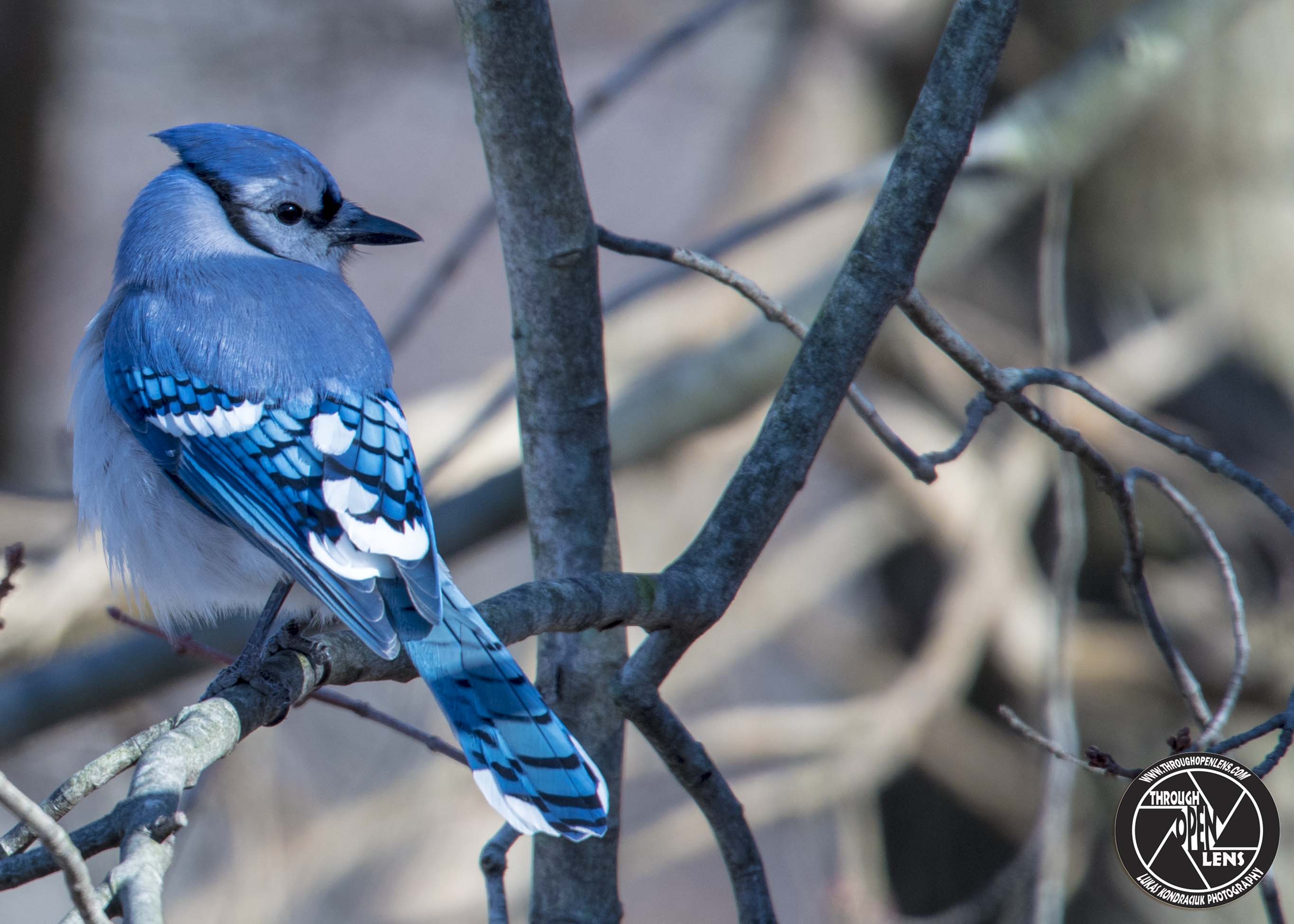
Blue You Away!

F/7.1, 1/200, ISO 250.

Blue Jay 

Why do ghosts have so much trouble dating?

Women can see right through them.

Interesting Fact: This common, large songbird is familiar to many people, with its perky crest; blue, white, gray, and black plumage; and noisy calls. Blue Jays are known for their intelligence and complex social systems, and have tight family bonds. They often mate for life, remaining with their social mate throughout the year. ( https://www.allaboutbirds.org/guide/Blue_Jay/lifehistory )