Quack Like You Mean It!

F/14.0, 1/500, ISO 800.

Black Scoter

This guy went to school and he asked
“May I use the bathroom?”
The teacher replied, ” no not unless you say your abc’s.”
The guy said “a b c d e f g h i j k l m n o q r s t u v w x y z.”
The teacher asked “Where’s the p?
He replied, ” running down my leg!”

Interesting Fact:  The Black Scoter occasionally does a “Wing-flap” display while swimming, flapping its wings with its body held up out of the water. Unlike other scoters, it almost always punctuates a Wing-flap with a characteristic downward thrust of head, as if its neck were momentarily broken. Surf and White-winged scoters keep their heads and bills pointing more or less above the horizontal throughout a Wing-flap.  ( https://www.allaboutbirds.org/guide/Black_Scoter/lifehistory )

Life Is So Much Easier When You Just Chill Out.

F/8.0, 1/250, ISO 500.

Greater Yellowlegs

Why are trees very forgiving?

Because in the Fall they “Let It Go” and in the Spring they “turn over a new leaf”.

Interesting Fact: The Greater Yellowlegs nest is a simple depression in the moss or peat, sometimes lined with leaves and lichen. The finished nest is about 6 inches across and the inner cup is about an inch deep. ( https://www.allaboutbirds.org/guide/Greater_Yellowlegs/lifehistory )

This Is My Formal Attire!

F/8.0, 1/250, ISO 250.

American Crow

What did one autumn leaf say to another?

I’m falling for you.

Interesting Fact: Young American Crows do not breed until they are at least two years old, and most do not breed until they are four or more. In most populations the young help their parents raise young for a few years. Families may include up to 15 individuals and contain young from five different years. ( https://www.allaboutbirds.org/guide/American_Crow )

Patience, Young Grasshopper.

F/9.0, 1/320, ISO 250.

Grasshopper

Why don’t some doctors like being on hold?

They don’t have a lot of patients.

Interesting Fact: A large grasshopper, such as a locust, can jump about a metre (twenty body lengths) without using its wings; the acceleration peaks at about 20 g.[26] Grasshoppers jump by extending their large back legs and pushing against the substrate (the ground, a twig, a blade of grass or whatever else they are standing on); the reaction force propels them into the air.[27] They jump for several reasons; to escape from a predator, to launch themselves into flight, or simply to move from place to place. For the escape jump in particular there is strong selective pressure to maximize take-off velocity, since this determines the range. This means that the legs must thrust against the ground with both high force and a high velocity of movement. A fundamental property of muscle is that it cannot contract with high force and high velocity at the same time. Grasshoppers overcome this by using a catapult mechanism to amplify the mechanical power produced by their muscles. ( https://en.wikipedia.org/wiki/Grasshopper )


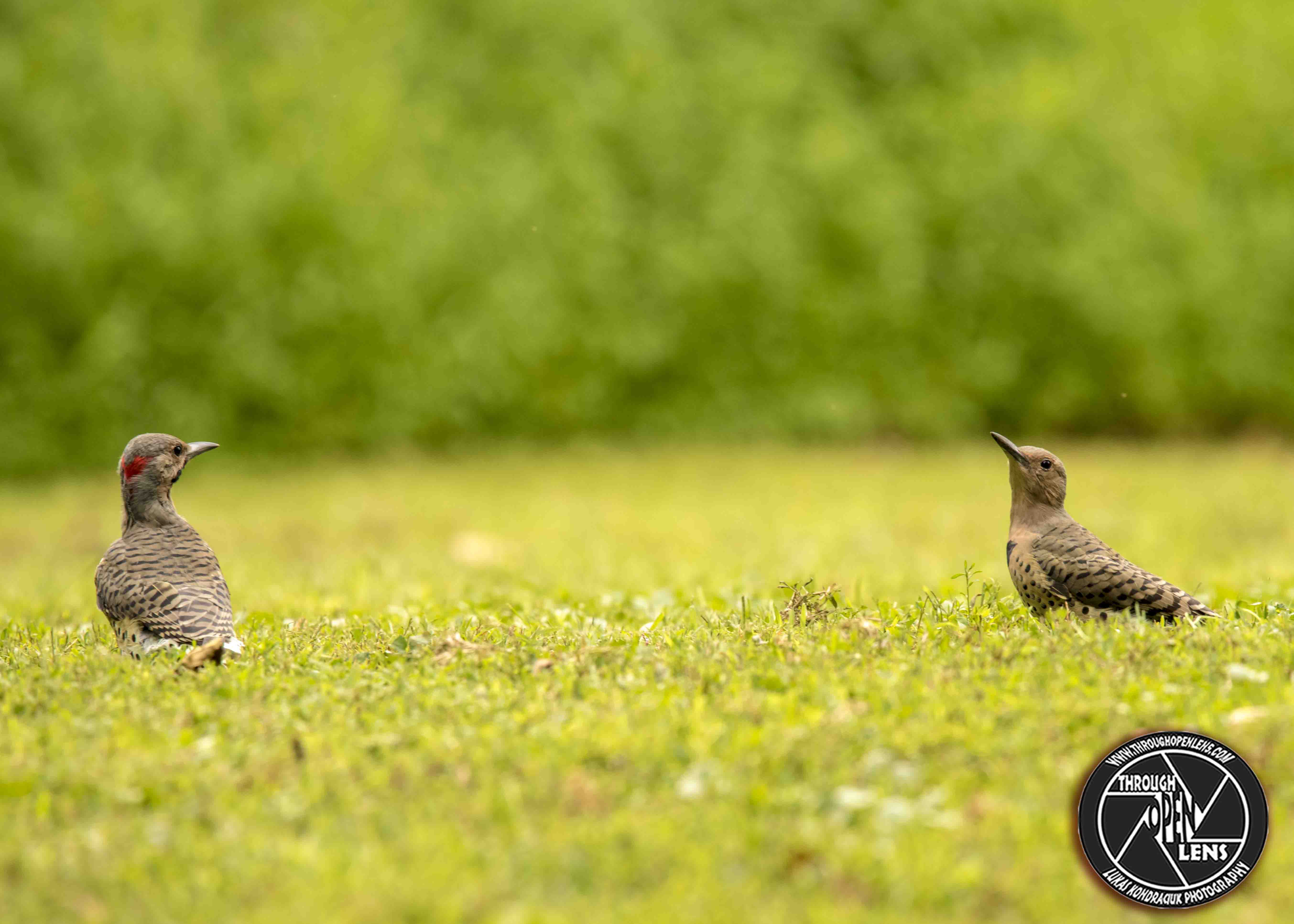
Hey Bro What’s Up!

F/8.0, 1/225, ISO 400.

Northern Flicker

Why is Superman’s costume so tight?

Because he wears a size “S”.

Interesting Fact: Like most woodpeckers, Northern Flickers drum on objects as a form of communication and territory defense. In such cases, the object is to make as loud a noise as possible, and that’s why woodpeckers sometimes drum on metal objects. One Northern Flicker in Wyoming could be heard drumming on an abandoned tractor from a half-mile away. ( https://www.allaboutbirds.org/guide/Northern_Flicker/lifehistory )

Without Change There Would Be No Butterflies

Autumn Begins! 🍁🍂

F/9.0, 1/320, ISO 320.

Butterfly

What kind of music do Mummies listen to?

Wrap.

Interesting Fact: Butterflies in their adult stage can live from a week to nearly a year depending on the species. Many species have long larval life stages while others can remain dormant in their pupal or egg stages and thereby survive winters.[29] The Melissa Arctic (Oeneis melissa) overwinters twice as a caterpillar.[30] Butterflies may have one or more broods per year. The number of generations per year varies from temperate to tropical regions with tropical regions showing a trend towards multivoltinism. ( https://en.wikipedia.org/wiki/Butterfly

I Meant To Behave But There Were Too Many Other Options

F/6.3, 1/160, ISO 320.

Nelson’s Sparrow

Did you hear abut the hungry clock?

It went back four seconds.

Interesting Fact: The Nelson’s Sharp-tailed Sparrow formerly was considered the same species as the Saltmarsh Sharp-tailed Sparrow, collectively known as the Sharp-tailed Sparrow. The two forms have separate breeding ranges that barely overlap in Maine. They differ in genetics, songs, and subtle plumage characters. ( https://www.allaboutbirds.org/guide/Nelsons_Sparrow/lifehistory )

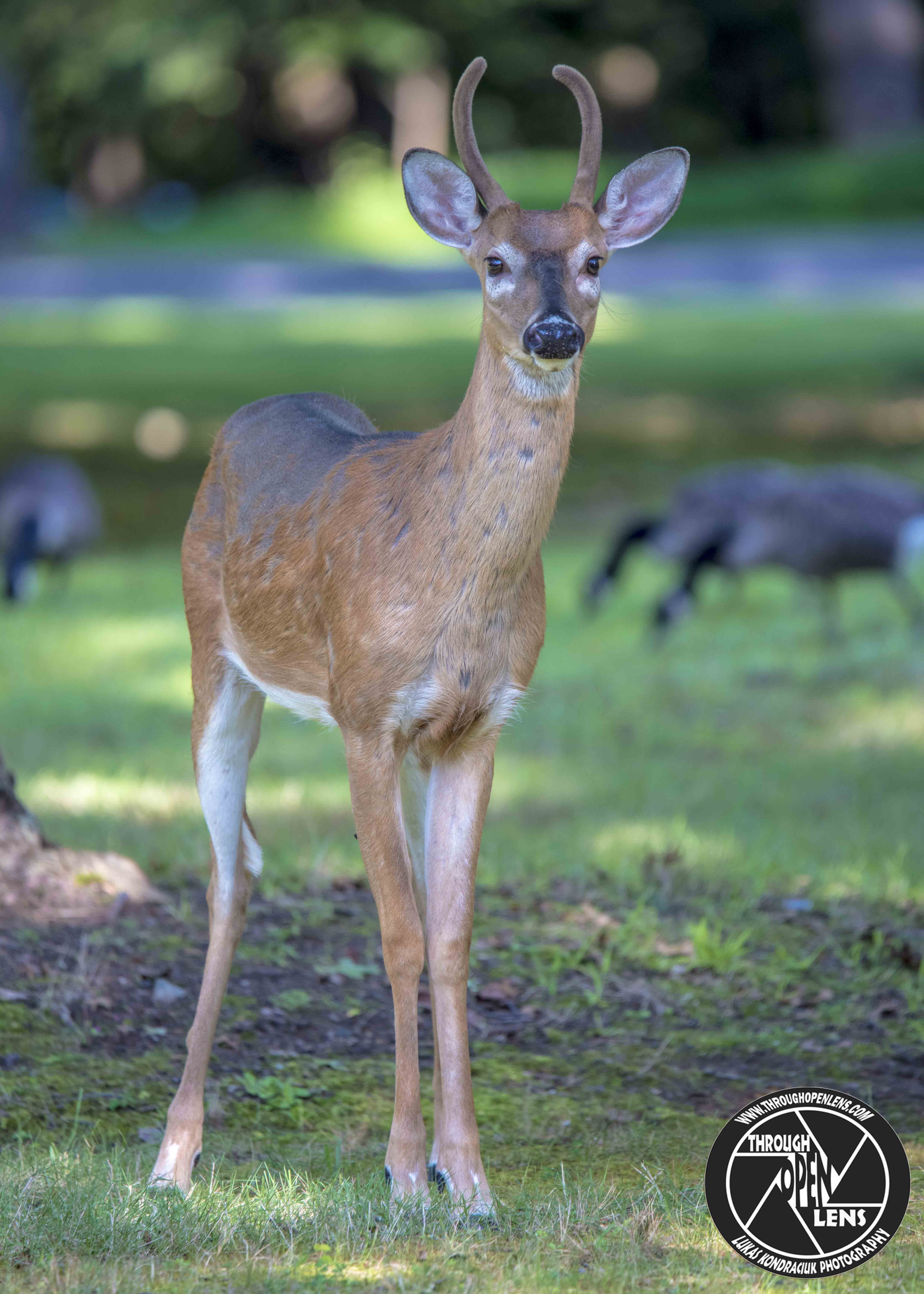
BUCK YOU!

F/6.3, 1/125, ISO 500.

White-Tailed Deer

What do you call a sleeping bull?

A bulldozer

Interesting Fact: Males regrow their antlers every year. About one in 10,000 females also has antlers, although this is usually associated with freemartinism. ( https://en.wikipedia.org/wiki/White-tailed_deer

I Am Happy To See You!

F11.0, 1/500, ISO 400.

Ruddy Ducks

What do you call a bee that lives in America?

A USB

Interesting Fact: Ruddy Ducks are very aggressive toward each other and toward other species, especially during the breeding season. Unlike most ducks, they form pairs only after arriving on the breeding grounds each year. Males perform unusual courtship displays in which they stick their tails straight up while striking their bills against their inflated necks, creating bubbles in the water as air is forced from their feathers. They punctuate the end of the display with a belch-like call. ( https://www.allaboutbirds.org/guide/Ruddy_Duck/lifehistory )


Kick Your Feet Back Its The Weekend!

F/9.0, 1/320, ISO 200.

Hispaniolan slider

Why do you measure snakes in inches?

Because they don’t have any feet.

Interesting Fact: Whether this creature is found in the wild or in captivity, it has been known to urinate when picked up. This is considered a sign of distress. It also may bite or scratch, but has not been known to cause any severe harm. If found in the wild, the turtle may be more likely to do any one of these. ( https://en.wikipedia.org/wiki/Hispaniolan_slider )