I Know A Morse Code!

F/6.3, 1/640, ISO 2200.

Yellow-Bellied Sapsucker

Why are gold fish orange?

The water makes them rusty!

Interesting Fact: The Yellow-bellied Sapsucker is the only woodpecker in eastern North America that is completely migratory. Although a few individuals remain throughout much of the winter in the southern part of the breeding range, most head farther south, going as far south as Panama. Females tend to migrate farther south than do males. ( https://www.allaboutbirds.org/guide/Yellow-bellied_Sapsucker/overview )

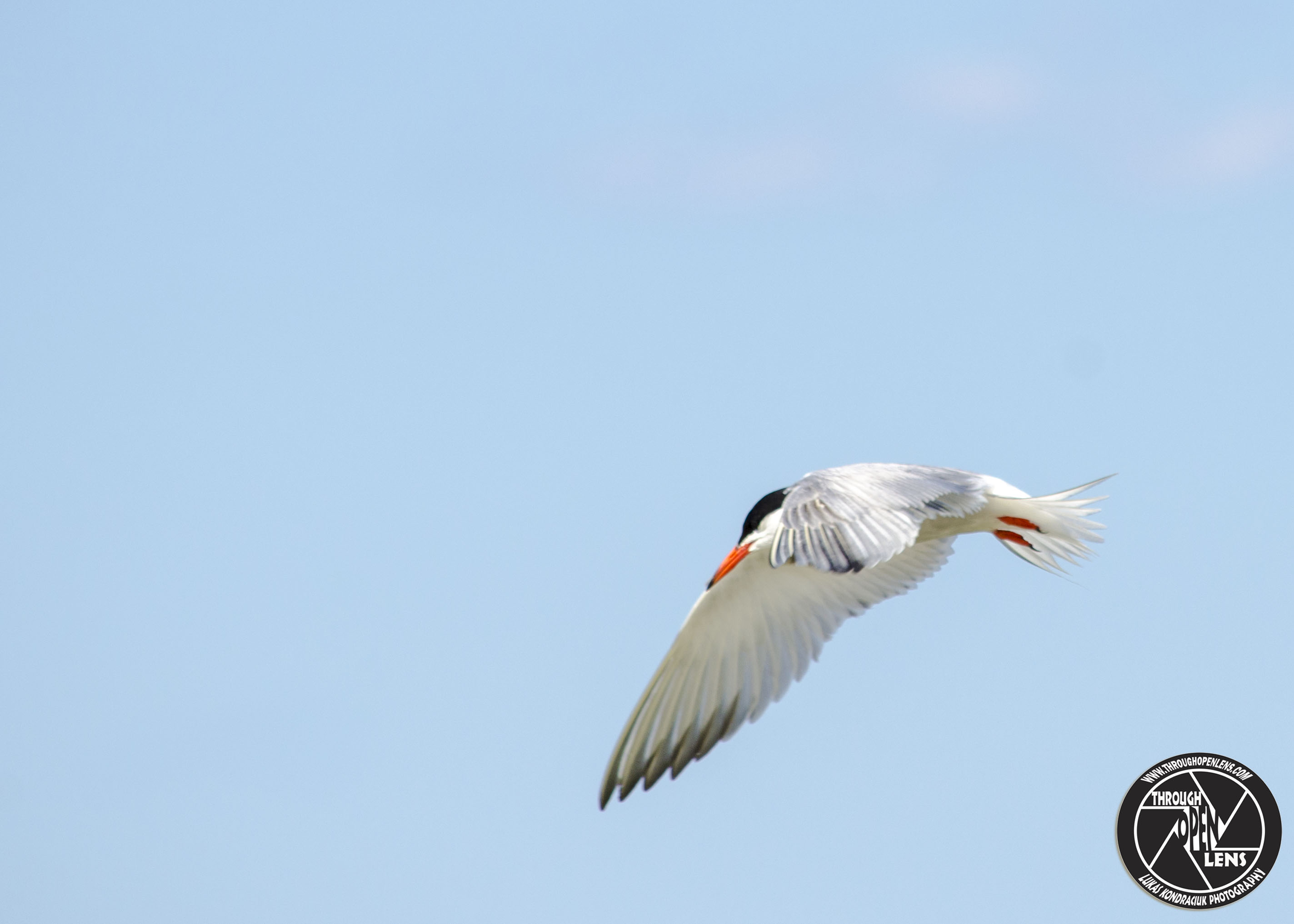
F.L.Y. ( First Love Yourself )

F/7.1, 1/800, ISO 200.

Common Tern

Why do you always see teen girls in groups of three?

Because they literally can’t even.

Interesting Fact: Males and females make a small scrape on the ground. Females add dead vegetation that has washed onshore, shell fragments, bones, stones, and sometimes plastic to the nest scrape before and after laying eggs.  ( https://www.allaboutbirds.org/guide/Common_Tern/lifehistory )


Quack Like You Mean It!

F/14.0, 1/500, ISO 800.

Black Scoter

This guy went to school and he asked
“May I use the bathroom?”
The teacher replied, ” no not unless you say your abc’s.”
The guy said “a b c d e f g h i j k l m n o q r s t u v w x y z.”
The teacher asked “Where’s the p?
He replied, ” running down my leg!”

Interesting Fact:  The Black Scoter occasionally does a “Wing-flap” display while swimming, flapping its wings with its body held up out of the water. Unlike other scoters, it almost always punctuates a Wing-flap with a characteristic downward thrust of head, as if its neck were momentarily broken. Surf and White-winged scoters keep their heads and bills pointing more or less above the horizontal throughout a Wing-flap.  ( https://www.allaboutbirds.org/guide/Black_Scoter/lifehistory )

We Need A Better Hiding Spot!

F/8.0, 1/250, ISO 320.

Snowy Egrets

How do leaves get from place to place?

With autumn-mobiles.

Interesting Fact: Snowy Egrets feed while standing, walking, running, or hopping, and they may vibrate their bills, sway their heads, or flick their wings as part of prey gathering. They even forage while hovering. ( https://www.allaboutbirds.org/guide/Snowy_Egret/lifehistory )

Life Is So Much Easier When You Just Chill Out.

F/8.0, 1/250, ISO 500.

Greater Yellowlegs

Why are trees very forgiving?

Because in the Fall they “Let It Go” and in the Spring they “turn over a new leaf”.

Interesting Fact: The Greater Yellowlegs nest is a simple depression in the moss or peat, sometimes lined with leaves and lichen. The finished nest is about 6 inches across and the inner cup is about an inch deep. ( https://www.allaboutbirds.org/guide/Greater_Yellowlegs/lifehistory )

Don’t Juge Me I Have An Itch!

F/7.1, 1/200, ISO 320.

Yellow-Rumped Warbler

Did you hear about the tree that had to take time off of work in autumn?

It was on paid leaf.

Interesting Fact: In winter, Yellow-rumped Warblers join flocks and switch to eating berries from fruiting shrubs. Sometimes the flocks are enormous groups consisting entirely of Yellow-rumped Warblers. If another bird gets too close, Yellow-rumped Warblers indicate the infraction by holding the body horizontally, fanning the tail, and raising it to form a right angle with its body. ( https://www.allaboutbirds.org/guide/Yellow-rumped_Warbler/lifehistory )


This Is My Formal Attire!

F/8.0, 1/250, ISO 250.

American Crow

What did one autumn leaf say to another?

I’m falling for you.

Interesting Fact: Young American Crows do not breed until they are at least two years old, and most do not breed until they are four or more. In most populations the young help their parents raise young for a few years. Families may include up to 15 individuals and contain young from five different years. ( https://www.allaboutbirds.org/guide/American_Crow )

Have You Seen My Nuts?

F/6.3, 1/50, ISO 320.

Eastern Chipmunk

What is the difference between a poorly dressed man on a bicycle and a handsomely dressed man on a unicycle?

Attire

Interesting Fact: It is mainly active during the day, spending most of its day foraging. It prefers bulbs, seeds, fruits, nuts, green plants, mushrooms, insects, worms, and bird eggs. Like other chipmunks, it transports food in pouches in its cheeks. ( https://en.wikipedia.org/wiki/Eastern_chipmunk )


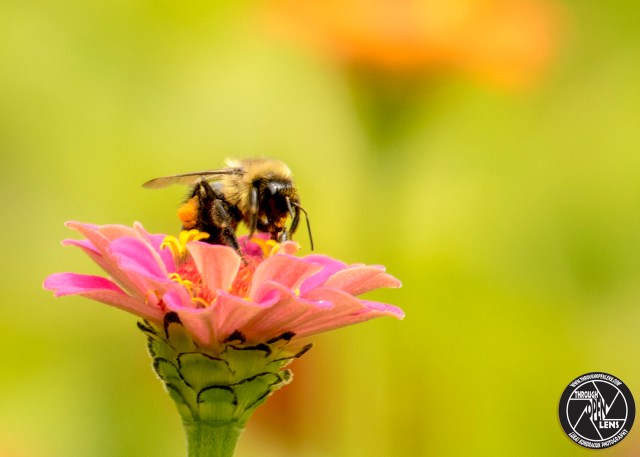
Don’t Worry BEE Happy!

F/8.0, 1/250, ISO 320.

Bumblebee

Why don’t elephants use cellular phones?

So the rest of the world won’t know their plans.

Interesting Fact: The bumblebee tongue (the proboscis) is a long, hairy structure that extends from a sheath-like modified maxilla. The primary action of the tongue is lapping, that is, repeated dipping of the tongue into liquid.[29] The tip of the tongue probably acts as a suction cup and during lapping, nectar may be drawn up the proboscis by capillary action. When at rest or flying, the proboscis is kept folded under the head. The longer the tongue, the deeper the bumblebee can probe into a flower and bees probably learn by experience which flower source is best-suited to their tongue length.[30] Bees with shorter proboscides, like Bombus bifarius, have a more difficult time foraging nectar relative to other bumblebees with longer proboscides; to overcome this disadvantage, B. bifarius workers were observed to lick the back of spurs on the nectar duct, which resulted in a small reward. ( https://en.wikipedia.org/wiki/Bumblebee )


Patience, Young Grasshopper.

F/9.0, 1/320, ISO 250.

Grasshopper

Why don’t some doctors like being on hold?

They don’t have a lot of patients.

Interesting Fact: A large grasshopper, such as a locust, can jump about a metre (twenty body lengths) without using its wings; the acceleration peaks at about 20 g.[26] Grasshoppers jump by extending their large back legs and pushing against the substrate (the ground, a twig, a blade of grass or whatever else they are standing on); the reaction force propels them into the air.[27] They jump for several reasons; to escape from a predator, to launch themselves into flight, or simply to move from place to place. For the escape jump in particular there is strong selective pressure to maximize take-off velocity, since this determines the range. This means that the legs must thrust against the ground with both high force and a high velocity of movement. A fundamental property of muscle is that it cannot contract with high force and high velocity at the same time. Grasshoppers overcome this by using a catapult mechanism to amplify the mechanical power produced by their muscles. ( https://en.wikipedia.org/wiki/Grasshopper )