Oh I’m Sorry. Did I Just Roll My Eyes Out loud?!

F/10.0, 1/250, ISO 125.

Dragonfly

What does a baby computer call its dad?

Data

Interesting Fact: Dragonflies are powerful and agile fliers, capable of migrating across oceans, moving in any direction, and changing direction suddenly. In flight, the adult dragonfly can propel itself in six directions: upward, downward, forward, back, to left and to right.[47] They have four different styles of flight:[48] A number of flying modes are used that include counter-stroking, with forewings beating 180° out of phase with the hindwings, is used for hovering and slow flight. This style is efficient and generates a large amount of lift; phased-stroking, with the hindwings beating 90° ahead of the forewings, is used for fast flight. This style creates more thrust, but less lift than counter-stroking; synchronised-stroking, with forewings and hindwings beating together, is used when changing direction rapidly, as it maximises thrust; and gliding, with the wings held out, is used in three situations: free gliding, for a few seconds in between bursts of powered flight; gliding in the updraft at the crest of a hill, effectively hovering by falling at the same speed as the updraft; and in certain dragonflies such as darters, when “in cop” with a male, the female sometimes simply glides while the male pulls the pair along by beating his wings. ( https://en.wikipedia.org/wiki/Dragonfly#Flight )

The Fish Was This Big! I Swear!

F/7.1, 1/200, ISO 320.

Canada Goose

What does a pig put on its paper cut?

Oinkment!

Interesting Fact:  At least 11 subspecies of Canada Goose have been recognized, although only a couple are distinctive. In general, the geese get smaller as you move northward, and darker as you go westward. The four smallest forms are now considered a different species: the Cackling Goose. ( https://www.allaboutbirds.org/guide/Canada_Goose/lifehistory )

I Rule The SKY!

F/6.3, 1/640, ISO 100.

Red-tailed Hawk

Why did the witches’ team lose the baseball game?

Their bats flew away.

Interesting Fact: Red-tailed Hawks typically put their nests in the crowns of tall trees where they have a commanding view of the landscape. They may also nest on a cliff ledge or on artificial structures such as window ledges and billboard platforms. ( https://www.allaboutbirds.org/guide/Red-tailed_Hawk/lifehistory )

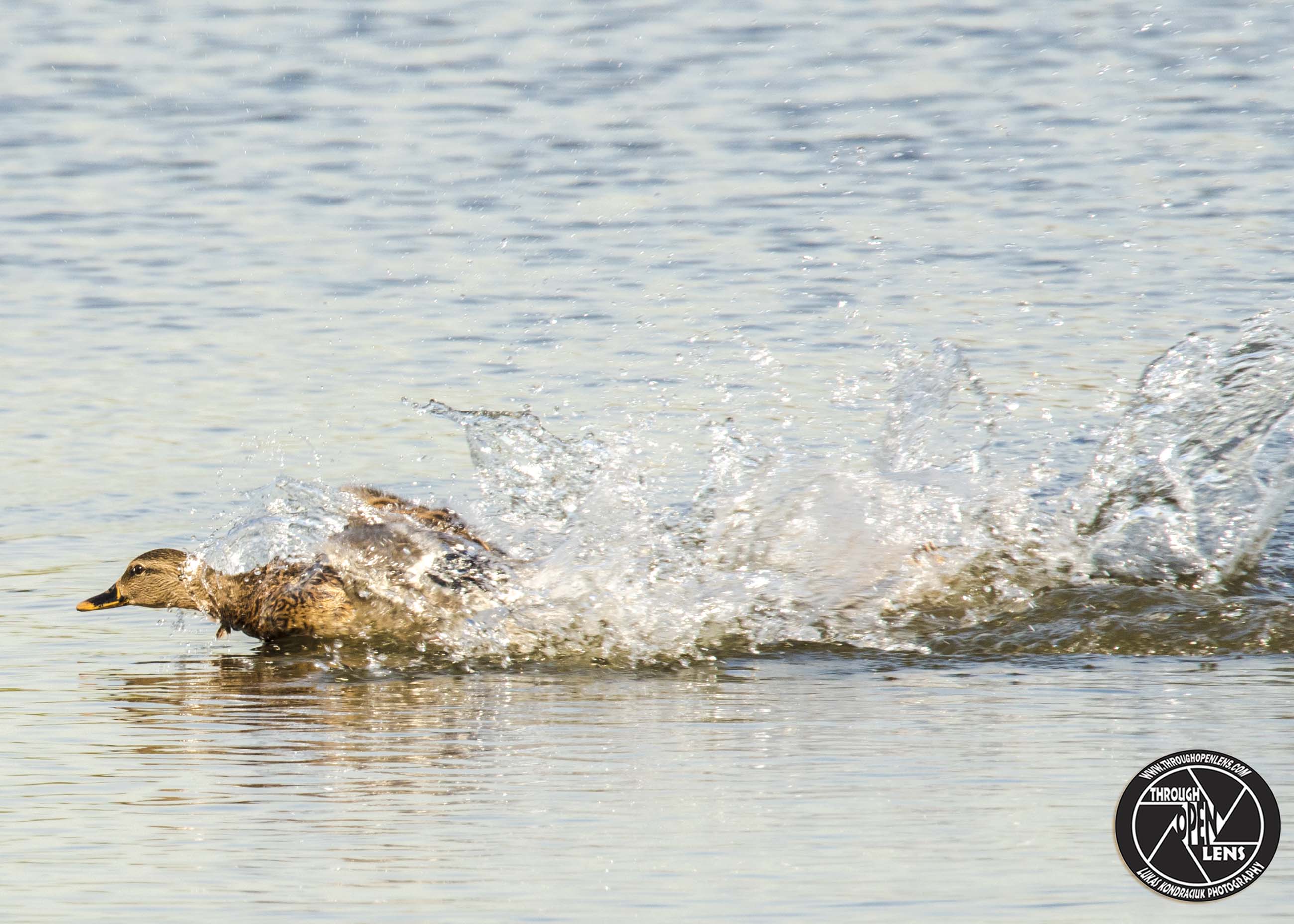
Motorboating Is My Thing!

F/11.0, 1/500, ISO 250.

Mallard Female

Which day of the week do chickens hate most?

Fry-day!

Interesting Fact: The female forms a shallow depression or bowl on the ground in moist earth. She does not carry material to the nest but rather pulls vegetation she can reach toward her while sitting on nest. During egg-laying phase, she lines the nest with grasses, leaves, and twigs from nearby. She also pulls tall vegetation over to conceal herself and her nest. ( https://www.allaboutbirds.org/guide/Mallard/lifehistory )

Ain’t No Thang Like A Duck Wing!

F/8.0, 1/250, ISO 200.

American Black Duck

Why did the Skeleton go to the movies by himself?

He had no body to go with him.

Interesting Fact:  Pleistocene fossils of American Black Ducks, at least 11,000 years old, have been unearthed in Florida and Georgia. ( https://www.allaboutbirds.org/guide/American_Black_Duck/lifehistory  )

It Is Hard To Fly When Something Is Weighing You Down


F/9.0, 1/320, ISO 200.

Great Egret 

What did the banana say to the doctor?

I’m not peeling well.

Interesting Fact: The Great Egret walks with its neck extended and its wings held close to its body. In flight, it is graceful and buoyant, with its neck tucked back against its shoulders and its legs trailing behind. ( https://www.allaboutbirds.org/guide/Great_Egret/lifehistory )

I’m Super Fly!

F/13.0, 1/640, ISO 320.

Northern Harrier

What did one toilet roll say to the other toilet roll? 

“People keep on ripping me off!”

Interesting Fact: Male Northern Harriers can have as many as five mates at once, though most have only one or two. The male provides most of the food for his mates and their offspring, while the females incubate the eggs and brood the chicks. ( https://www.allaboutbirds.org/guide/Northern_Harrier/overview )


Mine! Mine! Mine! Mine! Mine! Mine!

ring-billed-gulls

F/5.6, 1/320, ISO 400.

Ring-billed Gull             

What do you call a man with seagull on his head?

Cliff

Interesting Fact: Migrating Ring-billed Gulls apparently use a built-in compass to navigate. When tested at only two days of age, chicks showed a preference for magnetic bearings that would take them in the appropriate direction for their fall migration. The gulls also rely on landmarks and high-altitude winds to provide directional cues.  ( https://www.allaboutbirds.org/guide/Ring-billed_Gull/lifehistory )

You Big Silly Goose!

F/11.0, 1/500, ISO 320.

Brant Goose

How do baseball players stay cool?

They sit next to their fans.

Interesting Fact: An abundant small goose of the ocean shores, the Brant breeds in the high Arctic tundra and winters along both coasts. The Brant along the Atlantic have light gray bellies, while those off the Pacific Coast have black bellies and were at one time considered a separate species.  ( https://www.allaboutbirds.org/guide/Brant/lifehistory )

Ehh, What’s Up Duck?

F/5.6, 1/500, ISO 200.

Mallard 

Why did the duck cross the road?

Because there was a quack in the sidewalk. 

Interesting Fact:  Ducks have webbed feet, which they use for paddling beneath the water. Their feet have no nerves or blood vessels, which mean that they won’t feel chill from swimming in icy water. ( https://americanexpedition.us/mallard-duck-information-facts-photos-and-artwork )