
F/9.0, 1/320, ISO 1250.
Bald Eagles
What falls but never gets hurt?
The rain!
Interesting Fact: Bald Eagles occasionally hunt cooperatively, with one individual flushing prey towards another. ( https://www.allaboutbirds.org/guide/Bald_Eagle )

F/9.0, 1/320, ISO 1250.
Bald Eagles
What falls but never gets hurt?
The rain!
Interesting Fact: Bald Eagles occasionally hunt cooperatively, with one individual flushing prey towards another. ( https://www.allaboutbirds.org/guide/Bald_Eagle )

F/9.0, 1/320, ISO 200.
Red-breasted Merganser
Tom and Bobby are talking:
Bobby: “Holy crap, I just fell off a 50 ft ladder.”
Tom: “Oh my God, are you okay?”
Bobby: “Yeah it’s a good thing I fell off the first step.”
Interesting Fact: Its breedinghabitat is freshwater lakes and rivers across northern North America, Greenland, Europe, and Asia. It nests in sheltered locations on the ground near water. It is migratory and many northern breeders winter in coastalwaters further south. ( https://en.wikipedia.org/wiki/Red-breasted_merganser#Behaviour )
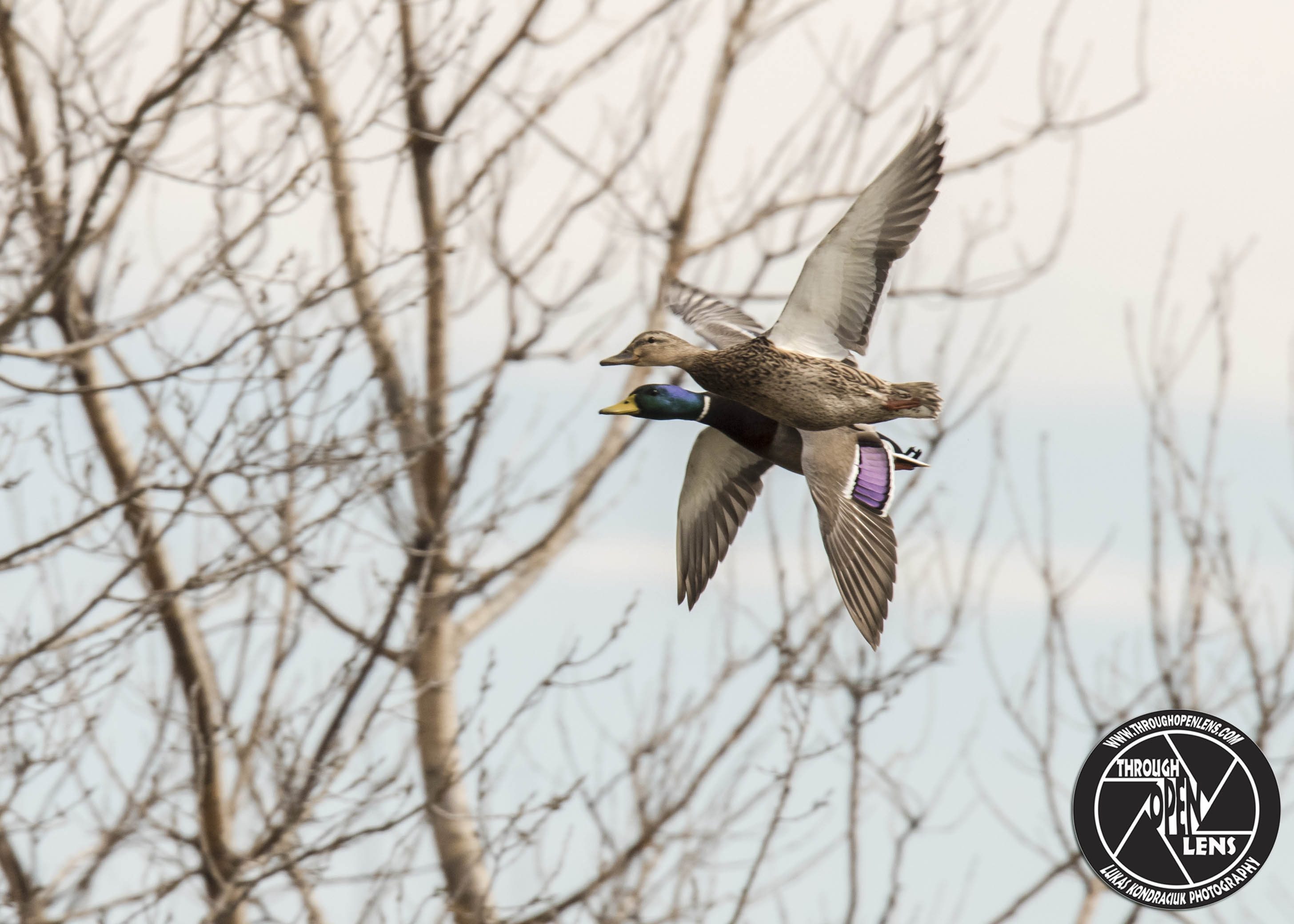
F/13.0, 1/640, ISO 400.
Mallard
As a scarecrow, people say I’m outstanding in my field.
But hay, it’s in my jeans.
Interesting Fact: Mallards, like other ducks, shed all their flight feathers at the end of the breeding season and are flightless for 3–4 weeks. They are secretive during this vulnerable time, and their body feathers molt into a concealing “eclipse” plumage that can make them hard to identify. ( https://www.allaboutbirds.org/guide/Mallard )
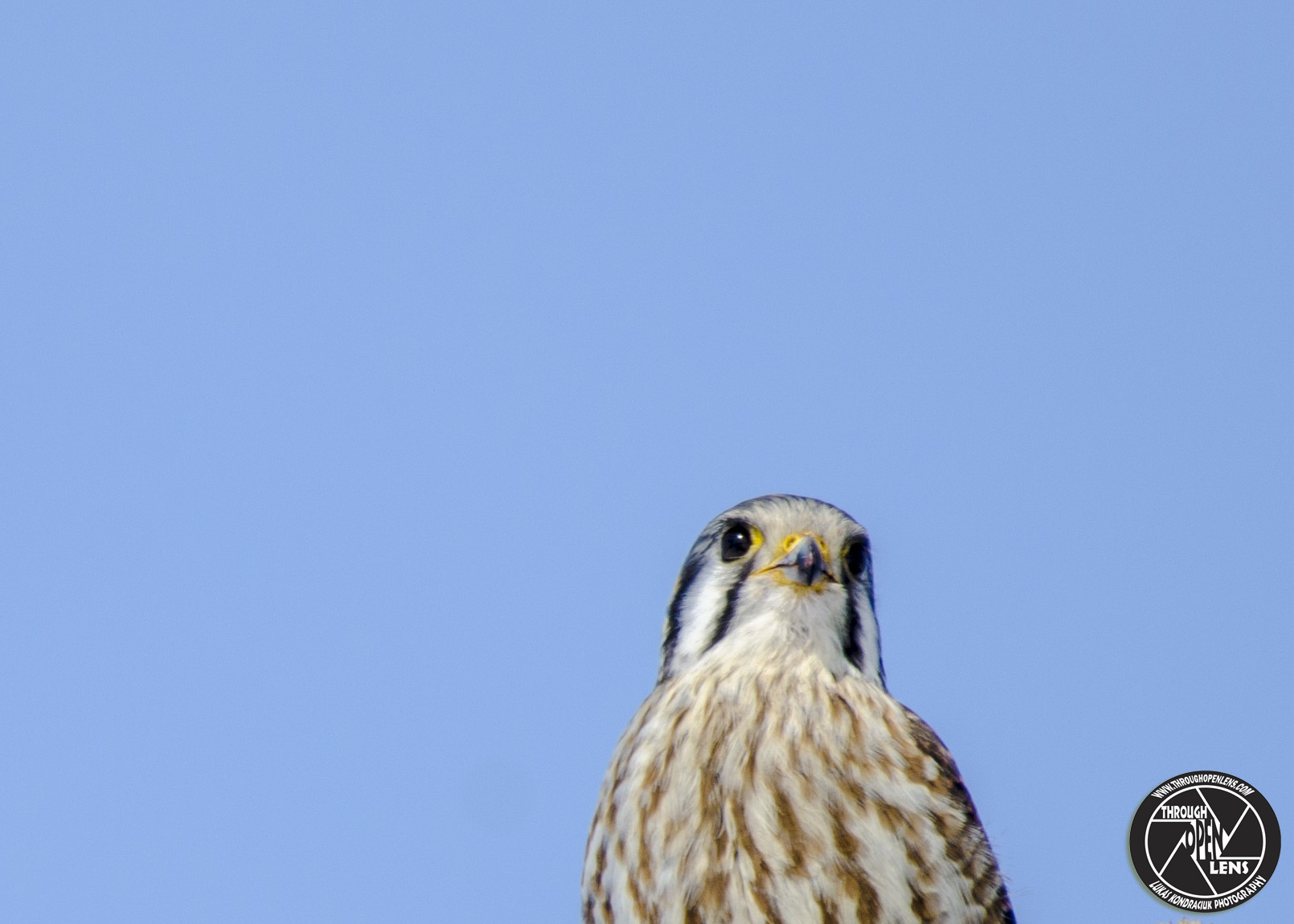
F/6.3, 1/640, ISO 200.
American Kestrel
What did the painter say to her boyfriend?
“I love you with all my art!”
Interesting Fact: It can be tough being one of the smallest birds of prey. Despite their fierce lifestyle, American Kestrels end up as prey for larger birds such as Northern Goshawks, Red-tailed Hawks, Barn Owls, American Crows, and Sharp-shinned and Cooper’s Hawks, as well as rat snakes, corn snakes, and even fire ants. ( https://www.allaboutbirds.org/guide/American_Kestrel )

F/9.0, 1/320, ISO 250.
Northern Shoveler
How do you know if there’s a snowman in your bed?
You wake up wet!
Interesting Fact: The bill of the Northern Shoveler is about 6.5 cm (2.5 inches) long. The bill has has about 110 fine projections (called lamellae) along the edges, for straining food from water. ( https://www.allaboutbirds.org/guide/Northern_Shoveler/lifehistory )
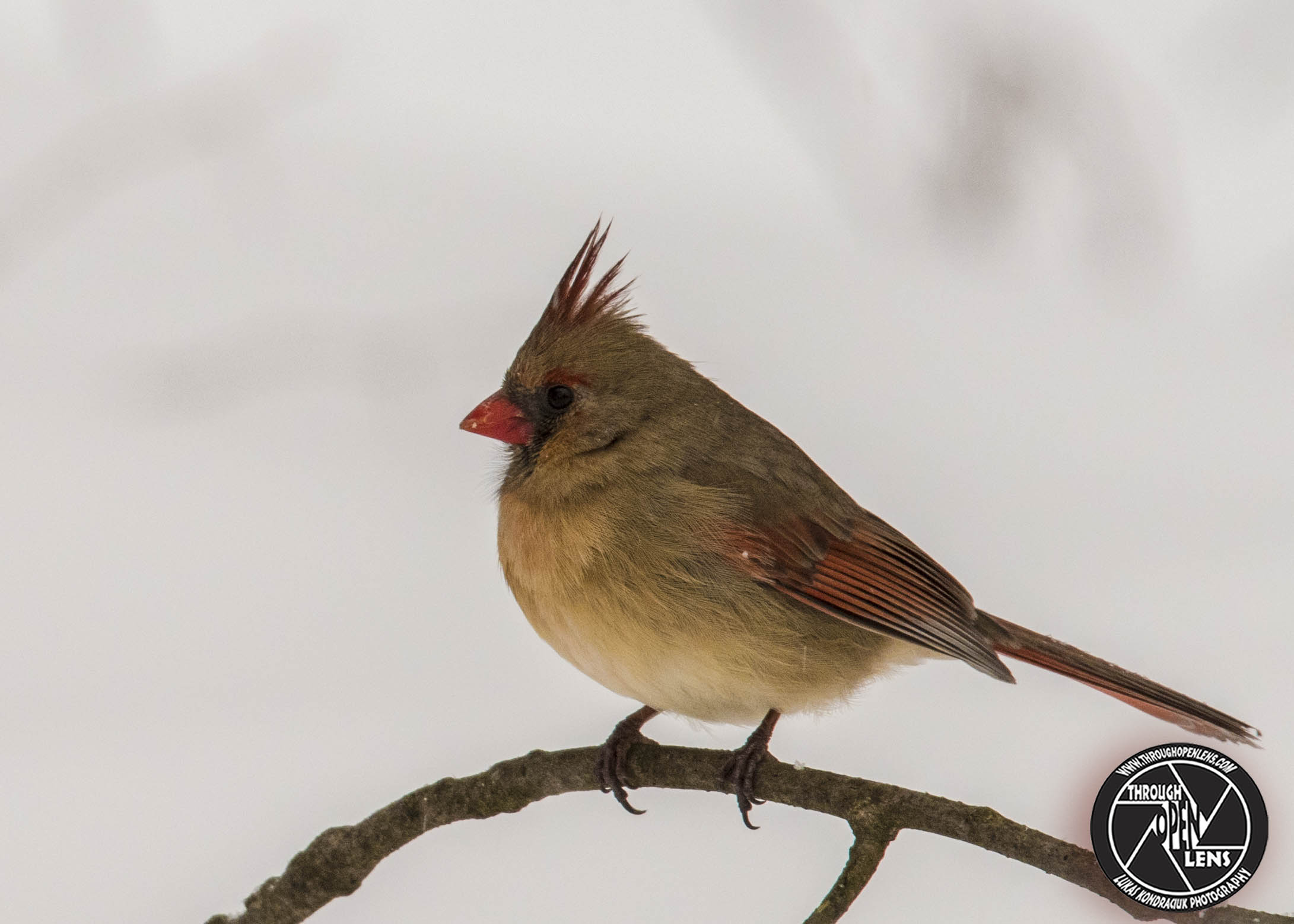
F/9.0, 1/320, ISO 500.
Northern Cardinal ( Female )
What do you give an elephant that’s going to be sick?
Plenty of space!
Interesting Fact: Males sometimes bring nest material to the female, who does most of the building. She crushes twigs with her beak until they’re pliable, then turns in the nest to bend the twigs around her body and push them into a cup shape with her feet. The cup has four layers: coarse twigs (and sometimes bits of trash) covered in a leafy mat, then lined with grapevine bark and finally grasses, stems, rootlets, and pine needles. The nest typically takes 3 to 9 days to build; the finished product is 2-3 inches tall, 4 inches across, with an inner diameter of about 3 inches. Cardinals usually don’t use their nests more than once. ( https://www.allaboutbirds.org/guide/Northern_Cardinal/lifehistory )

F/5.6, 1/1600, ISO 400.
Common Merganser ( Female )
Tom and Bob are talking:
Tom: “I managed to lose my rifle when I was in the army.”
Bob: “And…”
Tom: “I had to pay $1000 to cover the loss. I’m starting to understand why a Navy captain always goes down with his ship. ”
Interesting Fact: Often when one bird dives in a large group, the others follow the leader and disappear. They can stay under for up to 2 minutes, but they normally dive for less than 30 seconds. ( https://www.allaboutbirds.org/guide/Common_Merganser/lifehistory )

F/6.3, 1/160, ISO 320.
Happy Thanksgiving Everyone!
Wild Turkeys
Why do pilgrims’ pants always fall down?
Because they wear their belt buckles on their hats!
Interesting Fact: The Wild Turkey and the Muscovy Duck are the only two domesticated birds native to the New World. ( https://www.allaboutbirds.org/guide/Wild_Turkey/lifehistory )
Bonus Thanksgiving Facts: Setting aside time to give thanks for one’s blessings, along with holding feasts to celebrate a harvest, are both practices that long predate the European settlement of North America. The first documented thanksgiving services in territory currently belonging to the United States were conducted by Spaniards[9][10] and the French[11] in the 16th century. Wisdom practices such as expressing gratitude, sharing, and giving away, are integral to many indigenous cultures and communities. ( https://en.wikipedia.org/wiki/Thanksgiving_(United_States)#History )

F/6.0, 1/160, ISO 320.
Wild Turkey
What did the turkey say to the computer?
Google, google, google.
Interesting Fact: Wild Turkeys live year-round in open forests with interspersed clearings in 49 states (excluding Alaska), parts of Mexico, and parts of southern Alberta, Ontario, Manitoba, and Saskatchewan, Canada. ( https://www.allaboutbirds.org/guide/Wild_Turkey/lifehistory )

F/8.0, 1/200, ISO 320.
Dark-eyed Junco
Caller: Dials in 911 Hello officer, I broke my arm in 3 places!
Officer: Then stop going to those places.
Interesting Fact: When foraging, Dark-eyed Juncos typically hop (rather than walk) on the ground, pecking or scratching at the leaf litter, or flit very low in underbrush gleaning food from twigs and leaves. They sometimes fly up from the ground to catch insects from tree trunks. In flight, they flap continuously and pump their tails so the white outer tail feathers flash; flight is very agile as the bird maneuvers through its tangled environs. ( https://www.allaboutbirds.org/guide/Dark-eyed_Junco/lifehistory )
 Through Open Lens