Better Days Are Coming. They Are Called: Saturday And Sunday!

F/9.0, 1/250, ISO 200.

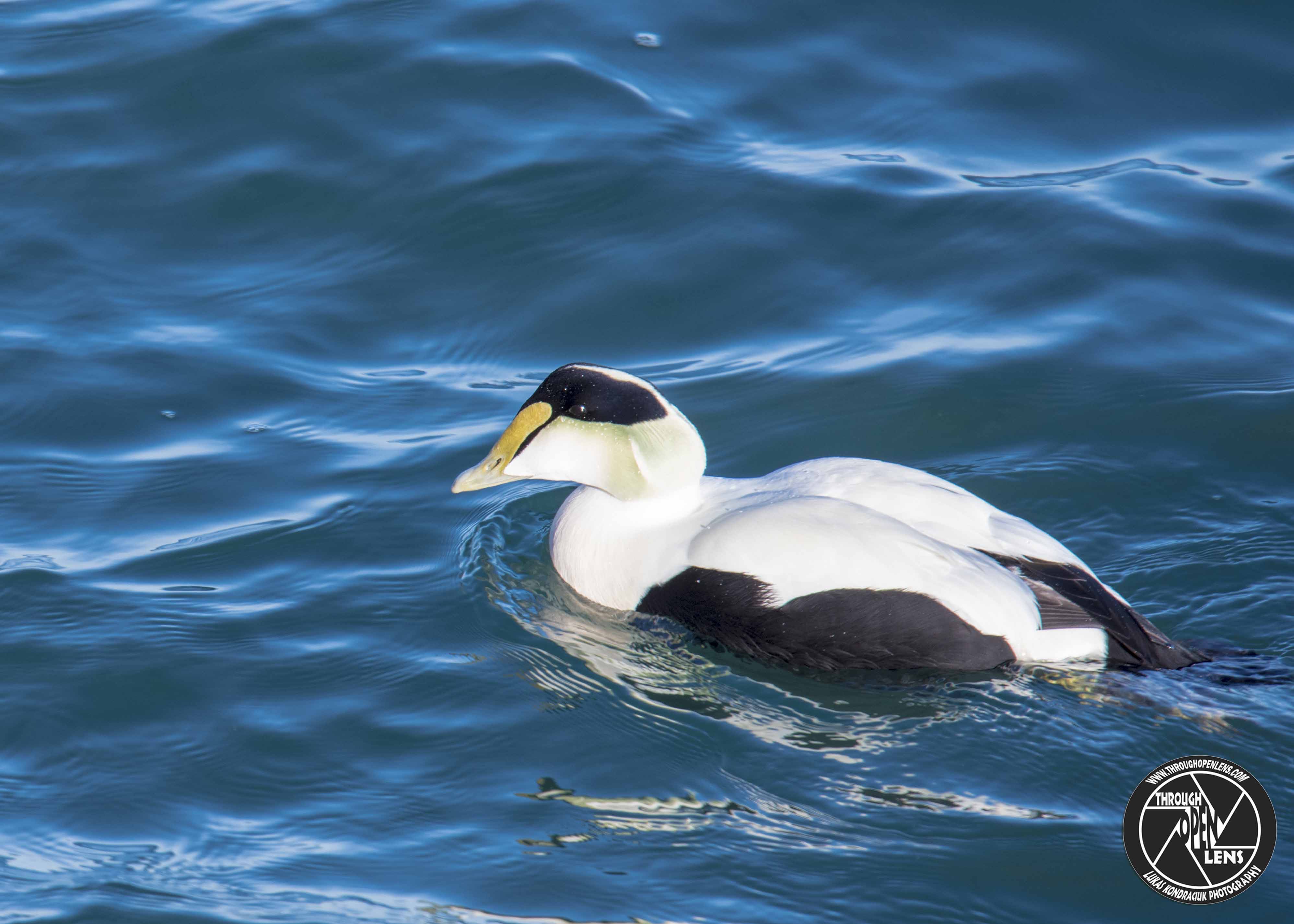
Common Eider ( Male ) 

How are hockey players like goldfish?

You tap on the glass to get their attention.

Interesting Facts: Common Eiders appear to be monogamous, though males will display to females other than their primary partner. Pairs sometimes reunite in consecutive seasons. During periods of calm weather in autumn, males begin to display, both singly and in groups, tossing their heads, stretching their necks, and flapping their wings while keeping up a soft cooing. Pairs often copulate during fall and winter, well outside of the nesting season. ( Common Eider Life History, All About Birds, Cornell Lab of Ornithology )
I’m A Duck That Does Not Give A Quack!

F/6.3, 1/500, ISO 250.

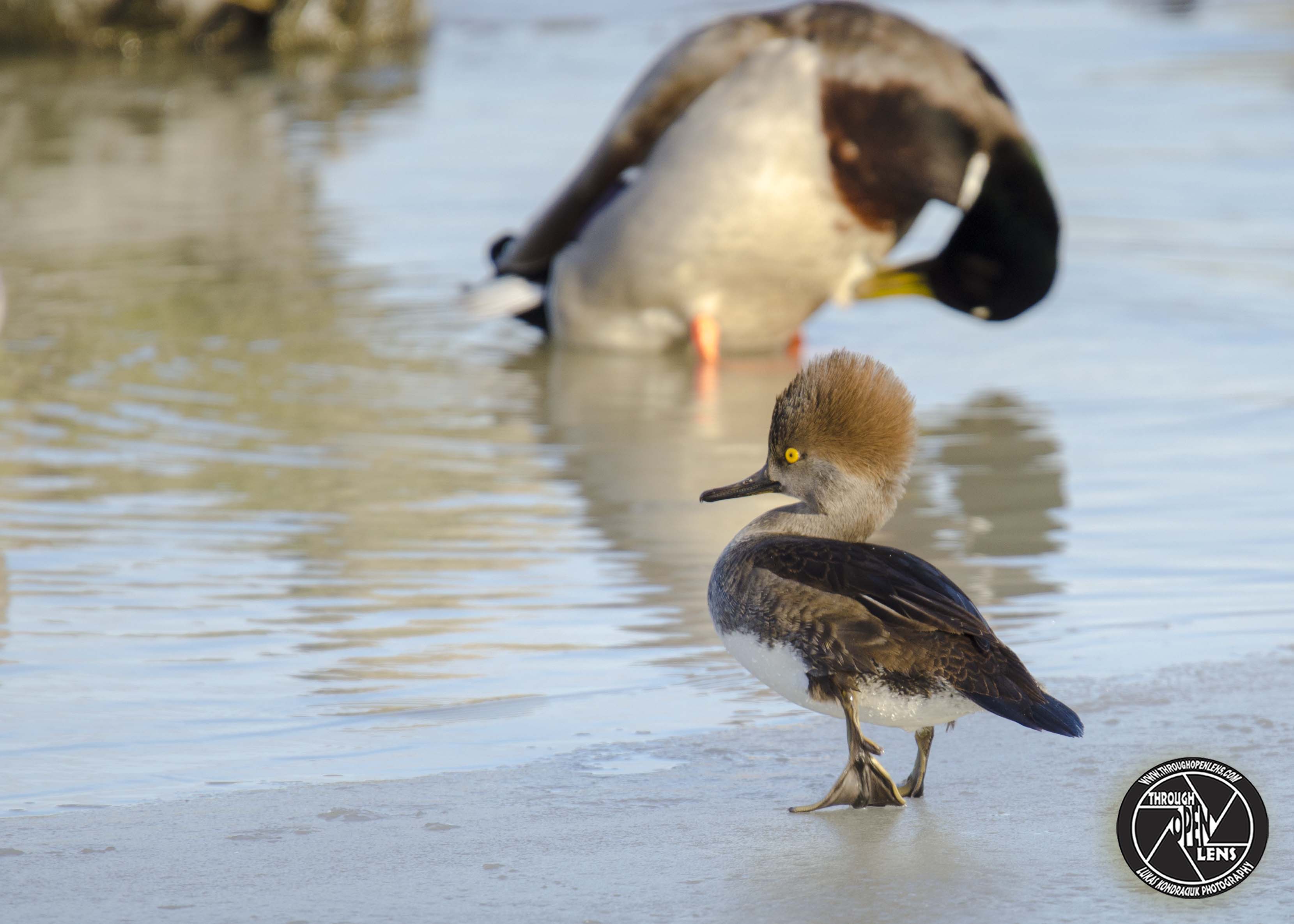
Hooded Merganser ( Female )

2 Guys walking down the street.

One walks into a bar, the other ducks.

Interesting Fact:  The female chooses the nest site, and may start scouting for next year’s tree cavity at the end of each breeding season. Nest cavities can be in live or dead trees and are usually close to water. Cavities are typically 10–50 feet off the ground, up to about 90 feet. Hooded Mergansers nest readily in boxes, preferring those with wood shavings or nest material from previous uses. They prefer cavities with 3–5 inch openings. ( https://www.allaboutbirds.org/guide/Hooded_Merganser/overview )

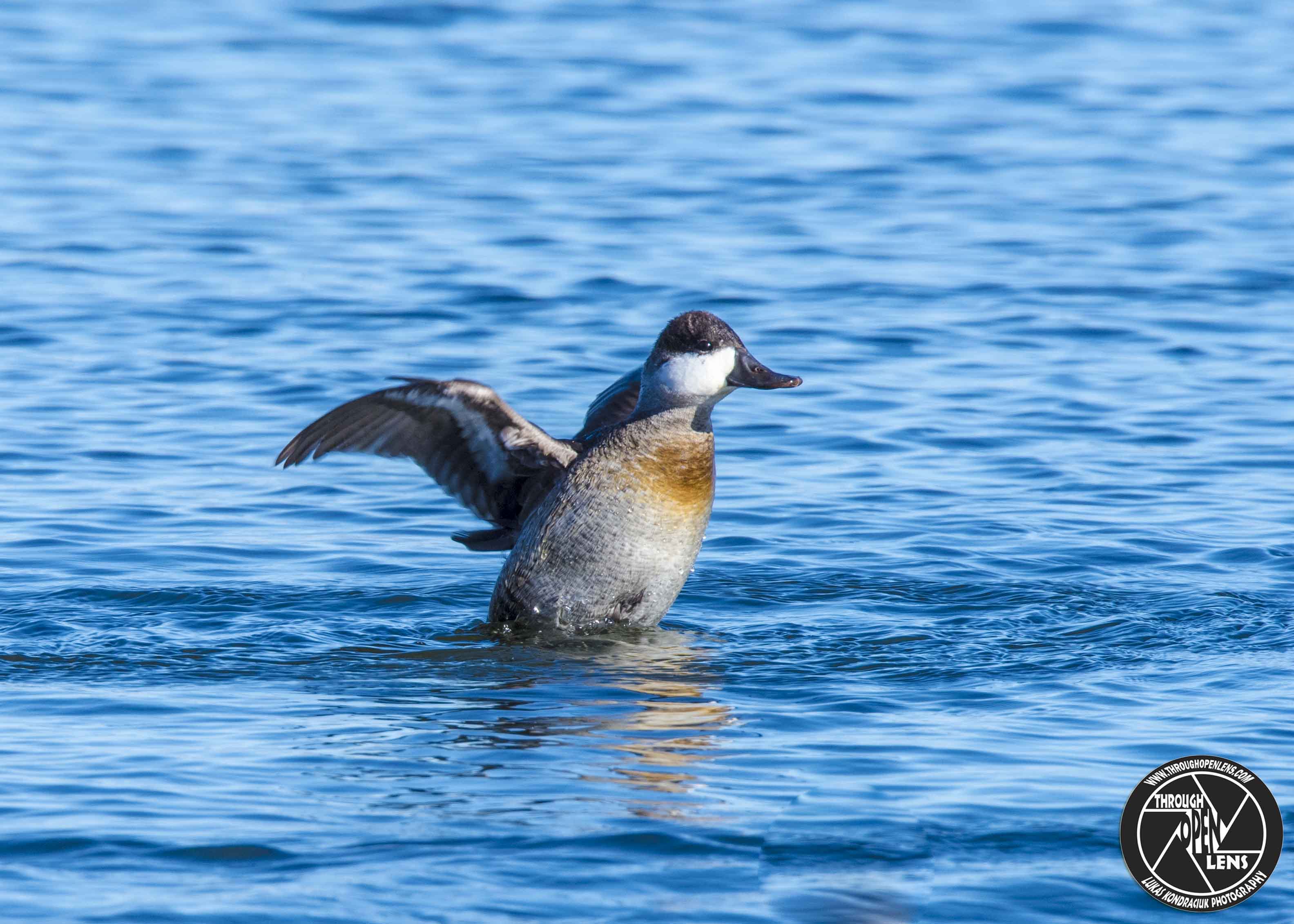
Like I Give A Duck!

F/11.0, 1/500, ISO 320.

Ruddy Duck 

Why do bees have sticky hair?

They use honey-combs.

Interesting Fact: Though Ruddy Ducks are native to the Americas, one population became established in England after captive ducks escaped in 1952. This population grew to about 3,500 individuals by 1992, and now appears to be expanding into the Netherlands, France, Belgium, and Spain. ( Ruddy Duck Overview, All About Birds, Cornell Lab of Ornithology )
A Good Joke Always Quacks Me Up!

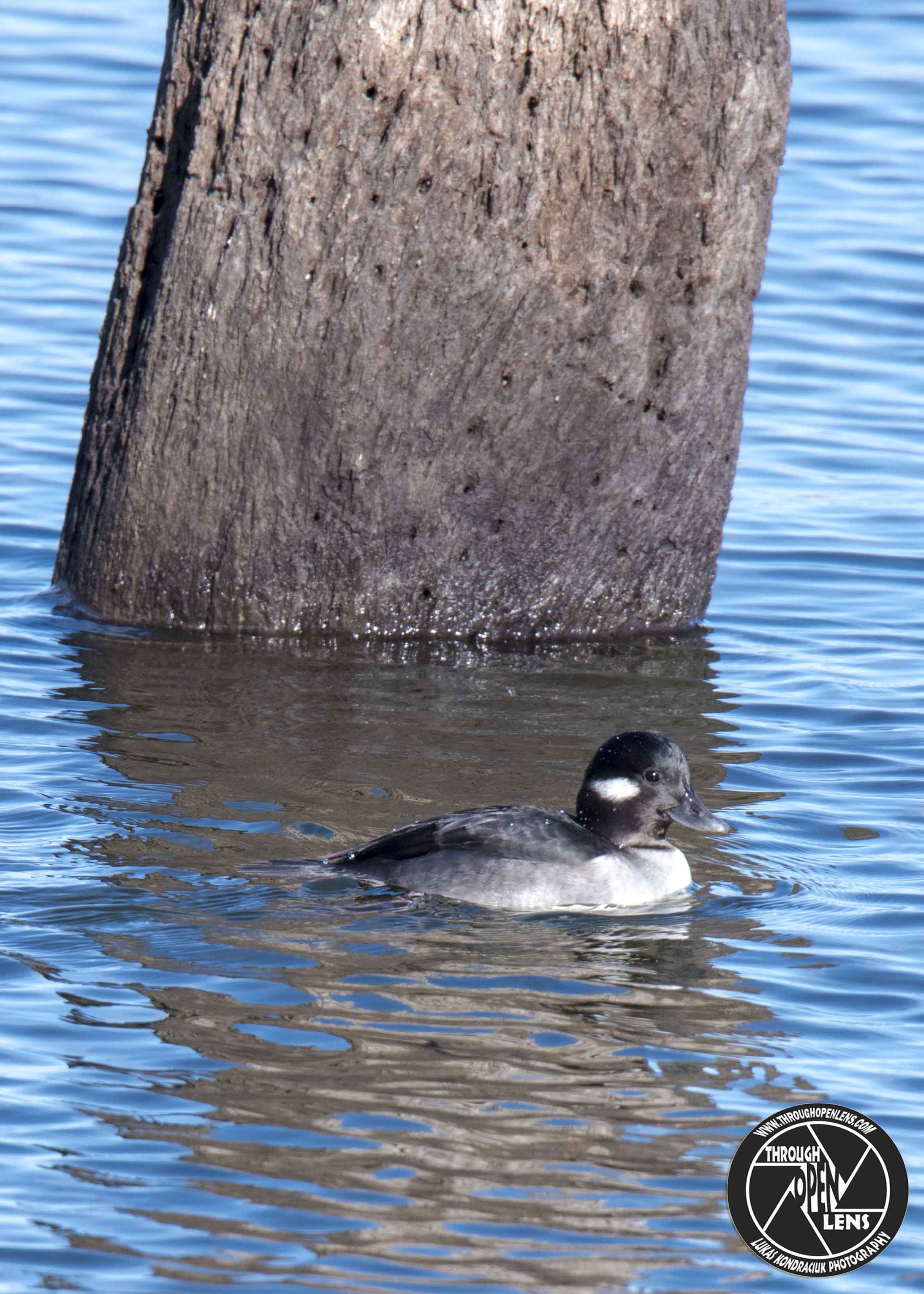
F/10.0, 1/400, ISO 320.

Bufflehead Duck ( Female )

Why couldn’t the bicycle stand up by itself?

It was two tired.

Interesting Fact: They hold their wings tightly against their bodies underwater and use only their feet to propel themselves. At the end of a dive, they may bob to the surface like a cork. Throughout the day they alternate between bouts of feeding, swimming alertly, preening, and sleeping. ( Bufflehead Life History, All About Birds, Cornell Lab of Ornithology )


Flying Quack!

F/6.3, 1/500, ISO 280.

Hooded Merganser ( Male ) 

A police officer stops a Bob’s car.

Police Officer: “Your driver’s license please.”

Bob: “I’m really sorry, I forgot.”

Officer: “At home?”

Bob: “No, to do it.”

Interesting Fact:They take flight by running across the water, flying with fast wingbeats and never gliding until they are about to land (by skidding to a stop on the water). ( https://www.allaboutbirds.org/guide/Hooded_Merganser/lifehistory )  

I Will, I Will, Quack You!

F/6.3, 1/640, ISO 200.

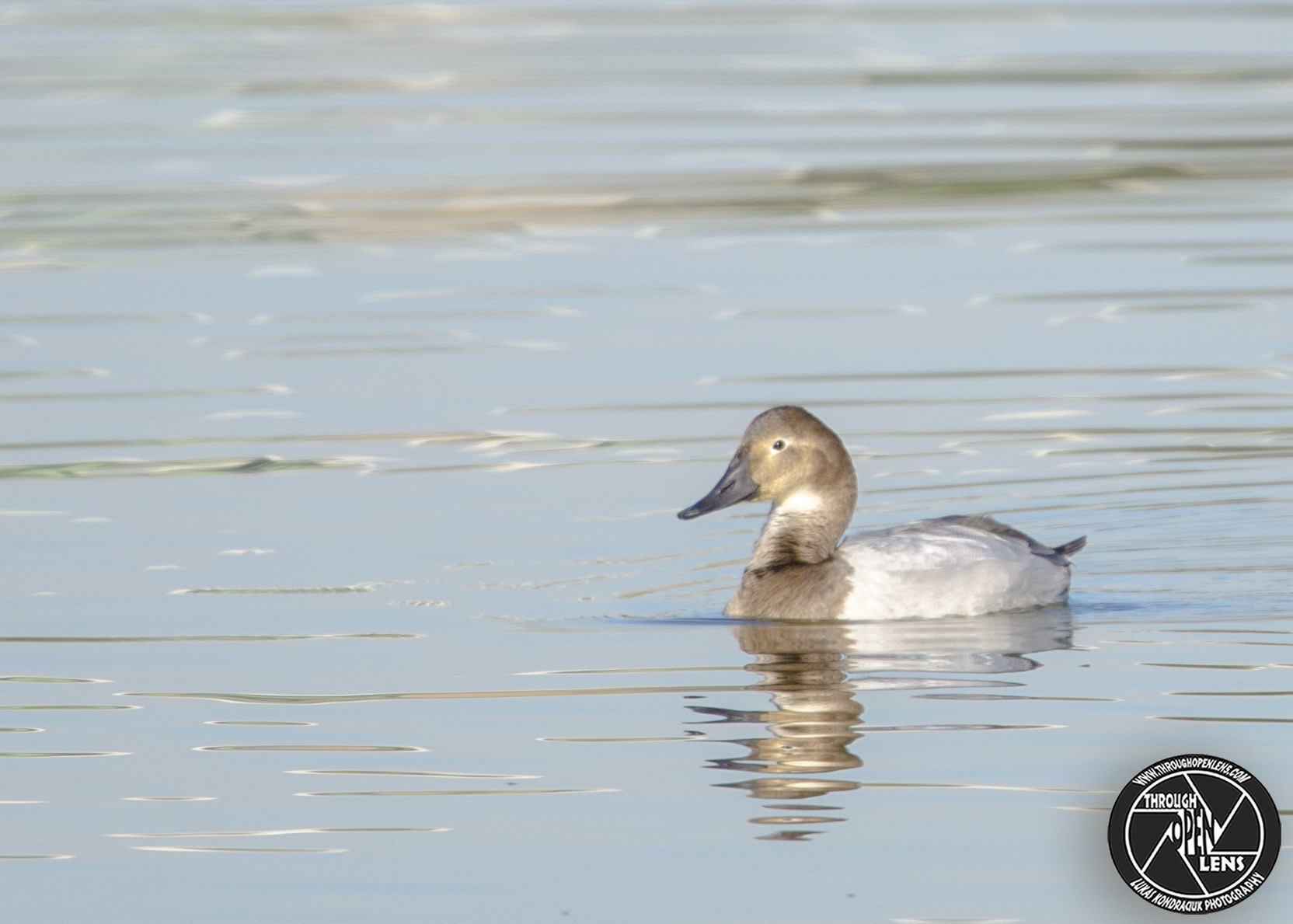
Canvasback ( Female ) 

Guy in a restaurant calls a waiter over

Guy: “Waiter, I am outraged. There is one hair in my soup.”

Waiter: “And what do you expect for this price? A whole wig?!”

Interesting Fact: The breeding habitat of the canvasback is in North Americaprairie potholes. The bulky nest is built from vegetation in a marsh and lined with down. Loss of nesting habitat has caused populations to decline. The canvasback usually takes a new mate each year, pairing in late winter on ocean bays.[5] It prefers to nest over water on permanent prairie marshes surrounded by emergent vegetation, such as cattails and bulrushes, which provide protective cover. Other important breeding areas are the subarctic river deltas in Saskatchewan and the interior of Alaska. ( https://en.wikipedia.org/wiki/Canvasback )

Snow Way You’ve Got To Be Flaking Me!

F/5.6, 1/1600, ISO 400.

Mute Swan

Why was the snowman sad?

Cause he had a meltdown.

Interesting Fact: Male Mute Swans select the nest site and may start several nests before the female accepts the location. Nest sites are safe from flooding yet offer easy access to water, with ample nesting materials and food nearby–often on a small peninsula, along a heavily vegetated shoreline, or on a small to medium-sized island.  ( https://www.allaboutbirds.org/guide/Mute_Swan/lifehistory )


I Love Escorting People… I Put An Ad Out For An Escort Service And Got A LOT Of Responses. Mostly Creeps. Made A Few Friends.

common-merganser-1

F/10.0, 1/1600, ISO 800.

Common Merganser

A police officer was escorting a prisoner to jail when his hat blew off.

“Shall I run and get it for you?” asked the prisoner obligingly.

“Do you think I am a fool” said the officer.

“You stand here and I’ll get it.”

Interesting Fact: The oldest Common Merganser on record was a female, and at least 13 years, 5 months old. She was banded in Oklahoma in 1938 and found in Wisconsin in 1950. ( https://www.allaboutbirds.org/guide/Common_Merganser/lifehistory )

Eat My Bubbles!

F/9.0, 1/320, ISO 200.

Red-breasted Merganser  

Tom and Bobby are talking:

Bobby: “Holy crap, I just fell off a 50 ft ladder.”

Tom: “Oh my God, are you okay?”

Bobby: “Yeah it’s a good thing I fell off the first step.”

Interesting Fact: Its breedinghabitat is freshwater lakes and rivers across northern North America, Greenland, Europe, and Asia. It nests in sheltered locations on the ground near water. It is migratory and many northern breeders winter in coastalwaters further south. ( https://en.wikipedia.org/wiki/Red-breasted_merganser#Behaviour )

Together We Fly!

F/13.0, 1/640, ISO 400.

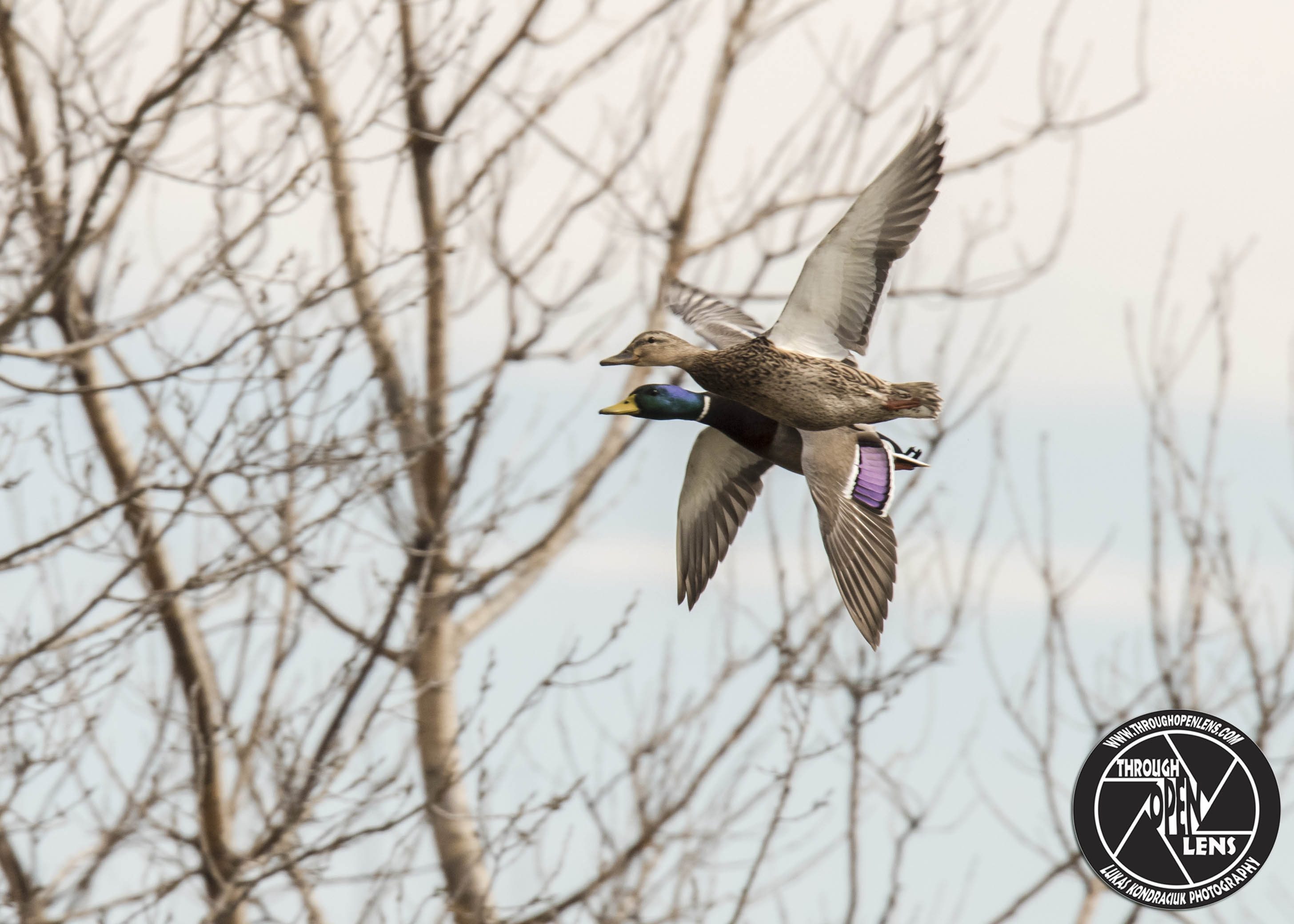
Mallard

As a scarecrow, people say I’m outstanding in my field.

But hay, it’s in my jeans.

Interesting Fact: Mallards, like other ducks, shed all their flight feathers at the end of the breeding season and are flightless for 3–4 weeks. They are secretive during this vulnerable time, and their body feathers molt into a concealing “eclipse” plumage that can make them hard to identify. ( https://www.allaboutbirds.org/guide/Mallard )