50 Shades Of Red In My Eyes

F/ 6.3, 1/640, ISO 200.

Canvasback 

What type of book has only characters and no story?

A telephone book.

Interesting Fact: A large diving duck, the Canvasback breeds in prairie potholes and winters on ocean bays. Its sloping profile distinguishes it from other ducks. ( https://www.allaboutbirds.org/guide/Canvasback/id )

Double Trouble!

Mute Swan

F/ 5.6, 1/1250, ISO 400.

Mute Swan 

What did the nose say to the finger?

Stop picking on me. 

Interesting Fact: The Mute Swan is reported to mate for life. However, changing of mates does occur infrequently, and swans will remate if their partner dies. If a male loses his mate and pairs with a young female, she joins him on his territory. If he mates with an older female, they go to hers. If a female loses her mate, she remates quickly and usually chooses a younger male.  ( https://www.allaboutbirds.org/guide/Mute_Swan/lifehistory )

I Can Walk On Water!

F/13.0, 1/640, ISO 320.

Ring-billed Gull

Two Police officers are talking:

A naked women robbed a bank.

Nobody could remember her face.

Interesting Fact: Ring-billed Gulls near Tampa Bay, Florida, became accustomed to feasting on garbage at an open landfill site. Then, in 1983, operators replaced the dumping grounds with closed incinerators. The thwarted scavengers found themselves another open dump, but the pattern continues all across the gull’s range. When waste-management practices shift from open landfills to closed incinerators, gull numbers often drop. ( https://www.allaboutbirds.org/guide/Ring-billed_Gull/lifehistory )

Splash Down!

F/8.0, 1/2000, ISO 800.

Common Merganser 

Why was the math book so sad?

It had a lot of problems.

Interesting Fact: Common Mergansers spend much of their time afloat, loafing, fishing, and often sleeping on open water. They may form flocks of up to 75 individuals. They often swim in small groups along the shoreline, dipping their heads underwater to search for prey and then diving with a slight leap. Often when one bird dives in a large group, the others follow the leader and disappear. ( Common Merganser Life History, All About Birds, Cornell Lab of Ornithology )


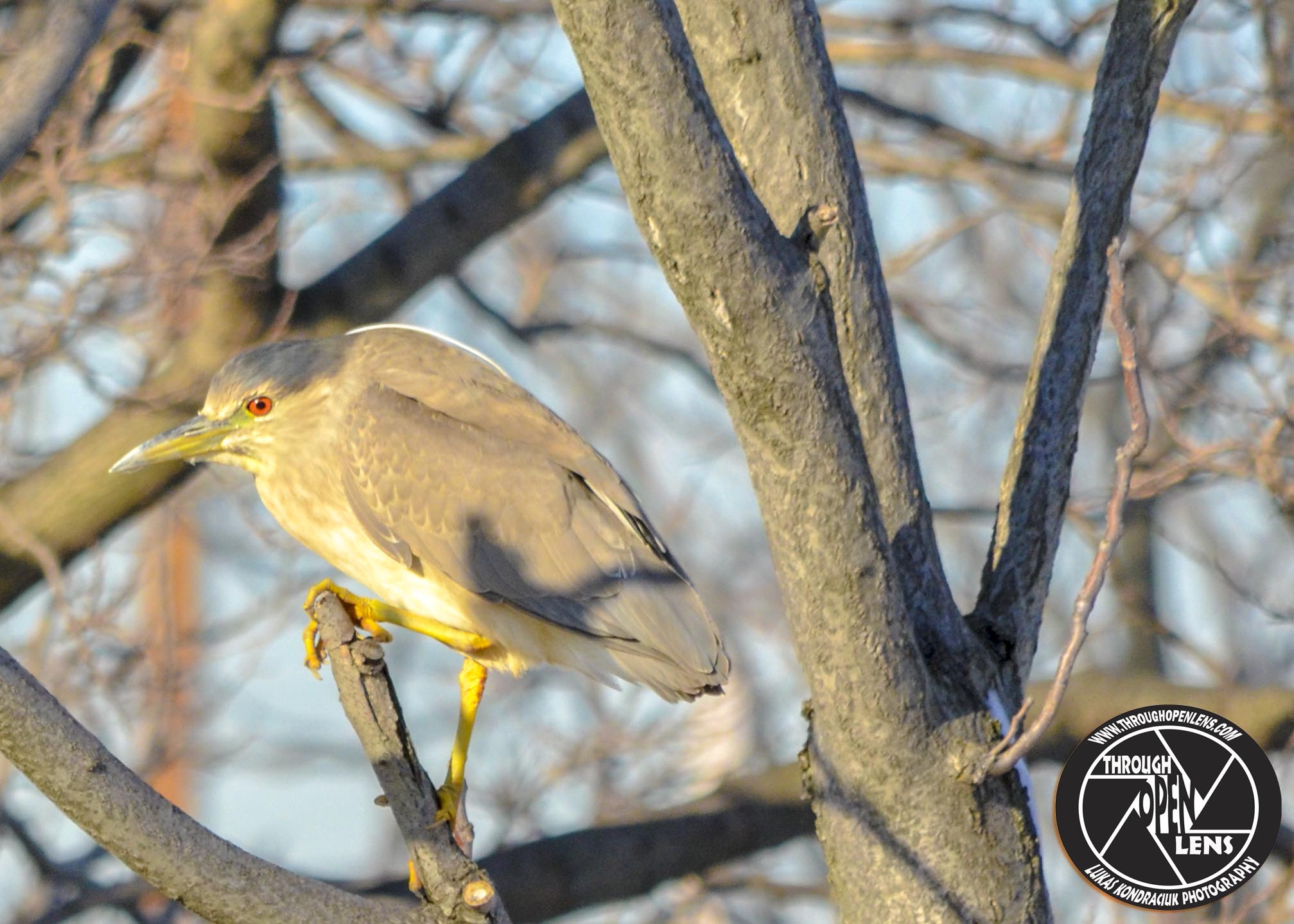
I Solemnly Swear I Am Up To No Good!

F/9.0, 1/125, ISO 320.

Black-crowned Night-Heron

Guest at a restaurant: “I refuse to eat this roast beef. Please call the manager! “

Waiter: “That’s no use. He won’t eat it either.”

Interesting Fact: Black-crowned Night Heron nest in groups that often include other species, including herons, egrets, and ibises. ( https://www.allaboutbirds.org/guide/Black-crowned_Night-Heron )

Don’t Confuse Me With Twitter!

F/9.0, 1/320, ISO 400.

Blue Jay

What do you get when you cross and smurf and a cow?

Blue cheese!

Interesting Fact: The black bridle across the face, nape, and throat varies extensively and may help Blue Jays recognize one another. ( https://www.allaboutbirds.org/guide/Blue_Jay/lifehistory

Monday Blues

F/7.1, 1/200, ISO 400.

Eastern Bluebird 

Where does Capitan Hook go shopping?

Second hand stores.

Interesting Fact: Eastern Bluebirds eat mostly insects, wild fruit and berries. Occasionally, Eastern Bluebirds have also been observed capturing and eating larger prey items such as shrews, salamanders, snakes, lizards and tree frogs. ( Eastern Bluebird Overview, All About Birds, Cornell Lab of Ornithology )


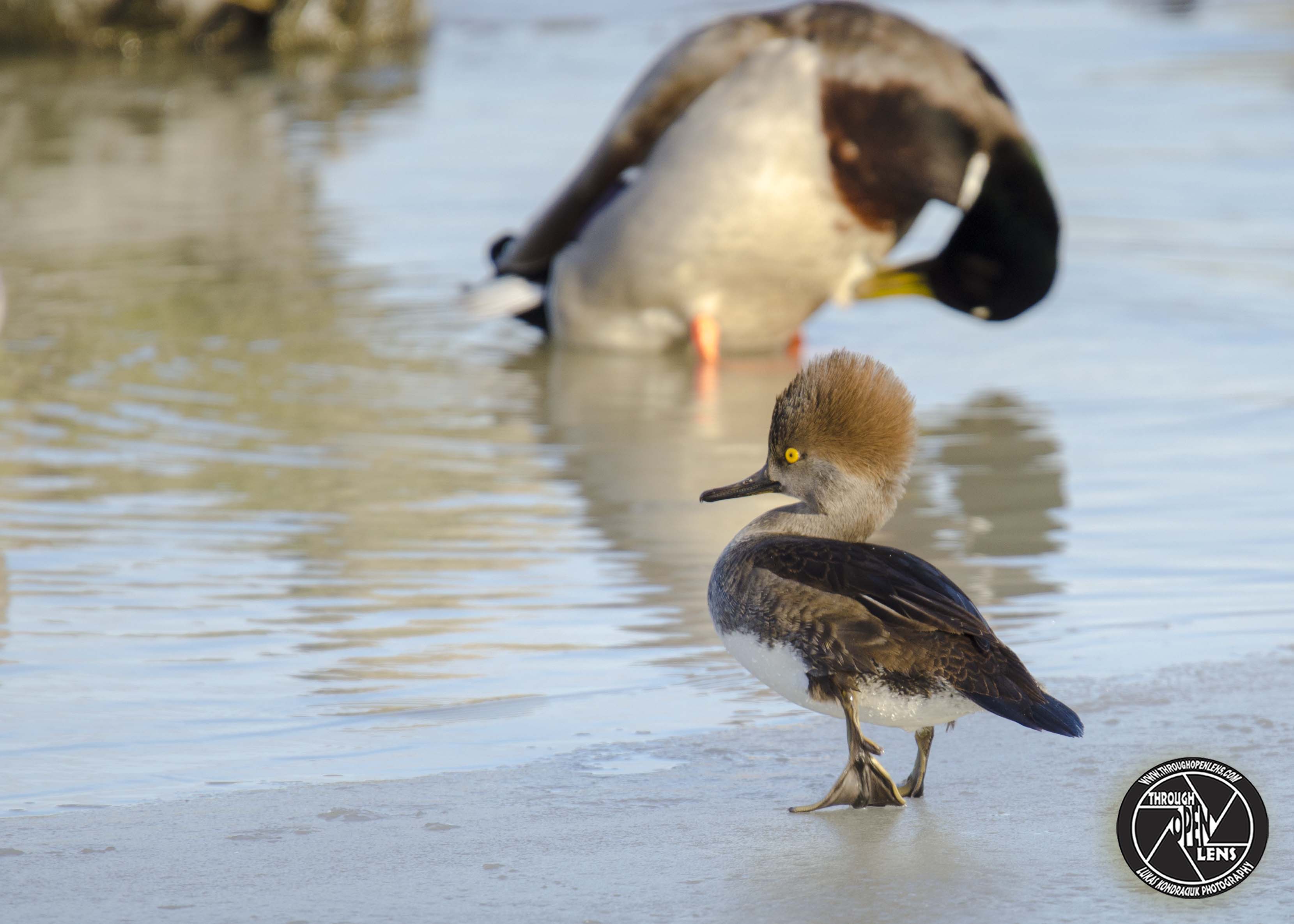
I’m A Duck That Does Not Give A Quack!

F/6.3, 1/500, ISO 250.

Hooded Merganser ( Female )

2 Guys walking down the street.

One walks into a bar, the other ducks.

Interesting Fact:  The female chooses the nest site, and may start scouting for next year’s tree cavity at the end of each breeding season. Nest cavities can be in live or dead trees and are usually close to water. Cavities are typically 10–50 feet off the ground, up to about 90 feet. Hooded Mergansers nest readily in boxes, preferring those with wood shavings or nest material from previous uses. They prefer cavities with 3–5 inch openings. ( https://www.allaboutbirds.org/guide/Hooded_Merganser/overview )

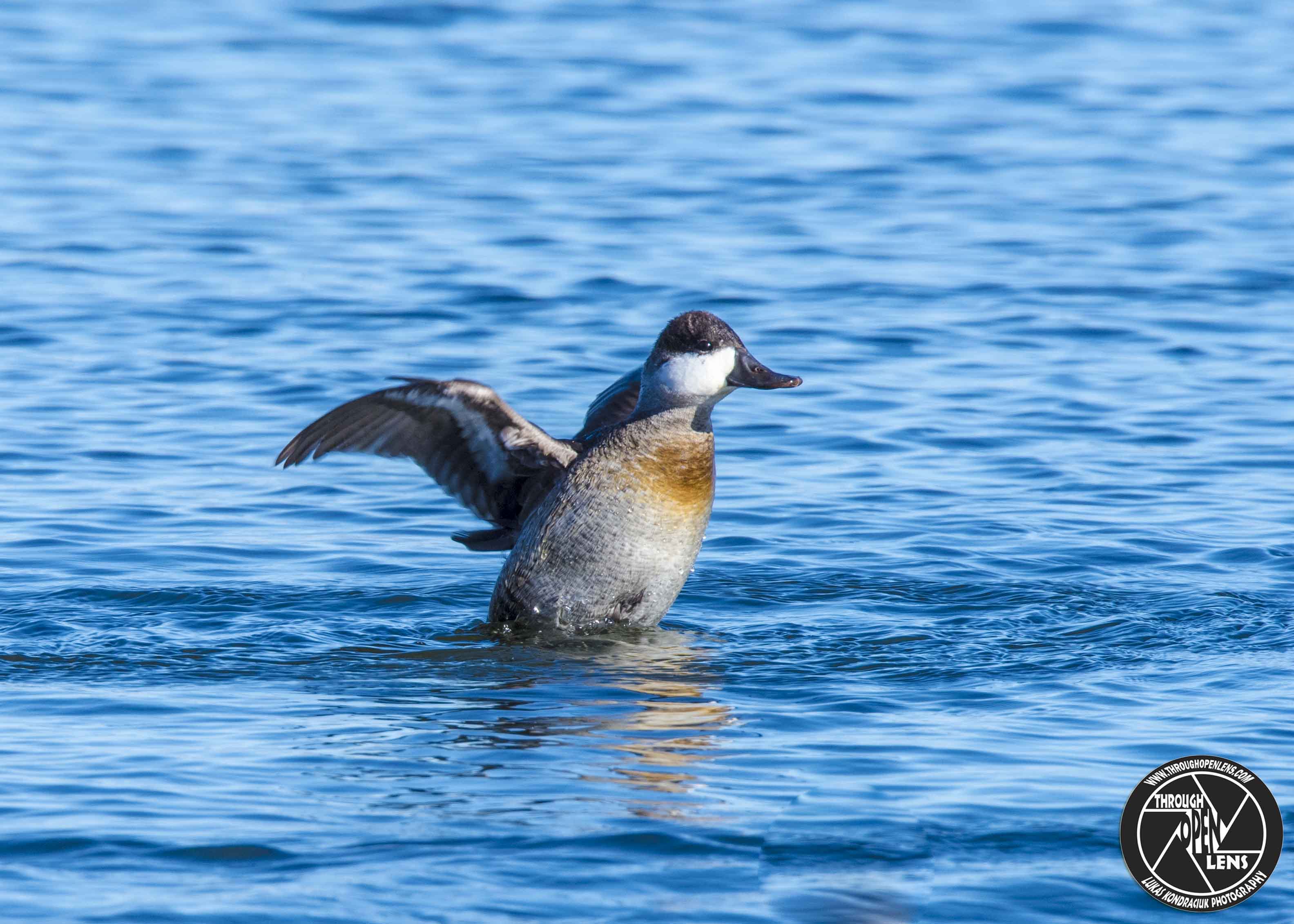
Like I Give A Duck!

F/11.0, 1/500, ISO 320.

Ruddy Duck 

Why do bees have sticky hair?

They use honey-combs.

Interesting Fact: Though Ruddy Ducks are native to the Americas, one population became established in England after captive ducks escaped in 1952. This population grew to about 3,500 individuals by 1992, and now appears to be expanding into the Netherlands, France, Belgium, and Spain. ( Ruddy Duck Overview, All About Birds, Cornell Lab of Ornithology )

Swan Lake Ballet ( On Ice )

mute-swan-on-ice

F/8.0, 1/1000, ISO 640.

Mute Swan

A good looking woman walks into a bar wearing a tube top. She raises her hand to signal the bartender for a beer, revealing that she does not shave her

armpits.

Meanwhile, a sloppy drunk on the other side of the bar signals the bartender, “Buy that ballerina over there a drink on me.”

The bartender replies, “What makes you think she’s a ballerina?”

“Because,” answers the drunken man, “any chick that can lift her leg that high has GOT to be a ballerina.”

Interesting Fact: All of the Mute Swans in North America descended from swans imported from Europe from the mid 1800s through early 1900s to adorn large estates, city parks, and zoos. Escapees established breeding populations and are now established in the Northeast, Midatlantic, Great Lakes, and Pacific Northwest of the U.S. ( https://www.allaboutbirds.org/guide/Mute_Swan/lifehistory )