From Small Beginnings Come Great Things

F/5.6, 1/200, ISO 100.

Canada Goose Goslings

What do you get when you cross fish and an elephant?

Swimming trunks.

Interesting Fact: Young often remain with their parents for their entire first year, especially in the larger subspecies. As summer wanes birds become more social; they may gather in large numbers at food sources; where food is limited and patchy, may compete with displays and fights.  ( https://www.allaboutbirds.org/guide/Canada_Goose/lifehistory )

PAUSE For A Moment And REFLECT

F/9.0, 1/320, ISO 320.

Red breasted Merganser 

What did E.T.’s mother say to him when he got home?

Where on Earth have you been?

Interesting Fact: The female creates a depression on the ground that she covers with dead grasses, forming a shallow bowl. She plucks down feathers from her breast to help insulate the nest. ( https://www.allaboutbirds.org/guide/Red-breasted_Merganser/lifehistory )


Always Be Yourself… Unless You Can Be A Duck… Then Always Be A Duck.

F/8.0, 1/250, ISO 200. 

Red-breasted Merganser 

Two men meet on opposite sides of a river.

One shouts to the other, “I need you to help me get to the other side!”

The other guy replies, “You’re on the other side!”

Interesting Fact: Red-breasted Mergansers are among the fastest flying ducks, clocking speeds of up to 81 miles per hour.  ( https://www.allaboutbirds.org/guide/Red-breasted_Merganser/lifehistory )


Welcome To The Duck Side. We Have Quackers.

F/9.0, 1/320, ISO 320.

Ruddy Duck 

Why didn’t my girlfriend believe I was a ghost?

She could see right through me.

Interesting Fact:  The nest is usually made of dead, dry plant materials, though some are built entirely with green vegetation. It starts as a platform and becomes more bowl-like throughout the construction process, with an inner cup measuring 4–12 inches across and 0.5–5 inches deep. Ruddy Ducks usually weave a canopy of vegetation over their nests. ( https://www.allaboutbirds.org/guide/Ruddy_Duck/lifehistory )

Bad Hair Day: Ain’t Nobody Got Time For That!

F/9.0, 1/320, ISO 200.

Red-breasted Mergansers 

Can February March?

No, but April May.

Interesting Fact:Red-breasted Mergansers nest along forested riverbanks, marsh edges, lakeshores, coastal islands, and sandy shores with vegetation. They are never far from water. Female Red-breasted Mergansers select a spot on the ground under dense cover from low tree branches, fallen logs, or boulders. They nest alone or in colonies often with gulls and terns. ( https://www.allaboutbirds.org/guide/Red-breasted_Merganser/lifehistory )


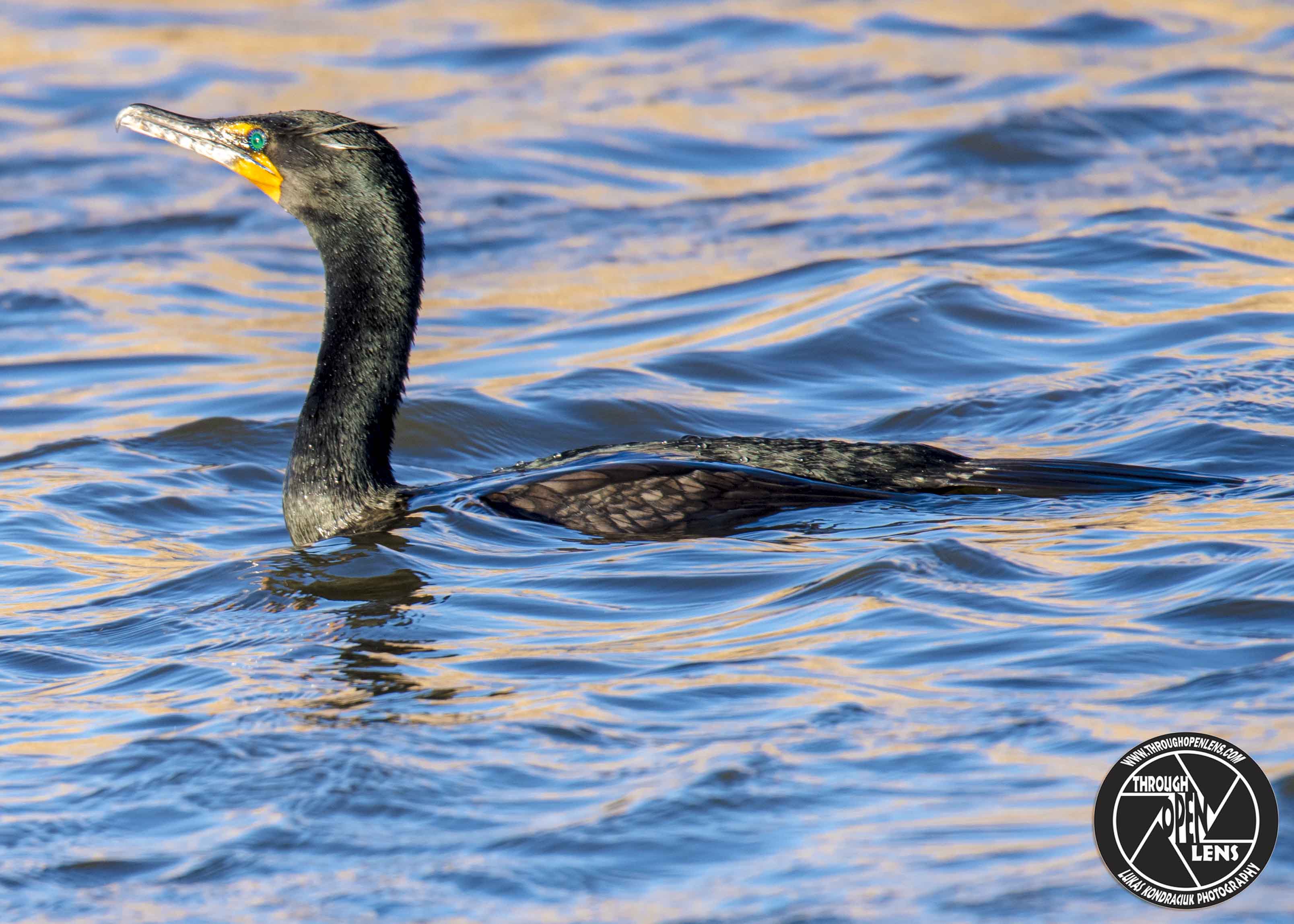
Gone Crazy! Be Back Soon!

F/9.0, 1/320, ISO 320.

Double-crested Cormorant 

What did one toilet say to the other toilet?

You look a bit flushed.

Interesting Fact: Double-crested Cormorant nests often are exposed to direct sun. Adults shade the chicks and also bring them water, pouring it from their mouths into those of the chicks. ( https://www.allaboutbirds.org/guide/Double-crested_Cormorant )

A Wise Duck Once Told Me “QUACK” And He Meant It!

F/7.1, 1/200, ISO 125.

White-cheeked pintail

Why did the student wear eye-glasses in math class?

It improved DiVision!

Interesting Fact: White-cheeked Pintail: Large, heavily spotted dark and light brown duck with striking white cheek patches, blue bill with bright red base, buff pointed tail. Legs and feet are blue-gray. Feeds on aquatic plants, small invertebrates. Swift direct flight with strong rapid wing beats. AKA Bahama Duck. ( https://identify.whatbird.com/obj/1029/overview/White-cheeked_Pintail.aspx )

Drink Water Suprise Your Liver!!

F/8.0, 1/250, ISO 200.

Wood Duck

Want to hear a pizza joke…. nah, it’s too cheesy.

What about a construction joke? Oh never mind, I’m still working on that one.

Interesting Fact:  Courting males swim before a female with wings and tail elevated, sometimes tilting the head backwards for a few seconds. Males may also perform ritualized drinking, preening, and shaking movements. Both members of a pair may preen each other. (  https://www.allaboutbirds.org/guide/Wood_Duck/lifehistory  )

Double Check!

F/5.6, 1/1600, ISO 400.

Mute Swan

What did the digital clock say to his mother?

Look ma, no hands!

Interesting Fact: All of the Mute Swans in North America descended from swans imported from Europe from the mid 1800s through early 1900s to adorn large estates, city parks, and zoos. Escapees established breeding populations and are now established in the Northeast, Midatlantic, Great Lakes, and Pacific Northwest of the U.S. ( https://www.allaboutbirds.org/guide/Mute_Swan )

I Just Love The Way I Feel, Hmmm.

F/11.0, 1/500, ISO 200.

Mute Swan

What do clouds do when they become rich?

They make it rain!

Interesting Fact: Mute Swans form long-lasting pair bonds. Their reputation for monogamy along with their elegant white plumage has helped establish them as a symbol of love in many cultures. ( https://www.allaboutbirds.org/guide/Mute_Swan/lifehistory )