Your Love, Got Me Looking So Crazy Right Now!

Happy Valentines Day! 

F/11.0, 1/500, ISO 200.

Snowy Egret

How did the telephone propose to its girlfriend?

He gave her a ring.

Interesting Fact: Male Snowy Egrets fight for breeding territories, choose nest sites, and perform noisy courtship displays to attract mates. A ring of other egrets often gathers around a displaying male as he pumps his body up and down, points his bill skyward, and calls. He also performs aerial displays, including one that ends with him dropping toward the ground while tumbling around and around. ( https://www.allaboutbirds.org/guide/Snowy_Egret/lifehistory )


Hold It Until We Find A Clean Car!

F/10.0, 1/400, ISO 200. 

Brown Pelican

How do you make holy water?

Boil the hell out of it!

Interesting Fact: Though they have an awkward gait on land, Brown Pelicans are strong swimmers and masterful fliers. They fly to and from their fishing grounds in V-formations or lines just above the water’s surface. They and the closely related Peruvian Pelican are the only pelican species to perform spectacular head-first dives (typically ending in a huge splash visible from far away) to trap fish.  ( https://www.allaboutbirds.org/guide/Brown_Pelican/lifehistory )

Wait, What Did You Said?

F/7.1, 1/200, ISO 250.

Blue Jay

Why is your foot more special than your other body parts?

Because they have their own soul.

Interesting Fact: Blue Jays are found in all kinds of forests but especially near oak trees; they’re more abundant near forest edges than in deep forest. They’re common in urban and suburban areas, especially where oaks or bird feeders are found. ( https://www.allaboutbirds.org/guide/Blue_Jay/lifehistory )

So, You Are The Quiet Type, I Like That.

F/9.0, 1/320, ISO 250.

Black-capped Chickadee 

“How do you shoot a killer bee?”

“With a bee bee gun.”

Interesting Fact: Adult chickadees don’t migrate. In years when chickadee reproduction is high, young birds sometimes move large distances, but these movements are irregular and are more accurately called “irruptions.”( https://www.allaboutbirds.org/guide/Black-capped_Chickadee )


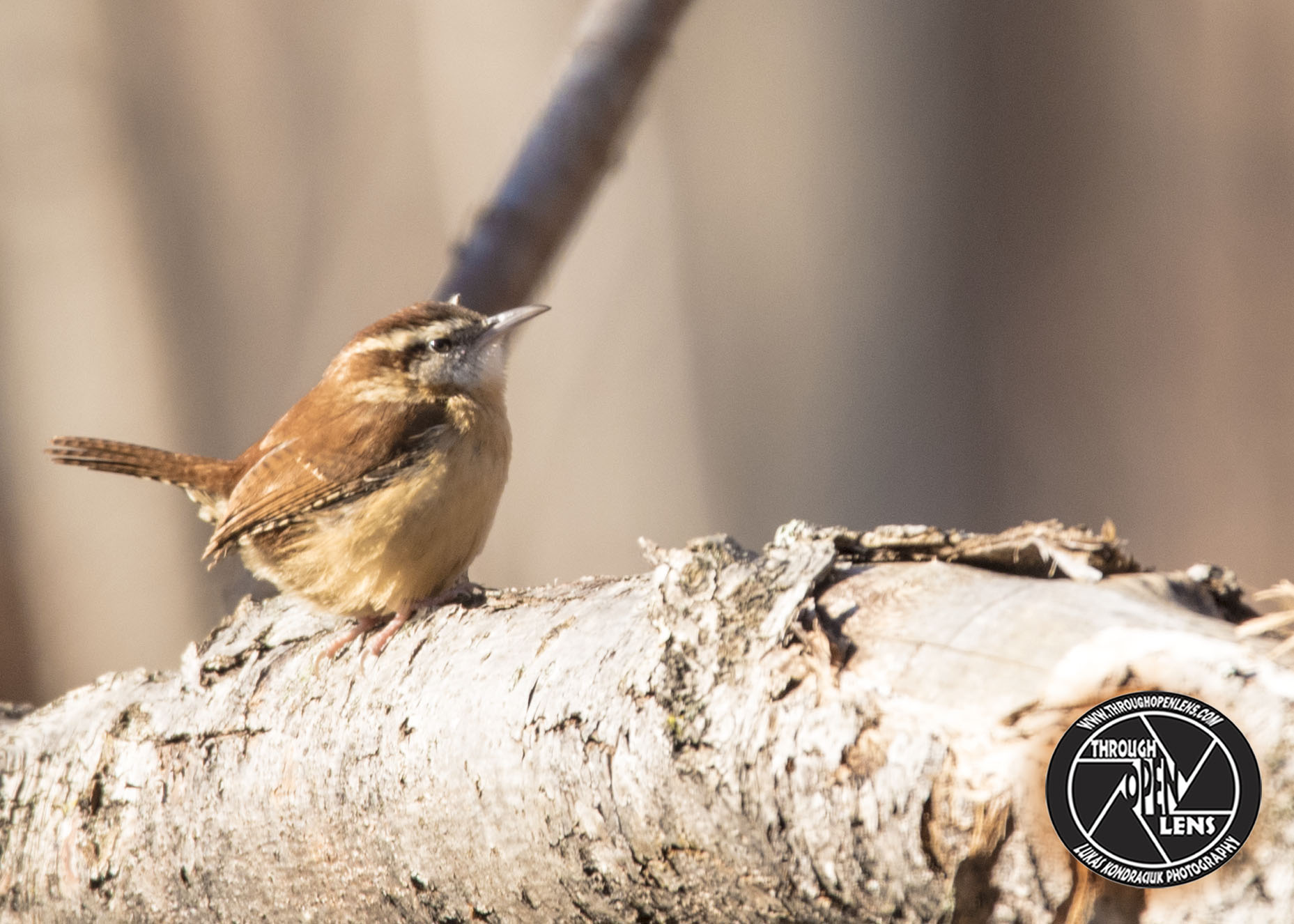
Life Is So Much Easier When You Just Chill Out.

F/8.0, 1/250, ISO 400.

Carolina Wren

One day, during a lesson on proper grammar, the teacher asked for a show of hands from those who could use the word “beautiful” in the same sentence twice. First, she called on little Suzie, who responded with, “My father bought my mother a beautiful dress and she looked beautiful in it.”

“Very good, Suzie,” replied the teacher. She then called on little Michael. “My mommy planned a beautiful banquet and it turned out beautifully,” he said.

“Excellent, Michael!”

Then, the teacher called on Little Johnny. “Last night, at the dinner table, my sister told my father that she was pregnant, and he said, ‘Beautiful, …just #$&#*&^# beautiful!

Interesting Fact: One captive male Carolina Wren sang nearly 3,000 times in a single day. ( https://www.allaboutbirds.org/guide/Carolina_Wren/lifehistory )

Something’s Stuck In My Butt Quack…

F/8.0, 1/250, ISO 160.

Common Eider ( Females ) 

What do you call a duck that steals?

A robber ducky.

Interesting Fact: Mother Common Eiders lead their young to water, and often are accompanied by nonbreeding hens that participate in chick protection. Broods often come together to form “crèches” of a few to over 150 ducklings. Attacks by predators may cause several broods to cluster together into a crèche. Once formed, a crèche tends to stay together throughout the brood rearing period, although some of the different females attending it may leave.  ( https://www.allaboutbirds.org/guide/Common_Eider/ )

Say What?!

F/8.0, 1/250, ISO 320.

Tufted Titmouse

Why are hairdressers never late for work?

Because they know all the short cuts!

Interesting Fact: Tufted Titmice live in deciduous woods or mixed evergreen-deciduous woods, typically in areas with a dense canopy and many tree species. They are also common in orchards, parks, and suburban areas. Generally found at low elevations, Tufted Titmice are rarely reported at elevations above 2,000 feet. ( https://www.allaboutbirds.org/guide/Tufted_Titmouse/lifehistory )


He Can Be A Real Pecker !

red-bellied-woodpecker-1

F/ 6.3, 1/125, ISO 1100.

Red-Bellied Woodpecker

An New York woodpecker and a Florida woodpecker were in New York arguing about which state had the toughest trees to peck. The New Yorker

woodpecker said that they had a tree there that no woodpecker can peck.

The Florida woodpecker challenged him and was able to peck a hole in the tree with no problem. The New Yorker woodpecker was in awe!

The Florida woodpeck then challenged the New Yorker woodpecker to come to Florida and try to peck this certain tree there that no woodpecker had

ever been able to peck successfully.

The NewYorker woodpecker said he was sure he would be able to do it. So, after flying down to Florida, he successfully pecked the tree!

The two woodpeckers then had a discussion about why they were each unable to peck those trees in their own states. After thinking about this problem

for some time, they both came to the same conclusion: “Your pecker is always harder when you’re away from home…”


Interesting Fact: You may sometimes see Red-bellied Woodpeckers wedge large nuts into bark crevices, then whack them into manageable pieces using their beaks. They also use cracks in trees and fence posts to store food for later in the year, a habit it shares with other woodpeckers in its genus. ( https://www.allaboutbirds.org/guide/Red-bellied_Woodpecker/lifehistory )




You Quack Me Up!

F/9.0, 1/320, ISO 250.

Northern Shoveler

At what time does a duck wake up?

At the quack of dawn.

Interesting Fact: When flushed off the nest, a female Northern Shoveler often defecates on its eggs, apparently to deter predators. ( https://www.allaboutbirds.org/guide/Northern_Shoveler/overview )

Kris Kross Will Make You Jump Jump!

F/11.0, 1/500, ISO 200.

Snowy Egret

Why did the barber win the race?

Because he took a short cut.

Interesting Fact:  Male and female Snowy Egrets take turns incubating their eggs. As one mate takes over for the other, it sometimes presents a stick, almost as if passing a baton. Both parents continue caring for the young when they hatch. ( https://www.allaboutbirds.org/guide/Snowy_Egret/lifehistory )