Welcome To The Duck Side. We Have Quackers.

F/9.0, 1/320, ISO 320.

Ruddy Duck 

Why didn’t my girlfriend believe I was a ghost?

She could see right through me.

Interesting Fact:  The nest is usually made of dead, dry plant materials, though some are built entirely with green vegetation. It starts as a platform and becomes more bowl-like throughout the construction process, with an inner cup measuring 4–12 inches across and 0.5–5 inches deep. Ruddy Ducks usually weave a canopy of vegetation over their nests. ( https://www.allaboutbirds.org/guide/Ruddy_Duck/lifehistory )

Finding A Needle In The Haystack

F/11.0 , 1/500, ISO 320.

Northern Harrier

Why are the middle ages sometimes called the Dark Ages?

Because they had so many knights.

Interesting Fact: Northern Harriers usually fly slowly and low over the ground, their wings held in a V-shape as they glide. Most males have either one mate or two mates at a time, but some have up to five mates when food is abundant. Each male courts females and advertises his territory by performing sky-dancing displays: undulating, rollercoaster-like flights up to 1,000 feet off the ground, sometimes covering more than half a mile. ( https://www.allaboutbirds.org/guide/Northern_Harrier/lifehistory )


Bad Hair Day: Ain’t Nobody Got Time For That!

F/9.0, 1/320, ISO 200.

Red-breasted Mergansers 

Can February March?

No, but April May.

Interesting Fact:Red-breasted Mergansers nest along forested riverbanks, marsh edges, lakeshores, coastal islands, and sandy shores with vegetation. They are never far from water. Female Red-breasted Mergansers select a spot on the ground under dense cover from low tree branches, fallen logs, or boulders. They nest alone or in colonies often with gulls and terns. ( https://www.allaboutbirds.org/guide/Red-breasted_Merganser/lifehistory )


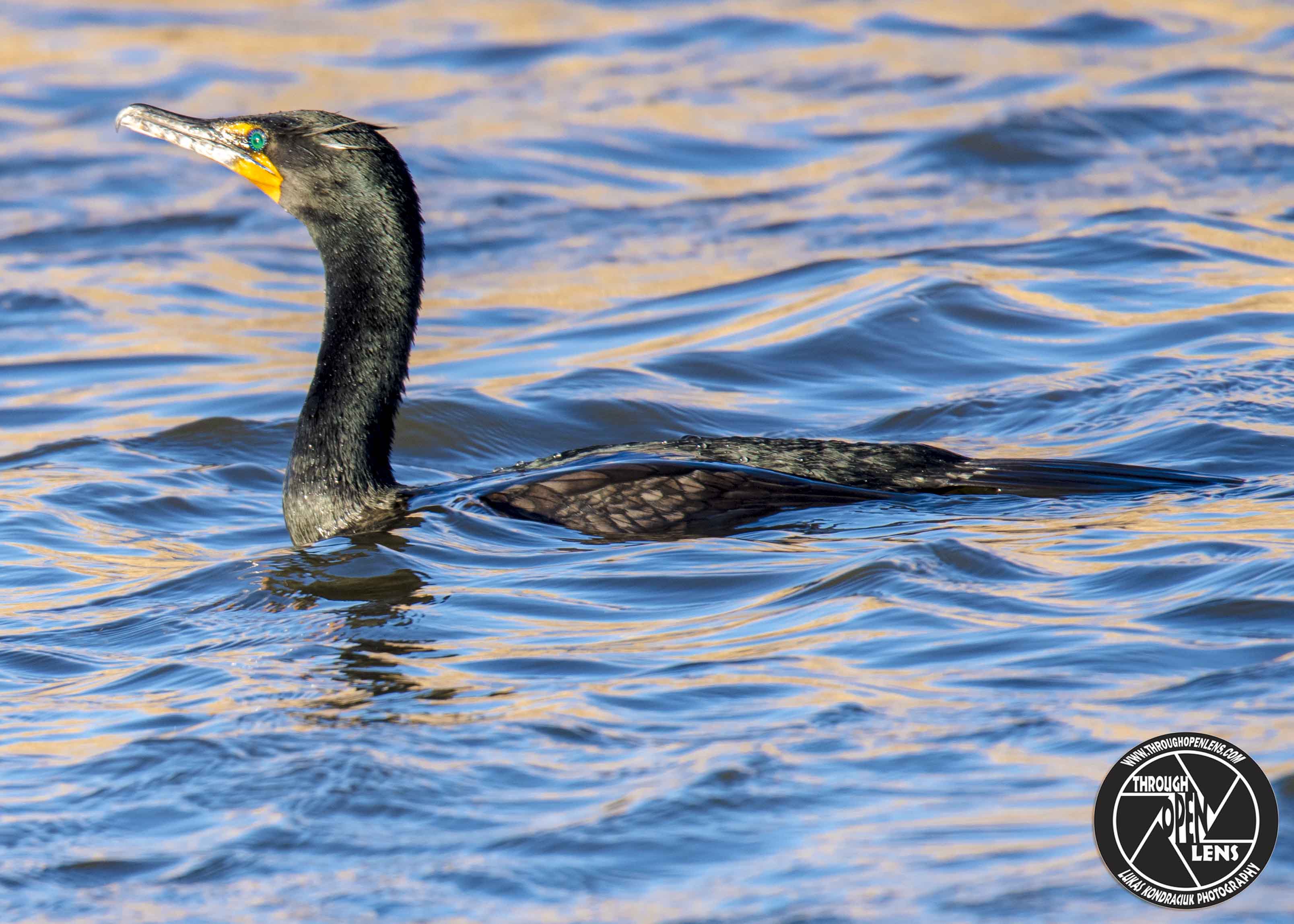
Gone Crazy! Be Back Soon!

F/9.0, 1/320, ISO 320.

Double-crested Cormorant 

What did one toilet say to the other toilet?

You look a bit flushed.

Interesting Fact: Double-crested Cormorant nests often are exposed to direct sun. Adults shade the chicks and also bring them water, pouring it from their mouths into those of the chicks. ( https://www.allaboutbirds.org/guide/Double-crested_Cormorant )

Don’t Look Back You’re Not Going That Way

F/5.6, 1/500, ISO 220.

Least Sandpiper

Browsing in a pet shop, a man sees a beautiful parrot with a red
string tied to its left leg and a green string tied to its right
leg, and asks the store owner about the different colored strings.
“This is a highly-trained parrot,” the owner explains. “If you
pull the red string, he’ll speak French.  If you pull the green
string, he’ll speak Spanish.”
The customer asks, “What happens if I pull both strings?”
“I’ll fall off my perch, dummy!” screeches the parrot.

Interesting Fact: Eastern populations probably fly nonstop over the ocean from the Gulf of St. Lawrence and New England to wintering grounds in northeastern South America, a distance of about 1,800 to 2,500 miles. ( https://www.allaboutbirds.org/guide/Least_Sandpiper/lifehistory )


Sing… The World Needs Your Music In It.

F/9.0, 1/320, ISO 320.

Eastern Wood-Pewee

Why can’t you write with a broken pencil?

Because it’s pointless.

Interesting Fact: The Eastern Wood-Pewee’s lichen-covered nest is so inconspicuous that it often looks like a knot on a branch. ( https://www.allaboutbirds.org/guide/Eastern_Wood-Pewee )


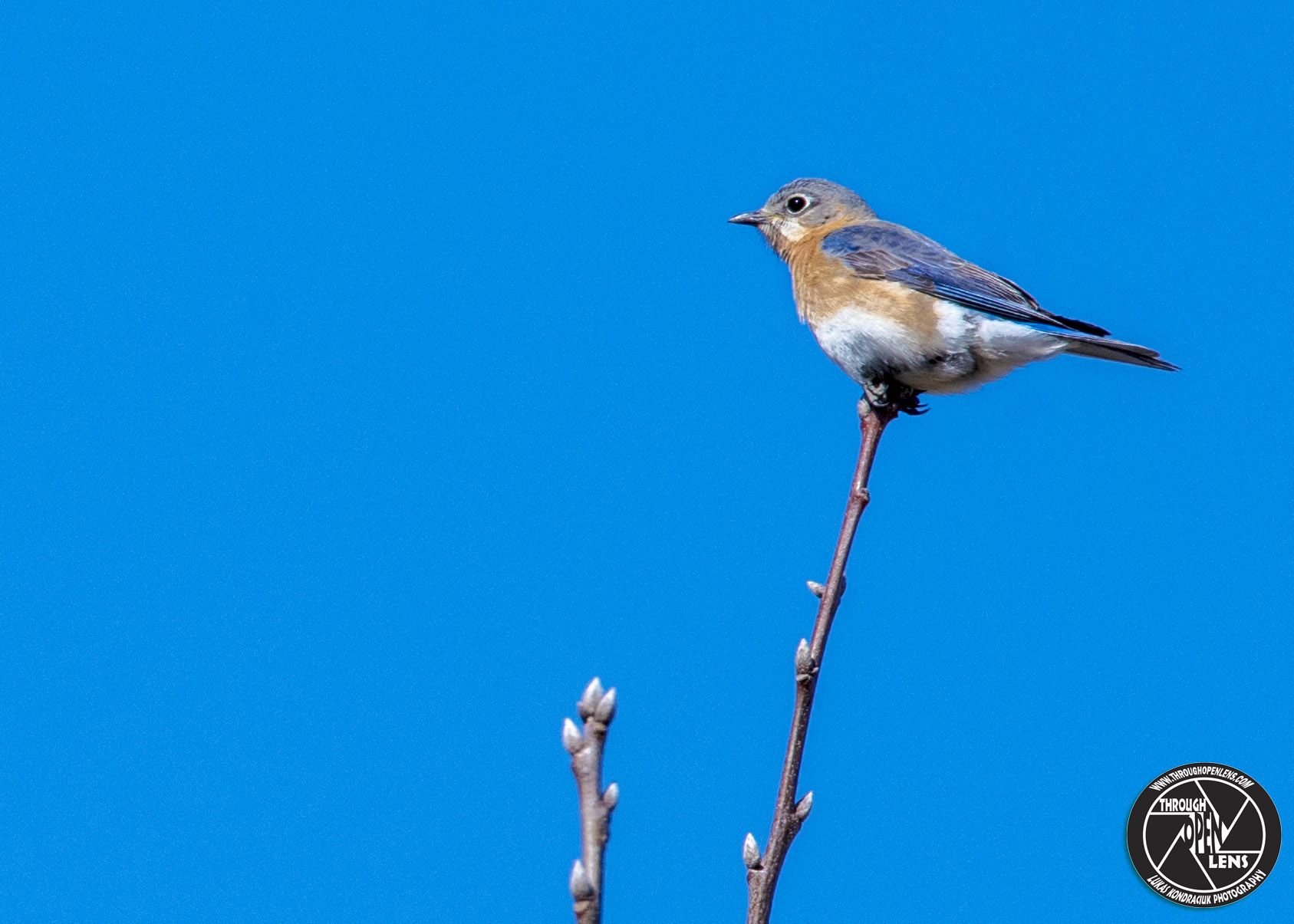
I See Sky Of Blue!

F/11.0, 1/500, ISO 320.

Eastern Bluebird 

Imagine you are in a water tank with a roof. There are no objects in the tank to help you escape. How do you get out?

Stop imagining.

Interesting Fact: Males vying over territories chase each other at high speed, sometimes grappling with their feet, pulling at feathers with their beaks, and hitting with their wings. The boxes and tree cavities where bluebirds nest are a hot commodity among birds that require holes for nesting, and male bluebirds will attack other species they deem a threat, including House Sparrows, European Starlings, Tree Swallows, Great Crested Flycatchers, Carolina Chickadees, and Brown-headed Nuthatches, as well as non-cavity nesters such as robins, Blue Jays, mockingbirds, and cowbirds. ( https://www.allaboutbirds.org/guide/Eastern_Bluebird/lifehistory )

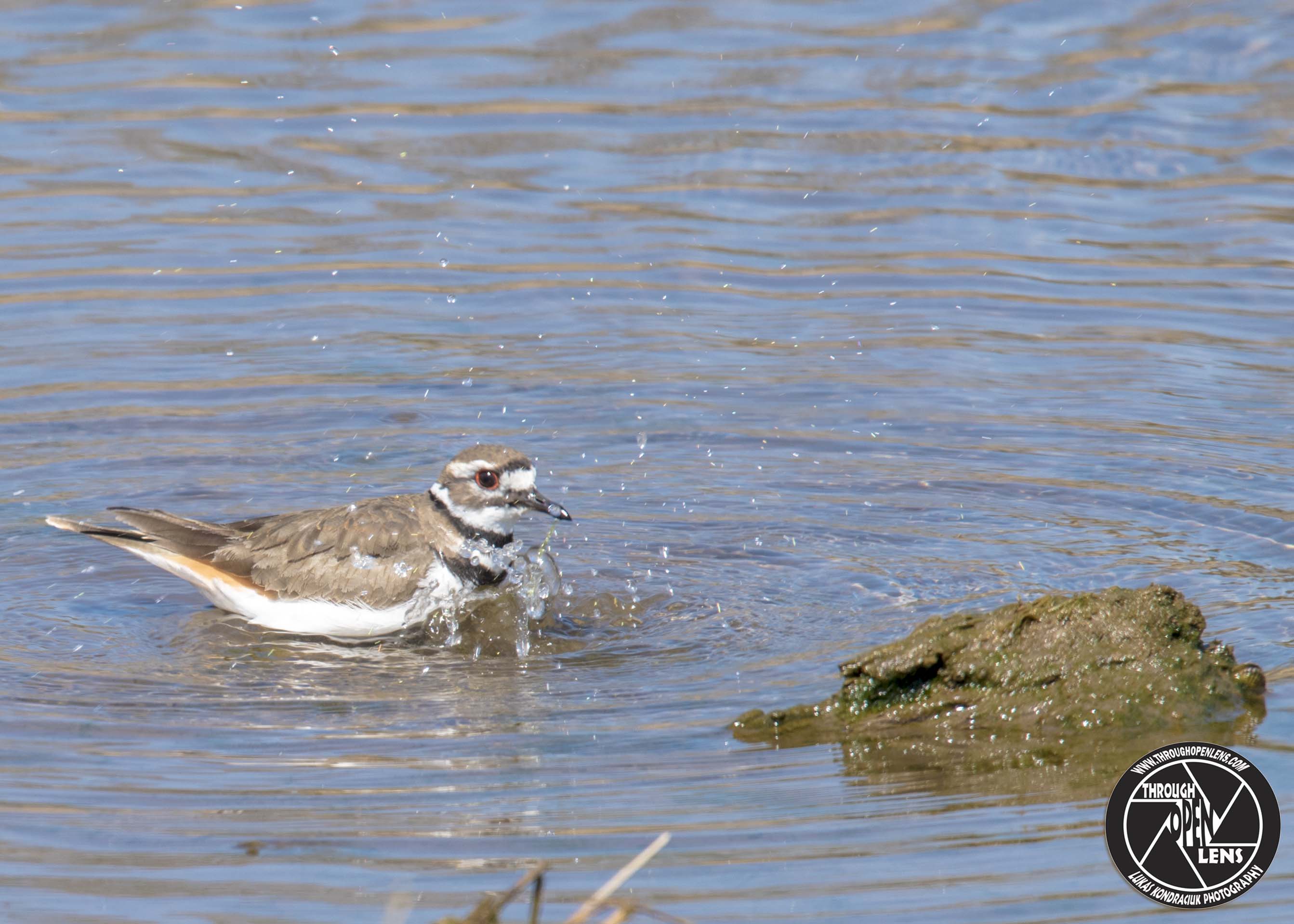
Make A Splash!

F/9.0, 1/320, ISO 200.

Killdeer

How does a man take a bubble bath?

He eats beans for dinner.

Interesting Fact: Often seen in dry, flat landscapes, running and halting on the ground in search of insects and earthworms. Although the Killdeer is common around human habitation it is often shy, at first running away rather than flying. ( https://www.allaboutbirds.org/guide/Killdeer/lifehistory )

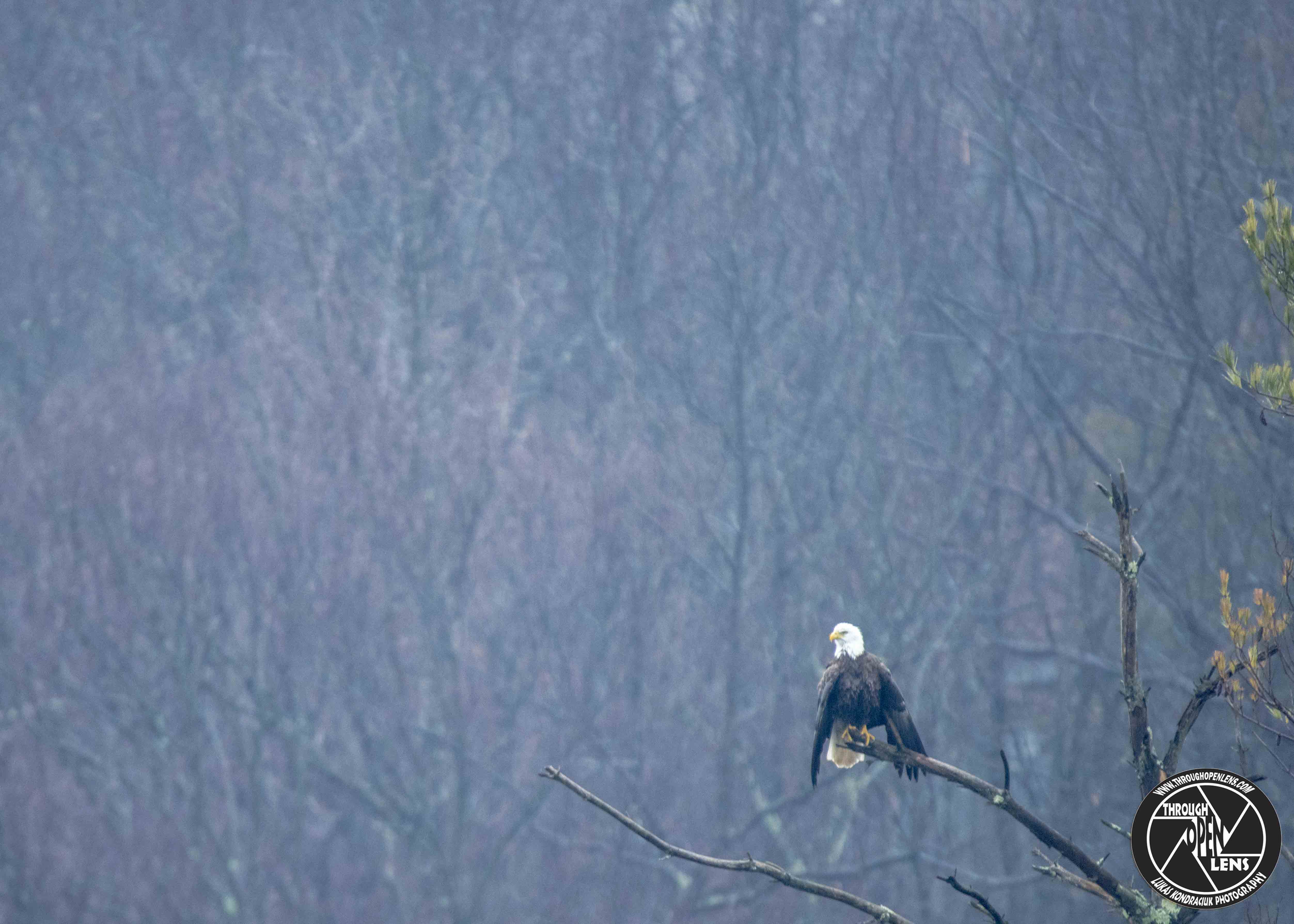
It’s Much Easier Sitting Down In The Chair..

F/6.3, 1/60, ISO 1250.

Bald Eagle

What is the difference between a good lawyer and a great lawyer?

A good lawyer knows the law and a great lawyer knows the judge!

Interesting Fact: Bald Eagles are powerful fliers—soaring, gliding, and flapping over long distances. In one of several spectacular courtship displays, a male and female fly high into the sky, lock talons, and cartwheel downward together, breaking off at the last instant to avoid crashing to earth. ( https://www.allaboutbirds.org/guide/Bald_Eagle/lifehistory )

Don’t Forget To Duck!

F/14.0, 1/800, ISO 640.

Northern Shoveler 

To whom do fish go to borrow money?

The loan shark!

Interesting Fact: They are fairly social ducks, occurring in groups with shovelers and other dabbling ducks, especially during the winter. During the breeding season, they are less tolerant of other shovelers encroaching on their territory. Defensive males often chase intruders on the water and in the air. ( https://www.allaboutbirds.org/guide/Northern_Shoveler/lifehistory )