I’m Not Trying To Impress You Or Anything, But I Can Swim Without Floaties.

western-grebe-1

F/7.1, 1/800, ISO 200.

Western Grebe

A man was stranded on a desert island for 10 years.
One day a beautiful girl swims to shore in a wet suit.
Man: “Hi! Am I ever happy to see you.”!
Girl: “Hi! It seems like you’ve been here along time. How long has it been since you’ve had a cigarette?”
Man: “It’s been ten years!”
With this information the girl unzips a slot on the arm of her wet suit and gives the man cigarette.
Man: “Oh thank you so much!”
Girl: “So tell me how long its been since you had a drink?”
Man: “It’s been ten years” The girl unzips a little longer zipper on her wet suit and comes out with a flask of whiskey and gives the man a drink.
Man: “Oh. Thank you so much. You are like a miracle”!
Finally the girl starts to unzip the front of her wet suit and asks the man leadingly, “So tell me then, have you been bored?”
The man looked at her and said excitedly: “Oh, my God, don’t tell me you’ve got a surfboard in there too?”


Interesting Fact: Western Grebes breed on freshwater lakes and marshes with extensive open water bordered by emergent vegetation. During winter they move to saltwater or brackish bays, estuaries, or sheltered sea coasts and are less frequently found on freshwater lakes or rivers. ( https://www.allaboutbirds.org/guide/Western_Grebe/lifehistory )

Red Mean Stop And Admire!

F/6.3, 1/125, ISO 1000.

Northern Cardinal ( Male )

Did you hear the joke about the roof?

Never mind, it’s over your head!

Interesting Fact: Males sometimes bring nest material to the female, who does most of the building. She crushes twigs with her beak until they’re pliable, then turns in the nest to bend the twigs around her body and push them into a cup shape with her feet. The cup has four layers: coarse twigs (and sometimes bits of trash) covered in a leafy mat, then lined with grapevine bark and finally grasses, stems, rootlets, and pine needles. ( https://www.allaboutbirds.org/guide/Northern_Cardinal/lifehistory )

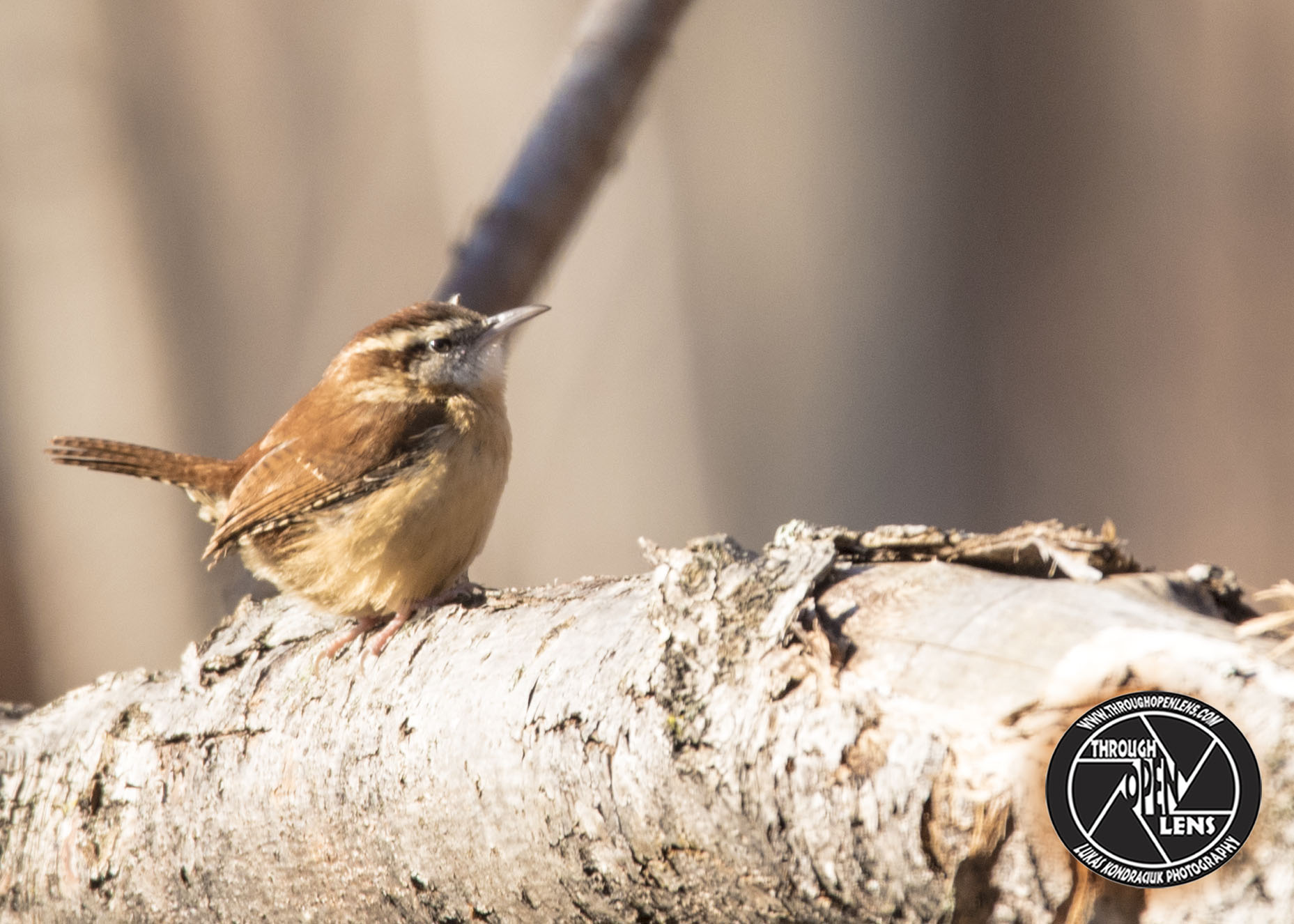
Life Is So Much Easier When You Just Chill Out.

F/8.0, 1/250, ISO 400.

Carolina Wren

One day, during a lesson on proper grammar, the teacher asked for a show of hands from those who could use the word “beautiful” in the same sentence twice. First, she called on little Suzie, who responded with, “My father bought my mother a beautiful dress and she looked beautiful in it.”

“Very good, Suzie,” replied the teacher. She then called on little Michael. “My mommy planned a beautiful banquet and it turned out beautifully,” he said.

“Excellent, Michael!”

Then, the teacher called on Little Johnny. “Last night, at the dinner table, my sister told my father that she was pregnant, and he said, ‘Beautiful, …just #$&#*&^# beautiful!

Interesting Fact: One captive male Carolina Wren sang nearly 3,000 times in a single day. ( https://www.allaboutbirds.org/guide/Carolina_Wren/lifehistory )

Gonzo Would Be Jealous!

F/7.1, 1/800, ISO 200.

Whimbrel

What Do You Call a Beach that Keeps Losing Sand?

A Shore Loser.

Interesting Fact: In many regions, the primary winter food of the Whimbrel is crab. The curve of the Whimbrel’s bill nicely matches the shape of fiddler crab burrows. The bird reaches into the crab’s burrow, extracts the crab, washes it if it is muddy, and sometimes breaks off the claws and legs before swallowing it. Indigestible parts are excreted in fecal pellets.  ( https://www.allaboutbirds.org/guide/Whimbrel/lifehistory )


I Would Cry But Mascara Is Designer

green-winged-teal

F/6.3, 1/500, ISO 360.

Green-Winged Teal

Men are like mascara, any sign of emotion and they’re running.

Interesting Fact: Green-winged Teals have closely spaced, comblike projections called lamellae around the inner edge of the bill. They use them to filter tiny invertebrates from the water, allowing the birds to capture smaller food items than other dabbling ducks. ( https://www.allaboutbirds.org/guide/Green-winged_Teal/lifehistory )

Use Your Head!

yellow-bellied-sapsucker-2

F/10.0, 1/400, ISO 400.

Yellow-Bellied Sapsucker

What did the trees wear to Mother Nature’s pool party?

Swimming trunks!

Interesting Fact: The Yellow-bellied Sapsucker frequently uses human-produced materials to help in its territorial drumming. Street signs and metal chimney flashing amplify the irregular tapping of a territorial sapsucker. The sapsucker seems to suffer no ill effects of whacking its bill on metal, and a bird will return to a favorite sign day after day to pound out its Morse code-like message. ( https://www.allaboutbirds.org/guide/Yellow-bellied_Sapsucker/lifehistory  )

I Am Going To Wing It!

double-crested-cormorant

F/ 5.6, 1/500, ISO 220.

Double-crested Cormorant

What do you call a fly without wings?

A walk

Interesting Fact: Accumulated fecal matter below nests can kill the nest trees. When this happens, the cormorants may move to a new area or they may simply shift to nesting on the ground. ( https://www.allaboutbirds.org/guide/Double-crested_Cormorant/lifehistory )

Here’s Looking At You, Kid

F/11.0, 1/500, ISO 320.

Red-tailed Hawk

Why can you never trust atoms?

They make up everything!

Interesting Fact: Birds are amazingly adapted for life in the air. The Red-tailed Hawk is one of the largest birds you’ll see in North America, yet even the biggest females weigh in at only about 3 pounds. A similar-sized small dog might weigh 10 times that. ( https://www.allaboutbirds.org/guide/Red-tailed_Hawk/lifehistory )

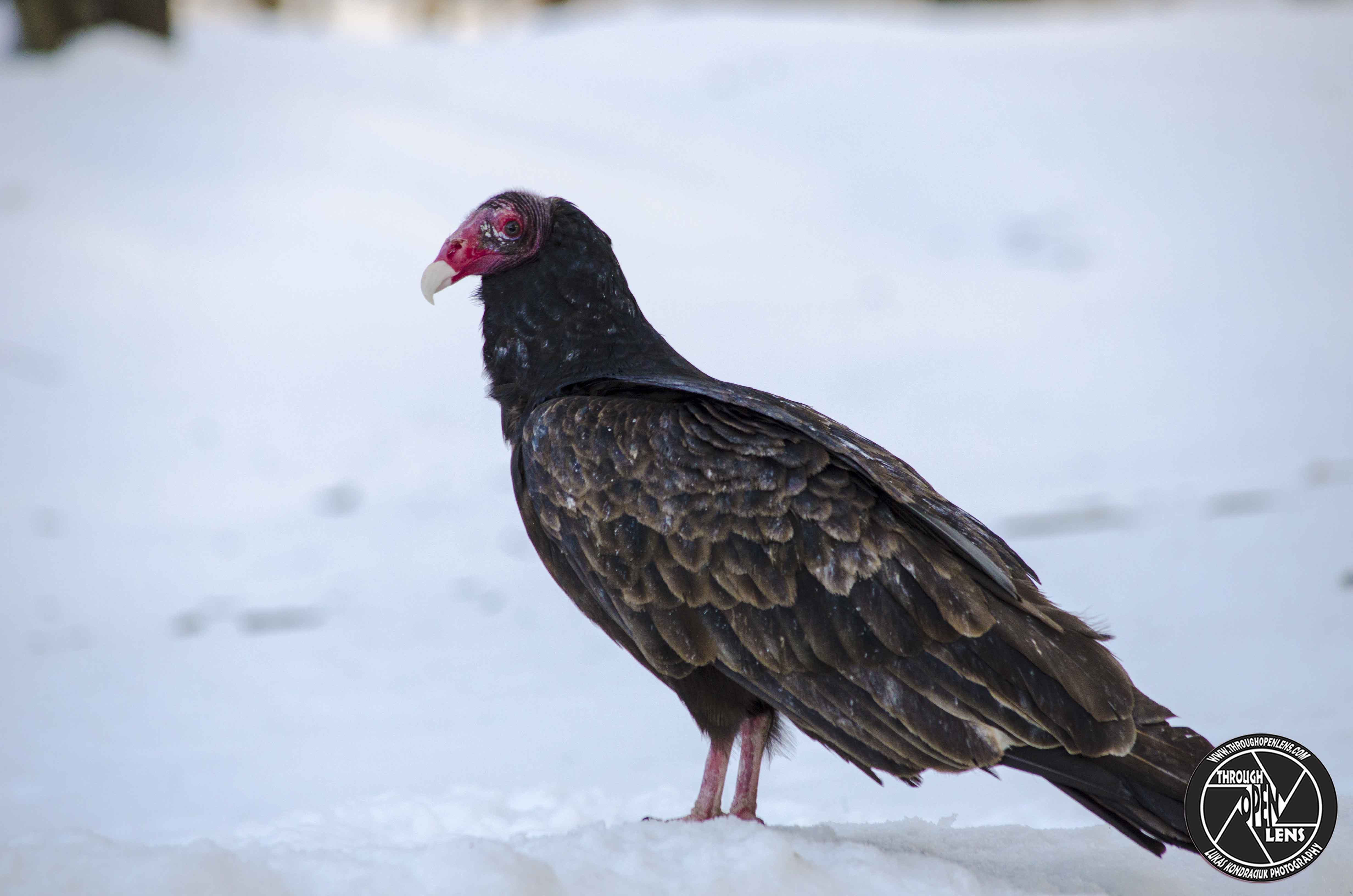
Whatchoo Wanna Do Tonight?!

F/5.6, 1/500, ISO 280

Turkey Vulture

Why do birds fly south in the fall?

Because it’s too far to walk.

Interesting Fact: The Turkey Vulture’s distinctive slow, teetering flight style probably helps the bird soar at low altitudes, where it is best able to use its nose to find carrion. At other times they may soar high on thermals and form mixed flocks or kettles. On the ground they move with ungainly hops and are less agile than Black Vultures. ( https://www.allaboutbirds.org/guide/Turkey_Vulture/lifehistory )

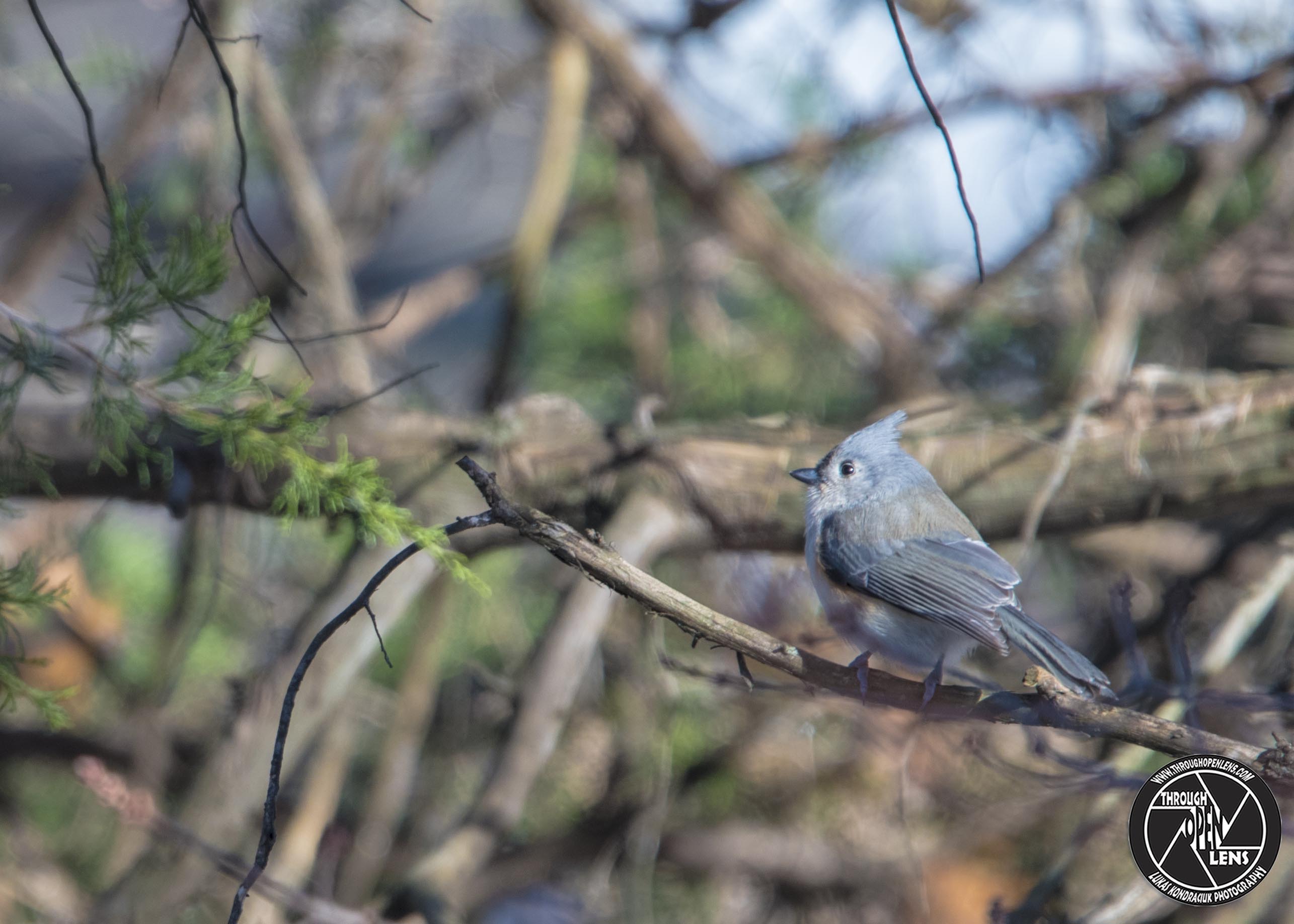
I Had A Dream I Was A Muffler And I Woke Up Exhausted.

F/7.1, 1/200, ISO 250.

Tufted Titmouse

Want to hear a dirty joke?

A kid jumped into a mud puddle.

Want to hear a clean joke?

A kid jumped into the bath.

Interesting Fact:  Tufted Titmice nest in cavities but aren’t able to excavate them on their own. They use natural holes and old nest holes made by several woodpecker species, including large species such as Pileated Woodpecker and Northern Flicker. Additionally, Tufted Titmice also nest in artificial structures including nest boxes, fenceposts, and metal pipes. ( https://www.allaboutbirds.org/guide/Tufted_Titmouse/lifehistory )