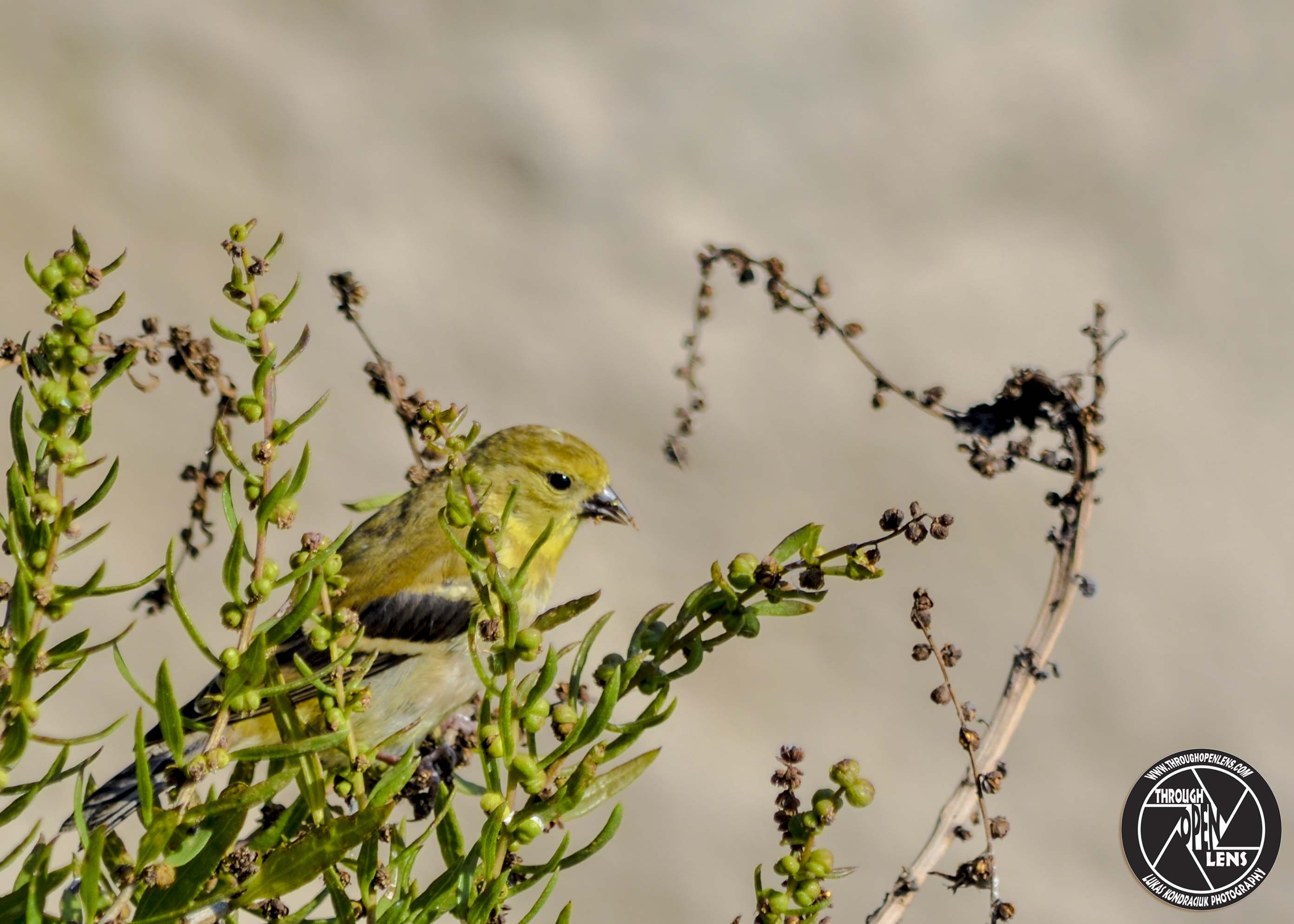
You had a bad day, You’re taking one down, You sing a sad song just to turn it around

F/10.0, 1/400, ISO 250.

American Goldfinch

A police officer in a small town stopped a motorist who was speeding down Main Street. “But officer,” the man began, “I can explain.” “Just be quiet,” snapped the officer. “I’m going to let you cool your heels in jail until the chief gets back.” “But, officer, I just wanted to say,…” “And I said to keep quiet! You’re going to jail!” A few hours later the officer looked in on his prisoner and said, “Lucky for you that the chief’s at his daughter’s wedding. He’ll be in a good mood when he gets back.” “Don’t count on it,” answered the fellow in the cell. “I’m the groom.”

Interesting Fact: Goldfinches are among the strictest vegetarians in the bird world, selecting an entirely vegetable diet and only inadvertently swallowing an occasional insect. ( https://www.allaboutbirds.org/guide/American_Goldfinch/lifehistory )

I Meant To Behave But There Were Too Many Other Options

F/6.3, 1/160, ISO 320.

Nelson’s Sparrow

Did you hear abut the hungry clock?

It went back four seconds.

Interesting Fact: The Nelson’s Sharp-tailed Sparrow formerly was considered the same species as the Saltmarsh Sharp-tailed Sparrow, collectively known as the Sharp-tailed Sparrow. The two forms have separate breeding ranges that barely overlap in Maine. They differ in genetics, songs, and subtle plumage characters. ( https://www.allaboutbirds.org/guide/Nelsons_Sparrow/lifehistory )

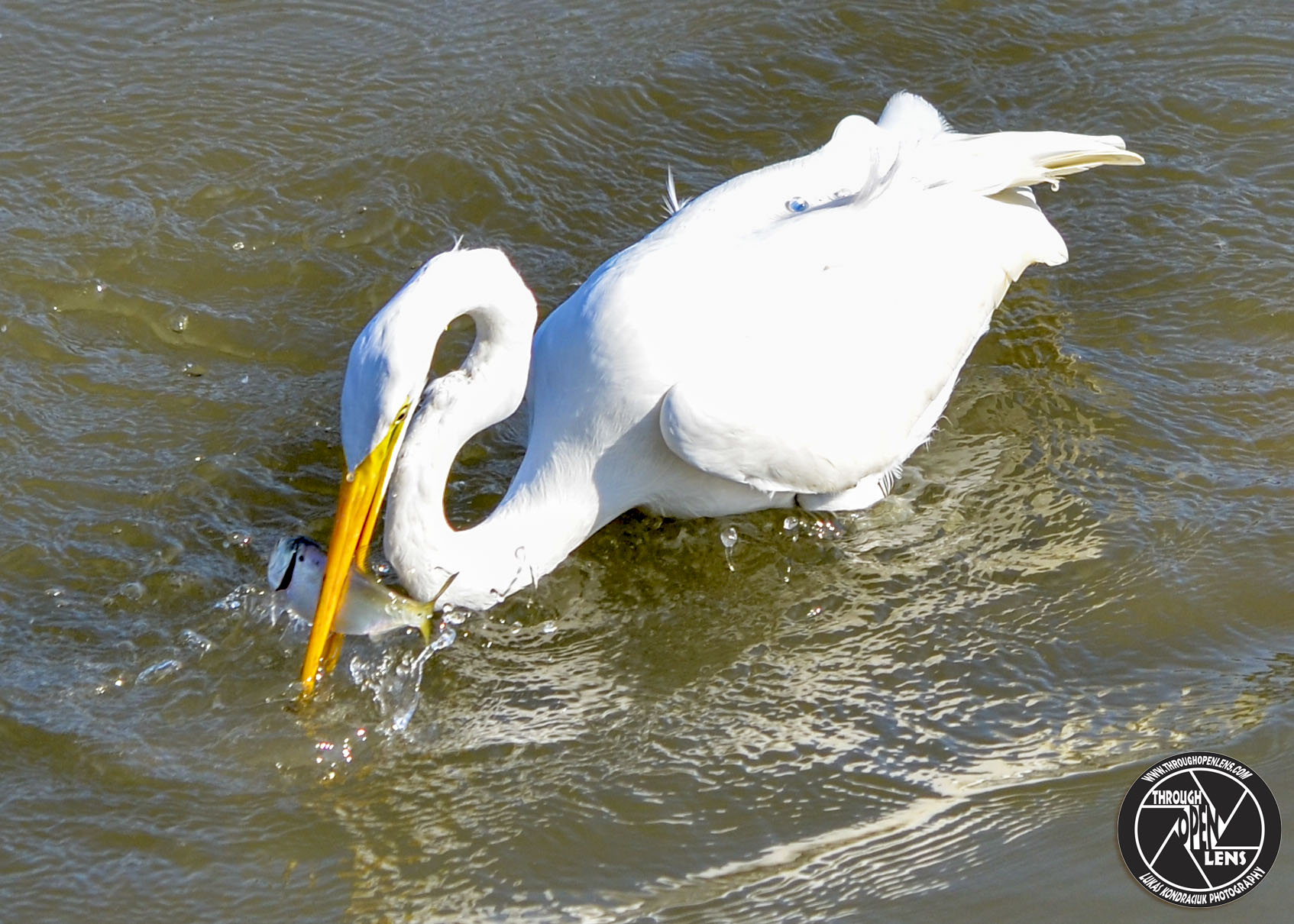
May The Fish Be With You!

F/6.3, 1/640, ISO 200.

Great Egret 

What did the ghost teacher say to her class?

Watch the board and I’ll go through it again.

Interesting Fact: Visit a pond or coastal marsh and look for an all-white bird—slightly smaller than a Great Blue Heron, with black legs and a yellow bill. It may be wading slowly or standing stock-still, peering intently at the water as it searches for fish. If you live outside of the species’ breeding range, you may still see Great Egrets in late summer as they move about widely before heading to their wintering grounds. ( https://www.allaboutbirds.org/guide/Great_Egret )


I Need A Hug!

F/5.6, 1/500, ISO 200.

Double-Crested Cormorant 

What do birds do on their free time?

They check their Twitter account.

Interesting Fact: Double-crested cormorants are gregarious birds that are almost always near water. Their main two activities are fishing and resting, with more than half their day spent on the latter. When at rest, a cormorant will choose an exposed spot on a bare branch or a windblown rock, and often spread its wings out, which is thought to be a means of drying their feathers after fishing. ( https://www.allaboutbirds.org/guide/Double-crested_Cormorant/lifehistory )


Peek A Boo I Can Still See You!

F/7.1, 1/800, ISO 200.

American Goldfinch

What do computers snack on when they’re hungry?

Chips!

Interesting Fact: Male and female move around together to choose a suitable nest site. The female builds the nest, usually in a shrub or sapling in a fairly open setting rather than in forest interior. The nest is often built high in a shrub, where two or three vertical branches join; usually shaded by clusters of leaves or needles from above, but often open and visible from below. ( https://www.allaboutbirds.org/guide/American_Goldfinch/lifehistory )


By Invitation Only!

F/5.6, 1/500, ISO 200.

Mallard Female

Why do barbers make good drivers?

They know all the shortcuts.

Interesting Fact: During egg-laying phase, she lines the nest with grasses, leaves, and twigs from nearby. She also pulls tall vegetation over to conceal herself and her nest. After incubation begins, she plucks down feathers from her breast to line the nest and cover her eggs. The finished nest is about a foot across, with a bowl for the eggs that is 1–6 inches deep and 6–9 inches across. ( https://www.allaboutbirds.org/guide/Mallard/lifehistory )

I Am Happy To See You!

F11.0, 1/500, ISO 400.

Ruddy Ducks

What do you call a bee that lives in America?

A USB

Interesting Fact: Ruddy Ducks are very aggressive toward each other and toward other species, especially during the breeding season. Unlike most ducks, they form pairs only after arriving on the breeding grounds each year. Males perform unusual courtship displays in which they stick their tails straight up while striking their bills against their inflated necks, creating bubbles in the water as air is forced from their feathers. They punctuate the end of the display with a belch-like call. ( https://www.allaboutbirds.org/guide/Ruddy_Duck/lifehistory )


Once You Stop Chasing The Wrong Things, The Right Ones Catch You.

F/9.0, 1/320, ISO 160.

Wood Duck

How does a man show he’s planning for the future?

He buys two cases of Beer instead of one.

Interesting Fact: Wood ducks cavities are typically places where a branch has broken off and the tree’s heartwood has subsequently rotted. Woodpecker cavities are used less frequently. Wood Ducks cannot make their own cavities. The nest tree is normally situated near to or over water, though Wood Ducks will use cavities up to 1.2 miles from water. ( https://www.allaboutbirds.org/guide/Wood_Duck/lifehistory )


Welcome To The Jungle We Got Fun And Games!

F/7.1, 1/160, ISO 250.

Tricolored Heron

What is a mattress favorite season?

Spring.

Interesting Fact: Tricolored Herons gracefully walk through wetlands as other herons do, but they also run after fish with sharp turns and stops, balancing with their wings. They tend to forage alone or at the edge of flocks of wading birds. ( https://www.allaboutbirds.org/guide/Tricolored_Heron/lifehistory )

I Don’t Have Grey Hair I Have Wisdom Highlights

F/10.0, 1/400, ISO 160.

Gray Kingbird

What’s the difference between in-laws and outlaws?

Outlaws are wanted.

Interesting Fact: The adult gray kingbird is an average-sized kingbird. It measures 23 cm (9.1 in) in length and weighs from 37 to 52 g (1.3 to 1.8 oz).[2] The upperparts are gray, with brownish wings and tail, and the underparts are white with a gray tinge to the chest. The head has a concealed yellow crown stripe, and a dusky mask through the eyes. The dark bill is heavier than that of the related, slightly smaller, tropical kingbird. The sexes are similar, but young birds have rufous edges on the wing coverts, rump and tail. ( https://en.wikipedia.org/wiki/Gray_kingbird )