I Used To Think I Was Indecisive, But Now I’m Not Too Sure.

F/8.0, 1/250, ISO 250.

Loggerhead Shrike

At a local coffee bar, a young woman was expounding on her idea of the perfect mate to some of her friends. “The man I marry must be a shining light amongst company. He must be musical. Tell jokes. Sing. And stay home at night!” An old granny overheard and spoke up, “Honey, if that’s all you want, get a TV!”

Interesting Fact: The upper cutting edge (tomium) of the Loggerhead Shrike’s hooked bill features a pair of built-in pointy projections, aptly named “tomial teeth.” Like a falcon, the shrike tackles vertebrate prey with a precise attack to the nape, probably using these tomial “teeth” to paralyze the animal with a jab to the spinal cord. ( https://www.allaboutbirds.org/guide/Loggerhead_Shrike )


I Have A Date Tonight, With My Bed. We Are Totally Gonna Sleep Together.

F/8.0, 1/250, ISO 400.

Common Eider ( Female ) 

Where do vegetables go to get drunk?

The Salad Bar.

Interesting Fact: Eiders are colonial breeders. They nest on coastal islands in colonies ranging in size of less than 100 to upwards of 10,000-15,000 individuals.[13] Female eiders frequently exhibit a high degree of natal philopatry, where they return to breed on the same island where they were hatched. This can lead to a high degree of relatedness between individuals nesting on the same island, as well as the development of kin-based female social structures.[14] This relatedness has likely played a role in the evolution of co-operative breeding behaviours amongst eiders. Examples of these behaviours include laying eggs in the nests of related individuals[15] and crèching, where female eiders team up and share the work of rearing ducklings. ( https://en.wikipedia.org/wiki/Common_eider )


It May Look Like I’m Doing Nothing. But In My Head, I’m Quite Busy.

F/9.0, 1/320, ISO 160.

Sandhill Cranes 

Why are baseball players so cool?

They always have their fans there!

Interesting Fact: During migration and winter the family units group together with other families and nonbreeders, forming loose roosting and feeding flocks—in some places numbering in the tens of thousands. Eggs, nestlings, and injured or sick adults may be hunted by foxes, raccoons, coyotes, wolves, bobcats, crows, ravens, eagles, and owls. Cranes attack aerial predators by leaping into the air and kicking their feet forward. They threaten terrestrial predators by spreading their wings and hissing, eventually resorting to kicking. ( https://www.allaboutbirds.org/guide/Sandhill_Crane/lifehistory )


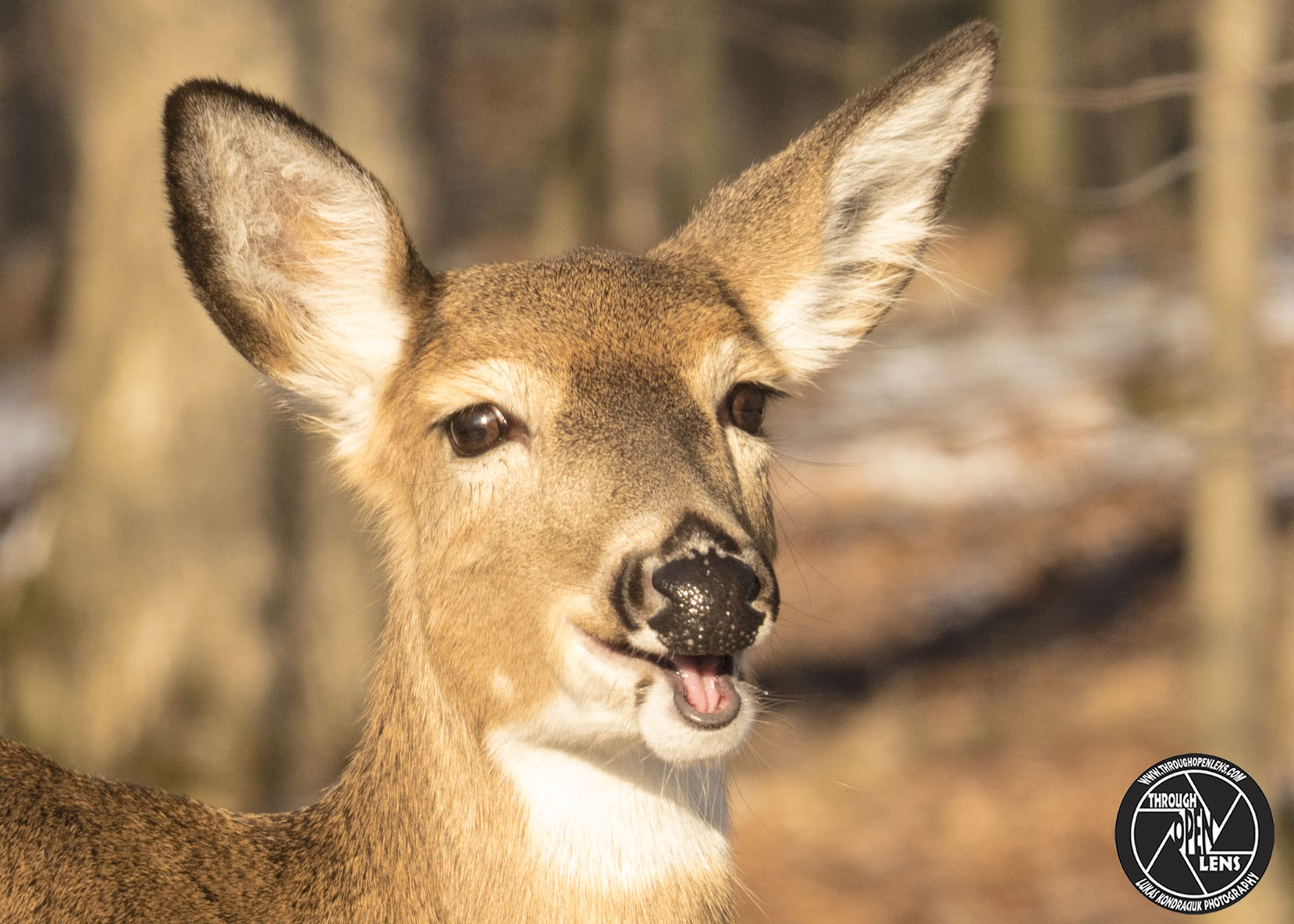
Hey Handsome!

F/9.0, 1/320, ISO 250.

White-Tailed Deer

Did you hear the joke about the butter?

I do not think I should tell you because you might spread it around…

Interesting Fact: Males compete for the opportunity of breeding females. Sparring among males determines a dominance hierarchy.[61] Bucks attempt to copulate with as many females as possible, losing physical condition, since they rarely eat or rest during the rut. The general geographical trend is for the rut to be shorter in duration at increased latitude. Many factors determine how intense the “rutting season” will be; air temperature is a major one. Any time the temperature rises above 40 °F (4 °C), the males do much less traveling looking for females, else they will be subject to overheating or dehydrating. Another factor for the strength in rutting activity is competition. If numerous males are in a particular area, then they compete more for the females. If fewer males or more females are present, then the selection process will not need to be as competitive. ( https://en.wikipedia.org/wiki/White-tailed_deer )

Dont Be Afraid to Stick Your Neck Out!

F/9.0, 1/320, ISO 320.

Ring-necked Duck

Why is it hard for a ghost to tell a lie?

Because you can see right through him.

Interesting Fact:  Ring-necked Ducks feed by diving underwater, rather than by tipping up as “dabbling” ducks do. When diving, they leap forward in an arc to plunge underwater, and they swim using only their feet for propulsion. ( https://www.allaboutbirds.org/guide/Ring-necked_Duck/lifehistory )

I Give High A New Meaning!

F/13.0, 1/640, ISO 320.

Northern Harrier

What did the eggs say when the cops showed up?

Everybody scramble!

Interesting Fact: Northern Harriers hunt mostly small mammals and small birds, but they are capable of taking bigger prey like rabbits and ducks. They sometimes subdue larger animals by drowning them. ( https://www.allaboutbirds.org/guide/Northern_Harrier )

A Little Mud Never Hurt Anyone!

F/10.0, 1/400, ISO 320.

Northern Pintail Ducks

What did one tube of glue say to the other tube of glue?

We have to stick together.

Interesting Fact: Males and females also lift their chins to greet each other and sometimes tip their chins when threatened. Pairs form on the wintering grounds, but males often mate with other females on the breeding grounds, and pairs only stay together for a single breeding season. Courting males stretch their necks up and tip their bills down while giving a whistle call. Males also preen behind their wing to expose the green speculum. Interested females follow males with head bobbing, preening, and clucking. ( https://www.allaboutbirds.org/guide/Northern_Pintail/lifehistory )


And Since I Have No Place To Go Let It Snow, Let It Snow, Let It Snow.

F/7.1, 1/200, ISO 320.

Northern Cardinal Female

Why did the baseball coach throw Cinderella off the team?

Because she ran away from the ball.

Interesting Fact: A week or two before the female starts building, she starts to visit possible nest sites with the male following along. The pair call back and forth and hold nesting material in their bills as they assess each site. Nests tend to be wedged into a fork of small branches in a sapling, shrub, or vine tangle, 1-15 feet high and hidden in dense foliage. ( https://www.allaboutbirds.org/guide/Northern_Cardinal/lifehistory )


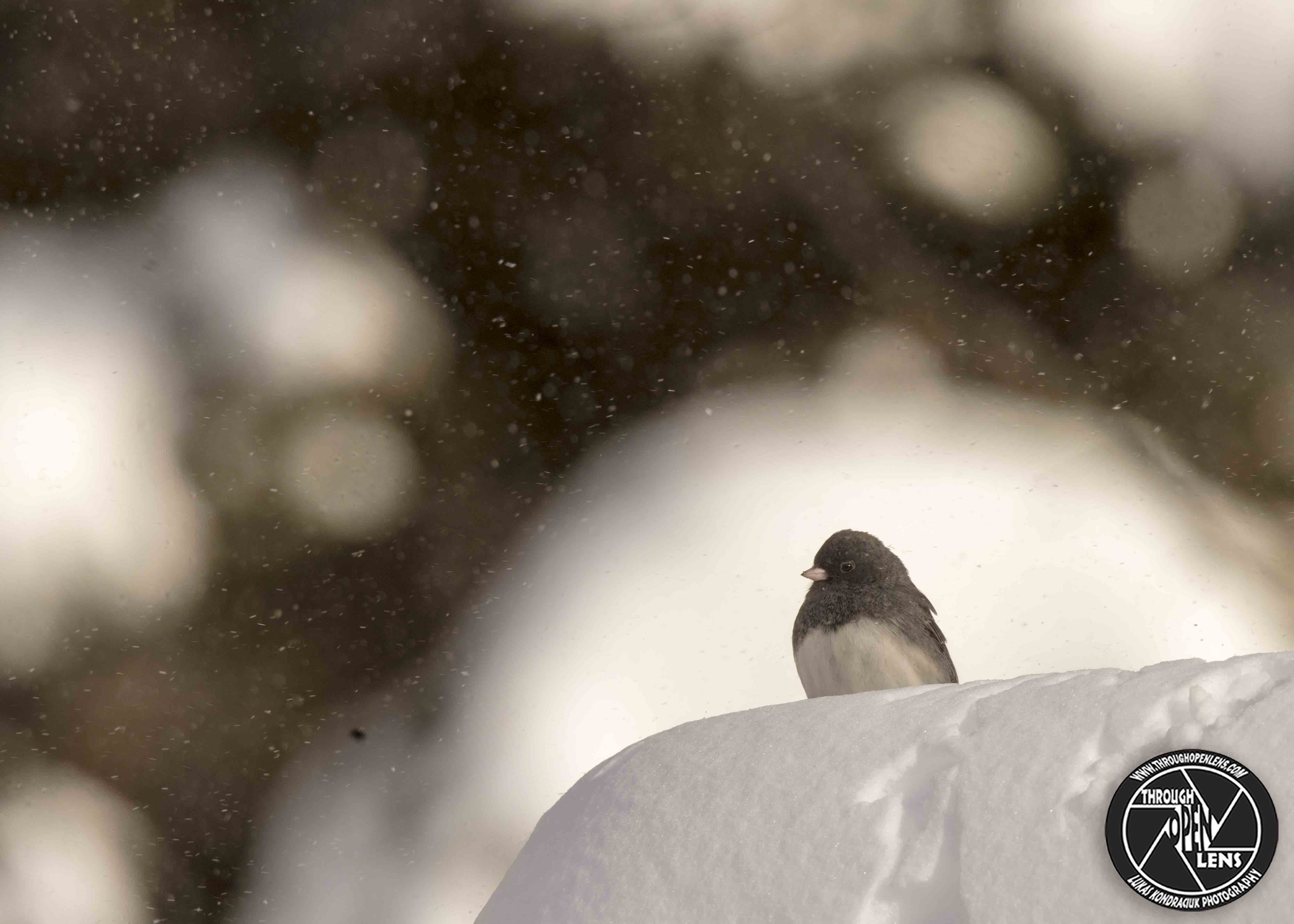
Cold Doesn’t Bother Me Anyway.

F/6.3, 1/160, ISO 320.

Dark-eyed Junco 

What do ghosts serve for dessert?

I Scream.

Interesting Fact: The female chooses the nest site, typically in a depression or niche on sloping ground, rock face, or amid the tangled roots of an upturned tree. Around people, juncos may nest in or underneath buildings. Occasionally, juncos nest above the ground on horizontal branches (rarely as high as 45 feet), window ledges, and in hanging flower pots or light fixtures. ( https://www.allaboutbirds.org/guide/Dark-eyed_Junco/lifehistory )


Let It Snow!

F/10.0, 1/800, ISO 250.

Dark-eyed Junco

What do you call an old snowman?

Water!

Interesting Fact: The oldest recorded Dark-eyed Junco was at least 11 years, 4 months old when it was recaptured and rereleased during banding operations in West Virginia in 2001. It had been banded in the same state in 1991. ( https://www.allaboutbirds.org/guide/Dark-eyed_Junco/lifehistory )