You Make Me Blush!

F/10.0, 1/400, ISO 250.

House Finch

Why are some fish at the bottom of the ocean?

Because they dropped out of school!

Interesting Fact:  House Finches were introduced to Oahu from San Francisco sometime before 1870. They had become abundant on all the major Hawaiian Islands by 1901 ( https://www.allaboutbirds.org/guide/House_Finch )

Freeze!

dark-eyed-junco

F/10.0, 1/160, ISO 400.

Dark-eyed Junco

How do you know if there’s a snowman in your bed?

You wake up wet!

Interesting Fact: Male juncos are very territorial in summer, chasing off intruders in rapid flights accompanied by excited call notes. When males court females, they fan or flick open their wings and tail, hop up and down, and pick up pieces of nest material or moss; females seem to prefer males that show more white in the tail. During winter, Dark-eyed Juncos form fairly large flocks, and where wintering ranges overlap you may find several subspecies in a single flock. Juncos also forage with other sparrows and bluebirds. Junco flocks typically have a hierarchy or pecking order, and earlier arrivals tend to rank higher in the group than later arrivals. ( https://www.allaboutbirds.org/guide/Dark-eyed_Junco/lifehistory )

50 Shades Of Red In My Eyes

F/ 6.3, 1/640, ISO 200.

Canvasback 

What type of book has only characters and no story?

A telephone book.

Interesting Fact: A large diving duck, the Canvasback breeds in prairie potholes and winters on ocean bays. Its sloping profile distinguishes it from other ducks. ( https://www.allaboutbirds.org/guide/Canvasback/id )

Double Trouble!

Mute Swan

F/ 5.6, 1/1250, ISO 400.

Mute Swan 

What did the nose say to the finger?

Stop picking on me. 

Interesting Fact: The Mute Swan is reported to mate for life. However, changing of mates does occur infrequently, and swans will remate if their partner dies. If a male loses his mate and pairs with a young female, she joins him on his territory. If he mates with an older female, they go to hers. If a female loses her mate, she remates quickly and usually chooses a younger male.  ( https://www.allaboutbirds.org/guide/Mute_Swan/lifehistory )

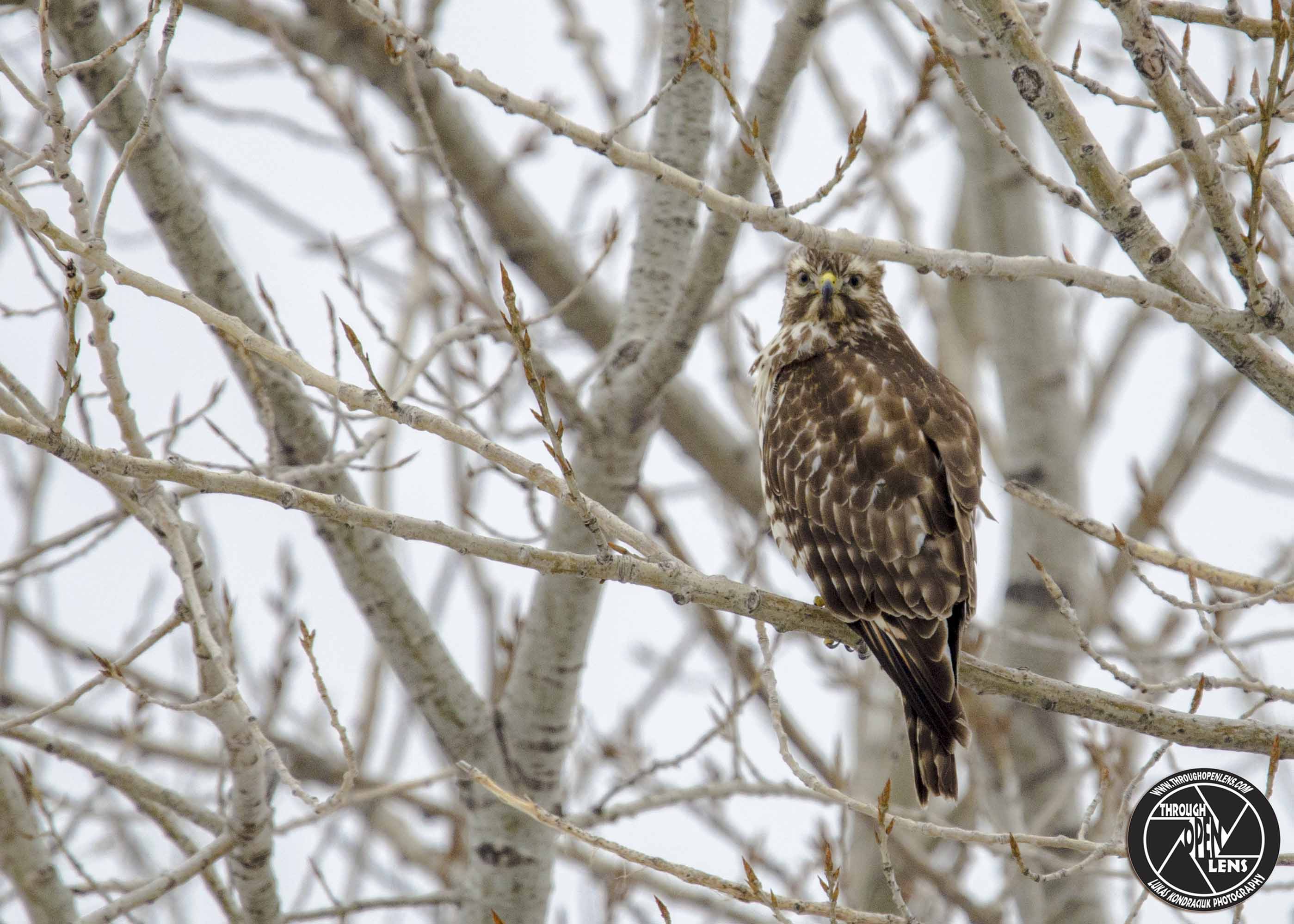
What Are You Looking At?!

F/6.3, 1/640, ISO 800.

Merlin

Why did the man fall down the well?

He couldn’t see that well.

Interesting Fact: Medieval European noblewomen—including Catherine the Great and Mary Queen of Scots—used Merlins for sport to hunt Skylarks. European and North American falconers continue to work with Merlins, hunting quarry that ranges from sparrow-sized to dove-sized. ( Merlin Overview, All About Birds, Cornell Lab of Ornithology )


Haters Will See You Walking On Water And Say It Is Because You Can’t Swim

F/11.0, 1/500, ISO 250.

Great Egret

Worker calls in to his Boss:

Worker: I can’t come to work today. I’m sick

Boss: Oh yea! What’s wrong with you now?

Worker: I have anal glaucoma.

Boss: What the hell is that?

Worker: I just can’t see my ass working today.

Interesting Fact: Great Egrets fly slowly but powerfully: with just two wingbeats per second their cruising speed is around 25 miles an hour. ( http://www.allaboutbirds.org/guide/great_egret/lifehistory )

Muddy Quack!

F/6.3, 1/250, ISO 450.

Northern Pintail Duck

What day do fish hate?

Fry-day!

Interesting Fact: The Northern Pintail is among the earliest nesting ducks in North America, beginning shortly after ice-out in many northern areas. ( https://www.allaboutbirds.org/guide/Northern_Pintail/lifehistory )

I Can Walk On Water!

F/13.0, 1/640, ISO 320.

Ring-billed Gull

Two Police officers are talking:

A naked women robbed a bank.

Nobody could remember her face.

Interesting Fact: Ring-billed Gulls near Tampa Bay, Florida, became accustomed to feasting on garbage at an open landfill site. Then, in 1983, operators replaced the dumping grounds with closed incinerators. The thwarted scavengers found themselves another open dump, but the pattern continues all across the gull’s range. When waste-management practices shift from open landfills to closed incinerators, gull numbers often drop. ( https://www.allaboutbirds.org/guide/Ring-billed_Gull/lifehistory )

Splash Down!

F/8.0, 1/2000, ISO 800.

Common Merganser 

Why was the math book so sad?

It had a lot of problems.

Interesting Fact: Common Mergansers spend much of their time afloat, loafing, fishing, and often sleeping on open water. They may form flocks of up to 75 individuals. They often swim in small groups along the shoreline, dipping their heads underwater to search for prey and then diving with a slight leap. Often when one bird dives in a large group, the others follow the leader and disappear. ( Common Merganser Life History, All About Birds, Cornell Lab of Ornithology )


Bring On The Night!

jersey-city-downtown-park

F/18.0, 24.0, ISO 80.

Newport Green Park Downtown Jersey City

A man asked his wife what she’d like for her birthday. “I’d love to be six again,” she replied.
On the morning of her birthday, he got her up bright and early and off they went to a local theme park.
What a day! He put her on every ride in the park: the Death Slide, the Screaming Loop, the Wall of Fear, everything there was!
Wow! Five hours later she staggered out of
the theme park, her head reeling and her stomach upside down.
Right to a McDonald’s they went, where her husband ordered her a Happy Meal with extra fries and a refreshing chocolate shake.
Then it was off to a movie, the latest Star Wars epic, a hot dog, popcorn, Pepsi, and M&Ms.
What a fabulous adventure! Finally she wobbled home with her husband and collapsed into bed.
He leaned over and lovingly, asked, “Well, dear, what was it like being six again?”
One eye opened. “You idiot, I meant my dress size.”
The moral of this story: Even when the man is listening, he’s still gonna get it wrong.

Interesting Fact: Newport is a 600-acre (2.4 km2) master-planned, mixed-use community in Downtown Jersey City, New Jersey, United States, consisting of retail, residential, office, and entertainment facilities. The neighborhood is situated on the Hudson Waterfront opposite the Tribeca area of Lower Manhattan in New York City, on what had been the yards of Erie Railroad‘s Pavonia Terminal. Redevelopment of the neighborhood began in 1986 as a $10 billion project led by real-estate tycoon Samuel J. LeFrak and his firm The LeFrak Organization.  ( https://en.wikipedia.org/wiki/Newport,_Jersey_City )