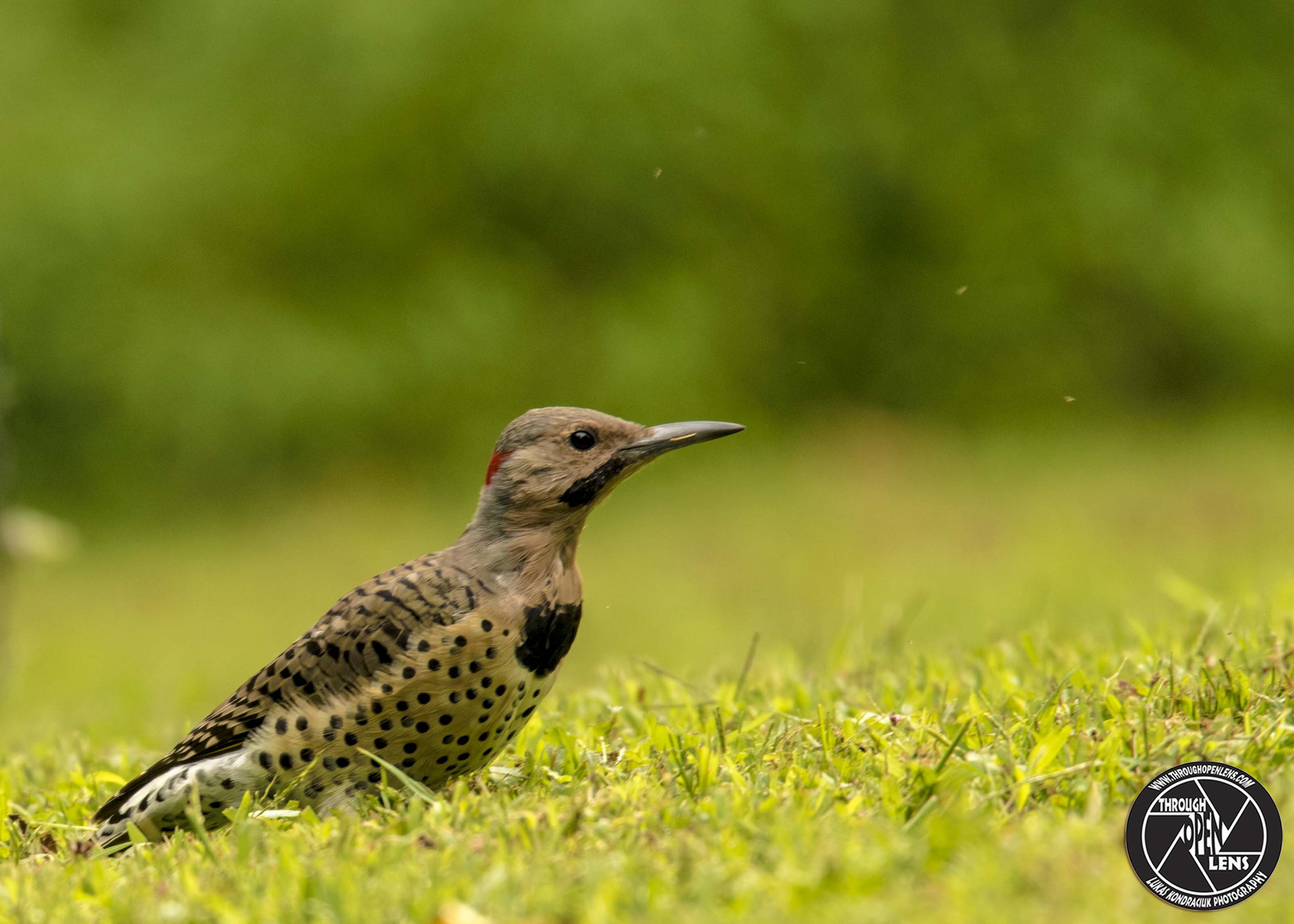
PLEASE KEEP ON THE GRASS! LIE DOWN! ROLL AROUND IN IT! FORGET ALL YOUR RESPONSIBILITES!

F/7.1, 1/200, ISO 400.

Northern Flicker

What do you call a Happy Cowboy?

A Jolly Rancher

Interesting Fact: Northern Flickers don’t act like typical woodpeckers. They mainly forage on the ground, sometimes among sparrows and blackbirds. When flushed, flickers often perch erect on thin horizontal branches rather than hitching up or around a tree trunk. Flickers do fly Iike most woodpeckers do, rising and falling smoothly as they intersperse periods of flapping with gliding. ( https://www.allaboutbirds.org/guide/Northern_Flicker/lifehistory )

Listen To Me Meow!

Gray Catbird

F/5.6, 1/125, ISO1400.

Son: Dad I am cold!

Dad: Go stand in the corner it’s 90 degrees.

Interesting Fact:  The male Gray Catbird uses his loud song to proclaim his territory. He uses a softer version of the song when near the nest or when a bird intrudes on his territory. The female may sing the quiet song back to the male. ( https://www.allaboutbirds.org/guide/Gray_Catbird )

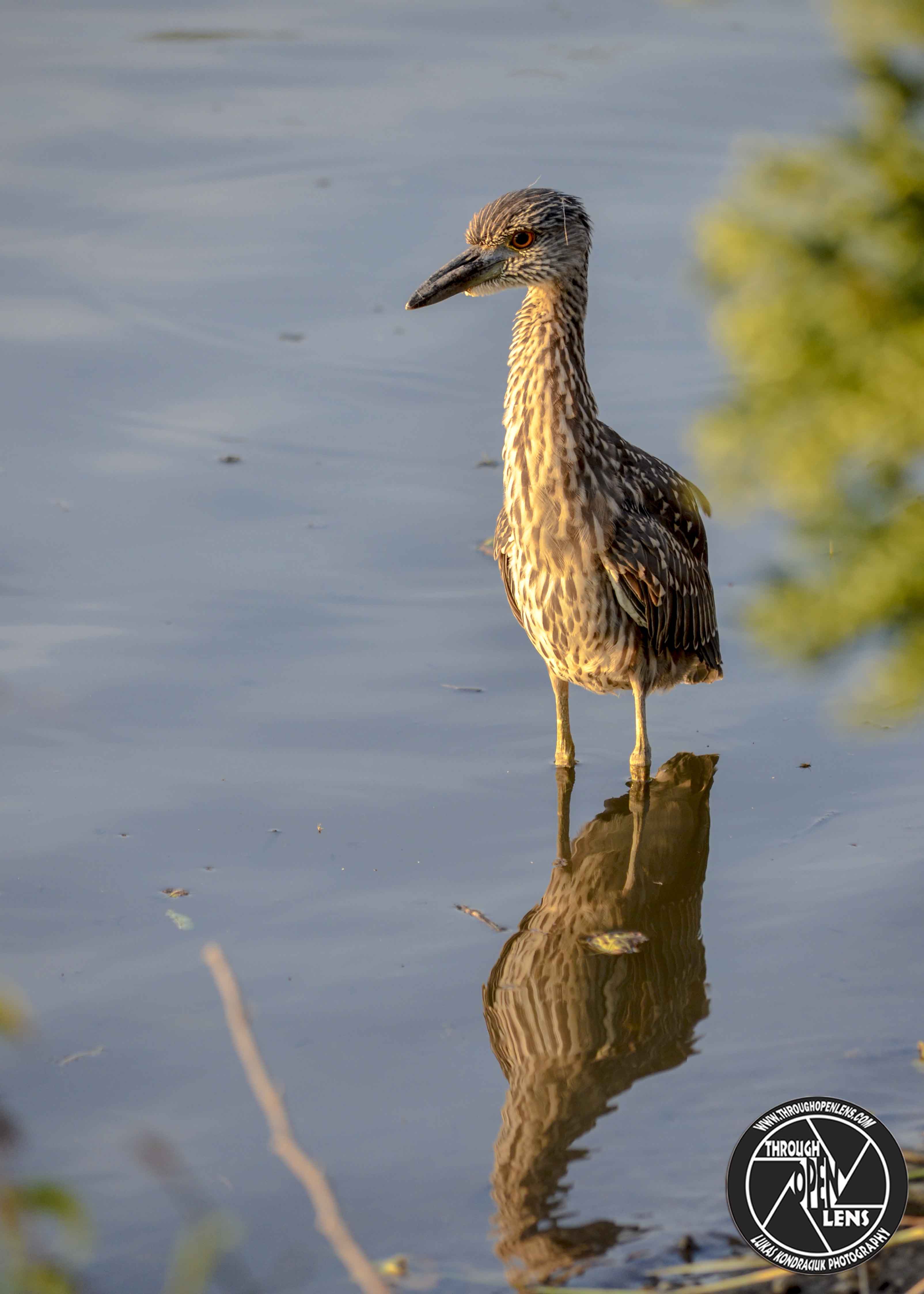
You Are Young. So Shut Up, And Enjoy Life.

F/5.6, 1/500, ISO 400.

Yellow-crowned Night-Heron ( Juvenile ) 

Why was the baby strawberry crying?

Because her mom and dad were in a jam

Interesting Fact: Foraging birds stand still or slowly stalk crabs and other prey along shorelines, marshes, and fields. Once in striking range they lunge at their prey and seize it in their bill. They swallow small prey whole, but often shake apart, crush, or spear larger prey. They forage on their own, typically keeping other individuals at a distance of 15 feet or more. Courting Yellow-crowned Night-Herons make display flights around their colonies, sometimes with the neck conspicuously extended. Courting pairs make a neck-stretching display, slowly raising and then quickly pushing the head back between its shoulders, while fanning the long shoulder plumes. Males do this first and females sometimes follow. ( https://www.allaboutbirds.org/guide/Yellow-crowned_Night-Heron )

Sunshine Is My Favorite Accessory!

F/8.0, 1/250, ISO 100.

California Sea Lion 

What did E.T.’s mother say to him when he got home?

Where on Earth have you been?

Interesting Fact: The sea lion’s ancient ancestors, like those of whales and dolphins, lived on land. The modern animal is well adapted to an aquatic environment, with its streamlined body and powerful flippers. (The rear flippers rotate forward to allow a California sea lion to move surprisingly well on land.) California sea lions also boast thick layers of blubber to insulate their bodies from the chill of marine waters. ( https://www.nationalgeographic.com/animals/mammals/c/california-sea-lion/ )


I’m So Crabby!

F/8.0, 1/640, ISO 100.

Atlantic Ghost Crabs

Did you hear about the crab that went to the seafood disco?

He pulled a muscle

Interesting Fact: Contrary to what many think, these creatures cannot swim in water. However, female crabs can keep themselves afloat by turning upside down in water. This is done to let the egg mass under their abdomen respire freely. ( http://www.animalspot.net/ghost-crab-sand-crab.html )

Making A Big Splash Today!

Happy 4th of July Everyone!

F/8.0, 1/250, ISO 160.

White-Cheeked Pintail

Did you hear about the painter who was hospitalized?

Reports say it was due to too many strokes.

Interesting Fact: It is popular in wildfowl collections, and escapees are frequently seen in a semi-wild condition in Europe. A leucistic (whitish) variant is known in aviculture as the Silver Bahama pintail. ( https://en.wikipedia.org/wiki/White-cheeked_pintail )

Hey Go Nuts Today!

F/6.3, 1/640, ISO 200.

Eastern Gray Squirrel

Why do squirrels swim on their backs?

To keep their nuts dry.


Interesting Fact: Squirrels are extremely intelligent creatures. They are known to put on elaborate bogus food burying displays to deceive onlookers. The fake burials are to trick potential thieves, such as other squirrels or birds, into thinking that they have stored their food stock there. Any observers planning on taking the stash will then focus on the bogus burial site, allowing the squirrel to bury the real stash elsewhere safely ( http://www.onekind.org/be_inspired/animals_a_z/squirrel/ )


It’s Not Easy Being Green

F/6.3, 1/60, ISO 640.

Northern Green Frog

What’s the difference between a cat and a frog?

A Cat has nine lives but a Frog croaks every night!

Interesting Fact:  The northern green frog (Lithobates clamitans melanota[2]) is a subspecies of the green frog, Lithobates clamitans. It is native to the northeastern North America and has been introduced to British Columbia.[3] Its mating call sounds like the single note of a plucked banjo. It is also quite common in the pet trade. ( https://en.wikipedia.org/wiki/Northern_green_frog )

Don’t Be Scared To Fly Alone Find A Path That Is Your Own

F/11.0, 1/500, ISO 200.

Brown Pelican

Why Did the Robber Take a Shower?

He wanted to make a clean getaway.

Interesting Fact: While the Brown Pelican is draining the water from its bill after a dive, gulls often try to steal the fish right out of its pouch—sometimes while perching on the pelican’s head. Pelicans themselves are not above stealing fish, as they follow fishing boats and hang around piers for handouts. ( https://www.allaboutbirds.org/guide/Brown_Pelican )

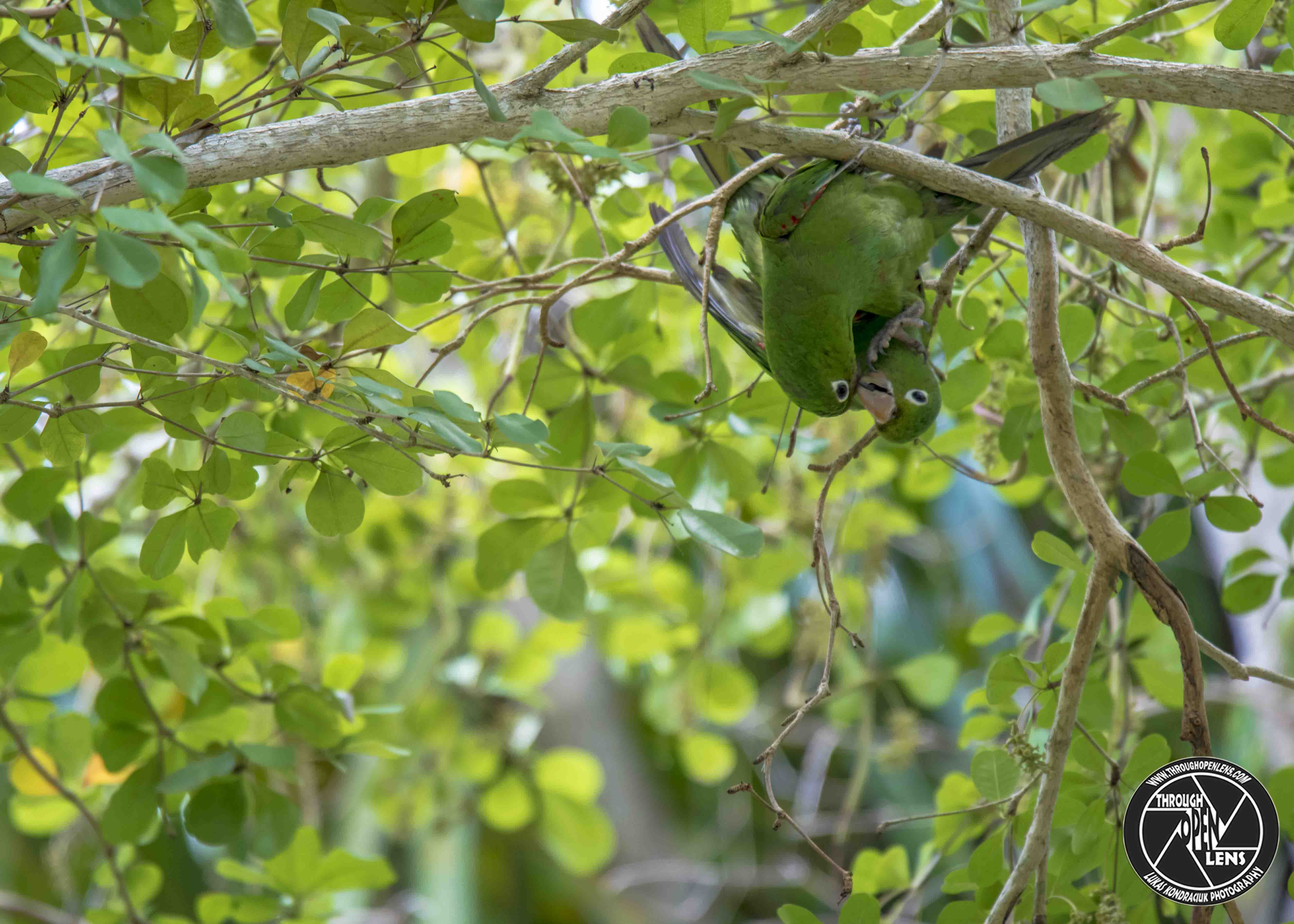
You Turn My World Upside Down

F/6.3, 1/60, ISO 640.

Hispaniolan Amazon Parrots

What’s the difference between a gamer and the calendar?

A calendar has dates.

Interesting Fact: These parrots create nests in tree cavities, the clutch ranges from 2 to 4 eggs maximum, the eggs hatch in about a 30 days and chicks usually fledge at 10 to 12 weeks of age. However people often remove the newborns from the tree cavities and destroy the nest that have been reused over the years and afterwards priving the parrot from reproducing. ( https://en.wikipedia.org/wiki/Hispaniolan_amazon )