We Are Not Talking If You Are Wondering!

F/6.3, 1/640, ISO 200.

Greater Yellowlegs

What’s invisible and smells like carrots?

Bunny Farts!

Interesting Fact: The Greater Yellowlegs walks with a distinctive high-stepping gait across wetlands when foraging, occasionally dashing forward in pursuit of a prey item. Compared to other shorebirds, the Greater Yellowlegs is often rather solitary.  ( https://www.allaboutbirds.org/guide/Greater_Yellowlegs/lifehistory )

I Rule The SKY!

F/6.3, 1/640, ISO 100.

Red-tailed Hawk

Why did the witches’ team lose the baseball game?

Their bats flew away.

Interesting Fact: Red-tailed Hawks typically put their nests in the crowns of tall trees where they have a commanding view of the landscape. They may also nest on a cliff ledge or on artificial structures such as window ledges and billboard platforms. ( https://www.allaboutbirds.org/guide/Red-tailed_Hawk/lifehistory )

Hey Go Nuts Today!

F/6.3, 1/640, ISO 200.

Eastern Gray Squirrel

Why do squirrels swim on their backs?

To keep their nuts dry.


Interesting Fact: Squirrels are extremely intelligent creatures. They are known to put on elaborate bogus food burying displays to deceive onlookers. The fake burials are to trick potential thieves, such as other squirrels or birds, into thinking that they have stored their food stock there. Any observers planning on taking the stash will then focus on the bogus burial site, allowing the squirrel to bury the real stash elsewhere safely ( http://www.onekind.org/be_inspired/animals_a_z/squirrel/ )


It’s Not Easy Being Green

F/6.3, 1/60, ISO 640.

Northern Green Frog

What’s the difference between a cat and a frog?

A Cat has nine lives but a Frog croaks every night!

Interesting Fact:  The northern green frog (Lithobates clamitans melanota[2]) is a subspecies of the green frog, Lithobates clamitans. It is native to the northeastern North America and has been introduced to British Columbia.[3] Its mating call sounds like the single note of a plucked banjo. It is also quite common in the pet trade. ( https://en.wikipedia.org/wiki/Northern_green_frog )

The Grass Is Greener Where You Water It!

F/6.3, 1/100, ISO 400.

White-throated Sparrow

What did the tie say to the hat?

You go on ahead and I’ll hang around!

Interesting Fact: White-throated Sparrows hop when they’re on the ground rather than walking or running. They forage in the leaf litter, often using both feet at once to scratch backwards, then pounce forward at anything they’ve uncovered. They also toss leaves aside with flicks of the head.  ( https://www.allaboutbirds.org/guide/White-throated_Sparrow/lifehistory )

Pleeeease!

F/6.3, 1/160, ISO 320.

Chipmunk

Why don’t chipmunks wear skinny jeans?

Because their nuts won’t fit.

Interesting Fact: Chipmunks generally gather food on the ground in areas with underbrush, rocks, and logs, where they can hide from predators like hawks, foxes, coyotes, weasels, and snakes. They feed on insects, nuts, berries, seeds, fruit, and grain which they stuff into their generous cheek pouches and carry to their burrow or nest to store. ( http://www.nationalgeographic.com/animals/mammals/group/chipmunks/ )

If You Want A Pet Bee, You Must Be Called A Wanna-Bee.

F/6.3, 1/100, ISO 250.

Bumblebee

What do you call a wasp?

A wanna-bee!

Interesting Fact: Bumblebees use sense of smell to detect flowers rich in nectar. Sense of smell is located on the antennas on the head. ( http://www.softschools.com/facts/animals/bumblebee_facts/582/ )

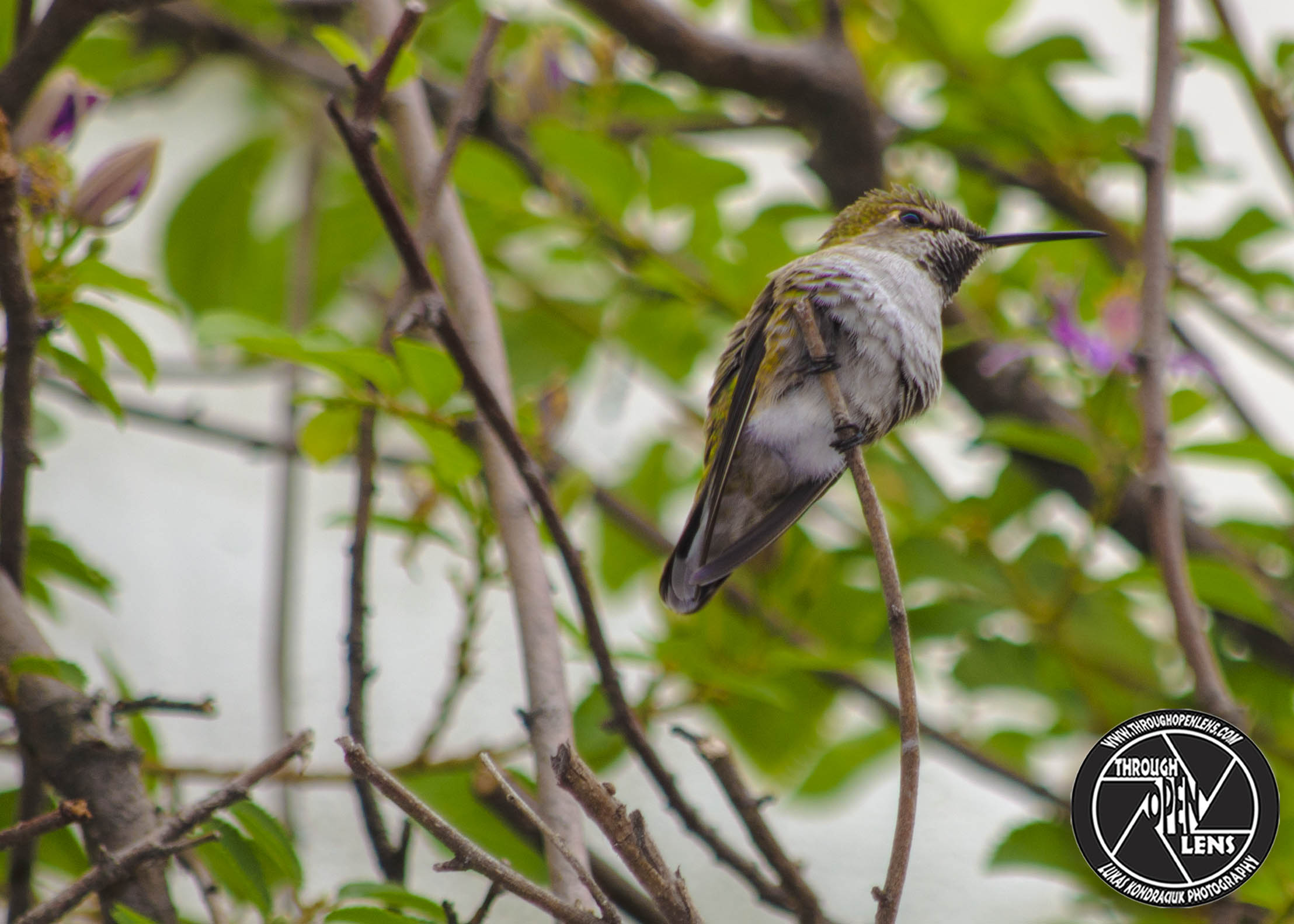
Don’t Bother Me I Am Guarding This Bush!

F/6.3, 1/125, ISO 100.

Rufous Hummingbird

Why did they have to bury George Washington standing up?

Because he could never lie.

Interesting Fact: Rufous Hummingbirds, like most other hummingbirds, beat their wings extremely fast to be able to hover in place. The wingbeat frequency of Rufous Hummingbirds has been recorded at 52–62 wingbeats per second. ( https://www.allaboutbirds.org/guide/Rufous_Hummingbird/lifehistory )


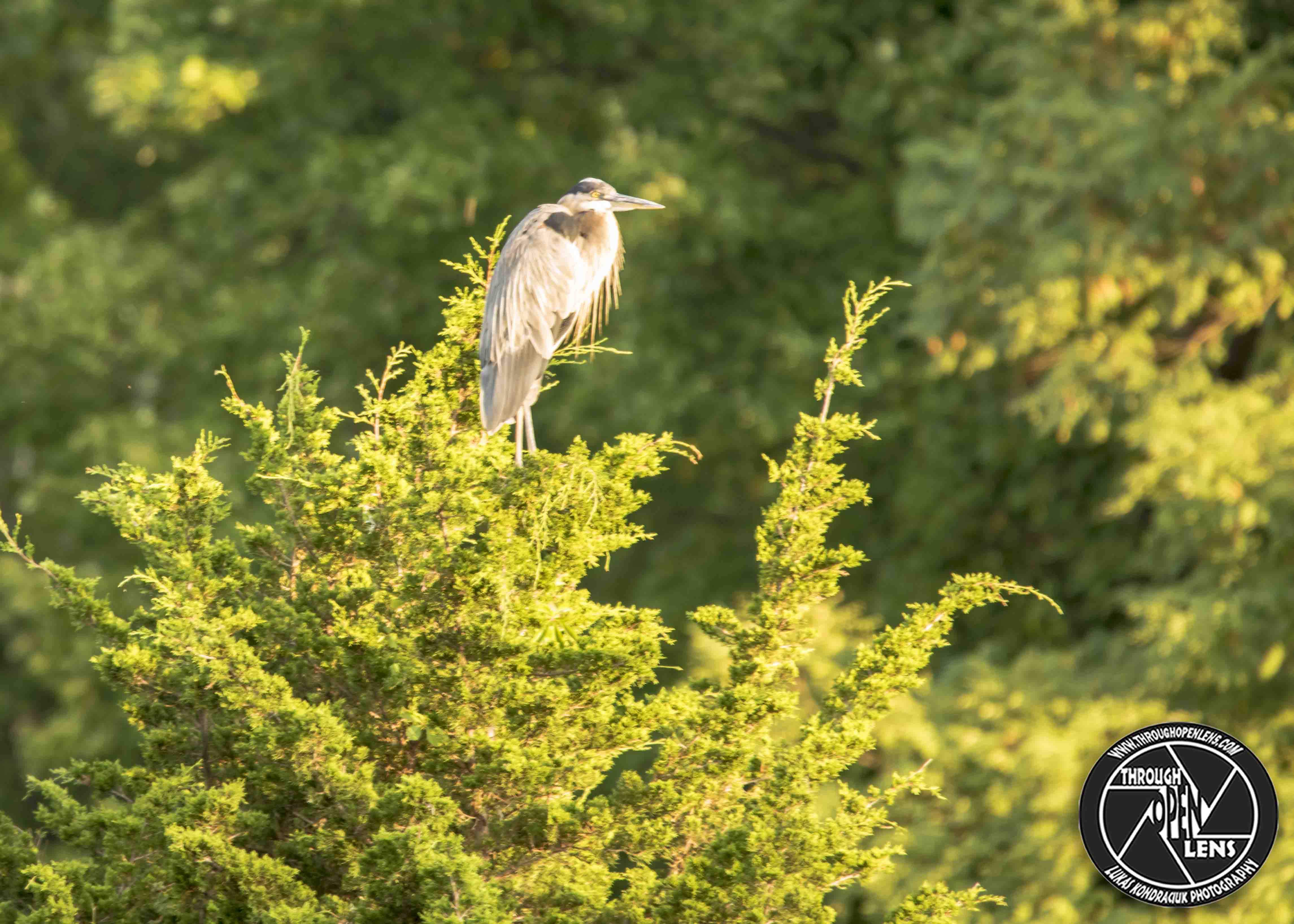
A Top Of The Tree To You

F/6.3, 1/160, ISO 400.

Great Blue Heron

A neutron walks into a bar and says,

“I’d like a beer. How much will that be?”

The bartender responds,

“For you? No charge!”

Interesting Fact:  Great Blue Herons congregate at fish hatcheries, creating potential problems for the fish farmers. A study found that herons ate mostly diseased fish that would have died shortly anyway. Sick fish spent more time near the surface of the water where they were more vulnerable to the herons.  ( https://www.allaboutbirds.org/guide/Great_Blue_Heron/lifehistory )

If You’re Feeling Blue Try Painting Yourself A Different Color

F/6.3, 1/160, ISO 1000.

Eastern Bluebird

What starts with a P, ends with an E, and has a million letters in it?

Post Office!

Interesting Fact: The male Eastern Bluebird displays at his nest cavity to attract a female. He brings nest material to the hole, goes in and out, and waves his wings while perched above it. That is pretty much his contribution to nest building; only the female Eastern Bluebird builds the nest and incubates the eggs.  ( https://www.allaboutbirds.org/guide/Eastern_Bluebird/lifehistory )