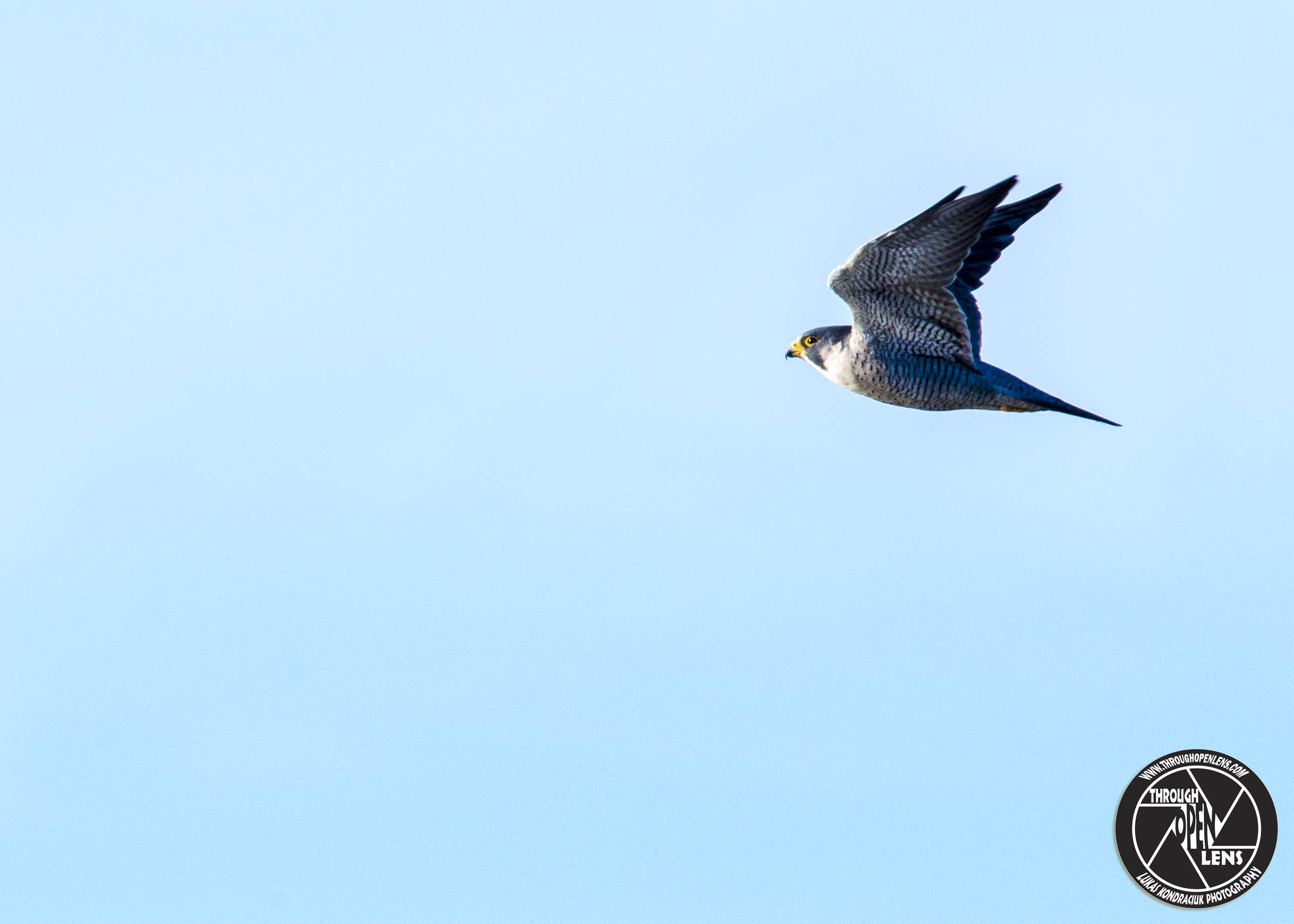
I Feel The Need… The Need For Speed.

F/13.0, 1/640, ISO 400.

Peregrine Falcon

Why did the cranberries turn red?

Because they saw the turkey dressing!

Interesting Fact: When hunting, Peregrines start by watching from a high perch or by flapping slowly or soaring at great height. Stoops begin 300–3,000 feet above their prey and end either by grabbing the prey or by striking it with the feet hard enough to stun or kill it. They then catch the bird and bite through the neck to kill it. ( https://www.allaboutbirds.org/guide/Peregrine_Falcon/lifehistory )


I Can’t Stop Watching You!

F/10.0, 1/400, ISO 400.

Peregrine Falcon

What does a teddy bear say when you offer it a sandwich?

“No thanks, I’m stuffed”

Interesting Fact: Peregrine Falcons are very strong fliers and often reported to be the fastest bird in the world. Their average cruising flight speed is 24 to 33 mph, increasing to 67 mph when in pursuit of prey. When stooping, or dropping on prey with their wings closed, it’s been calculated that Peregrine Falcons can achieve speeds of 238 mph. One researcher studied trained Peregrine Falcons while skydiving and described their body position while diving at 150 mph and 200 mph. ( https://www.allaboutbirds.org/guide/Peregrine_Falcon/lifehistory )
 

I Am Not Proud Of What I Did

Happy Halloween!

F/ 6.3, 1/125, ISO 1600.

Peregrine Falcon

Why do ghosts like to ride in elevators?

It raises their spirits.

Interesting Fact: Peregrine Falcons are very strong fliers and often reported to be the fastest bird in the world. Their average cruising flight speed is 24 to 33 mph, increasing to 67 mph when in pursuit of prey. When stooping, or dropping on prey with their wings closed, it’s been calculated that Peregrine Falcons can achieve speeds of 238 mph. One researcher studied trained Peregrine Falcons while skydiving and described their body position while diving at 150 mph and 200 mph. ( https://www.allaboutbirds.org/guide/Peregrine_Falcon/lifehistory )

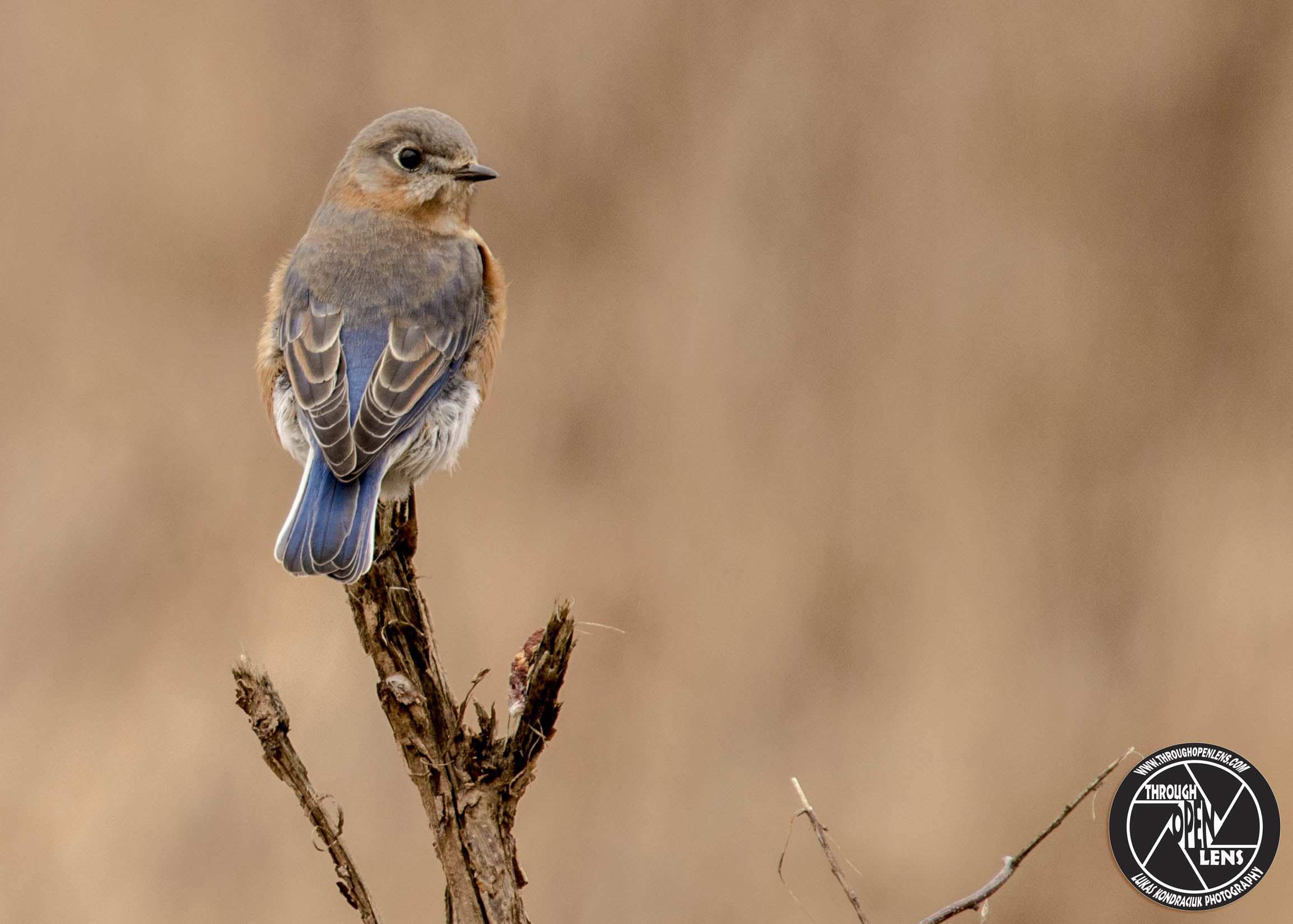
You’re My Boy Blue!

F/7.1, 1/200, ISO 400.

Eastern Bluebird

Why don’t they play poker in the jungle?

Too many cheetahs.

Interesting Fact: This small, brightly colored thrush typically perches on wires and fence posts overlooking open fields. The birds forage by fluttering to the ground to grab an insect, or occasionally by catching an insect in midair. Bluebirds can sight their tiny prey items from 60 feet or more away. They fly fairly low to the ground, and with a fast but irregular pattern to their wingbeats. ( https://www.allaboutbirds.org/guide/Eastern_Bluebird/lifehistory )


Take Off And See Whats Out There!

F/7.1, 1/200, ISO 400.

Common Merganser ( Female )

Why was the baby strawberry crying?

Because her mom and dad were in a jam.

Interesting Fact: The female chooses the nest site, which is usually in a natural cavity or woodpecker hole in a live or dead tree, up to 100 feet off the ground and within a mile of water. Common Mergansers nest less frequently in rock crevices, old sheds, chimneys, lighthouses, holes in banks, holes in the ground, hollow logs, and burrows. They readily nest in boxes, including those designed for the much smaller Common Goldeneye. Sometimes they nest on the ground. ( https://www.allaboutbirds.org/guide/Common_Merganser/lifehistory )

It’s Been A Rough Week So Far… But On Positive Note, I Didn’t Need Any Bail Money And Didn’t Have To Hide Any Bodies!

F/6.3, 1/800, ISO 800.

Rough-legged Hawk

Daughter: “Mom, where do tampons go?”

Mom: “Where the babies come from, darling.”

Daughter “In the stork?”

Check out this really funny jokes: http://www.short-funny.com/#ixzz5540ew6c6

Interesting Fact: The Rough-legged Hawk’s cliffside nest, a bulky mass of sticks, sometimes contains caribou bones. Nesting pairs need a lot of space: usually only a single pair will nest on a quarter-mile-long cliff. However, the pair may nest within 100 feet of Gyrfalcons, Peregrine Falcons, or Common Ravens. ( https://www.allaboutbirds.org/guide/Rough-legged_Hawk/lifehistory  )

Duck You!

F/8.0, 1/250, ISO 800.

Harlequin Duck Female

At what time does a duck wake up?

At the quack of dawn.

Interesting Fact:  More than half of eastern North American population of Harlequin Ducks winters in coastal Maine, particularly outer reaches of Penobscot and Jericho bays. ( https://www.allaboutbirds.org/guide/Harlequin_Duck/lifehistory )

I Patrol The Sky And I Am Super High!

F/11.0, 1/500, ISO 320.

Peregrine Falcon

A Jen caught her husband Bob on the weight scale, sucking in his stomach.

Jen: “That won’t help you, Bob, you know?”

Bob: “Oh it helps a lot,” says the man, “it’s the only way I can see the numbers!”

Interesting Fact: People have trained falcons for hunting for over a thousand years, and the Peregrine Falcon was always one of the most prized birds. Efforts to breed the Peregrine in captivity and reestablish populations depleted during the DDT years were greatly assisted by the existence of methods of handling captive falcons developed by falconers. ( https://www.allaboutbirds.org/guide/Peregrine_Falcon/lifehistory )

Fly Eagles Fly!!!

F/11.0, 1/500, ISO 320, CS6.

Bald Eagles ( Juveniles )

Why did the football coach shake the vending machine?

I don’t know?

Because he needed a quarter back.

Interesting Fact: Sometimes even the national bird has to cut loose. Bald Eagles have been known to play with plastic bottles and other objects pressed into service as toys. One observer witnessed six Bald Eagles passing sticks to each other in midair. ( https://www.allaboutbirds.org/guide/Bald_Eagle/lifehistory

If The Mud Ain’t Flying You Ain’t Trying!

F/9.0, 1/320, ISO 320.

Northern Pintail Duck

How do crazy people go through the forest?

They take the psycho path.

Interesting Fact: When it comes to breeding, Northern Pintails don’t waste any time. They start nesting as soon as the ice starts to thaw, arriving by late April in places as far north as the Northwest Territories, Canada. ( https://www.allaboutbirds.org/guide/Northern_Pintail/ )