So, You Are The Quiet Type, I Like That.

F/9.0, 1/320, ISO 250.

Black-capped Chickadee 

“How do you shoot a killer bee?”

“With a bee bee gun.”

Interesting Fact: Adult chickadees don’t migrate. In years when chickadee reproduction is high, young birds sometimes move large distances, but these movements are irregular and are more accurately called “irruptions.”( https://www.allaboutbirds.org/guide/Black-capped_Chickadee )


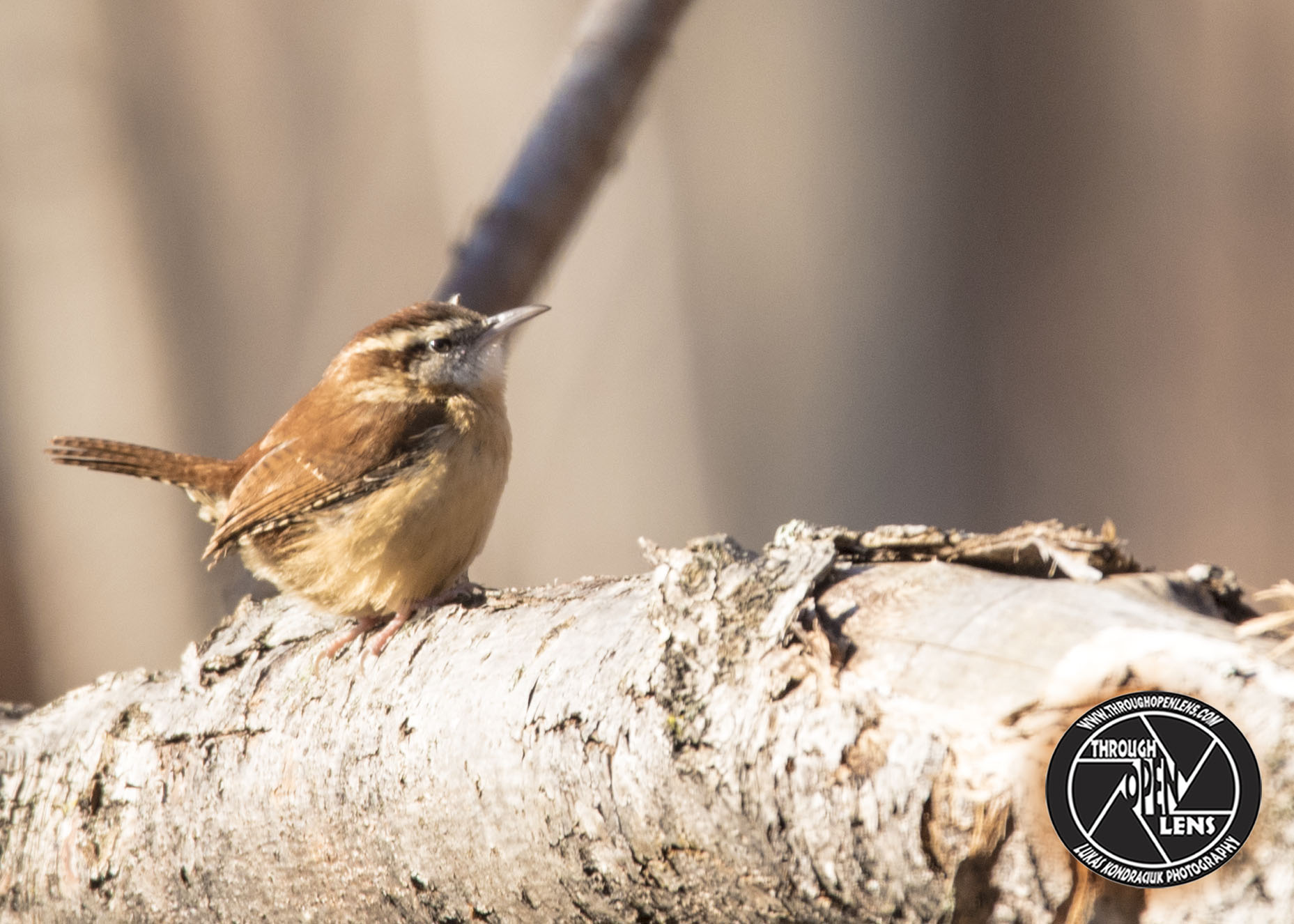
Life Is So Much Easier When You Just Chill Out.

F/8.0, 1/250, ISO 400.

Carolina Wren

One day, during a lesson on proper grammar, the teacher asked for a show of hands from those who could use the word “beautiful” in the same sentence twice. First, she called on little Suzie, who responded with, “My father bought my mother a beautiful dress and she looked beautiful in it.”

“Very good, Suzie,” replied the teacher. She then called on little Michael. “My mommy planned a beautiful banquet and it turned out beautifully,” he said.

“Excellent, Michael!”

Then, the teacher called on Little Johnny. “Last night, at the dinner table, my sister told my father that she was pregnant, and he said, ‘Beautiful, …just #$&#*&^# beautiful!

Interesting Fact: One captive male Carolina Wren sang nearly 3,000 times in a single day. ( https://www.allaboutbirds.org/guide/Carolina_Wren/lifehistory )

Something’s Stuck In My Butt Quack…

F/8.0, 1/250, ISO 160.

Common Eider ( Females ) 

What do you call a duck that steals?

A robber ducky.

Interesting Fact: Mother Common Eiders lead their young to water, and often are accompanied by nonbreeding hens that participate in chick protection. Broods often come together to form “crèches” of a few to over 150 ducklings. Attacks by predators may cause several broods to cluster together into a crèche. Once formed, a crèche tends to stay together throughout the brood rearing period, although some of the different females attending it may leave.  ( https://www.allaboutbirds.org/guide/Common_Eider/ )

Say What?!

F/8.0, 1/250, ISO 320.

Tufted Titmouse

Why are hairdressers never late for work?

Because they know all the short cuts!

Interesting Fact: Tufted Titmice live in deciduous woods or mixed evergreen-deciduous woods, typically in areas with a dense canopy and many tree species. They are also common in orchards, parks, and suburban areas. Generally found at low elevations, Tufted Titmice are rarely reported at elevations above 2,000 feet. ( https://www.allaboutbirds.org/guide/Tufted_Titmouse/lifehistory )


Kris Kross Will Make You Jump Jump!

F/11.0, 1/500, ISO 200.

Snowy Egret

Why did the barber win the race?

Because he took a short cut.

Interesting Fact:  Male and female Snowy Egrets take turns incubating their eggs. As one mate takes over for the other, it sometimes presents a stick, almost as if passing a baton. Both parents continue caring for the young when they hatch. ( https://www.allaboutbirds.org/guide/Snowy_Egret/lifehistory )

I Meant To Be Good But There Were Too Many Other Options!

ruby-crowned-kinglet

F/8.0, 1/250, ISO 640.

Ruby-crowned Kinglet

teacher asked : Why are you late for school?

Bobby: Because of the Sign.

Teacher : What Sign?

Bobby : The sign that says “School ahead go slow”

Interesting Fact: The Ruby-crowned Kinglet is a tiny bird that lays a very large clutch of eggs—there can be up to 12 in a single nest. Although the eggs themselves weigh only about a fiftieth of an ounce, an entire clutch can weigh as much as the female herself. ( https://www.allaboutbirds.org/guide/Ruby-crowned_Kinglet/lifehistory )

Use Your Head!

yellow-bellied-sapsucker-2

F/10.0, 1/400, ISO 400.

Yellow-Bellied Sapsucker

What did the trees wear to Mother Nature’s pool party?

Swimming trunks!

Interesting Fact: The Yellow-bellied Sapsucker frequently uses human-produced materials to help in its territorial drumming. Street signs and metal chimney flashing amplify the irregular tapping of a territorial sapsucker. The sapsucker seems to suffer no ill effects of whacking its bill on metal, and a bird will return to a favorite sign day after day to pound out its Morse code-like message. ( https://www.allaboutbirds.org/guide/Yellow-bellied_Sapsucker/lifehistory  )

I Am Very Saucy, You Can Call Me Duck Sauce.

ruddy-duck-2

F/10.0, 1/320, ISO 400.

Ruddy Duck

Why did the scarecrow get promoted?

Because he was outstanding in his field.

Interesting Fact: Pleistocene fossils of Ruddy Ducks, at least 11,000 years old, have been unearthed in Oregon, California, Virginia, Florida, and Illinois. ( https://www.allaboutbirds.org/guide/Ruddy_Duck/lifehistory )


Here’s Looking At You, Kid

F/11.0, 1/500, ISO 320.

Red-tailed Hawk

Why can you never trust atoms?

They make up everything!

Interesting Fact: Birds are amazingly adapted for life in the air. The Red-tailed Hawk is one of the largest birds you’ll see in North America, yet even the biggest females weigh in at only about 3 pounds. A similar-sized small dog might weigh 10 times that. ( https://www.allaboutbirds.org/guide/Red-tailed_Hawk/lifehistory )

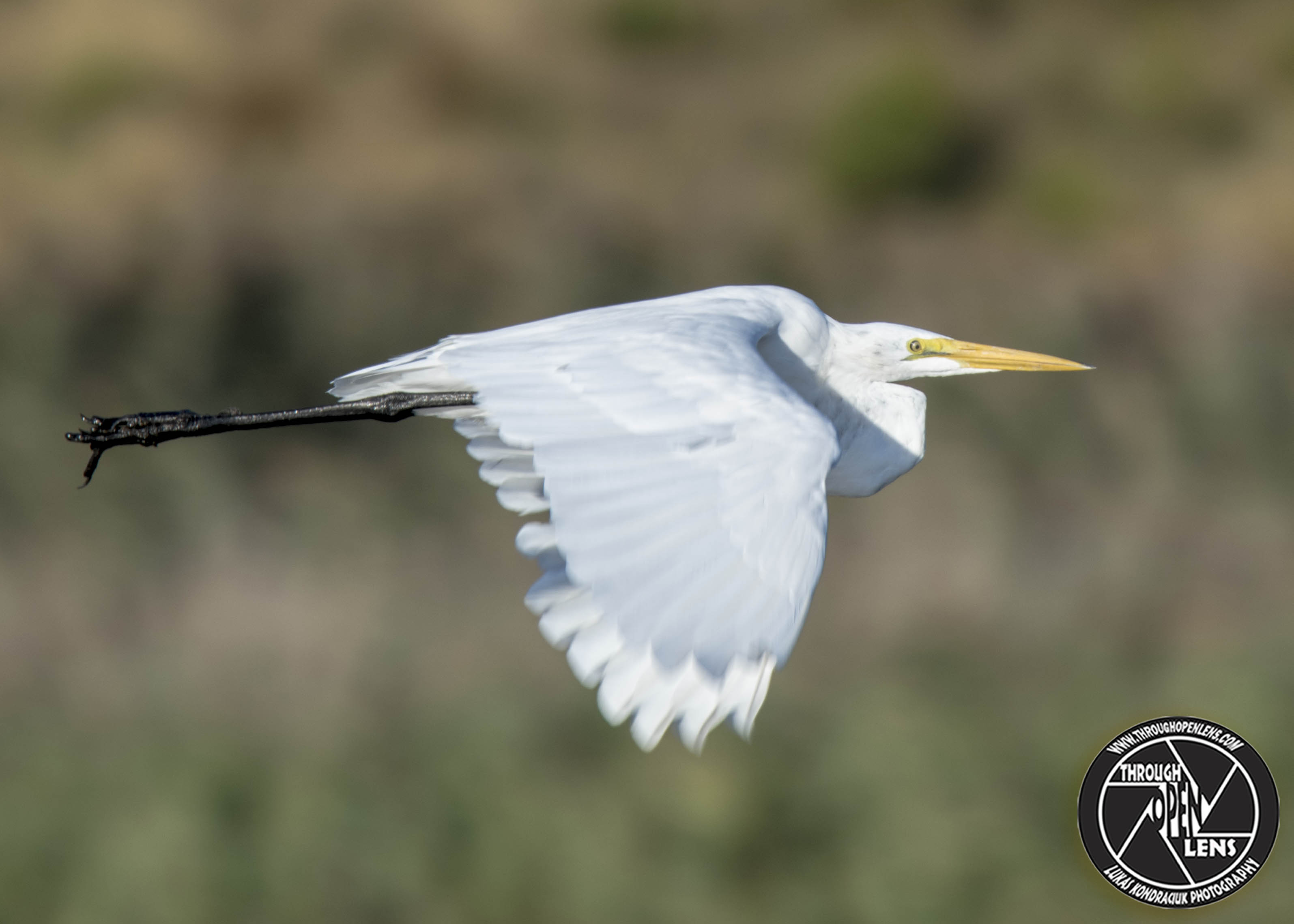
Your Wings Already Exist All You Have To Do Is Fly

F/9.0, 1/320, ISO 200.

Great Egret 

Why did the reporter rush into the ice cream shop?

He was looking for a scoop.

Interesting Fact: Not all young that hatch survive the nestling period. Aggression among nestlings is common and large chicks frequently kill their smaller siblings. This behavior, known as siblicide, is not uncommon among birds such as hawks, owls, and herons, and is often a result of poor breeding conditions in a given year. ( https://www.allaboutbirds.org/guide/Great_Egret/lifehistory )