Don’t Be Such A Turkey!

F/7.1, 1/200, ISO 500.

Wild Turkeys

Why did the toilet paper roll down the hill?

Because it wanted to get to the bottom.

Interesting Fact: Wild Turkeys nest on the ground in dead leaves at the bases of trees, under brush piles or thick shrubbery, or occasionally in open hayfields. ( https://www.allaboutbirds.org/guide/Wild_Turkey/lifehistory )


I Wanna Rock!

F/6.3, 1/100, ISO 500.

Chipping Sparrow

Why do fish live in salt water?

Because pepper makes them sneeze.

Interesting Fact: In summer, male Chipping Sparrows defend territories against other Chipping Sparrows, but often tolerate other species as long as they don’t go too near the nest. After the breeding season, Chipping Sparrows form flocks of several dozen, foraging together among grasses and at bird feeders. Their flight pattern is energetic, straight, and only slightly undulating. ( https://www.allaboutbirds.org/guide/Chipping_Sparrow/lifehistory )


Mouth Full!

F/7.1, 1/160, ISO 320.

American Robin

Why are vampires so easy to fool?

Because they are suckers.

Interesting Fact: An American Robin can produce three successful broods in one year. On average, though, only 40 percent of nests successfully produce young. Only 25 percent of those fledged young survive to November. From that point on, about half of the robins alive in any year will make it to the next. Despite the fact that a lucky robin can live to be 14 years old, the entire population turns over on average every six years. ( https://www.allaboutbirds.org/guide/American_Robin/lifehistory )

I May Look Calm, But In My Head I’ve Killed You 3 Times.

F/10.0, 1/400, ISO 200.

Osprey

What do lawyers wear to court?

Lawsuits!

Interesting Fact: The Osprey readily builds its nest on manmade structures, such as telephone poles, channel markers, duck blinds, and nest platforms designed especially for it. Such platforms have become an important tool in reestablishing Ospreys in areas where they had disappeared. In some areas nests are placed almost exclusively on artificial structures. ( https://www.allaboutbirds.org/guide/Osprey/lifehistory )

From Small Beginnings Come Great Things

F/5.6, 1/200, ISO 100.

Canada Goose Goslings

What do you get when you cross fish and an elephant?

Swimming trunks.

Interesting Fact: Young often remain with their parents for their entire first year, especially in the larger subspecies. As summer wanes birds become more social; they may gather in large numbers at food sources; where food is limited and patchy, may compete with displays and fights.  ( https://www.allaboutbirds.org/guide/Canada_Goose/lifehistory )

When In Doubt Chill Out!

F/8.0, 1/250, ISO 250.

Great Blue Heron

Why was strawberry sad?

Because her mom was in a jam.

Interesting Fact: Great Blue Herons nest mainly in trees, but will also nest on the ground, on bushes, in mangroves, and on structures such as duck blinds, channel markers, or artificial nest platforms. Males arrive at the colony and settle on nest sites; from there, they court passing females. Colonies can consist of 500 or more individual nests, with multiple nests per tree built 100 or more feet off the ground. ( https://throughopenlens.com/tag/great-blue-heron/ )

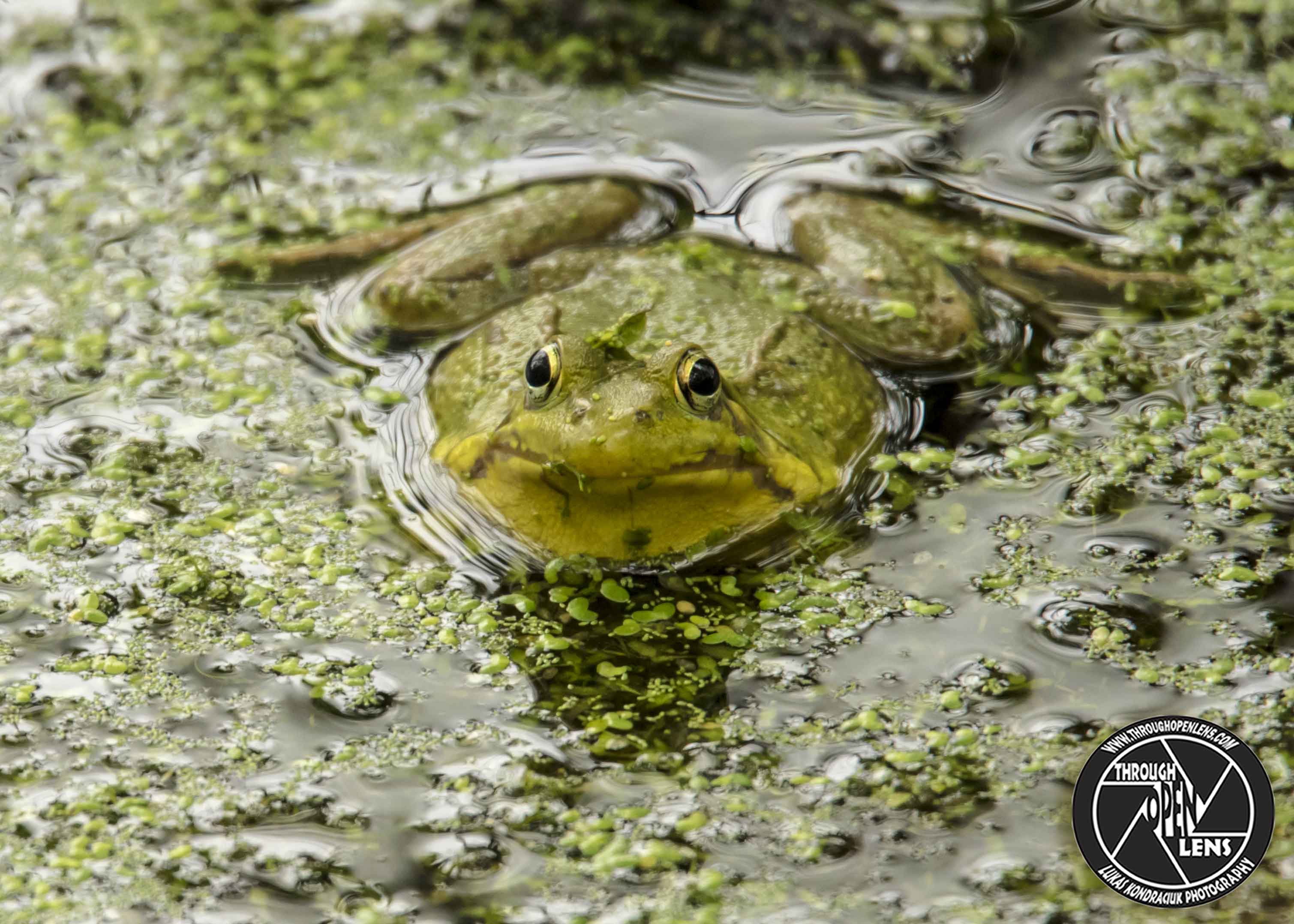
What? You Are Expecting A Prince Or Something?

F/6.3, 1/80, ISO 640.

Northern Green Frog

Why are frogs so happy?

They eat whatever bugs them!

Interesting Fact: The northern green frog dwells in marshes, swamps, ponds, lakes, springs, and other aquatic environment. It is active both day and night. ( https://en.wikipedia.org/wiki/Northern_green_frog )

I Run To Burn Off The Crazy!

F/11.0, 1/500, ISO 200.

Snowy Egret

Why do mummies make excellent spies?

They’re good at keeping things under wraps.

Interesting Fact: Male Snowy Egrets fight for breeding territories, choose nest sites, and perform noisy courtship displays to attract mates. A ring of other egrets often gathers around a displaying male as he pumps his body up and down, points his bill skyward, and calls. He also performs aerial displays, including one that ends with him dropping toward the ground while tumbling around and around. ( https://www.allaboutbirds.org/guide/Snowy_Egret/lifehistory )


What The Fox!

F/6.3, 1/30, ISO 500.

Red Fox 

What do you call a drunk shark?

Hammered Head

Interesting Fact: Red foxes are usually together in pairs or small groups consisting of families, such as a mated pair and their young, or a male with several females having kinship ties. The young of the mated pair remain with their parents to assist in caring for new kits.[8] The species primarily feeds on small rodents, though it may also target rabbitsgame birdsreptilesinvertebrates[6] and young ungulates.[6] Fruit and vegetable matter is also eaten sometimes.[9] Although the red fox tends to kill smaller predators, including other fox species, it is vulnerable to attack from larger predators, such as wolvescoyotesgolden jackals and medium- and large-sized felines. ( https://en.wikipedia.org/wiki/Red_fox )


I Know I Know I Am Standing Up For Myself!

F/6.3, 1/160, ISO 320.

Common Gallinule

Why is there only one Yogi Bear?

Because when they tried to make another one, they made a Boo-Boo.

Interesting Fact: The long-toed Common Gallinule walks atop floating vegetation and soft soils in a crouched position while slowly flicking its tail up. Seldom do you see them fly, but when they do, their flight is labored. They stride through water pumping their head forward with tail held horizontally and wings held up over the back. ( https://www.allaboutbirds.org/guide/Common_Gallinule/lifehistory )