Make Like A Tree And Leave!

F/8.0, 1/250, ISO 320.

Great Blue Heron 

Why haven’t aliens visited our solar system?

They checked the reviews and we only have one star.

Interesting Fact: Nest building can take from 3 days up to 2 weeks; the finished nest can range from a simple platform measuring 20 inches across to more elaborate structures used over multiple years, reaching 4 feet across and nearly 3.5 feet deep. Ground-nesting herons use vegetation such as salt grass to form the nest. ( https://www.allaboutbirds.org/guide/Great_Blue_Heron/lifehistory )

The Fish Was This Big! I Swear!

F/7.1, 1/200, ISO 320.

Canada Goose

What does a pig put on its paper cut?

Oinkment!

Interesting Fact:  At least 11 subspecies of Canada Goose have been recognized, although only a couple are distinctive. In general, the geese get smaller as you move northward, and darker as you go westward. The four smallest forms are now considered a different species: the Cackling Goose. ( https://www.allaboutbirds.org/guide/Canada_Goose/lifehistory )

I Might Look Like I’m Doing Nothing, But In My Head I’m Quite Busy.

F/7.1, 1/200, ISO 150.

Green Heron

Why did the dog sit in the shade?

Because he didn’t want to be a hot dog!

Interesting Fact:  The male begins building the nest before pairing up to breed, but afterward passes off most of the construction to his mate. As the male gathers long, thin sticks, the female shapes them into a nest 8–12 inches across, with a shallow depression averaging less than 2 inches deep. The nest varies from solid to flimsy, and has no lining. ( https://www.allaboutbirds.org/guide/Green_Heron/lifehistory )


Don’t Act Like You’re Not Impressed

F/11.0, 1/500, ISO 400.

Boston Terriers

What did the dog say to the hot dog bun?

“Are you pure bred?”

Interesting Fact: Judge weighed over 27.5 pounds (12.5 kg). The offspring interbred with one or more French Bulldogs, providing the foundation for the Boston Terrier. Bred down in size from fighting dogs of the Bull and Terrier types, the Boston Terrier originally weighed up to 44 pounds (20 kg) (Olde Boston Bulldogge).[2] The breed was first shown in Boston in 1870. By 1889 the breed had become sufficiently popular in Boston that fanciers formed the American Bull Terrier Club, the breed’s nickname, “roundheads”. Shortly after, at the suggestion of James Watson (a noted writer and authority), the club changed its name to the Boston Terrier Club and in 1893 it was admitted to membership in the American Kennel Club, thus making it the first US breed to be recognized.[8] It is one of a small number of breeds to have originated in the United States. The Boston Terrier was the first non-sporting dog bred in the US. ( https://en.m.wikipedia.org/wiki/Boston_Terrier )

Making A Big Splash Today!

Happy 4th of July Everyone!

F/8.0, 1/250, ISO 160.

White-Cheeked Pintail

Did you hear about the painter who was hospitalized?

Reports say it was due to too many strokes.

Interesting Fact: It is popular in wildfowl collections, and escapees are frequently seen in a semi-wild condition in Europe. A leucistic (whitish) variant is known in aviculture as the Silver Bahama pintail. ( https://en.wikipedia.org/wiki/White-cheeked_pintail )

Don’t Drink And Fly!

F/7.1, 1/200, ISO 320.

Bumblebee

Why Did The Bee Go To The Doctor?

It Had Hives!

Interesting Fact:  Only queen and worker bees have stingers. Besides lack of stingers, drones can be identified by size – they are the smallest type of bumblebees in the colony. ( http://www.softschools.com/facts/animals/bumblebee_facts/582/ )

If You Want A Pet Bee, You Must Be Called A Wanna-Bee.

F/6.3, 1/100, ISO 250.

Bumblebee

What do you call a wasp?

A wanna-bee!

Interesting Fact: Bumblebees use sense of smell to detect flowers rich in nectar. Sense of smell is located on the antennas on the head. ( http://www.softschools.com/facts/animals/bumblebee_facts/582/ )

What Does The Fox Say?

F/6.0, 1/30, ISO 400.

Red Fox

What do you call a fox with a carrot in each ear?

Anything you want as he can’t hear you!

Interesting Fact: Red foxes are solitary hunters who feed on rodents, rabbits, birds, and other small game—but their diet can be as flexible as their home habitat. Foxes will eat fruit and vegetables, fish, frogs, and even worms. If living among humans, foxes will opportunistically dine on garbage and pet food. ( http://www.nationalgeographic.com/animals/mammals/r/red-fox/ )

Don’t You Think We Should Go Wireless?!

F/11.0, 1/500, ISO 250.

Barn Swallow

Husband and Wife are having a conversation.

Wife: How many women have u slept with?

Husband: Only you darling, I was awake with the other women.

Interesting Fact: The Barn Swallow is the most abundant and widely distributed swallow species in the world. It breeds throughout the Northern Hemisphere and winters in much of the Southern Hemisphere. ( https://www.allaboutbirds.org/guide/Barn_Swallow/lifehistory )


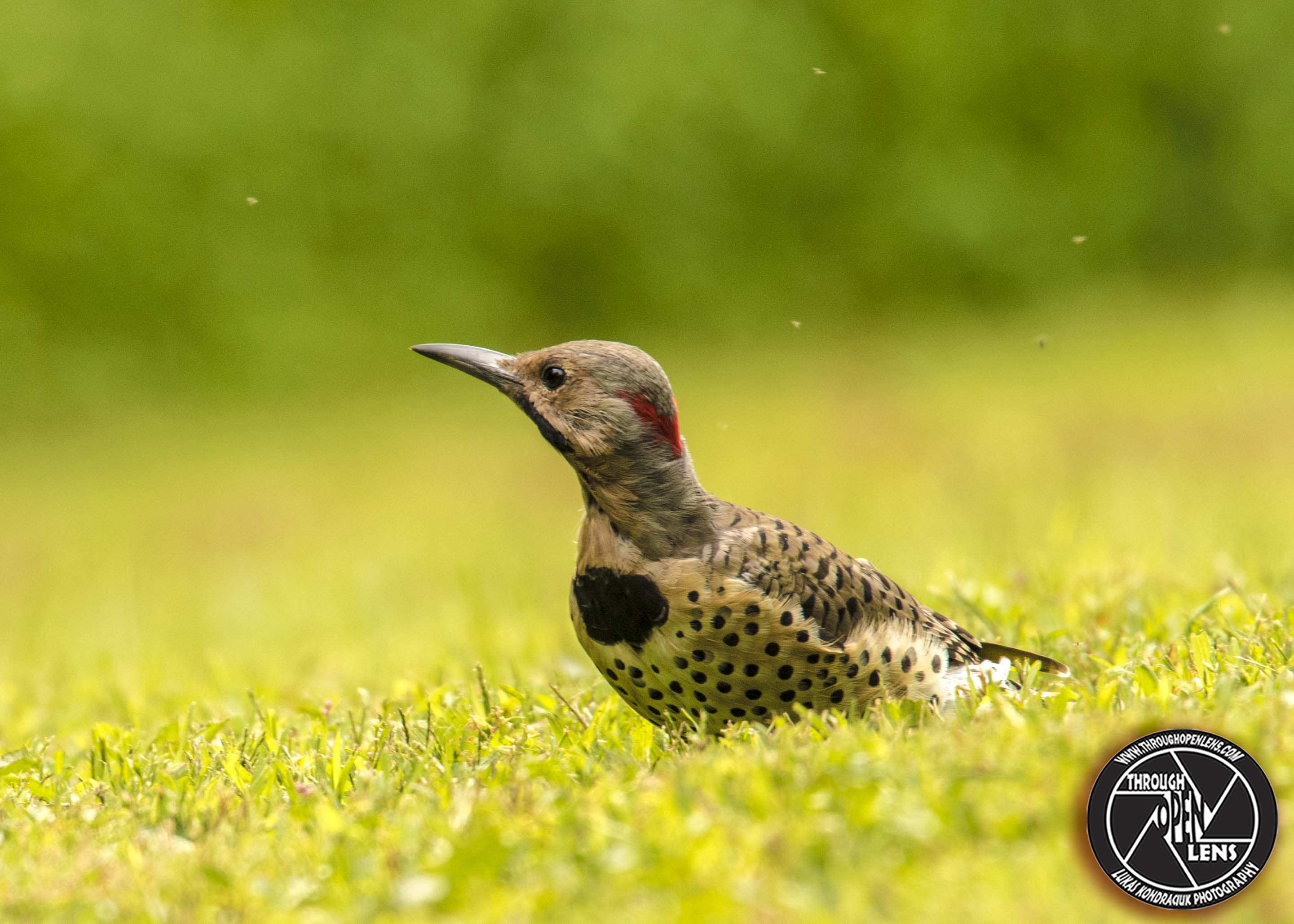
This Is My Good Side

F/8.0, 1/200, ISO 400.

Northern Flicker

Why is it so hot in a stadium after a football game?

Because all the fans have left.

Interesting Fact: The Northern Flicker is one of the few North American woodpeckers that is strongly migratory. Flickers in the northern parts of their range move south for the winter, although a few individuals often stay rather far north. ( https://www.allaboutbirds.org/guide/Northern_Flicker/lifehistory )