I May Look Calm, But In My Head I’ve Killed You 3 Times.

F/10.0, 1/400, ISO 200.

Osprey

What do lawyers wear to court?

Lawsuits!

Interesting Fact: The Osprey readily builds its nest on manmade structures, such as telephone poles, channel markers, duck blinds, and nest platforms designed especially for it. Such platforms have become an important tool in reestablishing Ospreys in areas where they had disappeared. In some areas nests are placed almost exclusively on artificial structures. ( https://www.allaboutbirds.org/guide/Osprey/lifehistory )

From Small Beginnings Come Great Things

F/5.6, 1/200, ISO 100.

Canada Goose Goslings

What do you get when you cross fish and an elephant?

Swimming trunks.

Interesting Fact: Young often remain with their parents for their entire first year, especially in the larger subspecies. As summer wanes birds become more social; they may gather in large numbers at food sources; where food is limited and patchy, may compete with displays and fights.  ( https://www.allaboutbirds.org/guide/Canada_Goose/lifehistory )

When In Doubt Chill Out!

F/8.0, 1/250, ISO 250.

Great Blue Heron

Why was strawberry sad?

Because her mom was in a jam.

Interesting Fact: Great Blue Herons nest mainly in trees, but will also nest on the ground, on bushes, in mangroves, and on structures such as duck blinds, channel markers, or artificial nest platforms. Males arrive at the colony and settle on nest sites; from there, they court passing females. Colonies can consist of 500 or more individual nests, with multiple nests per tree built 100 or more feet off the ground. ( https://throughopenlens.com/tag/great-blue-heron/ )

I Run To Burn Off The Crazy!

F/11.0, 1/500, ISO 200.

Snowy Egret

Why do mummies make excellent spies?

They’re good at keeping things under wraps.

Interesting Fact: Male Snowy Egrets fight for breeding territories, choose nest sites, and perform noisy courtship displays to attract mates. A ring of other egrets often gathers around a displaying male as he pumps his body up and down, points his bill skyward, and calls. He also performs aerial displays, including one that ends with him dropping toward the ground while tumbling around and around. ( https://www.allaboutbirds.org/guide/Snowy_Egret/lifehistory )


I Know I Know I Am Standing Up For Myself!

F/6.3, 1/160, ISO 320.

Common Gallinule

Why is there only one Yogi Bear?

Because when they tried to make another one, they made a Boo-Boo.

Interesting Fact: The long-toed Common Gallinule walks atop floating vegetation and soft soils in a crouched position while slowly flicking its tail up. Seldom do you see them fly, but when they do, their flight is labored. They stride through water pumping their head forward with tail held horizontally and wings held up over the back. ( https://www.allaboutbirds.org/guide/Common_Gallinule/lifehistory )


PAUSE For A Moment And REFLECT

F/9.0, 1/320, ISO 320.

Red breasted Merganser 

What did E.T.’s mother say to him when he got home?

Where on Earth have you been?

Interesting Fact: The female creates a depression on the ground that she covers with dead grasses, forming a shallow bowl. She plucks down feathers from her breast to help insulate the nest. ( https://www.allaboutbirds.org/guide/Red-breasted_Merganser/lifehistory )


Oops, Wrong Tern!

F/7.1, 1/800, ISO 200.

Common Tern

What did the stamp say to the envelope?

Stick with me and we will go places!

Interesting Fact:  The incubating adult Common Tern flies off its nest to defecate 5-50 m (16-160 ft) away. It deposits its feces indiscriminately in nearby water or on the territories of other terns. ( https://www.allaboutbirds.org/guide/Common_Tern/lifehistory )

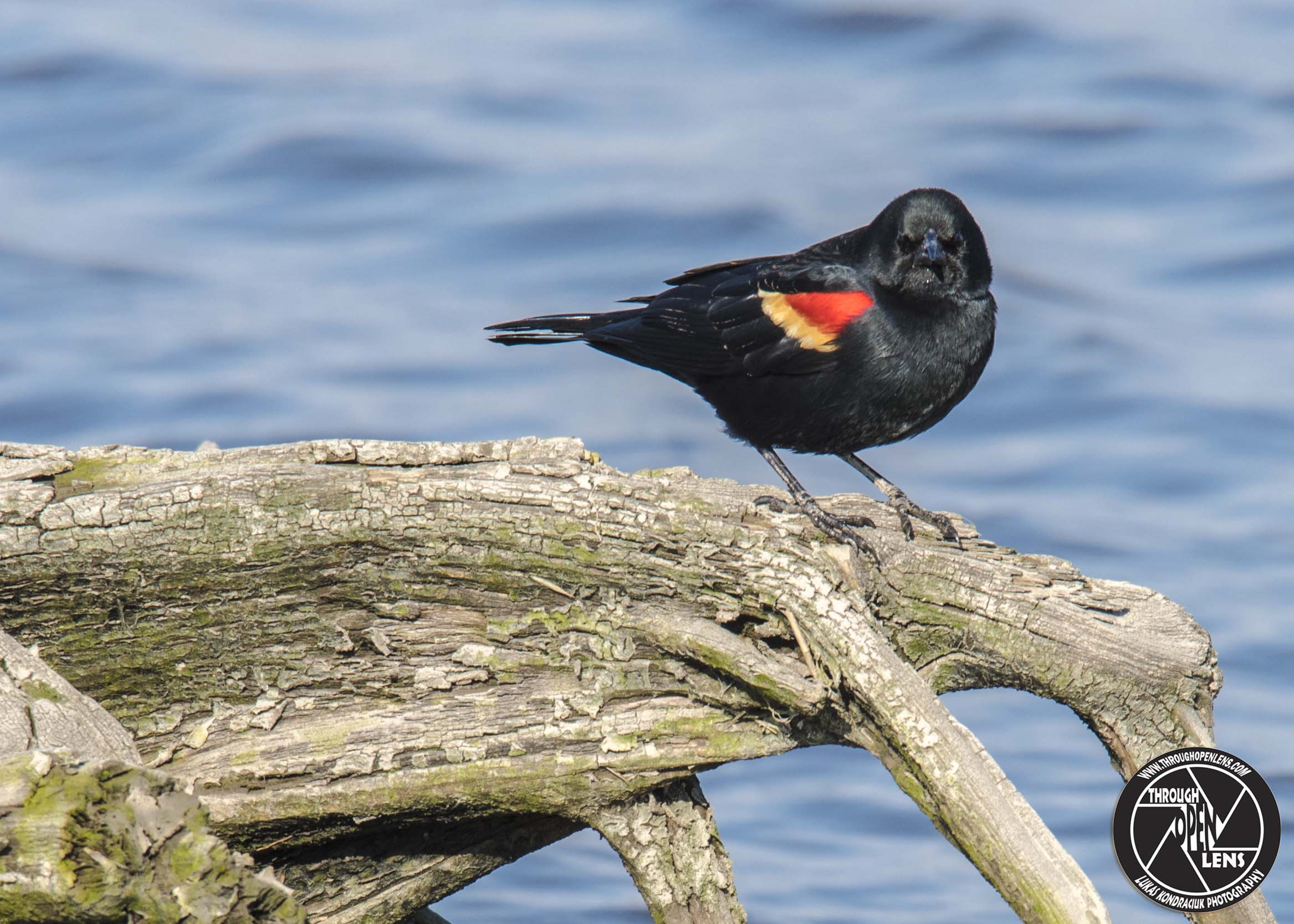
I Don’t Need Anger Management I Need People To Stop Pissing Me Off.

F/9.0, 1/320, ISO 320.

Red-winged Blackbird 

What did the ghost eat at his birthday party?

I scream

Interesting Fact: Male Red-winged Blackbirds spend much of the breeding season sitting on a high perch over their territories and singing their hearts out. Females tend to slink through reeds and grasses collecting food or nest material. Both males and females defend nests from intruders and predators. ( https://www.allaboutbirds.org/guide/Red-winged_Blackbird/lifehistory )

Always Be Yourself… Unless You Can Be A Duck… Then Always Be A Duck.

F/8.0, 1/250, ISO 200. 

Red-breasted Merganser 

Two men meet on opposite sides of a river.

One shouts to the other, “I need you to help me get to the other side!”

The other guy replies, “You’re on the other side!”

Interesting Fact: Red-breasted Mergansers are among the fastest flying ducks, clocking speeds of up to 81 miles per hour.  ( https://www.allaboutbirds.org/guide/Red-breasted_Merganser/lifehistory )


Just Checking If Gravity Still Works.

F/10.0, 1/400, ISO 200.

Great Egret

What did the inventor of the door knocker win?

The no bell prize.

Interesting Fact:  The male builds a nest platform from long sticks and twigs before pairing up with a female, and then both members of the pair may collaborate to complete the nest, though the male sometimes finishes it himself. The nest is up to 3 feet across and 1 foot deep. It is lined with pliable plant material that dries to form a cup structure. They don’t typically reuse nests from year to year. ( https://www.allaboutbirds.org/guide/Great_Egret/lifehistory )