Touchdown!

F/11.0, 1/500, ISO 400.

Ring-billed Gull 

What should you do if you’re afraid of elevators?

Take steps to avoid them.

Interesting Fact: Ring-billed Gulls are strong, graceful flyers. They can race along at more than 40 miles per hour, and they’re adept at snatching food from the air. ( https://www.allaboutbirds.org/guide/Ring-billed_Gull/lifehistory )

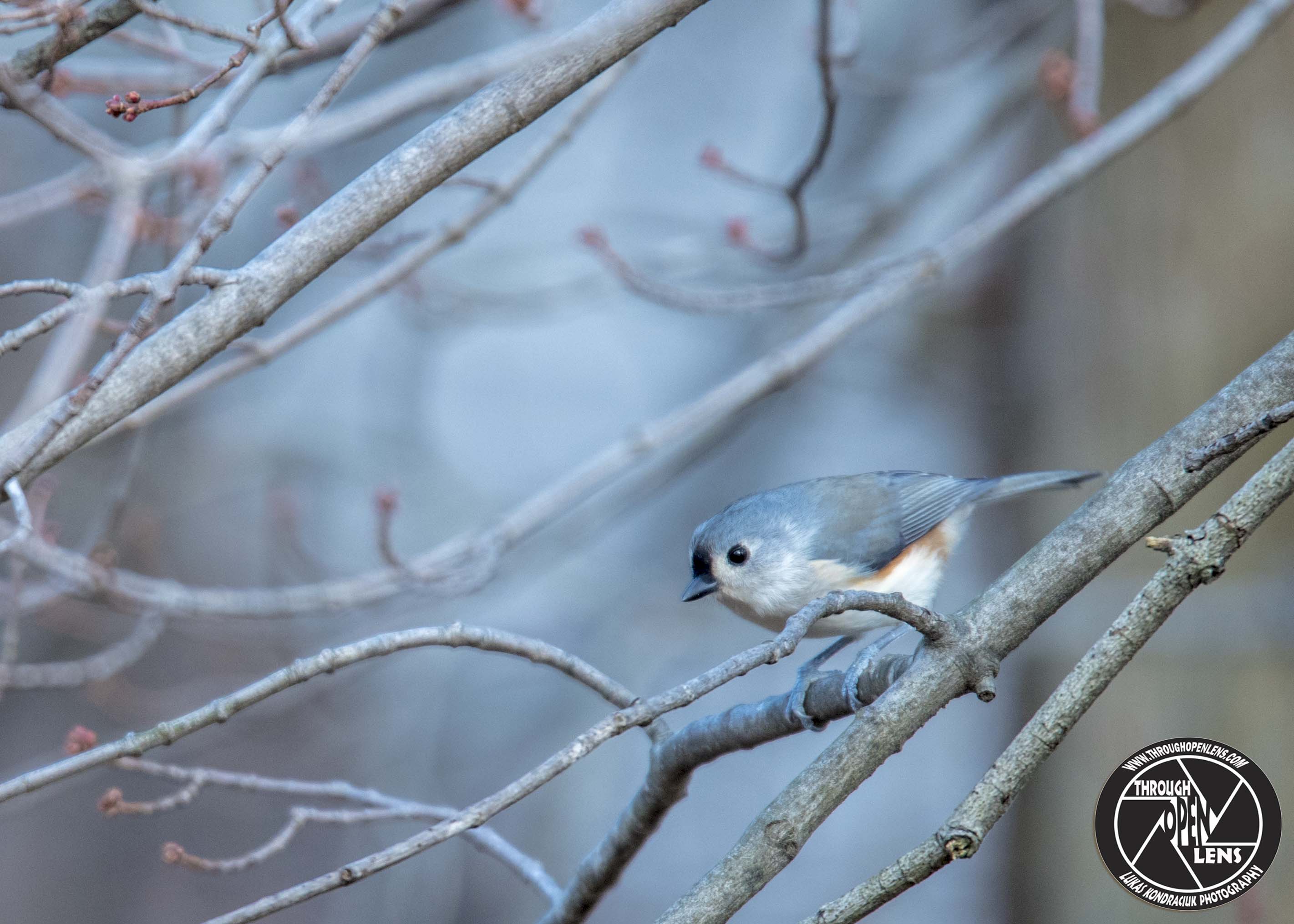
Get Ready, Set, Goooooooo!!!!!

F/7.1, 1/160, ISO 500.

Tufted Titmouse 

Why did the artist bring a pencil and paper to a duel?

He wanted to draw his weapon.

Interesting Fact: Tufted Titmice flit from branch to branch of the forest canopy looking for food, often in the company of other species including nuthatches, chickadees, kinglets, and woodpeckers. When they find large seeds, such as the sunflower seeds they take from bird feeders, titmice typically hold the seed with their feet and hammer it open with their beaks. ( https://www.allaboutbirds.org/guide/Tufted_Titmouse/lifehistory )


A Little Mud Never Hurt Anyone!

F/8.0, 1/250, ISO 320.

Green-Winged Teal

Why shouldn’t you let Elsa hold your balloon?

Because she will let it go, let it gooooooooo

Interesting Fact: Green-winged Teal eat mainly aquatic invertebrates and seeds. They feed in shallow water, near shorelines, on mudflats, and in agricultural fields, taking advantage of whatever foods are most abundant. Migrating and wintering birds may feed at night or during the day. On the water they dabble along the surface where they pluck or strain seeds and invertebrates, and dip their head and neck or tip up to reach submerged food. ( https://www.allaboutbirds.org/guide/Green-winged_Teal/lifehistory )


Cause I’m A Wanderer!

F/7.1, 1/200, ISO 400. 

White-breasted Nuthatch

What was the murderer’s last request to the priest as he sat in the electric chair?

Will you hold my hand?

Interesting Fact: White-breasted Nuthatches forage up, down, and sideways over tree trunks and around large branches. They often (though not always) start high in trees and move down them head first, pausing to crane their necks up and back, toward the horizontal, for a look around. They probe into bark crevices or chip away at wood to find food. ( https://www.allaboutbirds.org/guide/White-breasted_Nuthatch/lifehistory )


Let’s Go!

F/11.0, 1/500, ISO 400.

Black-capped Chickadee

Two snakes are talking.

One of them turns to the other and asks, “Are we venomous?”

The other replays, “Yes, why?…”

“I just bit ma lip.”

Interesting Fact: Most birds that associate with chickadee flocks respond to chickadee alarm calls, even when their own species doesn’t have a similar alarm call. ( https://www.allaboutbirds.org/guide/Black-capped_Chickadee/lifehistory )

Quack Head!

F/6.3, 1/1000, ISO 400.

Bufflehead

Why did the scientist take out his doorbell?

He wanted to win the no-bell prize.

Interesting Fact: The oldest Bufflehead on record was at least 18 years and 8 months old. It was caught and re-released by a bird bander in New York in 1975. ( https://www.allaboutbirds.org/guide/Bufflehead/lifehistory )

.

I Can’t Stop Watching You!

F/10.0, 1/400, ISO 400.

Peregrine Falcon

What does a teddy bear say when you offer it a sandwich?

“No thanks, I’m stuffed”

Interesting Fact: Peregrine Falcons are very strong fliers and often reported to be the fastest bird in the world. Their average cruising flight speed is 24 to 33 mph, increasing to 67 mph when in pursuit of prey. When stooping, or dropping on prey with their wings closed, it’s been calculated that Peregrine Falcons can achieve speeds of 238 mph. One researcher studied trained Peregrine Falcons while skydiving and described their body position while diving at 150 mph and 200 mph. ( https://www.allaboutbirds.org/guide/Peregrine_Falcon/lifehistory )


I Have A Funny Feeling It’s Going To Be One Of Those Days!

F/5.6, 1/125, ISO 250.

Black Vulture

A farmer goes out and buys a new, young rooster. As soon as he brings him home, the
young rooster rushes and screws all 150 of the farmers hens. The farmer is impressed.
At lunchtime, the young rooster again screws all 150 hens. The farmer is not just impressed anymore,he is worried. Next morning,not only is the rooster screwin…g the hens but he is screwing the turkeys,ducks even the cow.
Later farmer looks out into the barnyard and finds the rooster stretched out, limp as a rag, his eyes closed, dead and vultures circling overhead.
The farmer runs out, looks down at the young roosters limp body and says: “You deserved it, you horny bastard!”
And the young rooster opens one eye, points up at the vultures with his wing, and says, Shhhh!,they are about to land.”

Interesting Fact: One-on-one at a carcass, Black Vultures lose out to the slightly larger Turkey Vulture. But flocks of Black Vultures can quickly take over a carcass and drive the more solitary Turkey Vultures away. ( https://www.allaboutbirds.org/guide/Black_Vulture/lifehistory )

Come Out Come Out Wherever You Are?!

F/9.0, 1/320, ISO 400.

Red-tailed Hawk

Which runs faster, hot or cold?

HOT. Everyone can catch cold.

Interesting Fact: Red-tailed Hawks are large, sharp-taloned birds that can be aggressive when defending nests or territories. They frequently chase off other hawks, eagles, and Great Horned Owls. Courting birds fly with legs hanging beneath them, or chase and swoop after each other, sometimes locking talons. Mated pairs typically stay together until one of the pair dies. ( https://throughopenlens.com/tag/red-tailed-hawk/ )

Don’t Rush Me I’m Waiting For The Last Minute!

F/7.1, 1/200, ISO 800.

Belted Kingfisher

Why can’t you write with a broken pencil?

Because it’s pointless.

Interesting Fact: During breeding season the Belted Kingfisher pair defends a territory against other kingfishers. A territory along a stream includes just the streambed and the vegetation along it, and averages 0.6 mile long. The nest burrow is usually in a dirt bank near water. The tunnel slopes upward from the entrance, perhaps to keep water from entering the nest. Tunnel length ranges from 1 to 8 feet. ( https://www.allaboutbirds.org/guide/Belted_Kingfisher )