I Forgot My Swimsuit!

F/5.6, 1/500, ISO 200.

Horned Grebe

What do you get when you’re on you hands and knees?

You get very dirty.

Interesting Fact: A sleeping or resting Horned Grebe puts its neck on its back with its head off to one side and facing forward. It keeps one foot tucked up under a wing and uses the other one to maneuver in the water. Having one foot up under a wing makes it float with one “high” side and one “low” side. (https://www.allaboutbirds.org/guide/Horned_Grebe/overview# ).


The Juice Is Worth The Squeeze!

F/11.0, 1/500, ISO 320.

House Finch

What do you call a fake noodle?

An impasta.

Interesting Fact: A highly social bird, the House Finch is rarely seen alone outside of the breeding season, and may form flocks as large as several hundred birds. House Finches feed mainly on the ground or at feeders or fruiting trees. At rest, they commonly perch on the highest point available in a tree, and flocks often perch on power lines. ( https://www.allaboutbirds.org/guide/House_Finch/lifehistory )

Quack Like You Mean It!

F/14.0, 1/500, ISO 800.

Black Scoter

This guy went to school and he asked
“May I use the bathroom?”
The teacher replied, ” no not unless you say your abc’s.”
The guy said “a b c d e f g h i j k l m n o q r s t u v w x y z.”
The teacher asked “Where’s the p?
He replied, ” running down my leg!”

Interesting Fact:  The Black Scoter occasionally does a “Wing-flap” display while swimming, flapping its wings with its body held up out of the water. Unlike other scoters, it almost always punctuates a Wing-flap with a characteristic downward thrust of head, as if its neck were momentarily broken. Surf and White-winged scoters keep their heads and bills pointing more or less above the horizontal throughout a Wing-flap.  ( https://www.allaboutbirds.org/guide/Black_Scoter/lifehistory )

Come Swim With Me!

F/5.6, 1/500, ISO 250.

Horned Grebe

What is a witch’s favorite subject in school?

Spelling.

Interesting Fact:  Like most grebes, the small chicks of the Horned Grebe frequently ride on the backs of their swimming parents. The young ride between the wings on the parent’s back, and may even go underwater with them during dives. ( https://www.allaboutbirds.org/guide/Horned_Grebe/lifehistory )

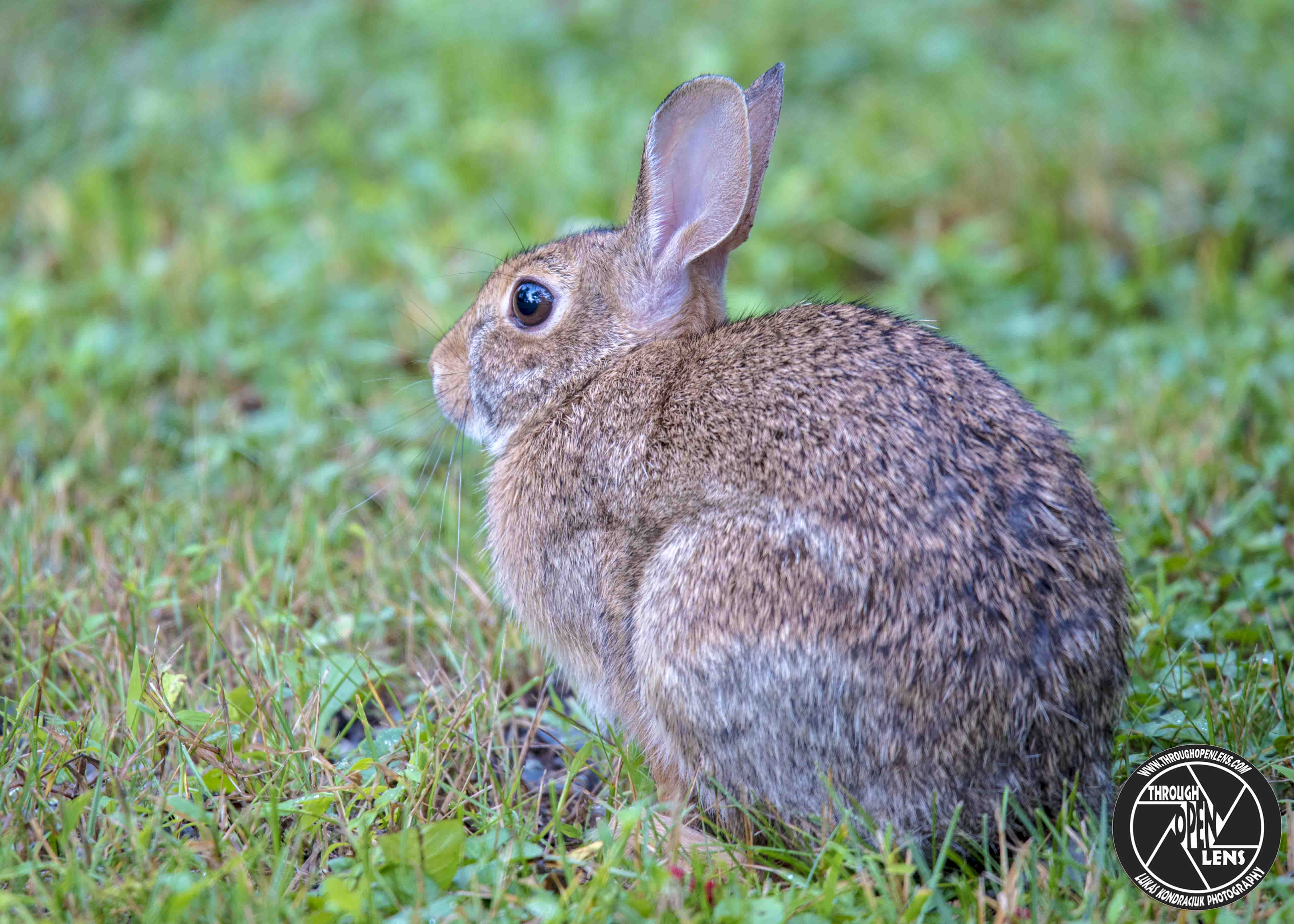
I Said A Hip Hop The Hippity To The Hip Hip Hop!

F/6.3, 1/100, ISO 400.

Eastern Cottontail Rabbit

Teacher:  Why are you late?

Student:  Because of the sign.

Teacher:  What sign?

Student:  The one that says, “School Ahead, Go Slow. ”  That’s what I did.

Interesting Fact: Eastern Cottontail Rabbit When chased, it runs in a zigzag pattern, running up to 18 mph (29 km/h). ( https://en.wikipedia.org/wiki/Eastern_cottontail )

Shhhh… I’m Hiding From Stupid People!

F/5.6, 1/500, ISO 200.

Great Egret 

Why did the boy take a ladder to school?

It was a high school.

Interesting Fact: The male builds a nest platform from long sticks and twigs before pairing up with a female, and then both members of the pair may collaborate to complete the nest, though the male sometimes finishes it himself. The nest is up to 3 feet across and 1 foot deep. It is lined with pliable plant material that dries to form a cup structure. They don’t typically reuse nests from year to year. ( https://www.allaboutbirds.org/guide/Great_Egret/lifehistory )

My Life Is So Much More Interesting Inside My Head

F/10.0, 1/400, ISO 400.

Ruby-crowned Kinglet

Four high school boys afflicted with spring fever skipped morning classes. After lunch they reported to the teacher that they had a flat tire.

Much to their relief she smiled and said, “Well, you missed a test today so take seats apart from one another and take out a piece of paper.”

Still smiling, she waited for them to sit down. Then she said: “First Question: Which tire was flat?”

Interesting Fact: Ruby-crowned Kinglets breed across far northern North America as well as the western mountains. Most migrate to the southern and southwestern United States and Mexico for the winter—but some mountain populations in the West simply move to lower elevations during the cold months. ( https://www.allaboutbirds.org/guide/Ruby-crowned_Kinglet/maps-range )

Your Worries Will Float Away

gadwall

F/6.3,1/250, ISO 400.

Gadwall

Why are bad school grades like a shipwreck in the Arctic Ocean?

They’re both below C level!

Interesting Fact: Gadwall have increased in numbers since the 1980s, partly because of conservation of wetlands and adjacent uplands in their breeding habitat through the Conservation Reserve Program and the North American Waterfowl Management Plan. Their habit of nesting on islands within marshes gives them some protection from predators. ( https://www.allaboutbirds.org/guide/Gadwall/lifehistory )

If You Talking About My Neck, I’m Not Responsible For What Happens Next…

F/9.0, 1/320, ISO 160.

Great Egret 

Why are pirates so mean?

I don’t know, they just arrrrrrrrr!

Interesting Fact: Males choose the display areas, where nests are later constructed. The nest itself is up to 100 feet off the ground, often over water, usually in or near the top of a shrub or tree such as a redwood, tamarisk, live oak, eastern redcedar, yaupon holly, wax myrtle, mangrove, Australian pine, buttonwood, Brazilian pepper, black willow, or privet. Great Egrets occasionally nest on the ground or on artificial platforms. ( https://www.allaboutbirds.org/guide/Great_Egret/lifehistory )

Don’t You Flap Your Wings At Me!

F/9.0, 1/320, ISO 320.

Hooded Merganser

In School

Teacher: “If I gave you 2 cats and another 2 cats and another 2, how many would you have?”
Bob: “Seven.”
Teacher: “No, listen carefully… If I gave you two cats, and another two cats and another two, how many would you have?”
Bob: “Seven.”
Teacher: “Let me put it to you differently. If I gave you two apples, and another two apples and another two, how many would you have?”
Bob: “Six.”
Teacher: “Good. Now if I gave you two cats, and another two cats and another two, how many would you have?”
Bob: “Seven!”
Teacher: “Bob, where in the heck do you get seven from?!”
Bob: “Because I’ve already got a freaking cat!”

Interesting Fact:  The Hooded Merganser is the second-smallest of the six living species of mergansers (only the Smew of Eurasia is smaller) and is the only one restricted to North America. ( https://www.allaboutbirds.org/guide/Hooded_Merganser/lifehistory )