Which Way Do We Go?

F/9.0, 1/320, ISO 320.

Ruddy Ducks

Where do sheep go to get haircuts?

To the Baa Baa shop!

Interesting Fact: Ruddy Ducks spend the vast majority of their time on the water. They are fast fliers but have little maneuverability in the air, and they tend to swim and dive rather than fly to escape predators—which include Red-tailed Hawks, Great Horned Owls, mink, raccoons, and red foxes.  ( https://www.allaboutbirds.org/guide/Ruddy_Duck/lifehistory )

Bellllyyyy Floooop!

F/11.0, 1/500, ISO 320.

Bufflehead Duck

Why are hairdressers never late for work?

Because they know all the short cuts!

Interesting Fact: Bufflehead nest only in cavities, using holes dug by Northern Flickers and sometimes Pileated Woodpeckers (as well as artificial nest boxes). In the summer, females that are too young to breed, or whose nests have failed, fly around in noisy groups and scope out the available nest holes for the following breeding season. Just before laying, females make more secretive flights to prospective holes, either alone or with their mates. They usually choose cavities in poplar or aspen trees, except in California where they often use pine trees. ( https://www.allaboutbirds.org/guide/Bufflehead/lifehistory )

If You Dare Come A Little Closer!

F/8.0, 1/1000, ISO 200.

Black-crowned Night-Heron

What did the big chimney say to the little chimney?

“You’re too young to smoke.”

 Interesting Fact: Some populations stay in one place year-round, while others disperse short distances of 5–60 miles. Others migrate farther, such as from Massachusetts to Florida and the Caribbean, or from Alberta to Mexico and Cuba. Migrants follow the coast or the Mississippi River flyway. ( https://www.allaboutbirds.org/guide/Black-crowned_Night-Heron/lifehistory )

Easter Is The Only Time Of The Year When It’s Perfectly Safe To Put All Your Eggs In One Basket.

Happy Easter Everyone! 

F/8.0, 1/250, ISO 250.

Desert Cottontail Rabbit

What did the Easter Egg say to the boiling water?

It’s going to take awhile to get me hard I just got layed by some chick!

Interesting Fact:  Many desert animals prey on cottontails, including birds of prey, mustelids, the coyote, the bobcat, the lynx, wolves, mountain lions, snakes, weasels, humans, and even squirrels, should a cottontail be injured or docile from illness.[22] Alien species, such as cats and dogs, are also known predators, and also pose a threat.[12] Southwestern Native Americans hunted them for meat but also used their fur and hides. It is also considered a game species, due to which it is hunted for sport.[12] The desert cottontail’s normal behavior upon spotting a potential predator is to freeze in place in an attempt to avoid being detected. If it determines that it is in danger, it will flee the area by hopping away in a zigzag pattern.[23] Cottontails can reach speeds of over 30 km/h (19 mph). When defending itself against small predators or other desert cottontails, it will nudge with its nose, or slap with its front paws, usually preceded by a hop straight upwards as high as two feet when threatened or taken by surprise. ( https://en.wikipedia.org/wiki/Desert_cottontail )

Buck Off!

F/6.3, 1/125, ISO 640.

White-Tailed Deer

I give a dead battery away today…

Free of charge!

Interesting Fact: Males regrow their antlers every year. About one in 10,000 females also has antlers, although this is usually associated with freemartinism.https://en.wikipedia.org/wiki/White-tailed_deer

It Will Be A Good Day As Long As You Won’t Hit Or Bite Anyone!

F/6.3, 1/80, ISO 320.

Common Yellowthroat

Why is Peter Pan always flying?

Because he neverlands.

Interesting Fact: Each male normally has only one mate in his territory during a breeding season. However, a female’s mating calls often attract other males, and she may mate with them behind her mate’s back. ( https://www.allaboutbirds.org/guide/Common_Yellowthroat/ )

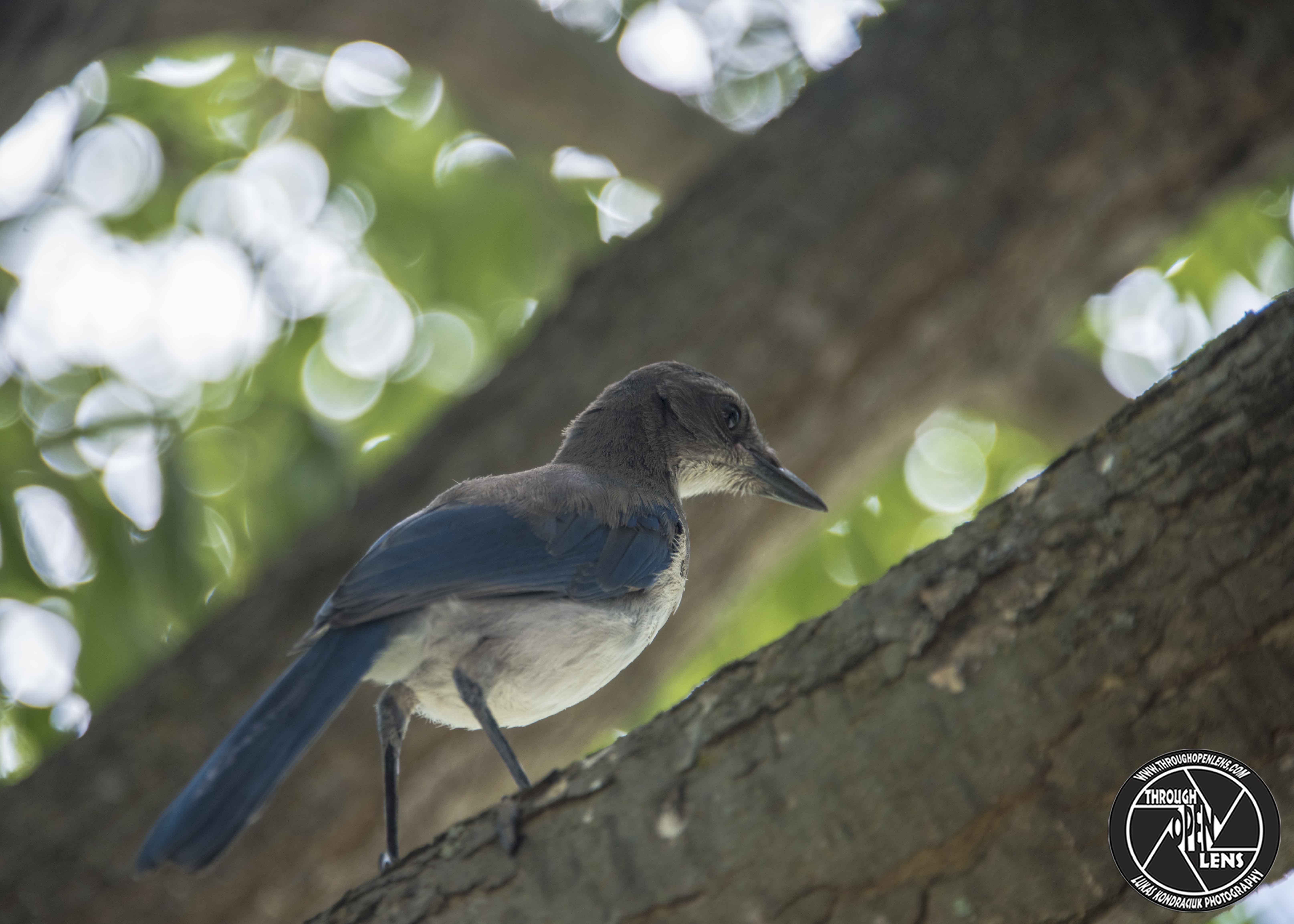
Blue Looks Good On You!

F/5.6, 1/160, ISO 320.

California Scrub-Jay

Why did Papa Smurf send Smurfette to see a doctor???

She was always feeling blue…

Interesting Fact: Look closely, and you’ll see an intriguing difference between the California Scrub-Jay and its close relative, Woodhouse’s Scrub-Jay. The bill of a California Scrub-Jay is stout and hooked, giving it extra power and grip as the birds hammer open acorns in their oak woodland habitats. By comparison, Woodhouse’s have thinner, more pointed bills that nimbly reach deep into pinyon pine cones to pull out the pine nuts inside. ( https://www.allaboutbirds.org/guide/California_Scrub-Jay )

Life Is Too Short To Have Boring Hair!

F/9.0, 1/320, ISO 200.

Polish chicken

What do you get when a chicken lays an egg on top of a barn?

An eggroll!

Interesting Fact: 

The Polish or Poland is a European breed of crested chickens known for its remarkable crest of feathers. The oldest accounts of these birds come from The Netherlands; their exact origins are unknown, however.[1] In addition to combs, they are adorned with large crests that nearly cover the entirety of the head. This crest limits their vision, and as a result can affect their temperament. Thus, though normally tame, they may be timid and easily frightened.  ( https://en.wikipedia.org/wiki/Polish_chicken

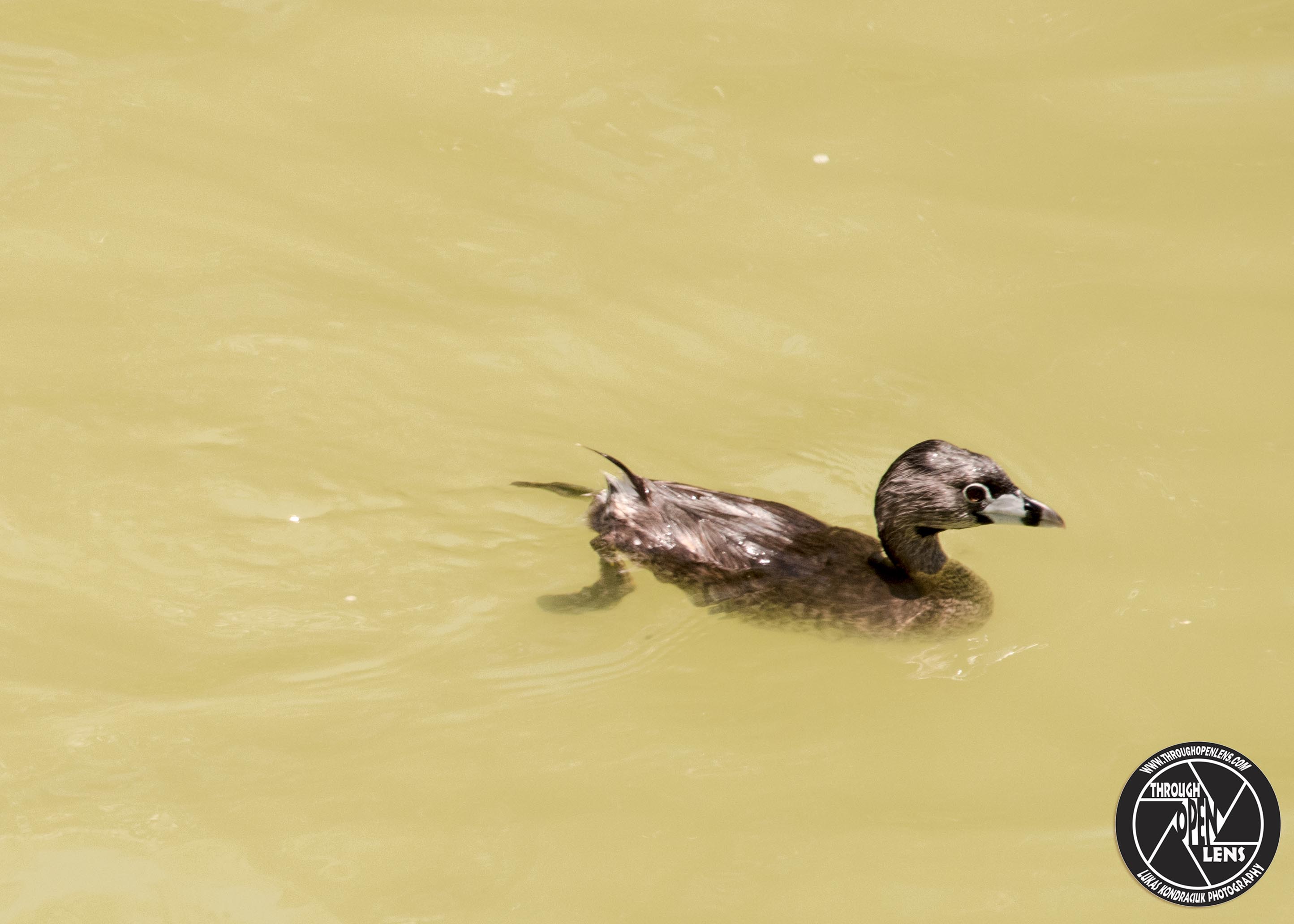
I Forgot My Swimsuit!

F/7.1, 1/200, ISO 400.

Pied-Billed Grebe

Breaking news!

Energizer Bunny arrested – charged with battery!

Interesting Fact: Pied-billed Grebes are fairly poor fliers and typically stay on the water—although rare individuals have managed to fly as far as the Hawaiian Islands, Europe, the Azores, and the Canary Islands. ( https://www.allaboutbirds.org/guide/Pied-billed_Grebe/ )

When I Am Knocking, You Better Open Up!

F/9.0, 1/320, ISO 250.

Red-Bellied Woodpecker

A police officer caught two kids playing with a firework and a car battery.

He charged one and let the other one off.

Interesting Fact: A Red-bellied Woodpecker can stick out its tongue nearly 2 inches past the end of its beak. The tip is barbed and the bird’s spit is sticky, making it easier to snatch prey from deep crevices. Males have longer, wider-tipped tongues than females, possibly allowing a breeding pair to forage in slightly different places on their territory and maximize their use of available food.  ( https://www.allaboutbirds.org/guide/Red-bellied_Woodpecker/lifehistory )