Im On Top Of The World!

F/6.3, 1/100, ISO 250.

Chipmunk

Why was the chipmunk late for work?

Traffic was NUTS.

Interesting Fact: Their shrill, repeated, birdlike chirp is usually made upon sensing a threat but is also thought to be used as a mating call by females. Chipmunks are solitary creatures and normally ignore one another except during the spring, when mating takes place. After a 30-day gestation, a litter of two to eight is born. The young stay with their parents for two months before they begin to gather their own provisions for the winter ahead. ( https://www.nationalgeographic.com/animals/mammals/group/chipmunks/ )

Fly By!

F/10.0, 1/400, ISO 200.

Great Egret

Bobby went in to a pet shop.

Bobby: “Can I buy a goldfish?”

The Sales Guy: “Do you want an aquarium?”

Bobby: “I don’t care what star sign it is.”

Interesting Fact: The oldest known Great Egret was 22 years, 10 months old and was banded in Ohio. ( https://www.allaboutbirds.org/guide/Great_Egret )

Chill With Me

F/6.3, 1/1000, ISO 450.

American Tree Sparrow 

Why don’t skeletons fight each other?

They don’t have the guts

Interesting Fact:  Misleadingly named by European settlers reminded of Eurasian Tree Sparrows back home, American Tree Sparrows are ground birds. They forage on the ground, nest on the ground, and breed primarily in scrubby areas at or above the treeline. ( https://www.allaboutbirds.org/guide/American_Tree_Sparrow/lifehistory )

Looks Like Someone Has A Case Of The Mondays

F/7.1, 1/200, ISO 250.

Great Horned Owl

What do you call a magic owl?

HOODINI

Interesting Fact: Great Horned Owls are fierce predators that can take large prey, including raptors such as Ospreys, Peregrine Falcons, Prairie Falcons, and other owls. They also eat much smaller items such as rodents, frogs, and scorpions. ( https://www.allaboutbirds.org/guide/Great_Horned_Owl/lifehistory )

Do You Have My Quack?

F/9.0, 1/320, ISO 320.

Ruddy Duck

Did you hear about the duck with a drug problem?

He was a quackhead.

Interesting Fact:  The oldest Ruddy Duck on record was a male and at least 13 years, 7 months old. He was banded in British Columbia and 1951 and found in Oregon in 1964. ( https://www.allaboutbirds.org/guide/Ruddy_Duck )

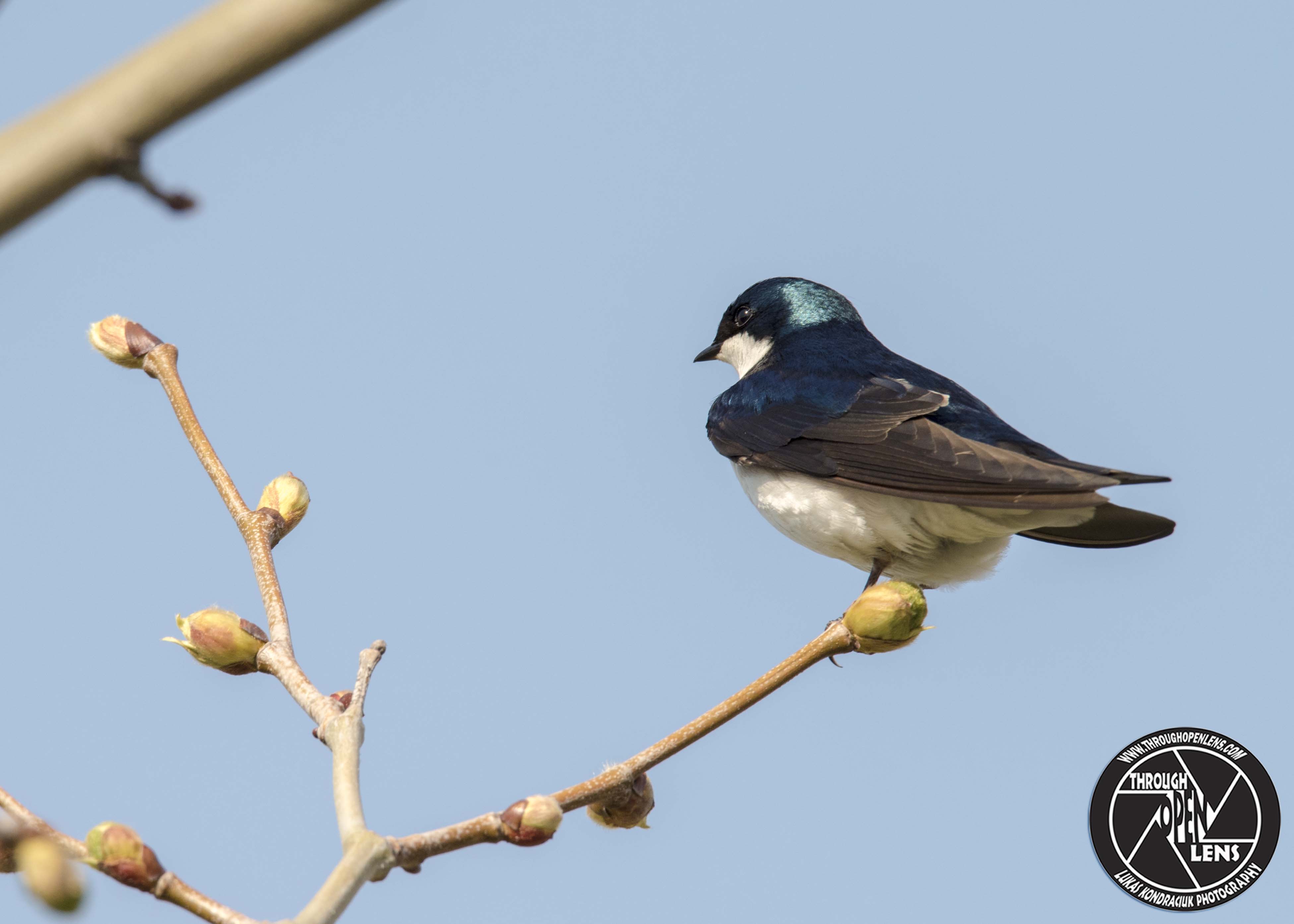
Take A Chill Pill!

F/11.0, 1/500, ISO 320.

Tree Swallow

What do you get when cross a donkey and an onion?

A piece of ass that’ll bring a tear to your eye!

Interesting Fact: Tree Swallows line their nests with feathers, and they seem to display or even play with these feathers during the early nesting season. A bird flies above the nest with a feather held in its bill; sometimes this leads to chases, and sometimes the bird drops the feather, causing an aerial free-for-all to see which bird retrieves it. ( https://www.allaboutbirds.org/guide/Tree_Swallow/lifehistory )

Stay Golden Ponyboy!

F/6.3, 1/180, ISO 320.

American Goldfinch

Who earns a living driving their customers away?

A taxi driver.

Interesting Fact: Goldfinches move south in winter following a pattern that seems to coincide with regions where the minimum January temperature is no colder than 0 degrees Fahrenheit on average. ( https://www.allaboutbirds.org/guide/American_Goldfinch )

Simon Says, Pause!

F/5.3, 1/160, IOS 800.

Great Blue Heron 

What do you call when Batman skips out on church?

Christian Bale.

Interesting Fact: Great Blue Herons have specialized feathers on their chest that continually grow and fray. The herons comb this “powder down” with a fringed claw on their middle toes, using the down like a washcloth to remove fish slime and other oils from their feathers as they preen. Applying the powder to their underparts protects their feathers against the slime and oils of swamps. ( Great Blue Heron Overview, All About Birds, Cornell Lab of Ornithology )


If You Can’t Tone It Tan It

F/11.0, 1/500, ISO 250.

Hispaniolan slider

Why did the turtle cross the road?

To get to the shell station!

Interesting Fact:  The Hispaniolan slider is a freshwater turtle. They can live on land and water, but prefer to be near freshwater.[3] These sliders are not on the endangered list, but are considered vulnerable. ( https://en.wikipedia.org/wiki/Hispaniolan_slider )

I Don’t Give A Fox!

F/6.3, 1/20, ISO 400.

Red Fox

What did one shark say to the other after eating a clown fish?

“Not only does it look funny, but it tastes funny too.”

Interesting Fact: Red foxes live around the world in many diverse habitats including forests, grasslands, mountains, and deserts. They also adapt well to human environments such as farms, suburban areas, and even large communities. The red fox’s resourcefulness has earned it a legendary reputation for intelligence and cunning. ( https://www.nationalgeographic.com/animals/mammals/r/red-fox/ )