Don’t Forget To Duck!

F/14.0, 1/800, ISO 640.

Northern Shoveler 

To whom do fish go to borrow money?

The loan shark!

Interesting Fact: They are fairly social ducks, occurring in groups with shovelers and other dabbling ducks, especially during the winter. During the breeding season, they are less tolerant of other shovelers encroaching on their territory. Defensive males often chase intruders on the water and in the air. ( https://www.allaboutbirds.org/guide/Northern_Shoveler/lifehistory )


In My Defense, I Was Left Unsupervised.

F/9.0, 1/320, ISO 640.

American Goldfinch

A unit in sex education was about to begin, and each student had to bring in a permission slip in order to take it.

Little Tommy handed in his slip and explained to the teacher, “My mom says I can take the course as long as there’s no homework.”

Interesting Fact: Goldfinches move south in winter following a pattern that seems to coincide with regions where the minimum January temperature is no colder than 0 degrees Fahrenheit on average. ( https://www.allaboutbirds.org/guide/American_Goldfinch )


DON’T PANIC!

F/5.6, 1/500, ISO 360.

Canada Goose 

A man goes to his doctor because he’s been feeling very ill for days. The doctor gives him several sets of pills.

The doctor instructs; “Take the green pill with two big glasses of water when you get up. An hour later, take the white pill with another glass of water. Take the blue pill with a big glass of water after lunch. Mid afternoon, take the orange pill with plenty of water, and repeat that at dinner. Then, just before going to bed, take the red pill with several big glasses of water.”

The man is alarmed at huge volume of medicine he has been given to take, and nervously asks, “What’s the diagnosis? What’s wrong with me?”

The doctor says, “You’re dehydrated.”

Interesting Fact: The “giant” Canada Goose, Branta canadensis maxima, bred from central Manitoba to Kentucky but was nearly driven extinct in the early 1900s. Programs to reestablish the subspecies to its original range were in many places so successful that the geese have become a nuisance in many urban and suburban areas.  ( https://www.allaboutbirds.org/guide/Canada_Goose/lifehistory )

Fast and Furry-ous!

F/7.1, 1/200, ISO 250.

Chipmunk

Why was the chipmunk late for work?

Traffic was NUTS.

Interesting Fact: Depending on species, chipmunks can be gray to reddish-brown in color with contrasting dark and light stripes on the sides of their face and across their back and tail. They range in size from the least chipmunk, which, at 7.2 to 8.5 inches and 1.1 to 1.8 ounces, is the smallest chipmunk, to the eastern chipmunk, which grows up to 11 inches and weighs as much as 4.4 ounces. ( http://www.nationalgeographic.com/animals/mammals/group/chipmunks/ )


It Seems To Me The Vultures Have Stopped Circling.

F/6.3, 1/60, ISO 400.

Turkey Vultures

What do you call security guards working outside Samsung shops?

Guardians of the Galaxy.

The Turkey Vulture’s distinctive slow, teetering flight style probably helps the bird soar at low altitudes, where it is best able to use its nose to find carrion. At other times they may soar high on thermals and form mixed flocks or kettles. On the ground they move with ungainly hops and are less agile than Black Vultures. Often, especially in the morning, they can be seen standing erect, wings spread in the sun, presumably to warm up, cool off, or dry off. ( https://www.allaboutbirds.org/guide/Turkey_Vulture/lifehistory )

Peck Me If You Can!

F/9.0, 1/1250, ISO 800.

Red-Bellied Woodpecker

Why did the owl, owl?

Because the woodpecker would peck ‘er!

Interesting Fact: A Red-bellied Woodpecker can stick out its tongue nearly 2 inches past the end of its beak. The tip is barbed and the bird’s spit is sticky, making it easier to snatch prey from deep crevices. Males have longer, wider-tipped tongues than females, possibly allowing a breeding pair to forage in slightly different places on their territory and maximize their use of available food. ( https://www.allaboutbirds.org/guide/Red-bellied_Woodpecker/lifehistory )


Waiting Here For You

F/13.0, 1/640, ISO 320.

Great Black-backed Gull

Four high school boys afflicted with spring fever skipped morning classes. After lunch they reported to the teacher that they had a flat tire.

Much to their relief she smiled and said, “Well, you missed a test today so take seats apart from one another and take out a piece of paper.”

Still smiling, she waited for them to sit down. Then she said: “First Question: Which tire was flat?”

Interesting Fact: The Great Black-backed Gull is one of many bird species whose feathers were used for fashionable clothing in the 1800s. After the demise of the feather trade in the early 1900s, Great Black-backed Gull populations increased and spread farther south. Garbage dumps and other sources of human refuse have contributed to their range expansion. ( https://www.allaboutbirds.org/guide/Great_Black-backed_Gull/lifehistory )

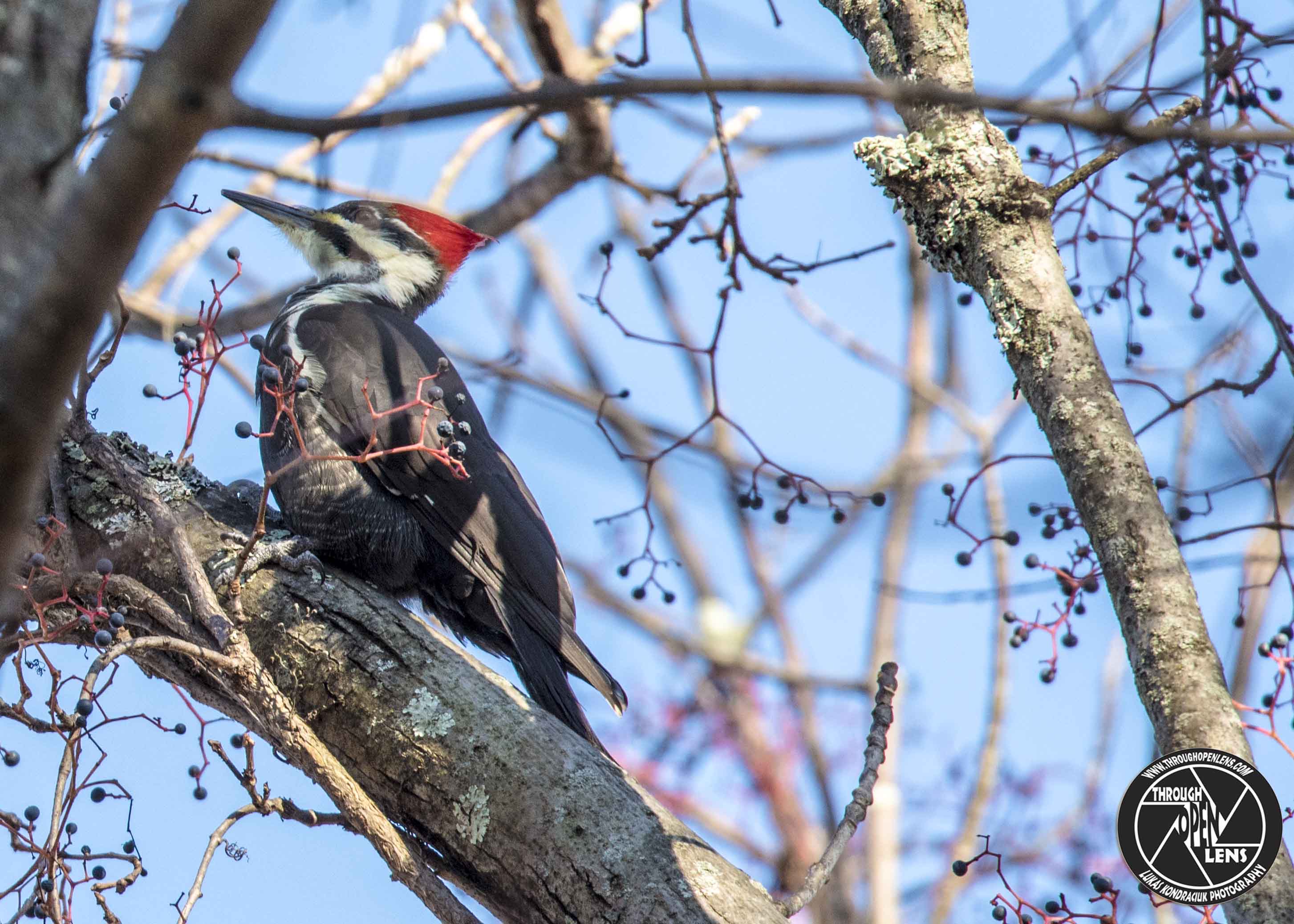
Peck Like There Is No Tomorrow!

F/9.0, 1/320, ISO 400.

Pileated Woodpecker 

Why do mummies make great spies?

They’re good at keeping things under wraps.

Interesting Fact: Pileated Woodpeckers forage in large, dead wood—standing dead trees, stumps, or logs lying on the forest floor. They make impressive rectangular excavations that can be a foot or more long and go deep inside the wood. These holes pursue the tunnels of carpenter ants, the woodpecker’s primary food. The birds also use their long, barbed tongues to extract woodboring beetle larvae (which can be more than an inch long) or termites lying deep in the wood. ( https://www.allaboutbirds.org/guide/Pileated_Woodpecker/lifehistory )

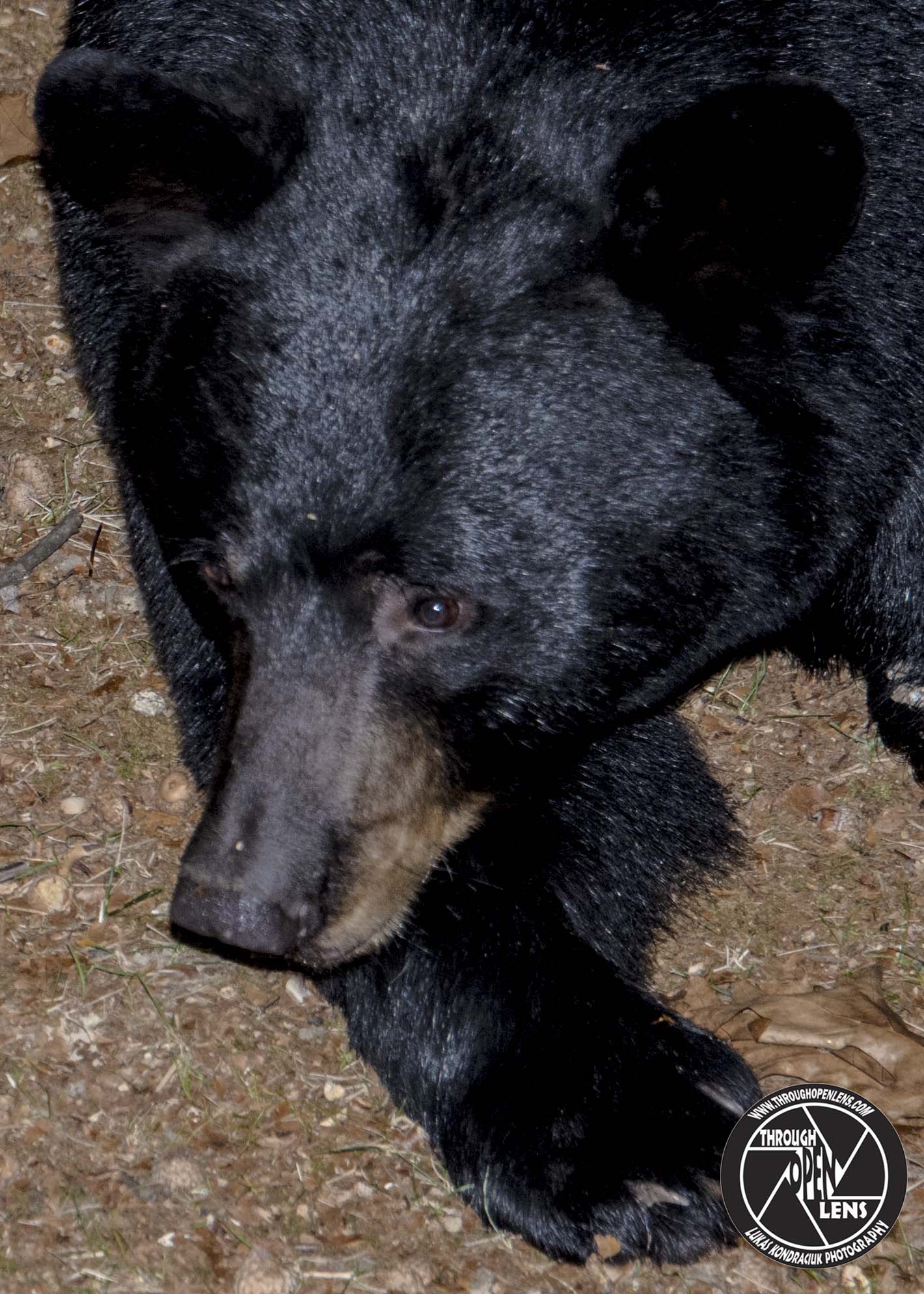
HEY BOO BOO!!!

F/6.3, 1/60. ISO 640.

American Black Bear

How does a tree get on the internet?

He logs in

Interesting Fact: American black bears have better eyesight and hearing than humans. Their keenest sense is their sense of smell, which is about seven times more sensitive than a domestic dog’s.[64] American black bears are excellent and strong swimmers, swimming for pleasure and to feed (largely on fish). ( https://en.wikipedia.org/wiki/American_black_bear )

Double Check!

F/5.6, 1/1600, ISO 400.

Mute Swan

What did the digital clock say to his mother?

Look ma, no hands!

Interesting Fact: All of the Mute Swans in North America descended from swans imported from Europe from the mid 1800s through early 1900s to adorn large estates, city parks, and zoos. Escapees established breeding populations and are now established in the Northeast, Midatlantic, Great Lakes, and Pacific Northwest of the U.S. ( https://www.allaboutbirds.org/guide/Mute_Swan )