Kris Kross Will Make You Jump Jump!

F/11.0, 1/500, ISO 200.

Snowy Egret

Why did the barber win the race?

Because he took a short cut.

Interesting Fact:  Male and female Snowy Egrets take turns incubating their eggs. As one mate takes over for the other, it sometimes presents a stick, almost as if passing a baton. Both parents continue caring for the young when they hatch. ( https://www.allaboutbirds.org/guide/Snowy_Egret/lifehistory )

I Meant To Be Good But There Were Too Many Other Options!

ruby-crowned-kinglet

F/8.0, 1/250, ISO 640.

Ruby-crowned Kinglet

teacher asked : Why are you late for school?

Bobby: Because of the Sign.

Teacher : What Sign?

Bobby : The sign that says “School ahead go slow”

Interesting Fact: The Ruby-crowned Kinglet is a tiny bird that lays a very large clutch of eggs—there can be up to 12 in a single nest. Although the eggs themselves weigh only about a fiftieth of an ounce, an entire clutch can weigh as much as the female herself. ( https://www.allaboutbirds.org/guide/Ruby-crowned_Kinglet/lifehistory )

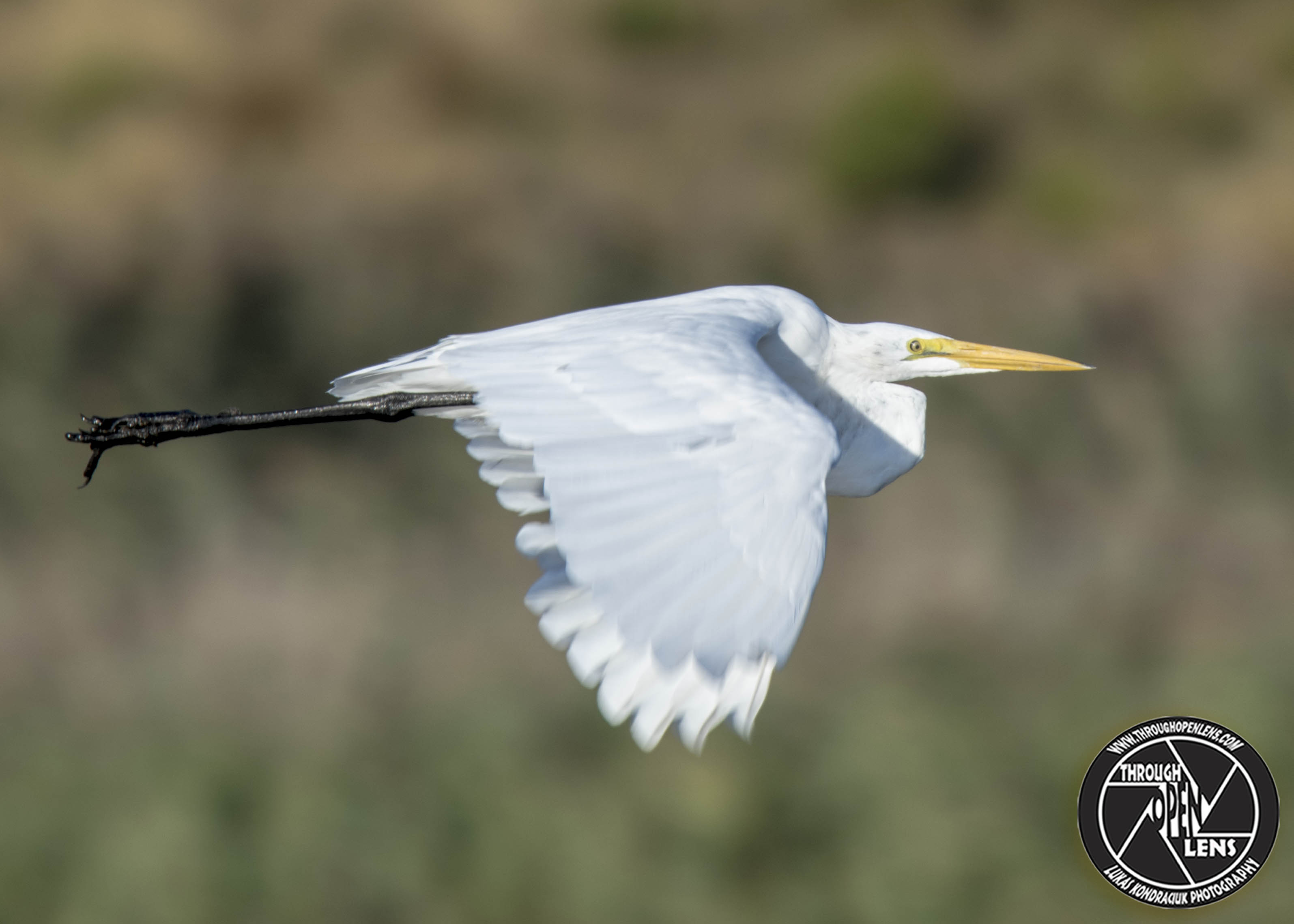
Your Wings Already Exist All You Have To Do Is Fly

F/9.0, 1/320, ISO 200.

Great Egret 

Why did the reporter rush into the ice cream shop?

He was looking for a scoop.

Interesting Fact: Not all young that hatch survive the nestling period. Aggression among nestlings is common and large chicks frequently kill their smaller siblings. This behavior, known as siblicide, is not uncommon among birds such as hawks, owls, and herons, and is often a result of poor breeding conditions in a given year. ( https://www.allaboutbirds.org/guide/Great_Egret/lifehistory )

I Can See Your Butt Quack!

F/6.3, 1/500, ISO 250.

Northern Pintail 

Why are celebrities so cool?

They have a lot of fans.

Interesting Fact: Northern Pintails migrate at night at speeds around 48 miles per hour. The longest nonstop flight recorded for a Northern Pintail was 1,800 miles. ( Northern Pintail Overview, All About Birds, Cornell Lab of Ornithology )


CAUTION! Headbanging In Progress!

F/6.3, 1/125, ISO 320.

Pileated Woodpecker 

What does a house wear?

Address.

Interesting Fact: Pileated Woodpeckers forage in large, dead wood—standing dead trees, stumps, or logs lying on the forest floor. They make impressive rectangular excavations that can be a foot or more long and go deep inside the wood. These holes pursue the tunnels of carpenter ants, the woodpecker’s primary food. ( Pileated Woodpecker Life History, All About Birds, Cornell Lab of Ornithology )

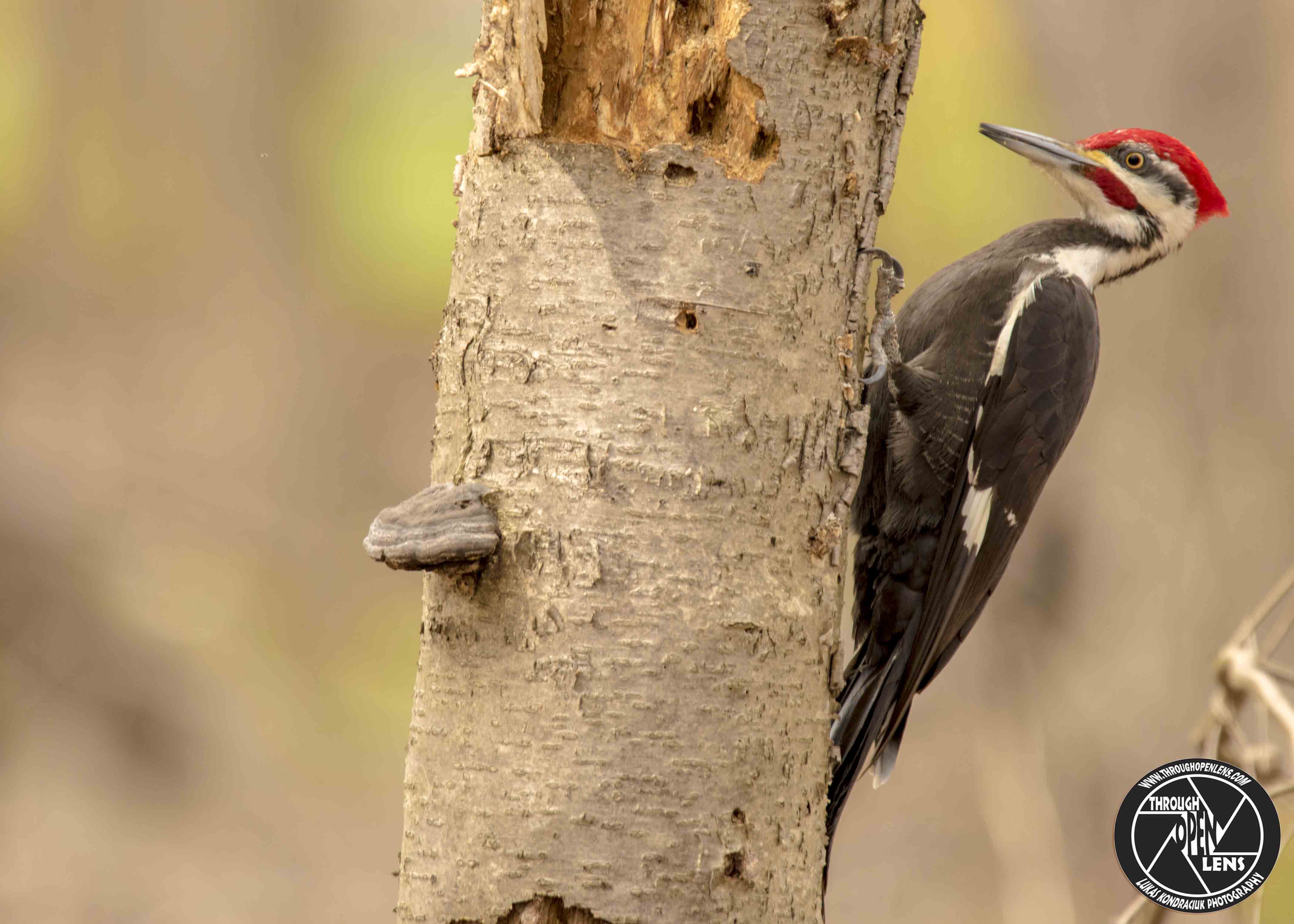
I Might Be Too Punk Rock For You.

F/ 7.1, 1/200, ISO 1600.

Pileated Woodpecker 

When is it bad luck to be followed by a black cat?

When you’re a mouse.

Interesting Fact: When hammering into this soft wood, Pileated Woodpeckers use their long necks to pull far back from the tree, then make powerful strikes with their heavy bills, pulling with their feet to increase the strength of the blow. The sound is often audible as a heavy thunk, and large chips of wood collect on the ground below. ( https://www.allaboutbirds.org/guide/Pileated_Woodpecker/lifehistory )

I Run To Burn Off The Crazy!

F/11.0, 1/500, ISO 200.

Snowy Egret

Why do mummies make excellent spies?

They’re good at keeping things under wraps.

Interesting Fact: Male Snowy Egrets fight for breeding territories, choose nest sites, and perform noisy courtship displays to attract mates. A ring of other egrets often gathers around a displaying male as he pumps his body up and down, points his bill skyward, and calls. He also performs aerial displays, including one that ends with him dropping toward the ground while tumbling around and around. ( https://www.allaboutbirds.org/guide/Snowy_Egret/lifehistory )


PAUSE For A Moment And REFLECT

F/9.0, 1/320, ISO 320.

Red breasted Merganser 

What did E.T.’s mother say to him when he got home?

Where on Earth have you been?

Interesting Fact: The female creates a depression on the ground that she covers with dead grasses, forming a shallow bowl. She plucks down feathers from her breast to help insulate the nest. ( https://www.allaboutbirds.org/guide/Red-breasted_Merganser/lifehistory )


Always Be Yourself… Unless You Can Be A Duck… Then Always Be A Duck.

F/8.0, 1/250, ISO 200. 

Red-breasted Merganser 

Two men meet on opposite sides of a river.

One shouts to the other, “I need you to help me get to the other side!”

The other guy replies, “You’re on the other side!”

Interesting Fact: Red-breasted Mergansers are among the fastest flying ducks, clocking speeds of up to 81 miles per hour.  ( https://www.allaboutbirds.org/guide/Red-breasted_Merganser/lifehistory )


I’m Not Lazy, I’m Just On My Energy Saving Mode!

F/6.3, 1/125, ISO 250.

Red-tailed Hawk 

How did the tree feel in the spring?

Releaved.

Interesting Fact: Red-tailed Hawks typically put their nests in the crowns of tall trees where they have a commanding view of the landscape. They may also nest on a cliff ledge or on artificial structures such as window ledges and billboard platforms. ( https://www.allaboutbirds.org/guide/Red-tailed_Hawk/lifehistory )