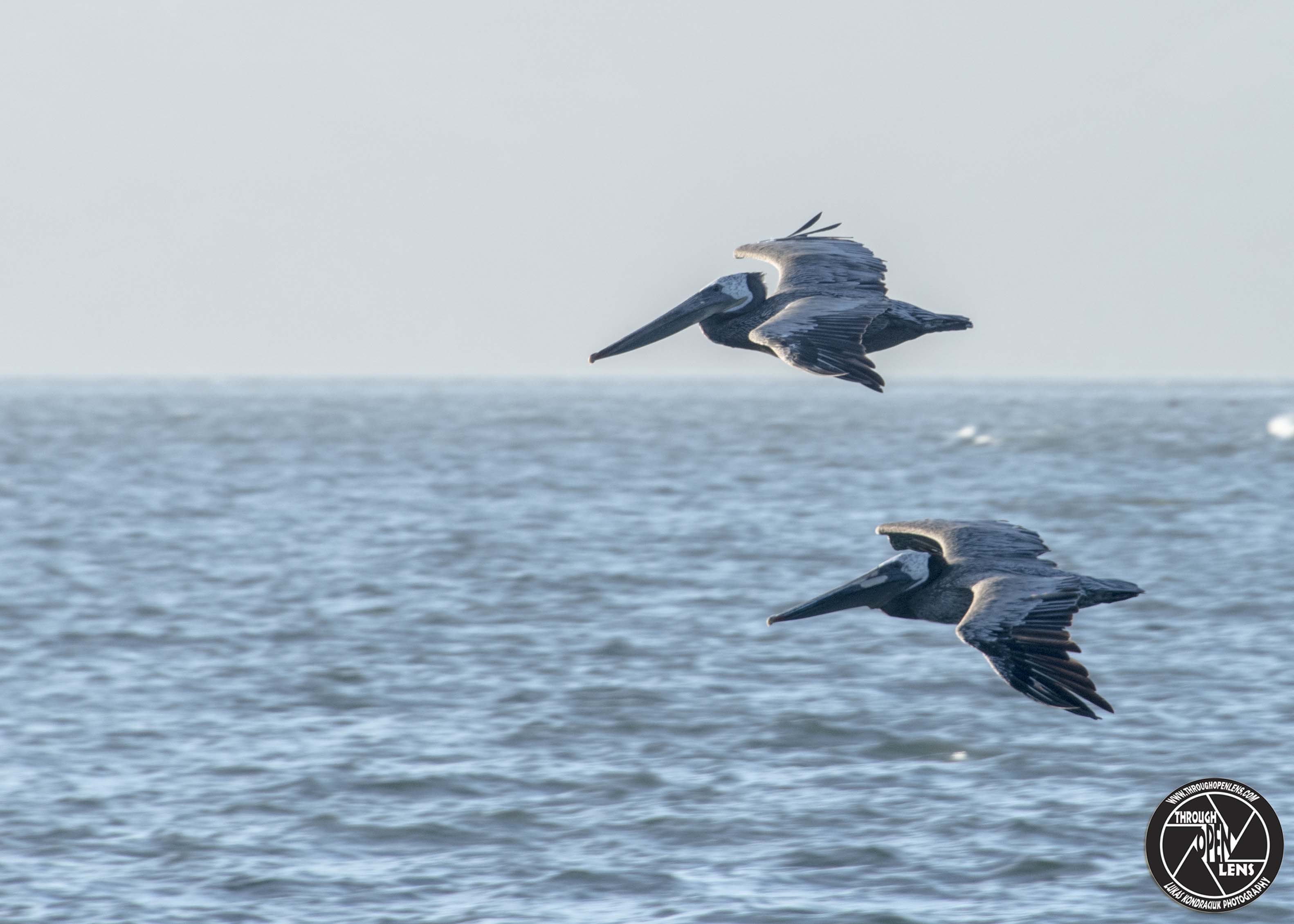
You Never Leave Your Wingman!

F/ 9.0, 1/320, ISO 250.

Brown Pelicans 

Why does Piglet smell so bad?

Because he plays with Pooh.

Interesting Fact: Pelicans usually feed above estuaries and shallow ocean waters within 12 miles of shore, but sometimes venture over the deeper waters past the narrow continental shelf of the Pacific coast. They occasionally feed by sitting on the surface and seizing prey with their bills, like other pelican species, usually when a dense school of fish is close to the surface and the water is too shallow and muddy to plunge. They also steal food from other seabirds, scavenge dead animals, and eat invertebrates such as prawns. ( https://www.allaboutbirds.org/guide/Brown_Pelican/lifehistory )

When Someone Yells STOP I Don’t Know Whether It’s In The Name Of Love, It’s Hammer Time, Or I Should Smell The Flowers.

F/5.3, 1/800, ISO 320.

Anna’s Hummingbird ( Female )

How do angels greet each other?

They say Halo

Interesting Fact: Anna’s Hummingbirds normally have a body temperature of around 107 degrees Fahrenheit—that’s a scorching temperature for a human. When outside temperatures fall, Anna’s and many other species of hummingbirds enter torpor. Their breathing and heart rate slow, and their body temperature can fall as low as 48 degrees Fahrenheit. When the temperature warms, the hummingbirds can become active again in a few minutes. ( https://www.allaboutbirds.org/guide/Annas_Hummingbird/ )


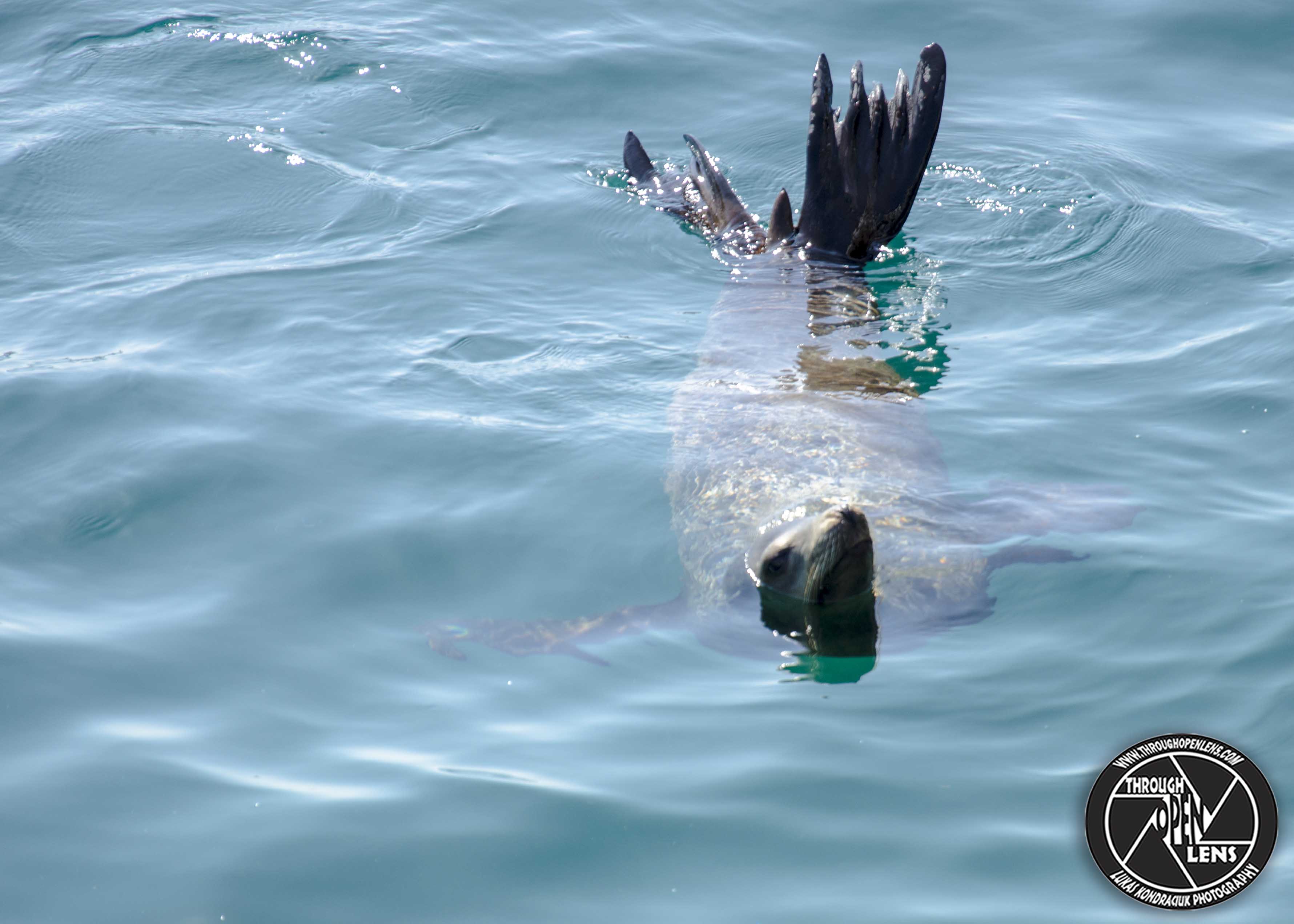
Just Smile And Wave!

F/5.6, 1/320, ISO 100.

California Sea Lion 

Why do sea lions go to Tupperware parties?

To find a tight seal!

Interesting Fact: When diving deep, California sea lions slow their heart rates to allow them to remain underwater for nearly ten minutes before surfacing to breathe. This ability gives them an edge in the pursuit of the fish, squid, and shellfish that make up their primary diet. ( http://www.nationalgeographic.com/animals/mammals/c/california-sea-lion/ )

I Don’t Need Therapy, I Need A Hug!

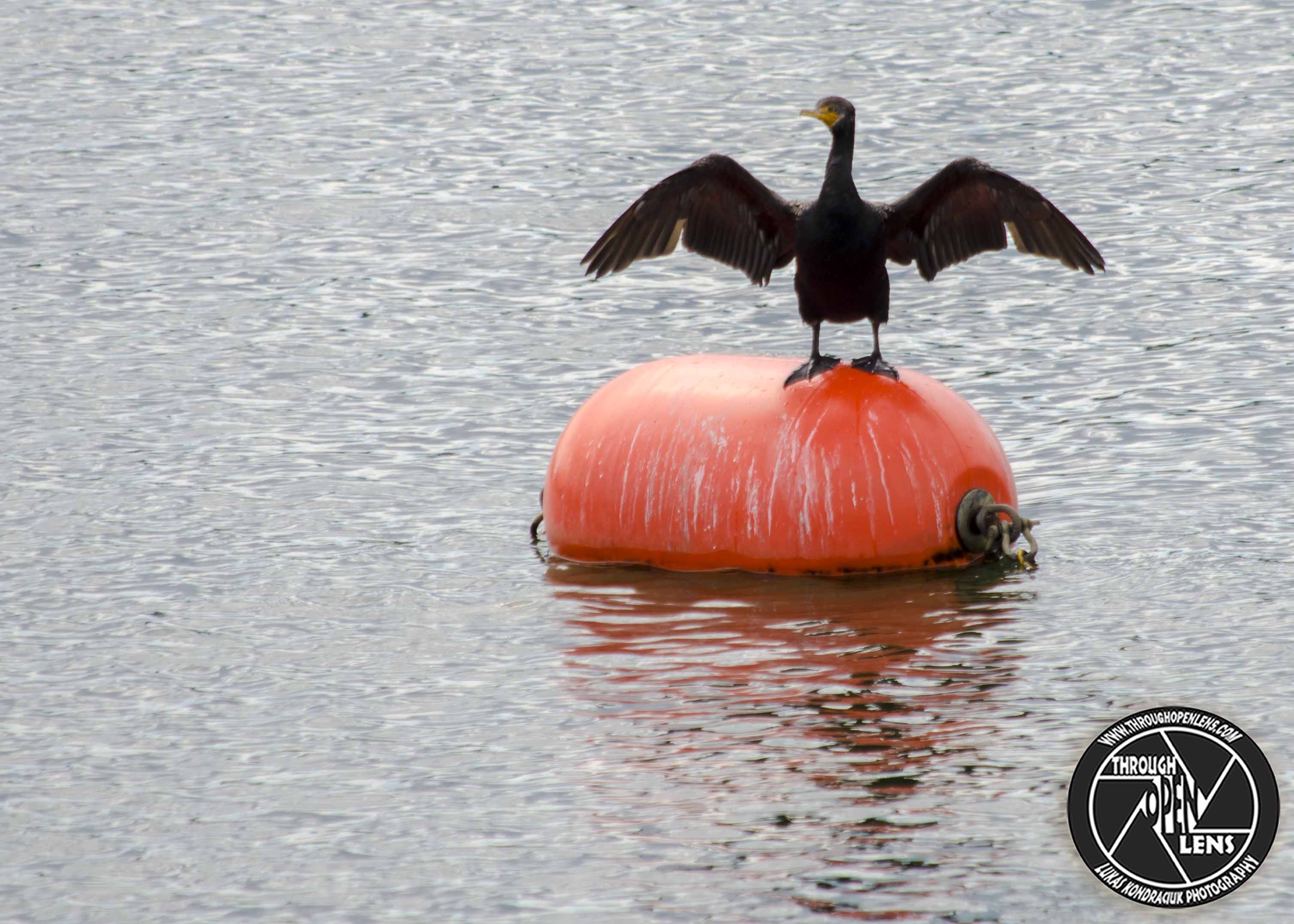
F/9.0, 1/320, ISO 100.

Double-crested Cormorant

Tom had asked Fred to help him out with the deck after work, so Fred went straight over to Tom’s place. When they got to the door, Tom went straight to his wife, gave her a hug and told her how beautiful she was and how much he had missed her at work.
When it was time for dinner, he complimented his wife on her cooking, kissed her and told her how much he loved her. Once they were working on the deck, Fred told Tom that he was surprised that he fussed so much over his wife. Tom said that he’d started this about 6 months ago, it had revived their marriage and things couldn’t be better.
Fred thought he’d give it a go. When he got home, he gave his wife a massive hug, kissed her and told her that he loved her. His wife burst into tears. Fred was confused and asked why she was crying.
She said, “This is the worst day of my life. First, little Bobby fell off his bike and twisted his ankle. Then, the washing machine broke and flooded the basement. And now, you come home drunk!”

Interesting Fact: The double-crest of the Double-crested Cormorant is only visible on adults during breeding season. The crests are white in cormorants from Alaska, and black in other regions.  ( https://www.allaboutbirds.org/guide/Double-crested_Cormorant/lifehistory )

Ehh, What’s Up Doc?

F/6.3, 1/160, ISO 640.

Eastern Cottontail Rabbit

What did the rabbit give his girlfriend?

A 14 carrot ring!

Interesting Fact: There are several species of cottontail rabbit, but the eastern cottontail is the most common. This ubiquitous animal can be found from Canada to South America and, in the United States, from the East Coast to the Great Plains. Cottontails range from reddish brown to gray, but all feature the distinctive “cotton ball” tail for which they are named. ( http://www.nationalgeographic.com/animals/mammals/e/eastern-cottontail-rabbit/ )

Double Take!

F/8.0, 1/250, ISO 250.

White-Cheeked Pintail

What kind of water do you put into a waterbed?

Spring water.

Interesting Fact: It is found in the CaribbeanSouth America, and the Galápagos Islands.[4] It occurs on waters with some salinity, such as brackish lakes, estuaries and mangrove swamps. ( https://en.wikipedia.org/wiki/White-cheeked_pintail )

First Major Obstacle And DONE!

F/6.3, 1/125, ISO 640.

Canada Goose ( Juvenile )

Why couldn’t the leopard play hide and seek?

Because he was always spotted.

Interesting Fact: The oldest known wild Canada Goose was a female, and at least 33 years, 3 months old when she was shot in Ontario in 2001. She had been banded in Ohio in 1969. ( https://www.allaboutbirds.org/guide/Canada_Goose/lifehistory )

Welcome To The Jungle We Got Fun And Games!

F/9.0, 1/320, ISO 800.

Hispaniolan Amazon Parrots

What is a mattress’ favorite season?

Spring.

Interesting Fact: Its natural habitats are subtropical or tropical dry forestsubtropical or tropical moist lowland forest, subtropical or tropical moist montane forest, and plantations. It is threatened in its home range by habitat loss and the capture of individuals for the pet trade. ( https://en.wikipedia.org/wiki/Hispaniolan_amazon )

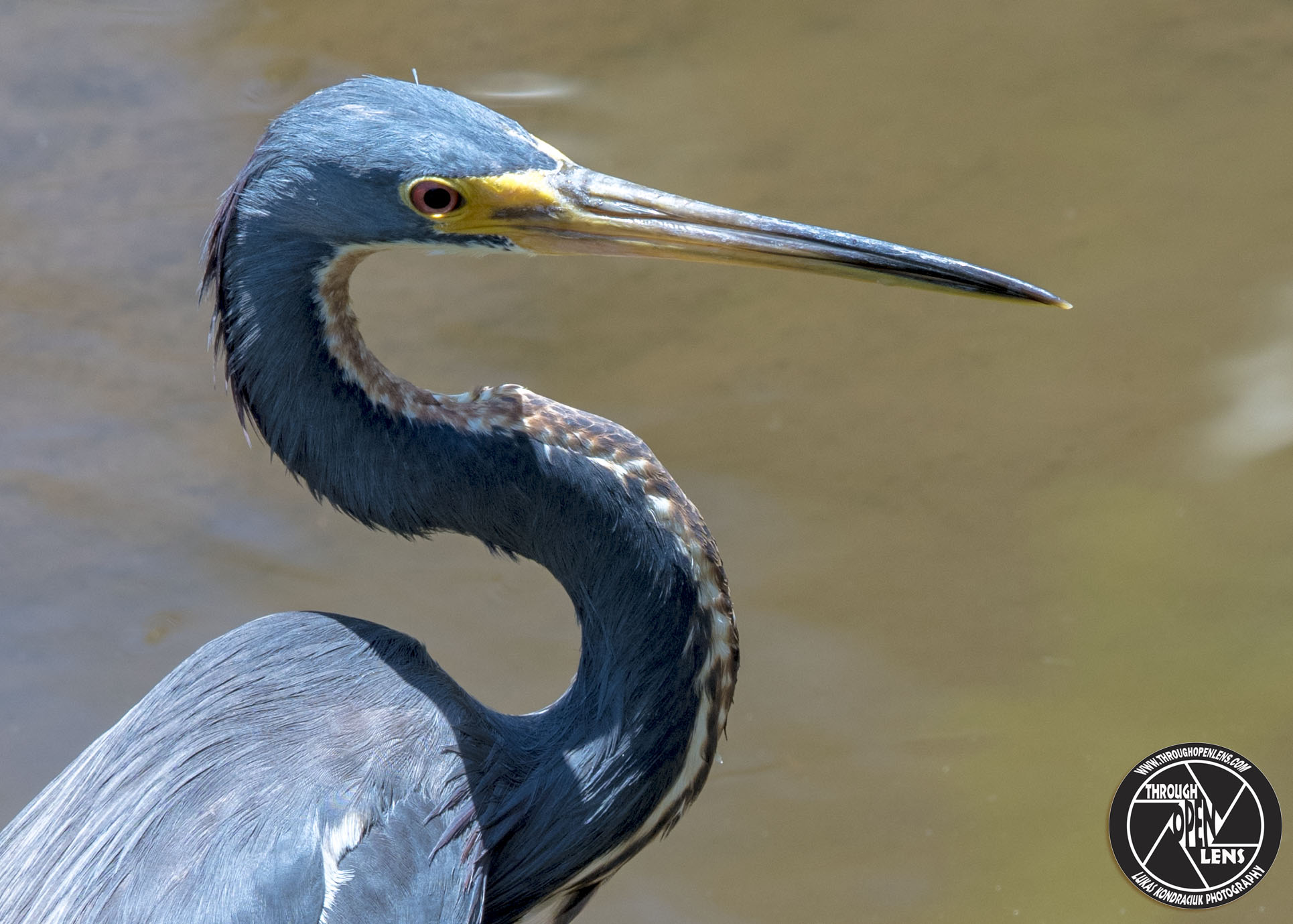
“S” Stands For Both SADNESS And SMILE. It’s Up To You How You Wanna See It.

F/8.0, 1/250, ISO 250.

Tricolored-Heron

Why did the worker get fired from the calendar factory?

He took a day off.

Interesting Facts: Although they are solitary foragers, they nest in colonies often with other herons and egrets. At the colony males are aggressive toward all individuals that come near the nest site, but gradually let a female enter during courtship. Aggressive posturing includes calling, stretching the neck straight up, fluffing up the crest feathers, holding the wings below and away from the body, fighting and jabbing in midair, and shaking twigs. Males court females near the nest site. Males bow down, grab a twig, and then stretch the head straight up while snapping the bill. ( https://www.allaboutbirds.org/guide/Tricolored_Heron/lifehistory )

Heeeey!

F/6.3, 1/125, ISO 500.

Blue Jay

What kind of shoes do ninjas wear?

Sneakers.

Interesting Fact:  They often mate for life, remaining with their social mate throughout the year. Only the female incubates; her mate provides all her food during incubation. For the first 8–12 days after the nestlings hatch, the female broods them and the male provides food for his mate and the nestlings. ( https://www.allaboutbirds.org/guide/Blue_Jay/lifehistory )