
F/8.0, 1/1000, ISO 200.
Black-crowned Night-Heron
What did the big chimney say to the little chimney?
“You’re too young to smoke.”

F/8.0, 1/1000, ISO 200.
Black-crowned Night-Heron
What did the big chimney say to the little chimney?
“You’re too young to smoke.”

F/10.0, 1/400, ISO 250.
Double-crested Cormorant
What do you call someone without a nose or a body?
Nobodynose.
Interesting Fact: Both Double-crested Cormorant mates work on the nest, with the male bringing most of the material and the female doing the building. The nest is mostly made of finger-size sticks, with some seaweed and flotsam, and lined with grass. Nests are 1.5 to 3 feet in diameter and 4 to 17 inches high; ground nests tend to be wider than tree nests, but tree nests have deeper interiors. Breeding cormorants readily steal nesting materials from a nearby nest that’s not guarded. ( https://www.allaboutbirds.org/guide/Double-crested_Cormorant/lifehistory )
Happy Easter Everyone!

F/8.0, 1/250, ISO 250.
Desert Cottontail Rabbit
What did the Easter Egg say to the boiling water?
It’s going to take awhile to get me hard I just got layed by some chick!
Interesting Fact: Many desert animals prey on cottontails, including birds of prey, mustelids, the coyote, the bobcat, the lynx, wolves, mountain lions, snakes, weasels, humans, and even squirrels, should a cottontail be injured or docile from illness.[22] Alien species, such as cats and dogs, are also known predators, and also pose a threat.[12] Southwestern Native Americans hunted them for meat but also used their fur and hides. It is also considered a game species, due to which it is hunted for sport.[12] The desert cottontail’s normal behavior upon spotting a potential predator is to freeze in place in an attempt to avoid being detected. If it determines that it is in danger, it will flee the area by hopping away in a zigzag pattern.[23] Cottontails can reach speeds of over 30 km/h (19 mph). When defending itself against small predators or other desert cottontails, it will nudge with its nose, or slap with its front paws, usually preceded by a hop straight upwards as high as two feet when threatened or taken by surprise. ( https://en.wikipedia.org/wiki/Desert_cottontail )

F/6.3, 1/125, ISO 640.
White-Tailed Deer
I give a dead battery away today…
Free of charge!
Interesting Fact: Males regrow their antlers every year. About one in 10,000 females also has antlers, although this is usually associated with freemartinism. ( https://en.wikipedia.org/wiki/White-tailed_deer )

F/6.3, 1/80, ISO 320.
Common Yellowthroat
Why is Peter Pan always flying?
Because he neverlands.
Interesting Fact: Each male normally has only one mate in his territory during a breeding season. However, a female’s mating calls often attract other males, and she may mate with them behind her mate’s back. ( https://www.allaboutbirds.org/guide/Common_Yellowthroat/ )
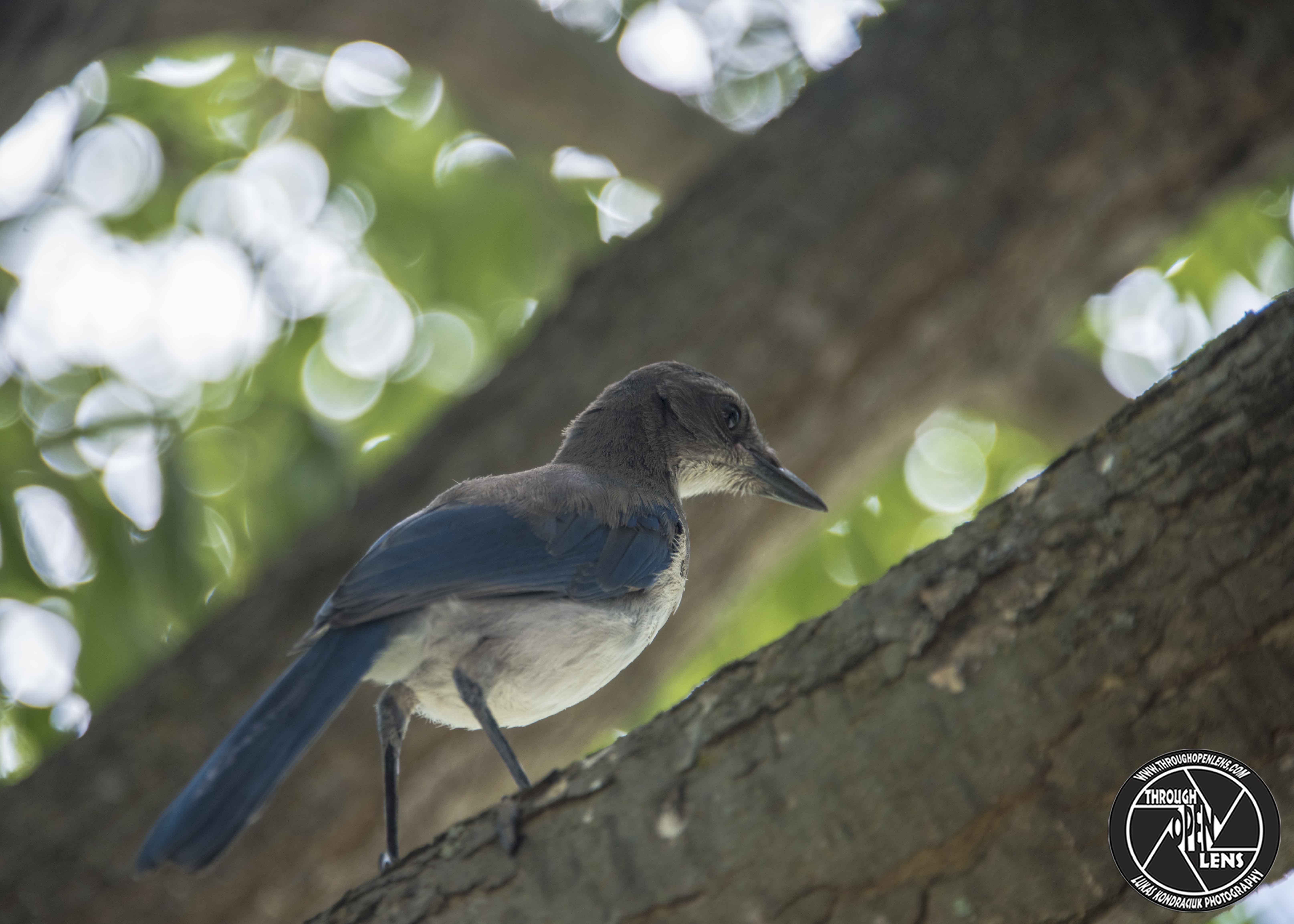
F/5.6, 1/160, ISO 320.
California Scrub-Jay
Why did Papa Smurf send Smurfette to see a doctor???
She was always feeling blue…
Interesting Fact: Look closely, and you’ll see an intriguing difference between the California Scrub-Jay and its close relative, Woodhouse’s Scrub-Jay. The bill of a California Scrub-Jay is stout and hooked, giving it extra power and grip as the birds hammer open acorns in their oak woodland habitats. By comparison, Woodhouse’s have thinner, more pointed bills that nimbly reach deep into pinyon pine cones to pull out the pine nuts inside. ( https://www.allaboutbirds.org/guide/California_Scrub-Jay )

F/9.0, 1/320, ISO 200.
Polish chicken
What do you get when a chicken lays an egg on top of a barn?
An eggroll!
Interesting Fact:
The Polish or Poland is a European breed of crested chickens known for its remarkable crest of feathers. The oldest accounts of these birds come from The Netherlands; their exact origins are unknown, however.[1] In addition to combs, they are adorned with large crests that nearly cover the entirety of the head. This crest limits their vision, and as a result can affect their temperament. Thus, though normally tame, they may be timid and easily frightened. ( https://en.wikipedia.org/wiki/Polish_chicken )
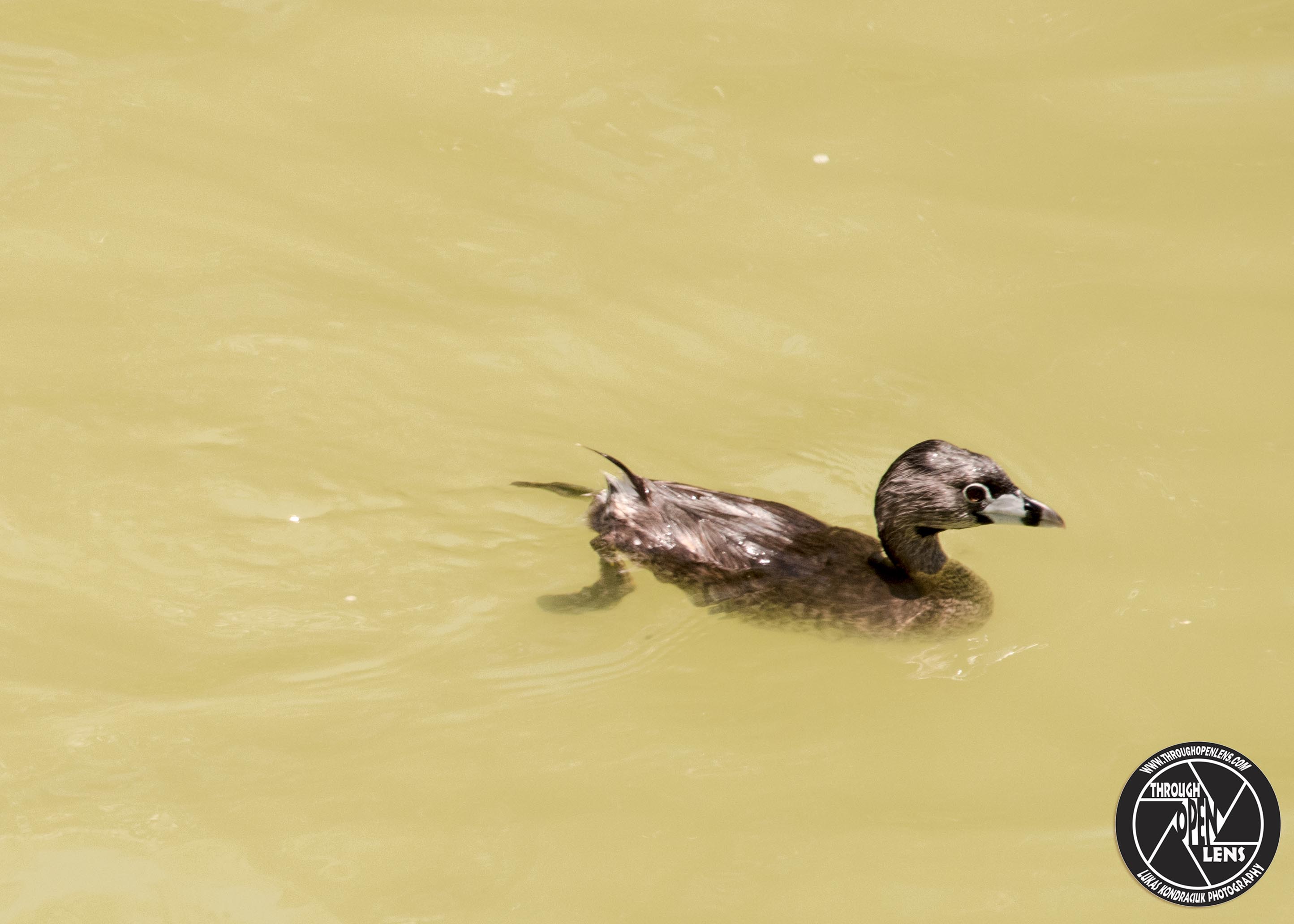
F/7.1, 1/200, ISO 400.
Pied-Billed Grebe
Breaking news!
Energizer Bunny arrested – charged with battery!
Interesting Fact: Pied-billed Grebes are fairly poor fliers and typically stay on the water—although rare individuals have managed to fly as far as the Hawaiian Islands, Europe, the Azores, and the Canary Islands. ( https://www.allaboutbirds.org/guide/Pied-billed_Grebe/ )

F/9.0, 1/320, ISO 250.
Red-Bellied Woodpecker
A police officer caught two kids playing with a firework and a car battery.
He charged one and let the other one off.
Interesting Fact: A Red-bellied Woodpecker can stick out its tongue nearly 2 inches past the end of its beak. The tip is barbed and the bird’s spit is sticky, making it easier to snatch prey from deep crevices. Males have longer, wider-tipped tongues than females, possibly allowing a breeding pair to forage in slightly different places on their territory and maximize their use of available food. ( https://www.allaboutbirds.org/guide/Red-bellied_Woodpecker/lifehistory )

F/10.0, 1/400, ISO 250.
Greater Yellowlegs
Ghosts are hard to impress.
They boo everything.
Interesting Fact: Their breeding habitat is bogs and marshes in the boreal forest region of Canada and Alaska. They nest on the ground, usually in well-hidden locations near water. The three to four eggs average 50 mm (2.0 in) in length and 33 mm (1.3 in) in breadth and weigh about 28 g (0.99 oz). The incubation period is 23 days. The young leave the nest within 24 hours of hatching and then leave the vicinity of the nest within two days.( https://en.wikipedia.org/wiki/Greater_yellowlegs )
 Through Open Lens