Ordinarily, Staring is Creepy. But If You Spread Your Attention Across Many Individuals, Then It’s Just People Watching.

F/7.1, 1/200, ISO 320.

Common Grackle

Tom is sitting on the ice all day fishing with no luck, not even a nibble. Cold and tired he is about to leave, when a guy walks up cuts a hole in the ice beside him, and starts pulling out fish as fast a he can drop his hook in the water. Tom cant believe it, he yells over ” whats your secret?” “woogatkakeptewrwm” he answers back. “what did you say?” replies Tom. The man spits a large ball of worms on the ice and says to Tom, ” you have to keep your worms warm”.

Interesting Fact: Those raggedy figures out in cornfields may be called scare-crows, but grackles are the #1 threat to corn. They eat ripening corn as well as corn sprouts, and their habit of foraging in big flocks means they have a multimillion dollar impact. Some people have tried to reduce their effects by spraying a foul-tasting chemical on corn sprouts or by culling grackles at their roosts. ( https://www.allaboutbirds.org/guide/Common_Grackle/lifehistory )


I’m Not Lazy, I’m Just On My Energy Saving Mode!

F/6.3, 1/125, ISO 250.

Red-tailed Hawk 

How did the tree feel in the spring?

Releaved.

Interesting Fact: Red-tailed Hawks typically put their nests in the crowns of tall trees where they have a commanding view of the landscape. They may also nest on a cliff ledge or on artificial structures such as window ledges and billboard platforms. ( https://www.allaboutbirds.org/guide/Red-tailed_Hawk/lifehistory )


Danger Mouth Operates Faster Than Brain!

F/10.0, 1/640, ISO 250.

Belted Kingfisher

What did the salad say to the fridge?

Shut the door, I’m dressing!

Interesting Fact: Pleistocene fossils of Belted Kingfishers (to 600,000 years old) have been unearthed in Florida, Virginia, Tennessee, and Texas. The oldest known fossil in the kingfisher genus is 2 million years old, found in Alachua County, Florida. ( https://www.allaboutbirds.org/guide/Belted_Kingfisher )


OH SH*T!

F/9.0, 1/320, ISO 250.

Tree Swallow

Why do ghosts ride in elevators?

It keeps their spirits up.

Interesting Fact: They bathe by flying low over the water and skimming their bodies against the surface, then rising quickly while shaking off droplets. ( https://www.allaboutbirds.org/guide/Tree_Swallow/lifehistory )

Down The Rabbit Hole!

F/8.0, 1/250, ISO 250.

Desert Cottontail Rabbit 

What is a tree’s favorite drink?

Root beer!

Interesting Fact: The lifespan of a cottontail that reaches adulthood averages less than two years, depending on the location.[6] Unfortunately for the cottontail, almost every local carnivore larger or faster than the lagomorph is its predator. Some predators, like snakes for example, are familiar with the area inhabited by the cottontails, and can catch and eat the young at will; the mother is unable to defend the litter. Although cottontails are highly active sexually, and mated pairs have multiple litters throughout the year, few young survive to adulthood. Those that survive grow quickly and are full grown at three months. ( https://en.wikipedia.org/wiki/Desert_cottontail )


Welcome To The Duck Side. We Have Quackers.

F/9.0, 1/320, ISO 320.

Ruddy Duck 

Why didn’t my girlfriend believe I was a ghost?

She could see right through me.

Interesting Fact:  The nest is usually made of dead, dry plant materials, though some are built entirely with green vegetation. It starts as a platform and becomes more bowl-like throughout the construction process, with an inner cup measuring 4–12 inches across and 0.5–5 inches deep. Ruddy Ducks usually weave a canopy of vegetation over their nests. ( https://www.allaboutbirds.org/guide/Ruddy_Duck/lifehistory )

Finding A Needle In The Haystack

F/11.0 , 1/500, ISO 320.

Northern Harrier

Why are the middle ages sometimes called the Dark Ages?

Because they had so many knights.

Interesting Fact: Northern Harriers usually fly slowly and low over the ground, their wings held in a V-shape as they glide. Most males have either one mate or two mates at a time, but some have up to five mates when food is abundant. Each male courts females and advertises his territory by performing sky-dancing displays: undulating, rollercoaster-like flights up to 1,000 feet off the ground, sometimes covering more than half a mile. ( https://www.allaboutbirds.org/guide/Northern_Harrier/lifehistory )


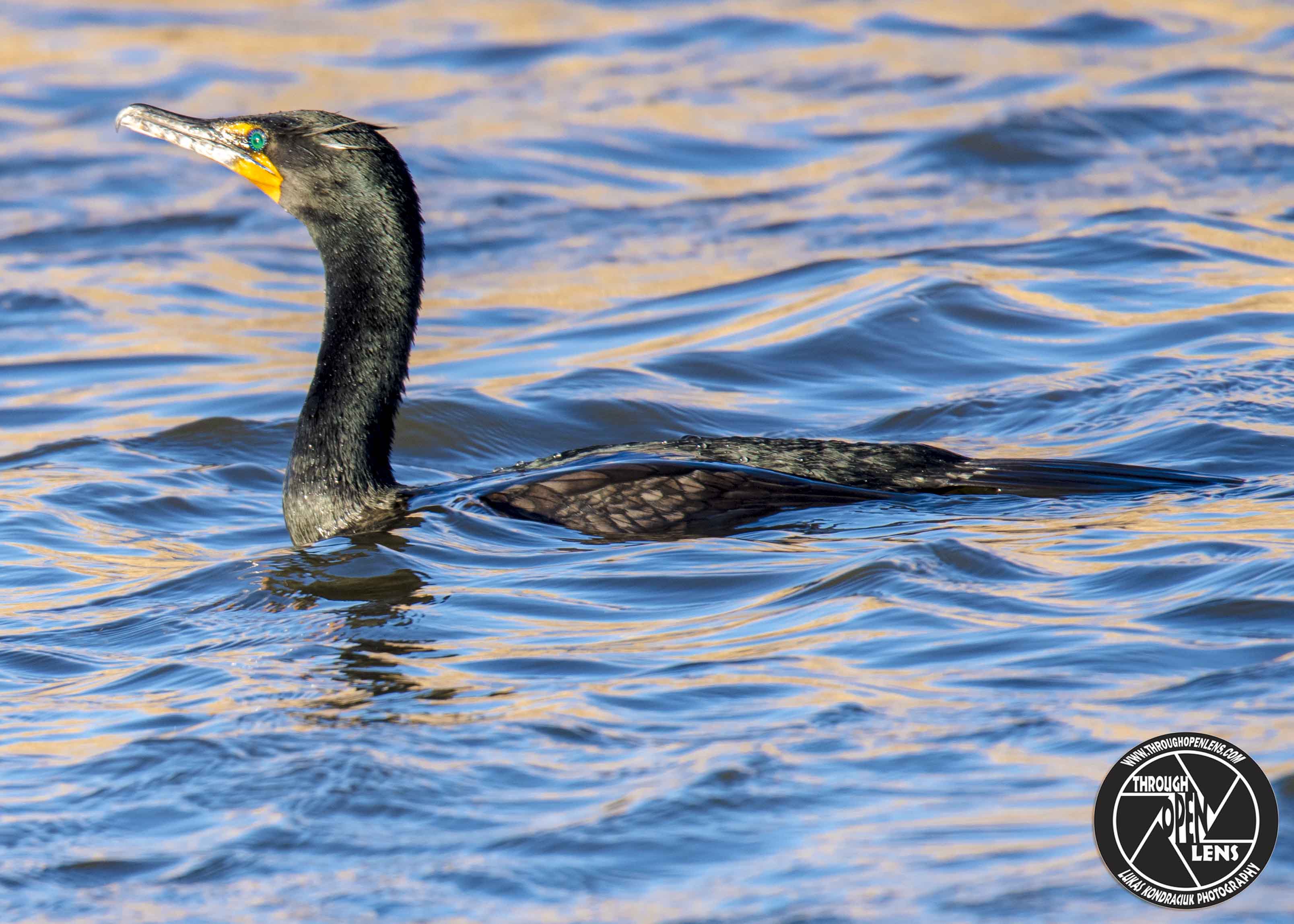
Gone Crazy! Be Back Soon!

F/9.0, 1/320, ISO 320.

Double-crested Cormorant 

What did one toilet say to the other toilet?

You look a bit flushed.

Interesting Fact: Double-crested Cormorant nests often are exposed to direct sun. Adults shade the chicks and also bring them water, pouring it from their mouths into those of the chicks. ( https://www.allaboutbirds.org/guide/Double-crested_Cormorant )

Don’t Look Back You’re Not Going That Way

F/5.6, 1/500, ISO 220.

Least Sandpiper

Browsing in a pet shop, a man sees a beautiful parrot with a red
string tied to its left leg and a green string tied to its right
leg, and asks the store owner about the different colored strings.
“This is a highly-trained parrot,” the owner explains. “If you
pull the red string, he’ll speak French.  If you pull the green
string, he’ll speak Spanish.”
The customer asks, “What happens if I pull both strings?”
“I’ll fall off my perch, dummy!” screeches the parrot.

Interesting Fact: Eastern populations probably fly nonstop over the ocean from the Gulf of St. Lawrence and New England to wintering grounds in northeastern South America, a distance of about 1,800 to 2,500 miles. ( https://www.allaboutbirds.org/guide/Least_Sandpiper/lifehistory )


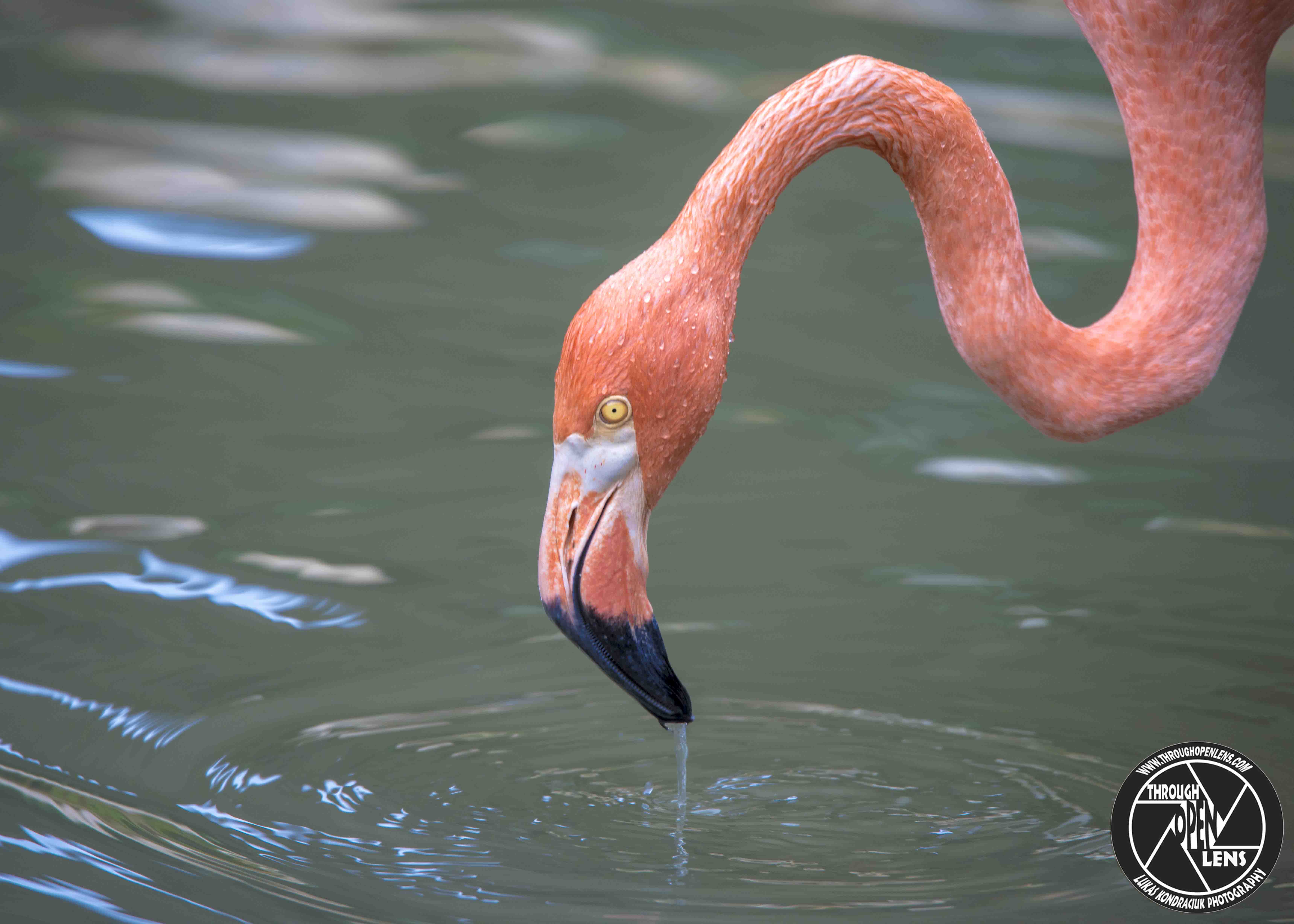
I Don’t Have A Drinking Problem, I Drink, I Get Drunk, I Pass Out, No Problem!

F/7.1, 1/200, ISO 320.

American Flamingo 

Why did the baseball player bring a rope to the game?

He wanted to tie the score

Interesting Fact: American flamingos are saltwater birds that ingest food with a high salt content and mostly drink salt water (with an osmolarity of usually 1000), hyperosmotic to the bodies cells . Also, though not commonly, they can drink fresh water at near-boiling temperatures from geysers. From their high-salt diet, they would lose more water and have a greater salt uptake. One way in which they osmoregulate is through the use of a salt gland, which is found in their beaks.[17] This salt gland helps excrete excess salt from the body through the nasal openings in the flamingo’s beaks. When these birds consume salt, the osmolarity increases in the blood plasma through the gut. This causes water to move out of the cells, increasing extracellular fluids. Both these changes, in turn, activate the salt glands of the bird,[18] but before any activity occurs in the salt glands, the kidney has to reabsorb the ingested sodium from the small intestine. As seen in other saltwater birds, the fluid that is excreted has been seen to have an osmolarity greater than that of the salt water, but this varies with salt consumption and body size. ( https://en.wikipedia.org/wiki/American_flamingo )