I’m A Biter!

F/10.0, 1/400, ISO 800.

Common Loon ( Nonbreeding adult )

Why did the teddy bear say no to dessert?

Because she was stuffed.

Interesting Fact: Loons shoot through the water like a torpedo, propelled by powerful thrusts of feet located near the rear of their body. When their quarry changes direction, loons can execute an abrupt flip-turn that would make Olympic swimmers jealous: they extend one foot laterally as a pivot brake and kick with the opposite foot to turn 180 degrees in a fraction of a second. ( https://www.allaboutbirds.org/guide/Common_Loon/lifehistory )


Look Into My Eyes And Jump Into My Mouth… Fish!

F/9.0, 1/320, ISO 160.

Green Heron

Where do bees go to the bathroom?

At the BP station!

Interesting Fact: Both the male and female brood and feed the chicks, which may stay with their parents for more than a month after leaving the nest, as they learn to forage. Green Herons protect their feeding areas by driving away other species, such as American Coots, that approach too closely. ( https://www.allaboutbirds.org/guide/Green_Heron/lifehistory )

GERONIMO!

F/ 6.3, 1/1000, ISO 640.

Great Blue Heron

A magician was performing on cruise ship and each night while performing his pet parrot keeps saying:

“its up his sleeve”

” its in his pocket”.

“its in his shoe”.

“in his pants”.

Etc. and the magician was loosing his patience. one night while performing his tricks the ships boilers blew and the ship sank, the lucky magician was able to grab onto a ships table and float on the sea for a few days. the parrot in the mean time seemed non plussed and was looking quizzically at the magician for a few days whilst drifting. On the 4th day the parrots looks at his master and says:

“I give up… what did you do with the ship?”

Interesting Fact: Great Blue Herons have specialized feathers on their chest that continually grow and fray. The herons comb this “powder down” with a fringed claw on their middle toes, using the down like a washcloth to remove fish slime and other oils from their feathers as they preen. Applying the powder to their underparts protects their feathers against the slime and oils of swamps. ( https://www.allaboutbirds.org/guide/Great_Blue_Heron/lifehistory )

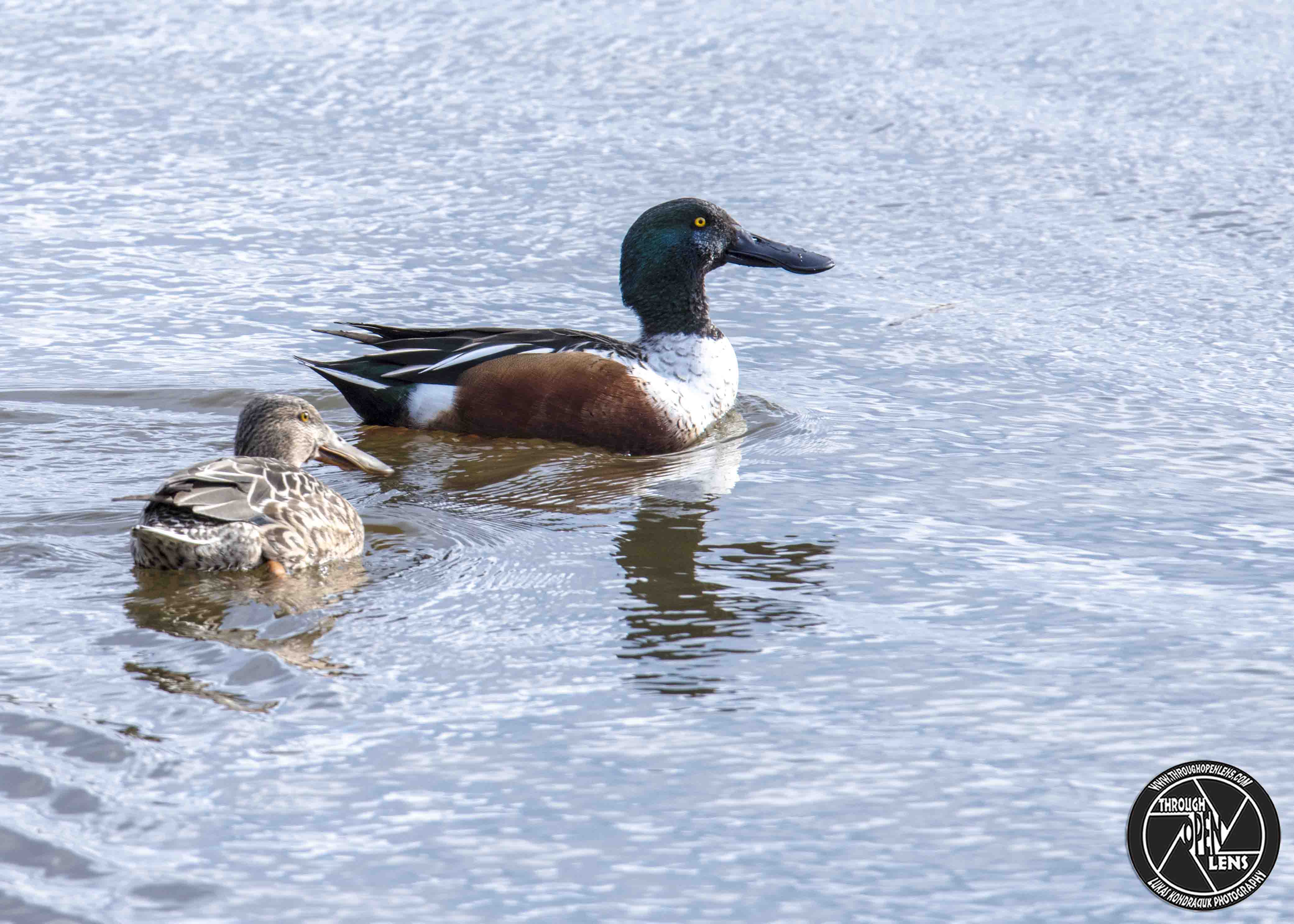
Save Water Take Baths With A Friend!

F/11.0, 1/500, ISO 400.

Northern Shoveler

What did the duck say when he dropped the dishes?

“I hope I didn’t quack any!”

Interesting Fact: Females use their body, feet, and bill to make a small depression on the ground about 8 inches wide. The nest scrape is usually surrounded on at least three sides by vegetation and lined with downy feathers. ( https://www.allaboutbirds.org/guide/Northern_Shoveler/lifehistory )


Baby It’s Cold Outside!

F/8.0,1/250, ISO 400.

Northern Cardinal Male 

Why did Scrooge keep a pet lamb?

Because it would say, “Baaaaahh humbug!”

Interesting Fact: Look for Northern Cardinals in dense shrubby areas such as forest edges, overgrown fields, hedgerows, backyards, marshy thickets, mesquite, regrowing forest, and ornamental landscaping. Cardinals nest in dense foliage and look for conspicuous, fairly high perches for singing. Growth of towns and suburbs across eastern North America has helped the cardinal expand its range northward. ( https://www.allaboutbirds.org/guide/Northern_Cardinal/lifehistory )


A song told me to Deck the Halls…so I did! Mr.and Mrs. Hall are not very happy!

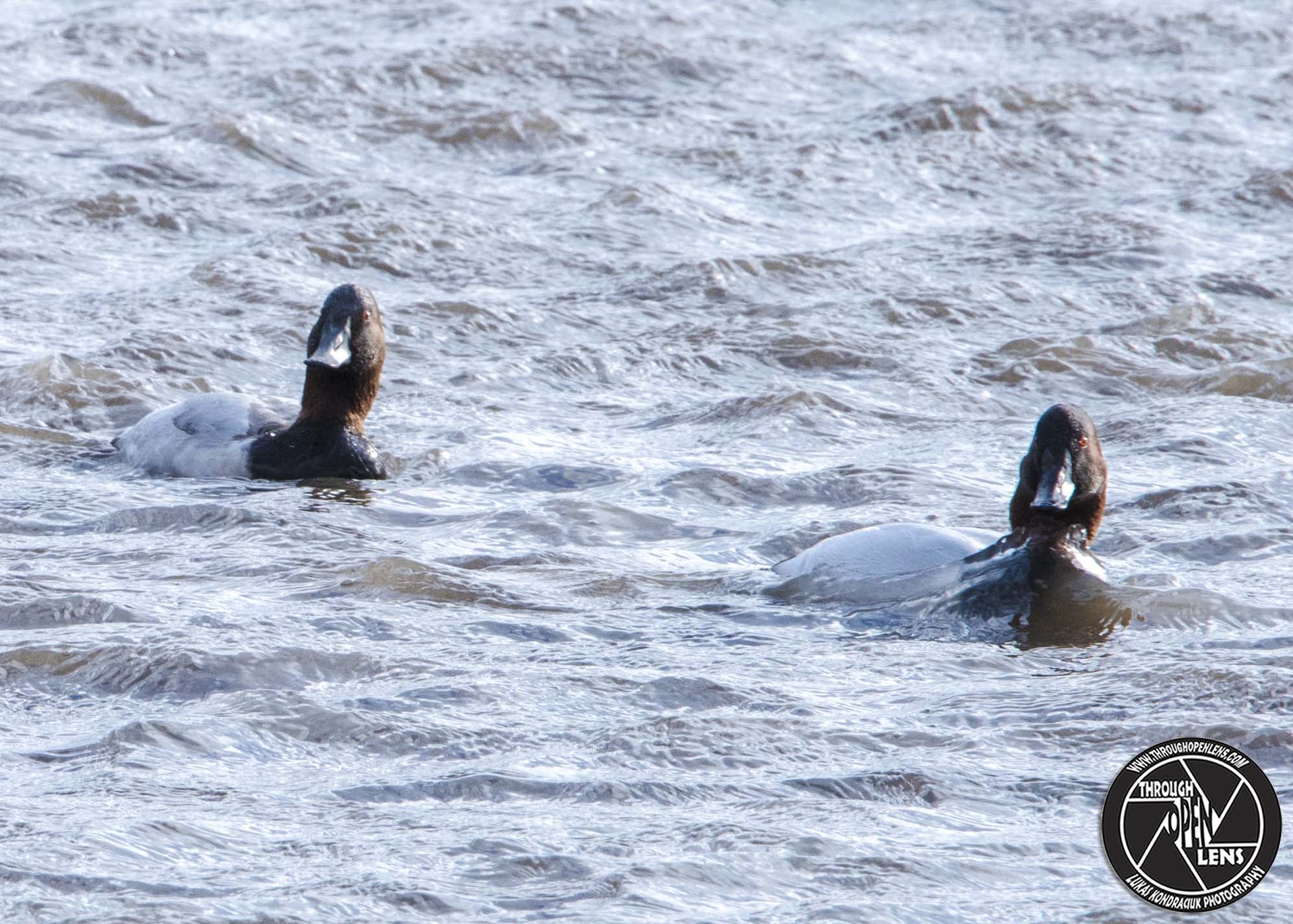
F/11.0, 1/500, ISO 500.

Canvasback 

Did you hear the joke about the roof?

Never mind, it’s over your head!

Interesting Fact: Canvasbacks are diving ducks at home in the water, seldom going ashore to dry land. They sleep on the water with their bill tucked under the wing, and they nest on floating mats of vegetation. To get airborne Canvasbacks need a running start, but once in the air they are strong and fast fliers, clocking airspeeds of up to 56 miles per hour. ( https://www.allaboutbirds.org/guide/Canvasback/lifehistory )

What Drives You Nuts?!

F/6.3, 1/100, ISO 320.

American Red Squirrel

Why do squirrels swim on there back?

To keep their nuts dry!

Interesting Fact: Red squirrels can be easily distinguished from other North American tree squirrels by their smaller size, 28–35 cm (11–14 in) total length (including tail), territorial behavior, and reddish fur with a white venter (underbelly).[6] Red squirrels are somewhat larger than chipmunks. The Douglas squirrel is morphologically similar to the American red squirrels, but has a rust-colored venter and is restricted to the southwestern coast of British Columbia and in the Pacific Northwest of the United States. These species’ ranges do not overlap.  ( https://en.wikipedia.org/wiki/American_red_squirrel )

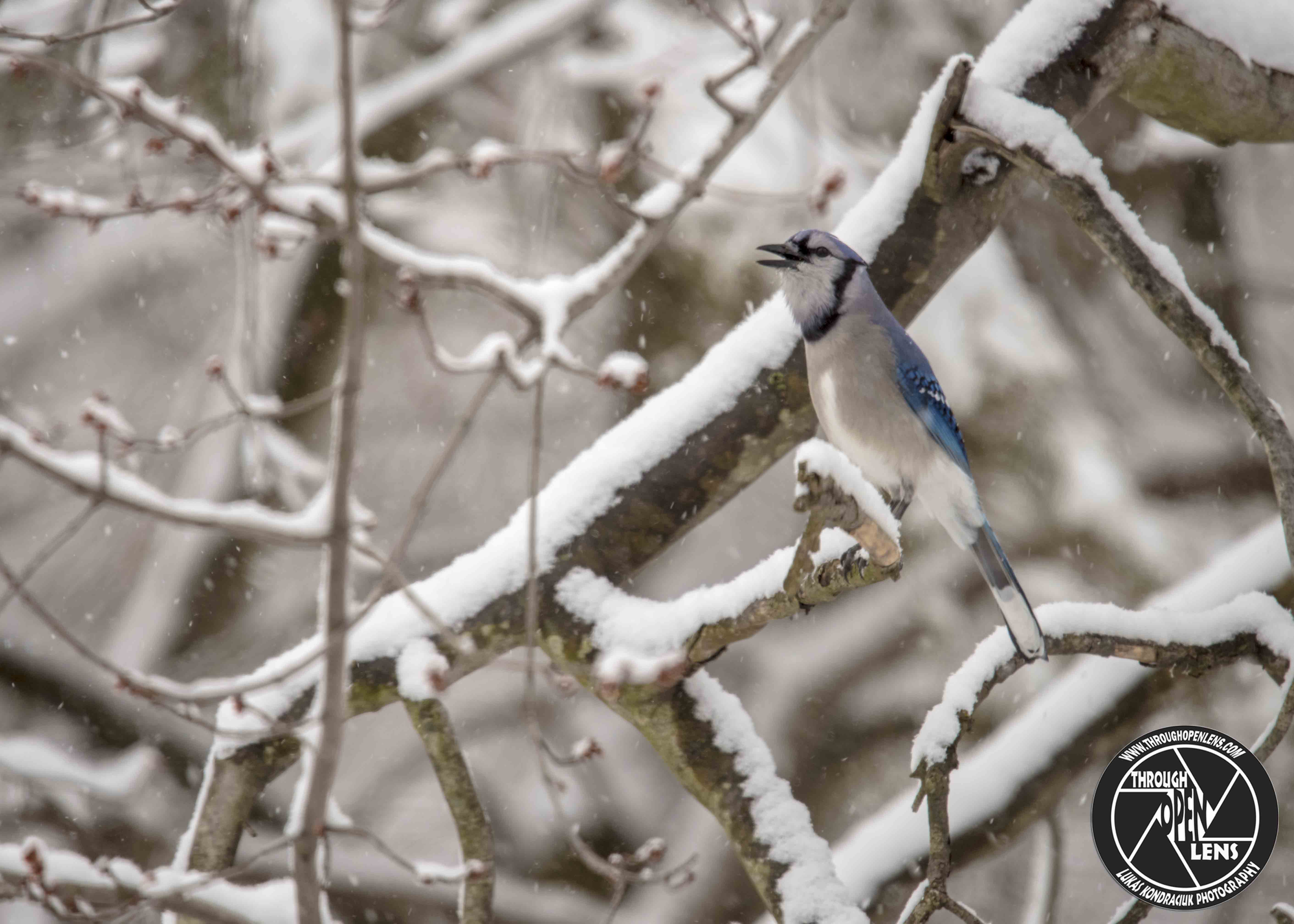
Let It Snow! Let It Snow! The Cold Never Bothered Me Anyway!

F/6.3, 1/160, ISO 400.

Blue Jay

Bobby went in to a pet shop.

He asked the employee, “Can I buy a goldfish?”

The employee: “Do you want an aquarium?”

Bobby: “I don’t care what star sign it is.”

Interesting Fact: Blue Jays are known to take and eat eggs and nestlings of other birds, but we don’t know how common this is. In an extensive study of Blue Jay feeding habits, only 1% of jays had evidence of eggs or birds in their stomachs. Most of their diet was composed of insects and nuts. (  https://www.allaboutbirds.org/guide/Blue_Jay )

With The New Day Comes New Strength And New Thoughts

F/11.0, 1/500, ISO 400.

Cedar Waxwing

What do you call a cow that eats your grass?

A lawn moo-er.

Interesting Fact: The name “waxwing” comes from the waxy red secretions found on the tips of the secondaries of some birds. The exact function of these tips is not known, but they may help attract mates. ( https://www.allaboutbirds.org/guide/Cedar_Waxwing/lifehistory )

I Am As Low As Your Lowrider!

F/9.0, 1/320, ISO 250.

Carolina Wren 

How do you drown a Hipster?

In the mainstream.

Interesting Fact: They are known to build multiple nests to confuse predators. ( http://identify.whatbird.com/obj/677/overview/Carolina_Wren.aspx )