Keep Your Beak Clean

F/9.0, 1/320, ISO 640.

Ruddy Duck

Can your mother predict the future with cards?

Yes! She takes one look at my report card and tells me what will happen when my father gets home.

Interesting Fact: The nest is usually made of dead, dry plant materials, though some are built entirely with green vegetation. It starts as a platform and becomes more bowl-like throughout the construction process, with an inner cup measuring 4–12 inches across and 0.5–5 inches deep. Ruddy Ducks usually weave a canopy of vegetation over their nests. ( https://www.allaboutbirds.org/guide/Ruddy_Duck/lifehistory )


Come Out Come Out Wherever You Are?!

F/9.0, 1/320, ISO 400.

Red-tailed Hawk

Which runs faster, hot or cold?

HOT. Everyone can catch cold.

Interesting Fact: Red-tailed Hawks are large, sharp-taloned birds that can be aggressive when defending nests or territories. They frequently chase off other hawks, eagles, and Great Horned Owls. Courting birds fly with legs hanging beneath them, or chase and swoop after each other, sometimes locking talons. Mated pairs typically stay together until one of the pair dies. ( https://throughopenlens.com/tag/red-tailed-hawk/ )

Don’t Rush Me I’m Waiting For The Last Minute!

F/7.1, 1/200, ISO 800.

Belted Kingfisher

Why can’t you write with a broken pencil?

Because it’s pointless.

Interesting Fact: During breeding season the Belted Kingfisher pair defends a territory against other kingfishers. A territory along a stream includes just the streambed and the vegetation along it, and averages 0.6 mile long. The nest burrow is usually in a dirt bank near water. The tunnel slopes upward from the entrance, perhaps to keep water from entering the nest. Tunnel length ranges from 1 to 8 feet. ( https://www.allaboutbirds.org/guide/Belted_Kingfisher )


My Best Friend Is My Reflection!

F/ 6.3, 1/640, ISO 200.

Snowy Egret

Did you here about the mathematician who was afraid of negative numbers?

He will stop at nothing to avoid them.

Interesting Fact: The oldest Snowy Egret on record was at least 17 years, 7 months old. It was banded in Colorado in 1970 and found in Mexico in 1988. ( https://www.allaboutbirds.org/guide/Snowy_Egret )

If You Can’t Reach It You Don’t Need It!

F/10.0, 1/400, ISO 400.

Pileated Woodpecker

How are a husband and a cat similar when it comes to housework?

They both hide when they see the vacuum cleaner.

Interesting Fact: The feeding excavations of a Pileated Woodpecker are so extensive that they often attract other birds. Other woodpeckers, as well as House Wrens, may come and feed there. ( https://www.allaboutbirds.org/guide/Pileated_Woodpecker )


Don’t Be Afraid To Stick Your Neck Out!

F/9.0, 1/320, ISO 100.

Mute Swan

What did one potato chip say to the other?

Shall we go for a dip?

Interesting Fact: Short legs placed well back on the body give Mute Swans an awkward walking gait, but the birds can run quickly if pursued and can take off from land and water, flying with head and neck extended. On the water they sometimes hold their wings slightly raised and “sail” with the wind. Mute Swans are predominantly monogamous and form long-lasting breeding pairs. They are extremely aggressive in defending their breeding territory. ( https://www.allaboutbirds.org/guide/Mute_Swan/lifehistory )

I’m Watching You!

F/11.0, 1/500, ISO 400.

Red-tailed Hawk

What’s the difference between the dinosaur and a dragon?

Dinosaurs are too young to SMOKE!

Interesting Fact: Red-tailed Hawks have been seen hunting as a pair, guarding opposite sides of the same tree to catch tree squirrels. ( https://www.allaboutbirds.org/guide/Red-tailed_Hawk/overview )

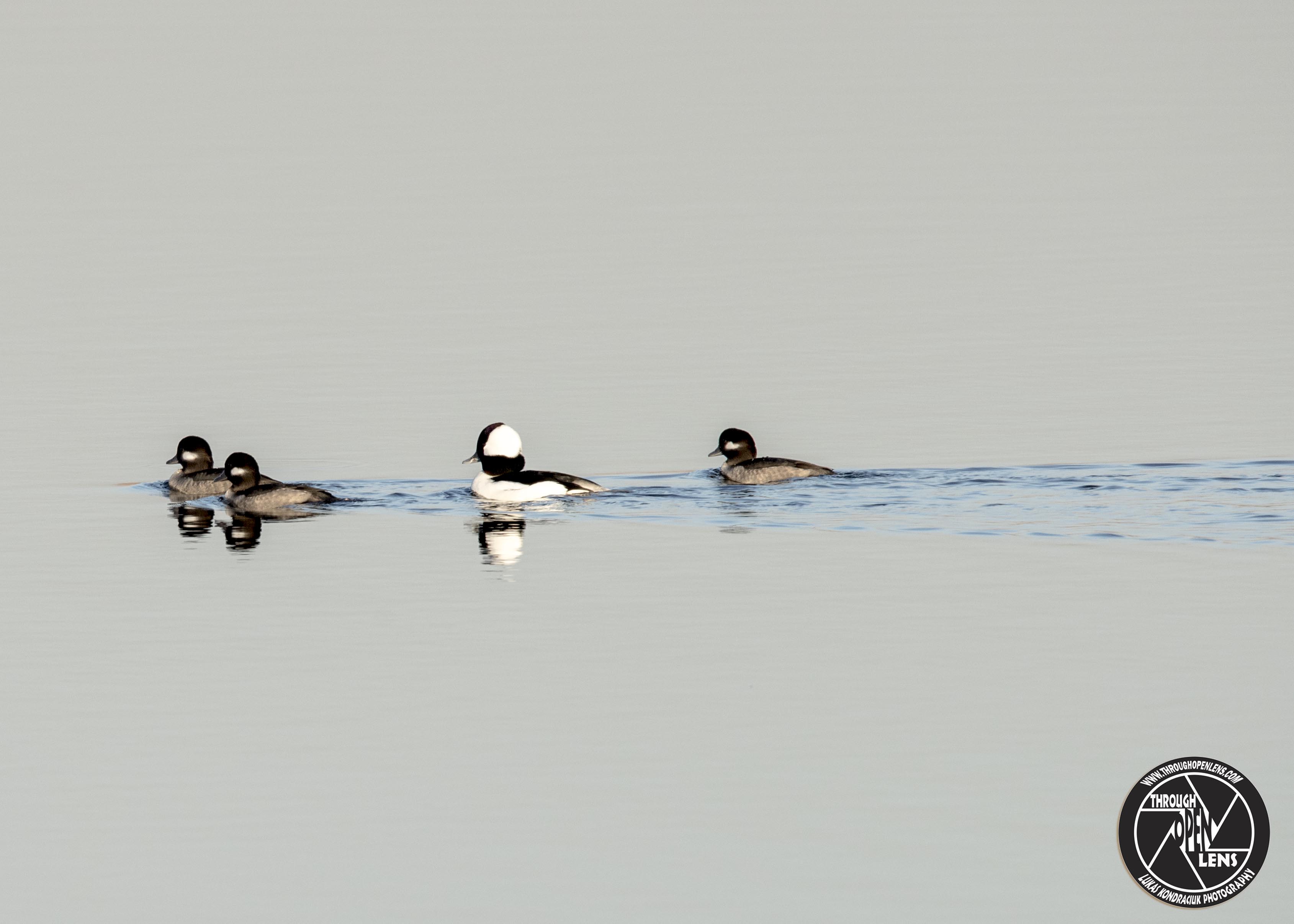
That Is How I Roll!

F/10.0, 1/400, ISO 400.

Bufflehead Ducks

What happened when the lion ate the comedian?

He felt funny!

Interesting Fact: When a pair of Buffleheads intrudes into a nearby territory, the male that owns the territory often chases the intruding female and her mate follows them in hot pursuit. Males leave their mates during incubation in order to molt, but return to the same mate multiple years in a row (one of the few duck species in which this is true). ( https://www.allaboutbirds.org/guide/Bufflehead/lifehistory )


How Is My Posture?

F/6.3, 1/125, ISO 320.

Ruby-crowned Kinglet 

Why did the skeleton go to the BBQ?

To get some spare ribs!

Interesting Fact:  Breeding pairs of Ruby-Crowned Kinglets stay together for two months, until their chicks fledge. Ruby-Crowned Kinglets use their long, bubbly, and amazingly loud songs to establish territories; this is more energy efficient than chasing and less dangerous than fighting. They can be recognized by a constant flicking of their wings. ( https://www.allaboutbirds.org/guide/Ruby-crowned_Kinglet/lifehistory )


The Juice Is Worth The Squeeze!

F/11.0, 1/500, ISO 320.

House Finch

What do you call a fake noodle?

An impasta.

Interesting Fact: A highly social bird, the House Finch is rarely seen alone outside of the breeding season, and may form flocks as large as several hundred birds. House Finches feed mainly on the ground or at feeders or fruiting trees. At rest, they commonly perch on the highest point available in a tree, and flocks often perch on power lines. ( https://www.allaboutbirds.org/guide/House_Finch/lifehistory )