Easter Is The Only Time Of The Year When It’s Perfectly Safe To Put All Your Eggs In One Basket.

Happy Easter Everyone! 

F/8.0, 1/250, ISO 250.

Desert Cottontail Rabbit

What did the Easter Egg say to the boiling water?

It’s going to take awhile to get me hard I just got layed by some chick!

Interesting Fact:  Many desert animals prey on cottontails, including birds of prey, mustelids, the coyote, the bobcat, the lynx, wolves, mountain lions, snakes, weasels, humans, and even squirrels, should a cottontail be injured or docile from illness.[22] Alien species, such as cats and dogs, are also known predators, and also pose a threat.[12] Southwestern Native Americans hunted them for meat but also used their fur and hides. It is also considered a game species, due to which it is hunted for sport.[12] The desert cottontail’s normal behavior upon spotting a potential predator is to freeze in place in an attempt to avoid being detected. If it determines that it is in danger, it will flee the area by hopping away in a zigzag pattern.[23] Cottontails can reach speeds of over 30 km/h (19 mph). When defending itself against small predators or other desert cottontails, it will nudge with its nose, or slap with its front paws, usually preceded by a hop straight upwards as high as two feet when threatened or taken by surprise. ( https://en.wikipedia.org/wiki/Desert_cottontail )

Buck Off!

F/6.3, 1/125, ISO 640.

White-Tailed Deer

I give a dead battery away today…

Free of charge!

Interesting Fact: Males regrow their antlers every year. About one in 10,000 females also has antlers, although this is usually associated with freemartinism.https://en.wikipedia.org/wiki/White-tailed_deer

It Will Be A Good Day As Long As You Won’t Hit Or Bite Anyone!

F/6.3, 1/80, ISO 320.

Common Yellowthroat

Why is Peter Pan always flying?

Because he neverlands.

Interesting Fact: Each male normally has only one mate in his territory during a breeding season. However, a female’s mating calls often attract other males, and she may mate with them behind her mate’s back. ( https://www.allaboutbirds.org/guide/Common_Yellowthroat/ )

When I Am Knocking, You Better Open Up!

F/9.0, 1/320, ISO 250.

Red-Bellied Woodpecker

A police officer caught two kids playing with a firework and a car battery.

He charged one and let the other one off.

Interesting Fact: A Red-bellied Woodpecker can stick out its tongue nearly 2 inches past the end of its beak. The tip is barbed and the bird’s spit is sticky, making it easier to snatch prey from deep crevices. Males have longer, wider-tipped tongues than females, possibly allowing a breeding pair to forage in slightly different places on their territory and maximize their use of available food.  ( https://www.allaboutbirds.org/guide/Red-bellied_Woodpecker/lifehistory )

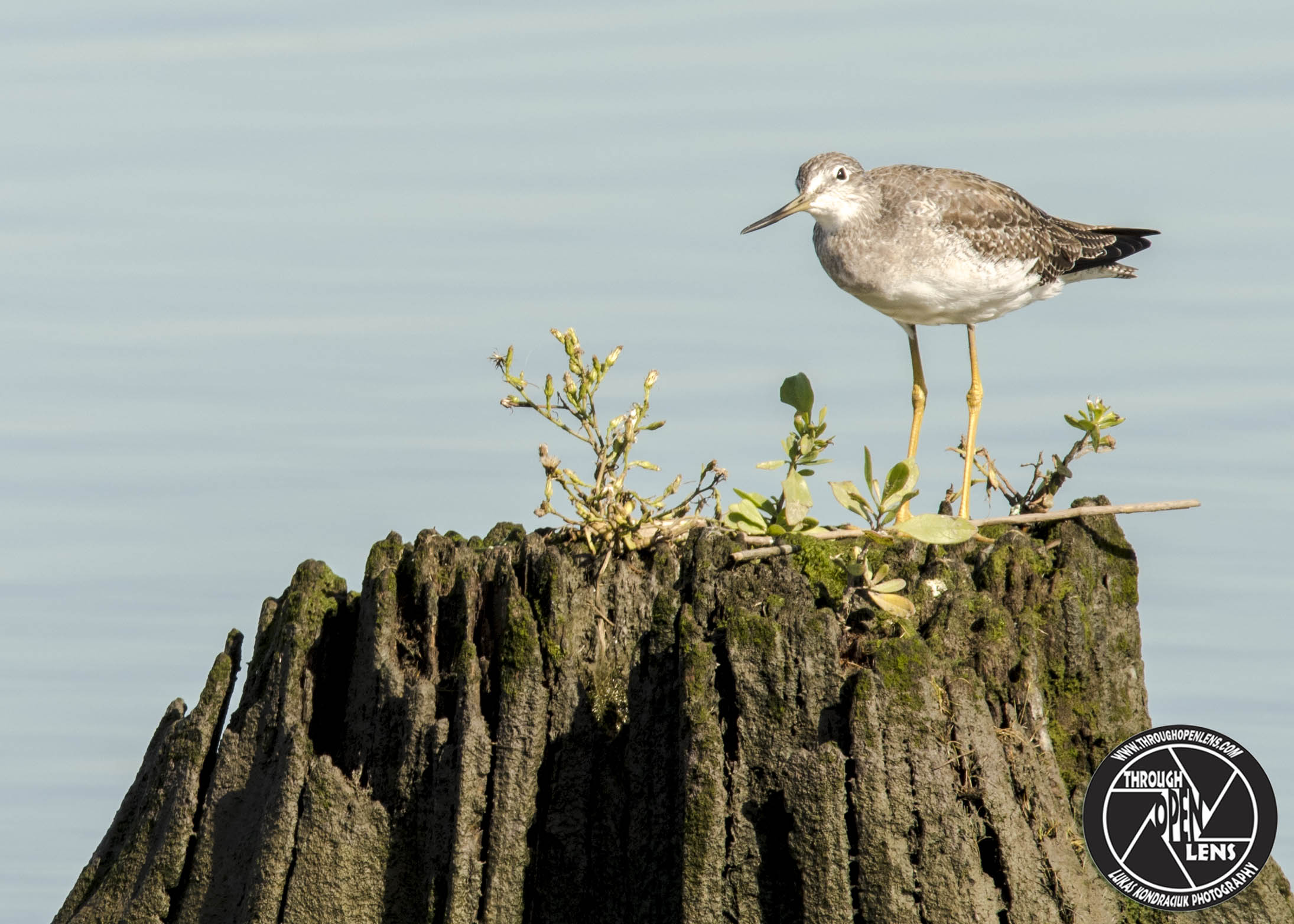
I Have A Leg Up On You

F/10.0, 1/400, ISO 250.

Greater Yellowlegs

Ghosts are hard to impress.

They boo everything.

Interesting Fact: Their breeding habitat is bogs and marshes in the boreal forest region of Canada and Alaska. They nest on the ground, usually in well-hidden locations near water. The three to four eggs average 50 mm (2.0 in) in length and 33 mm (1.3 in) in breadth and weigh about 28 g (0.99 oz). The incubation period is 23 days. The young leave the nest within 24 hours of hatching and then leave the vicinity of the nest within two days.( https://en.wikipedia.org/wiki/Greater_yellowlegs )

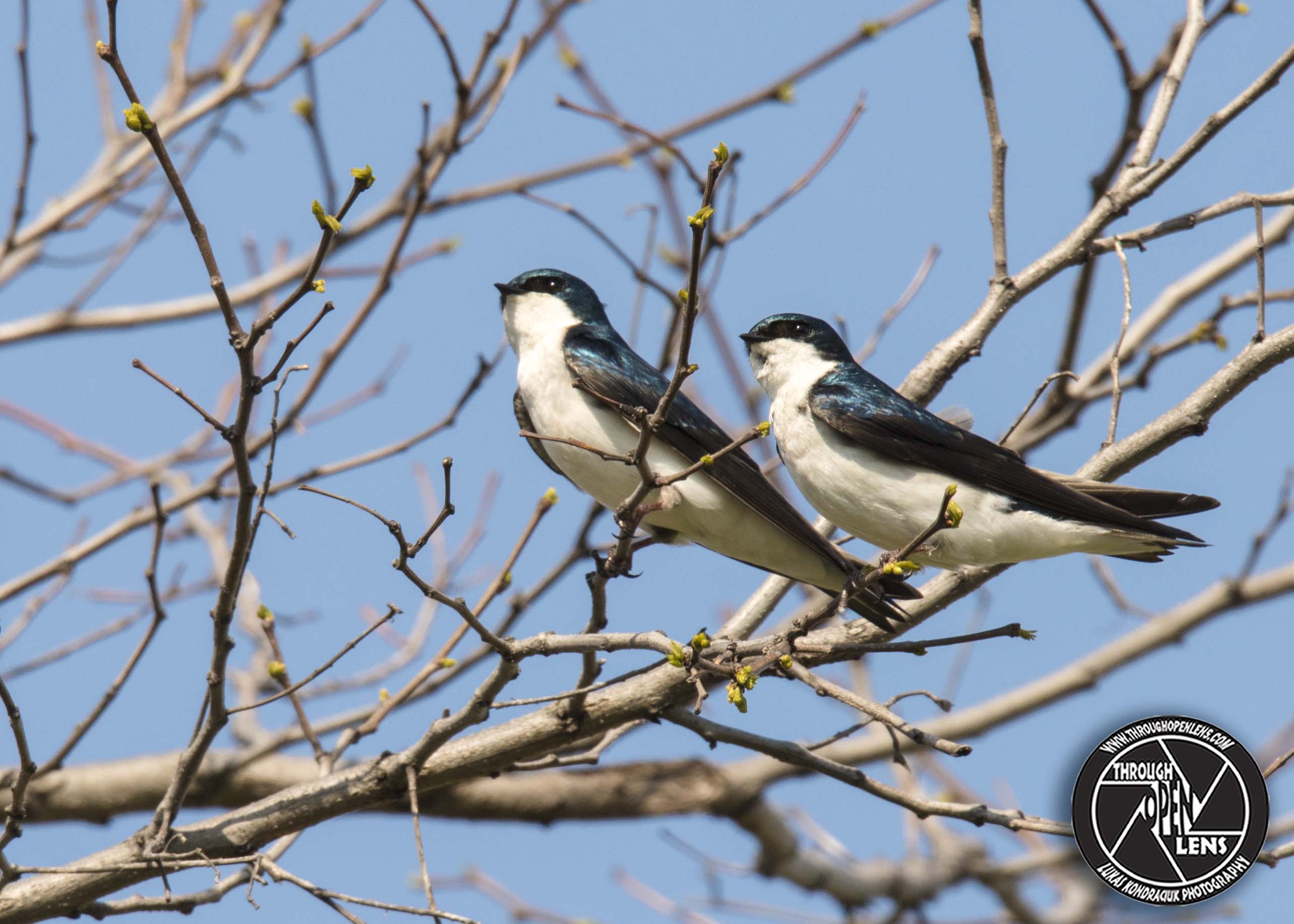
The Truth Is Hard To Swallow When You’re Choking On Your Pride!

F/11.0, 1/500, ISO 250.

Tree Swallows

What do you call a guy who never farts in public?

A private tutor.

Interesting Fact: Tree Swallows have helped researchers make major advances in several branches of ecology, and they are among the best-studied bird species in North America. Still, we know little about their lives during migration and winter. ( https://www.allaboutbirds.org/guide/Tree_Swallow/lifehistory )

You Give Me The Chills!

F/10.0, 1/400, ISO 160.

Red-tailed Hawk

Two snakes are talking.

One of them turns to the other and asks, “Are we venomous?”

The other replays, “Yes,why?…”

“I just bit ma lip.”

Interesting Fact: Red-tailed Hawks typically put their nests in the crowns of tall trees where they have a commanding view of the landscape. They may also nest on a cliff ledge or on artificial structures such as window ledges and billboard platforms. ( https://www.allaboutbirds.org/guide/Red-tailed_Hawk/lifehistory

Life Always Offers You A Second Chance. It’s Called Tomorrow.

F/10.0, 1/400, ISO 250.

Greater Yellowlegs

Beer Bottle: You break me, you get 1 year of bad luck!

Mirror: You kiddin’ me? You break me, then you will get 7 years of bad luck! 

Condom: Hahaha… (Condom walks off laughing)

Interesting Fact: These birds forage in shallow water, sometimes using their bills to stir up the water. They mainly eat insects and small fish, as well as crustaceans and marine worms. It often walks in sand or mud and leaves clear tracks; it can be possible to gather information about this species using its tracks. ( https://en.wikipedia.org/wiki/Greater_yellowlegs )

I Used My Last “Chill-Pill” Yesturday. This Is Your ONLY Warning!

F/10.0, 1/400, ISO 160.

Palmchat

What happened when you go inside with a snowsuit on?

It melts

Interesting Fact: The breeding season is mainly from March to June. The birds build large, messy, communal nests of twigs in the crowns of palms (mainly royal palms Roystonea sp.). Occasionally, in the absence of palms, other trees or even telephone poles, may be used. The whole nesting structure may be up to 2 m across, containing up to 30 adjoining nests with their own separate chambers and entrances. The females lay clutches of 2-4 thickly spotted, grey-purple eggs.  ( https://en.wikipedia.org/wiki/Palmchat )

My Life Is So Much More Interesting Inside My Head

F/10.0, 1/400, ISO 400.

Ruby-crowned Kinglet

Four high school boys afflicted with spring fever skipped morning classes. After lunch they reported to the teacher that they had a flat tire.

Much to their relief she smiled and said, “Well, you missed a test today so take seats apart from one another and take out a piece of paper.”

Still smiling, she waited for them to sit down. Then she said: “First Question: Which tire was flat?”

Interesting Fact: Ruby-crowned Kinglets breed across far northern North America as well as the western mountains. Most migrate to the southern and southwestern United States and Mexico for the winter—but some mountain populations in the West simply move to lower elevations during the cold months. ( https://www.allaboutbirds.org/guide/Ruby-crowned_Kinglet/maps-range )