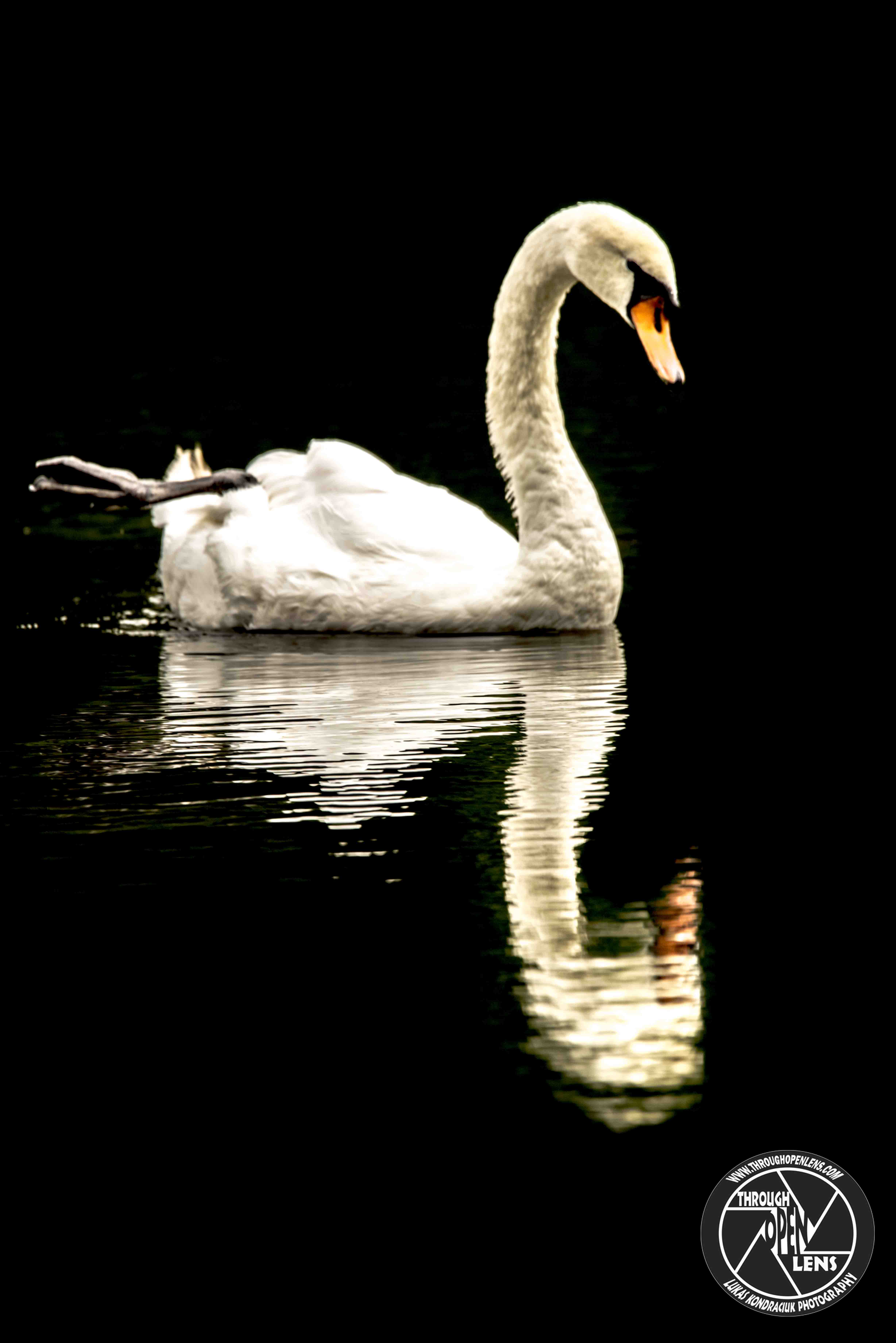
The Darkness That Surrounds Us Cannot Hurt Us. It Is The Darkness In Your Own Heart You Should Fear.

F/9.0, 1/320, ISO 320.

Mute Swan

Why did The Joker have to sleep with his lights on?

Because he was afraid of the Dark Knight.

Interesting Fact: Short legs placed well back on the body give Mute Swans an awkward walking gait, but the birds can run quickly if pursued and can take off from land and water, flying with head and neck extended. On the water they sometimes hold their wings slightly raised and “sail” with the wind. ( https://www.allaboutbirds.org/guide/Mute_Swan/lifehistory )

Do We Have A Problem Here!

F/6.3, 1/640, ISO800.

American Black Duck

What says “Quick, Quick”?

A duck with the hiccups.

Interesting Fact: If a mother is killed or separated from her brood, another Black Duck with ducklings of her own, regardless of their age, will quickly adopt the orphans. ( http://identify.whatbird.com/obj/392/_/American_Black_Duck.aspx )

Shhhh…. I’m Hiding!

F/ 5.6, 1/250, ISO 720.

Mallard

What does a duck do first when making an omelet?

He quacks some eggs.

Interesting Fact: The widespread Mallard has given rise to a number of populations around the world that have changed enough that they could be considered separate species. The “Mexican Duck” of central Mexico and the extreme southwestern United States and the Hawaiian Duck both are closely related to the Mallard, and in both forms the male is dull like the female. The Mexican Duck currently is considered a subspecies of the Mallard, while the Hawaiian Duck is still given full species status. ( https://www.allaboutbirds.org/guide/Mallard/lifehistory )

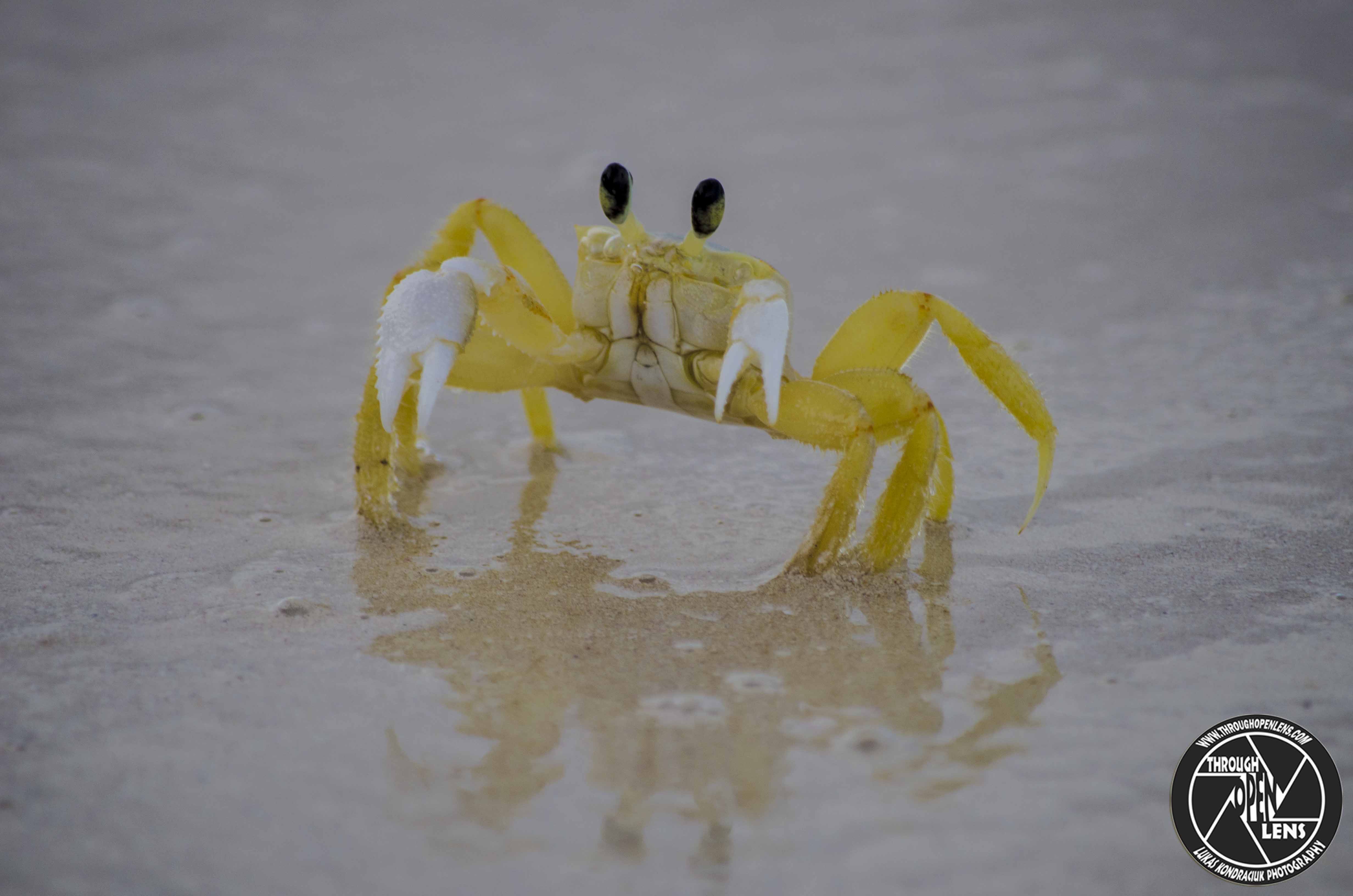
Don’t Be Crabby…

F/5.6, 1/500, ISO 250.

Atlantic Ghost Crabs

A lonely female crab was walking down the beach one evening when she noticed a male crab coming toward her.

But he was walking straight and not sideways! Impressed by his talent, she decided to marry him immediately.

The next morning she noticed him walking sideways like any ordinary crab!

She asked, “What happened? Yesterday you were able to walk straight!”

He answered “What?! I can’t get that drunk every day!”.

Interesting Fact: Atlantic Ghost Crabs can hold oxygen in their air sacs for about six weeks. The crab has club-shaped eyestalks and it boasts of a 360° vision. This helps it see and catch insects that are even in mid-air.  ( http://www.animalspot.net/ghost-crab-sand-crab.html )

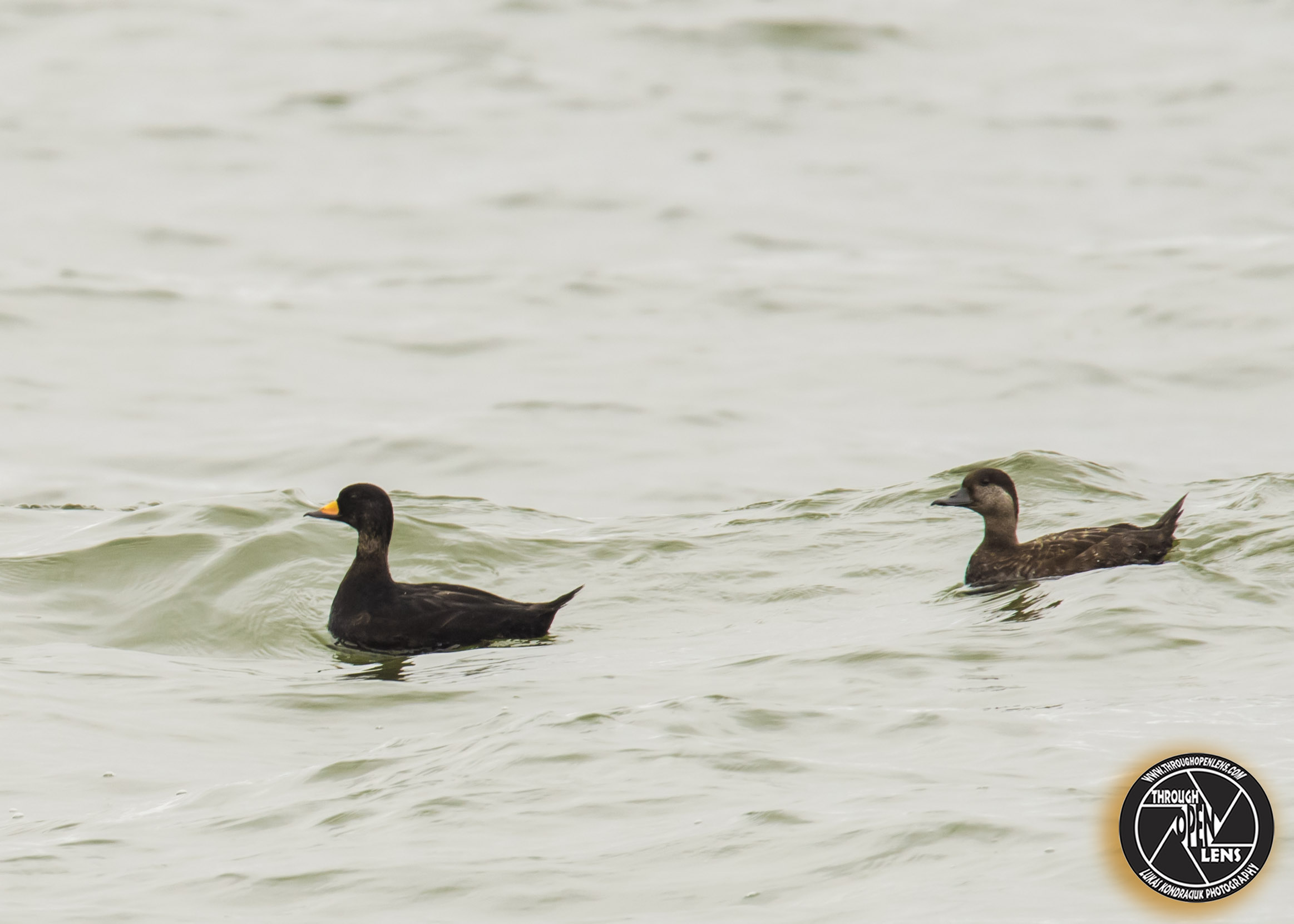
Keep Calm And Quack Quack!

F/11.0, 1/500, ISO 500.

Black Scoter

Mother: What did you learn in school today

Son: How to write.

Mother: What did you write?

Son: I don’t know, they haven’t taught us how to read yet!

Interesting Fact: The Black Scoter is divided into two subspecies. In the form found in Europe, the “Common Scoter,” the male has a larger swollen knob at the base of the upper bill that is black on the sides with a yellow stripe on top, not entirely yellow. ( https://www.allaboutbirds.org/guide/Black_Scoter/lifehistory )


I Am Too Busy Working On My Own Grass To Notice If Yours Is Greener

F/6.3, 1/250, ISO 640.

Muskrat

Why is sex like math?

You add a bed, subtract the clothes, divide the legs, and pray there’s no multiplying!

Interesting Fact: Muskrats provide an important food resource for many other animals, including minkfoxescoyoteswolveslynxbobcatsbearseaglessnakesalligators, and large owls and hawksOtterssnapping turtles, and large fish such as pike prey on baby muskrats. Caribou and elk sometimes feed on the vegetation which makes up muskrat push-ups during the winter when other food is scarce for them.[24] In their introduced range in the former Soviet Union, the muskrat’s greatest predator is the golden jackal. They can be completely eradicated in shallow water bodies, and during the winter of 1948–49 in the Amu Darya (river in central Asia), muskrats constituted 12.3% of jackal faeces contents, and 71% of muskrat houses were destroyed by jackals, 16% of which froze and became unsuitable for muskrat occupation. Jackals also harm the muskrat industry by eating muskrats caught in traps or taking skins left out to dry. ( https://en.wikipedia.org/wiki/Muskrat#Behavior )

Only The Bold Get To The Top.

F/8.0, 1/250, ISO 320.

Red-Eared Slider Turtles

Why did the nurse go to art school?

To learn how to draw blood!

Interesting Fact: Red-eared sliders are almost entirely aquatic, but as they are cold-blooded, they leave the water to sunbathe to regulate their temperature. ( https://en.wikipedia.org/wiki/Red-eared_slider )


Today’s Forecast Calling For A 90% Chance Of Swamp-Ass.

F/6.3, 1/160, ISO 800.

Great Egret

Why did the lady quit her job at the orange juice factory?

She couldn’t concentrate.

Interesting Fact: Males choose the display areas, where nests are later constructed. The nest itself is up to 100 feet off the ground, often over water, usually in or near the top of a shrub or tree such as a redwood, tamarisk, live oak, eastern redcedar, yaupon holly, wax myrtle, mangrove, Australian pine, buttonwood, Brazilian pepper, black willow, or privet. Great Egrets occasionally nest on the ground or on artificial platforms. ( https://www.allaboutbirds.org/guide/Great_Egret/lifehistory )

POLLEN: When Flowers Can’t Keep It In Their Plants.

F/14.0, 1/60, ISO 250.

Daylily

Why did the gardener plant a light bulb?

She wanted to grow a power plant!

Interesting Fact: Daylilies are perennial plants, whose name alludes to the flowers which typically last no more than 24 hours (about a day or so). The flowers of most species open in early morning and wither during the following night, possibly replaced by another one on the same scape (flower stalk) the next day. Some species are night-blooming. Daylilies are not commonly used as cut flowers for formal flower arranging, yet they make good cut flowers otherwise as new flowers continue to open on cut stems over several days. ( https://en.wikipedia.org/wiki/Daylily#Etymology )

That’s Not A Wild Goose Chase. That’s Bingo.

F/7.1, 1/200, ISO 400.

Domestic Geese in Wild

Which two letters in the alphabet are always jealous?

NV.

Interesting Fact: In Europe, northern Africa, and western Asia, the original domesticated geese are derived from the greylag goose Anser anser. In eastern Asia, the original domesticated geese are derived from the swan goose Anser cygnoides; these are commonly known as Chinese geese. Both have been widely introduced in more recent times, and modern flocks in both areas (and elsewhere, such as Australia and North America) may consist of either species, and/or hybrids between them. Chinese geese may be readily distinguished from European geese by the large knob at the base of the bill, though hybrids may exhibit every degree of variation between them. ( https://en.m.wikipedia.org/wiki/Domestic_goose )